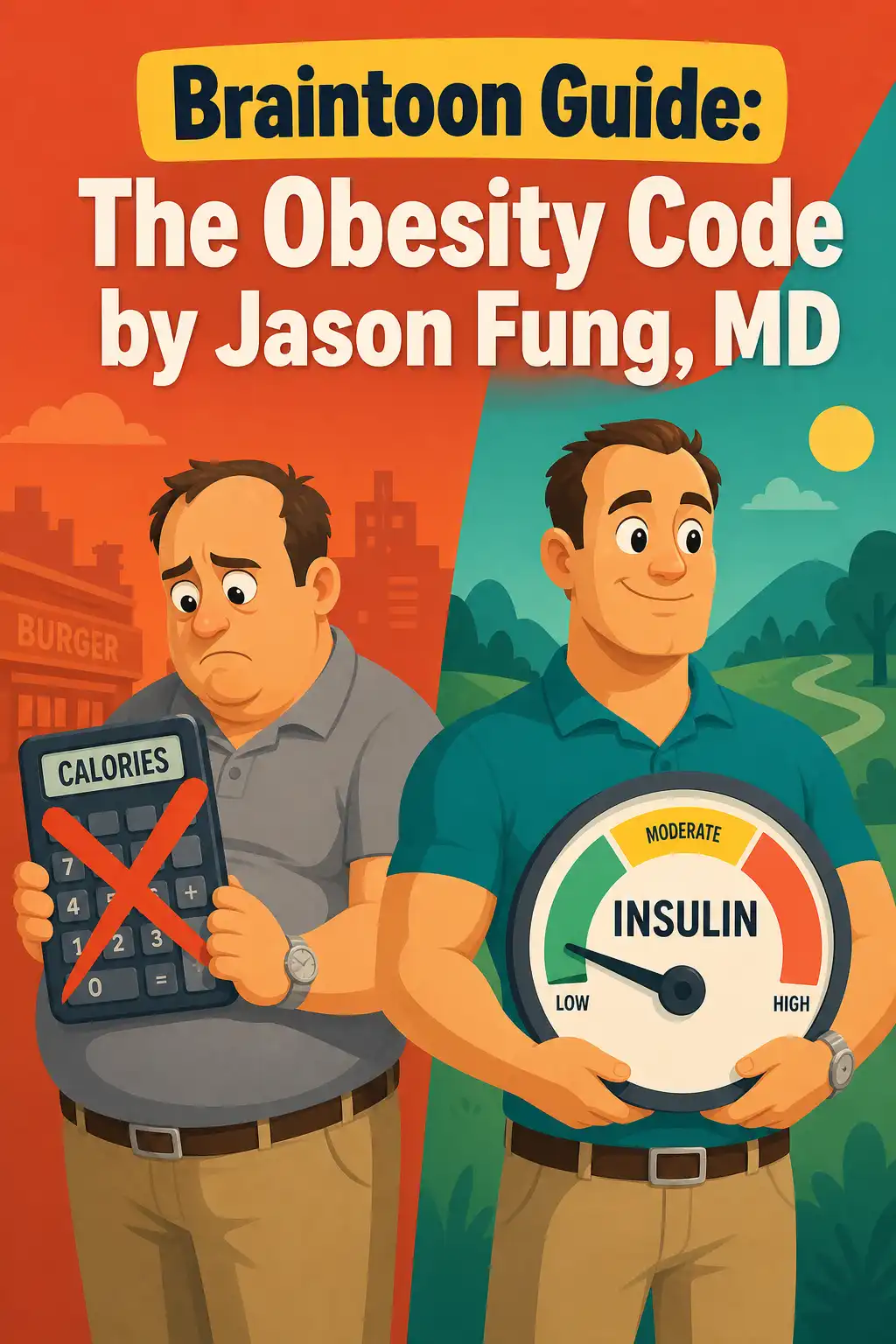
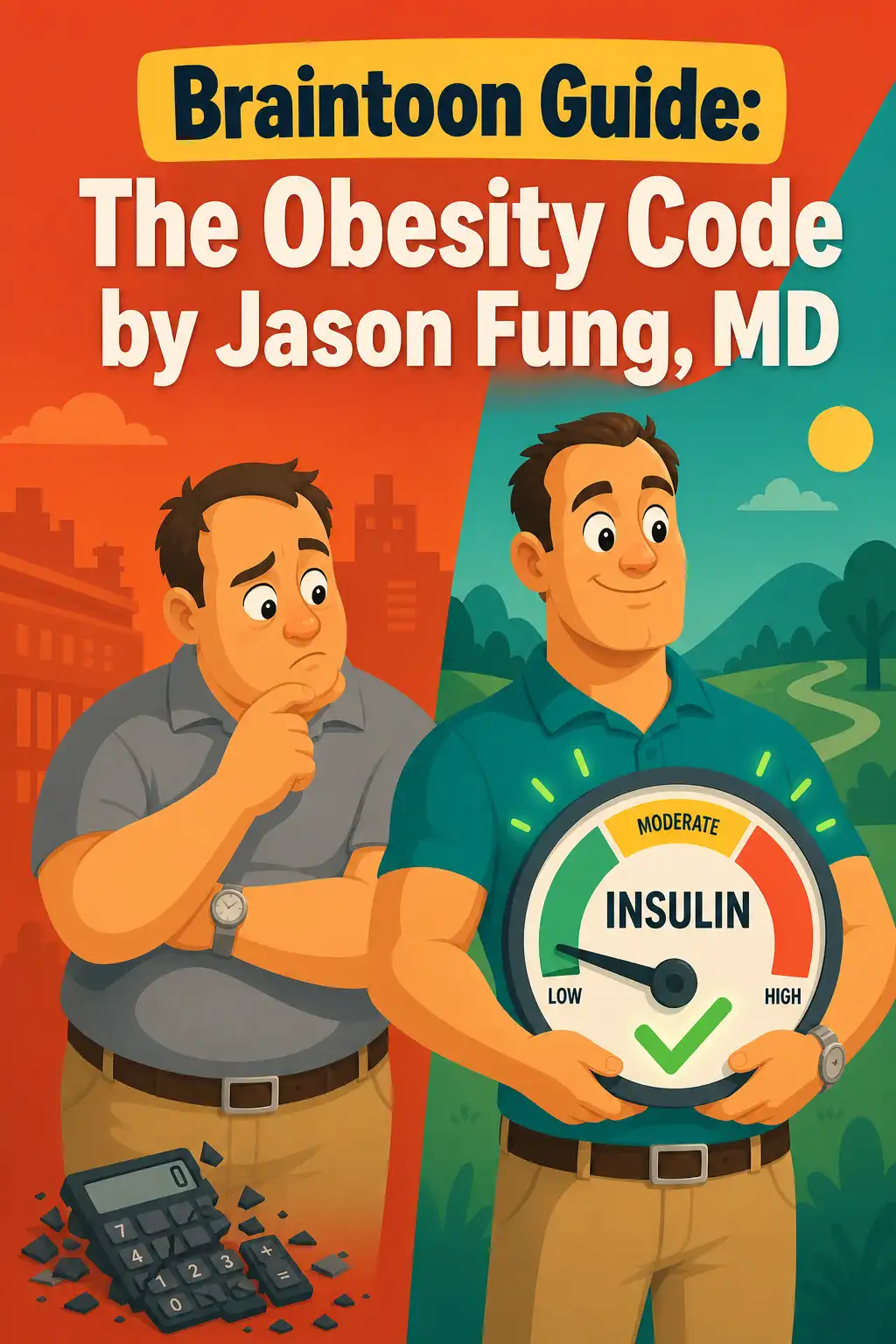
A detailed summary ofThe Obesity Codeby Jason Fung, MD
The Obesity Code by Jason Fung, MD argues that weight gain isn't about willpower or calories at all. It's about hormones, especially insulin, and the book shows you how to finally bring them down.
Watch the first minute




Dave grips the exam table as his
0:00 / 1:00
60-second animated preview
Key ideas, illustrated
The Hormonal Engine of Weight Gain
The Two-Part Fix: What to Eat & When to Eat
The Obesity Code Summary
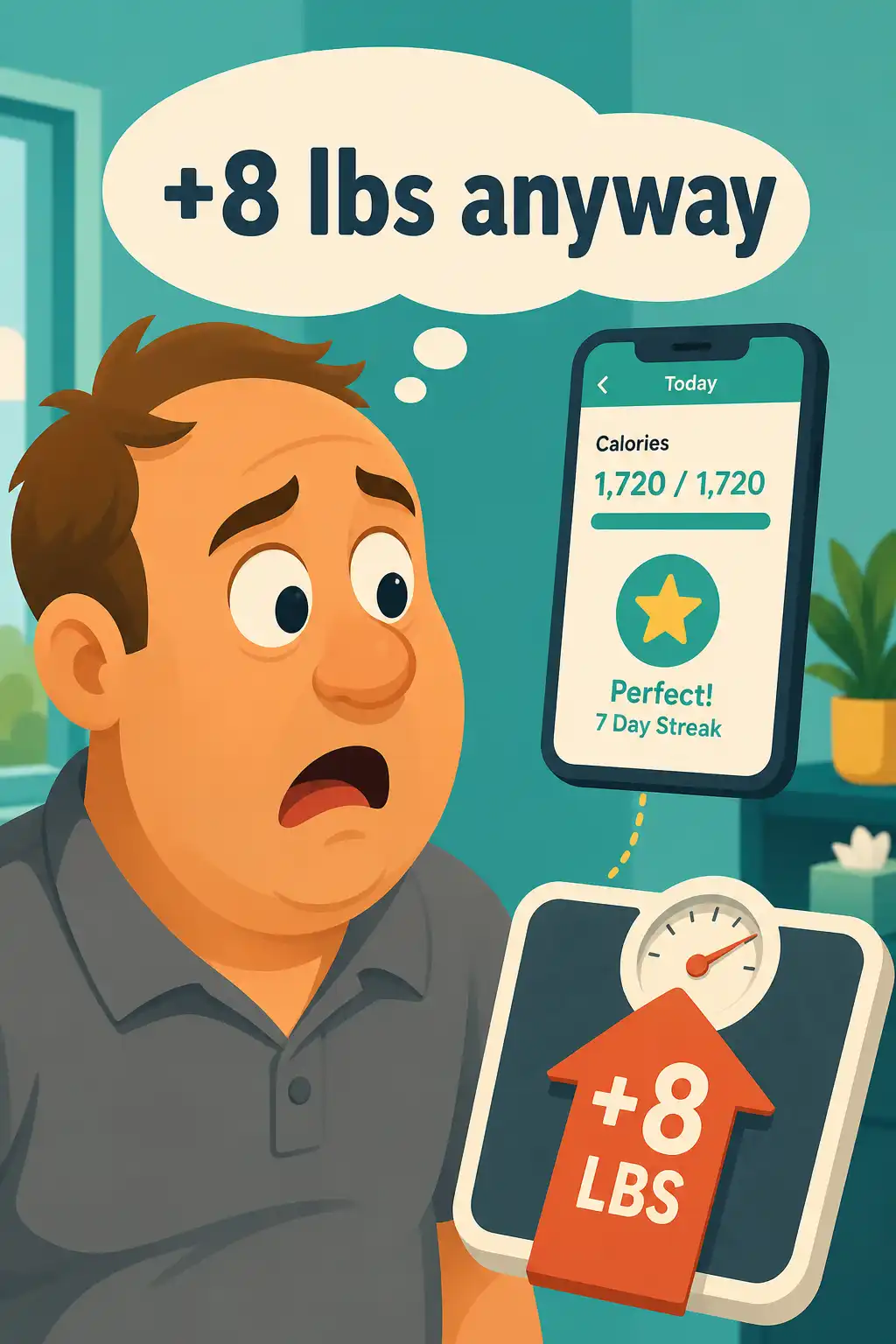
Dave grips the exam table as his doctor says the word prediabetic. And here's the kicker. He's spent six months counting every single calorie, and somehow the scale still climbed eight pounds.
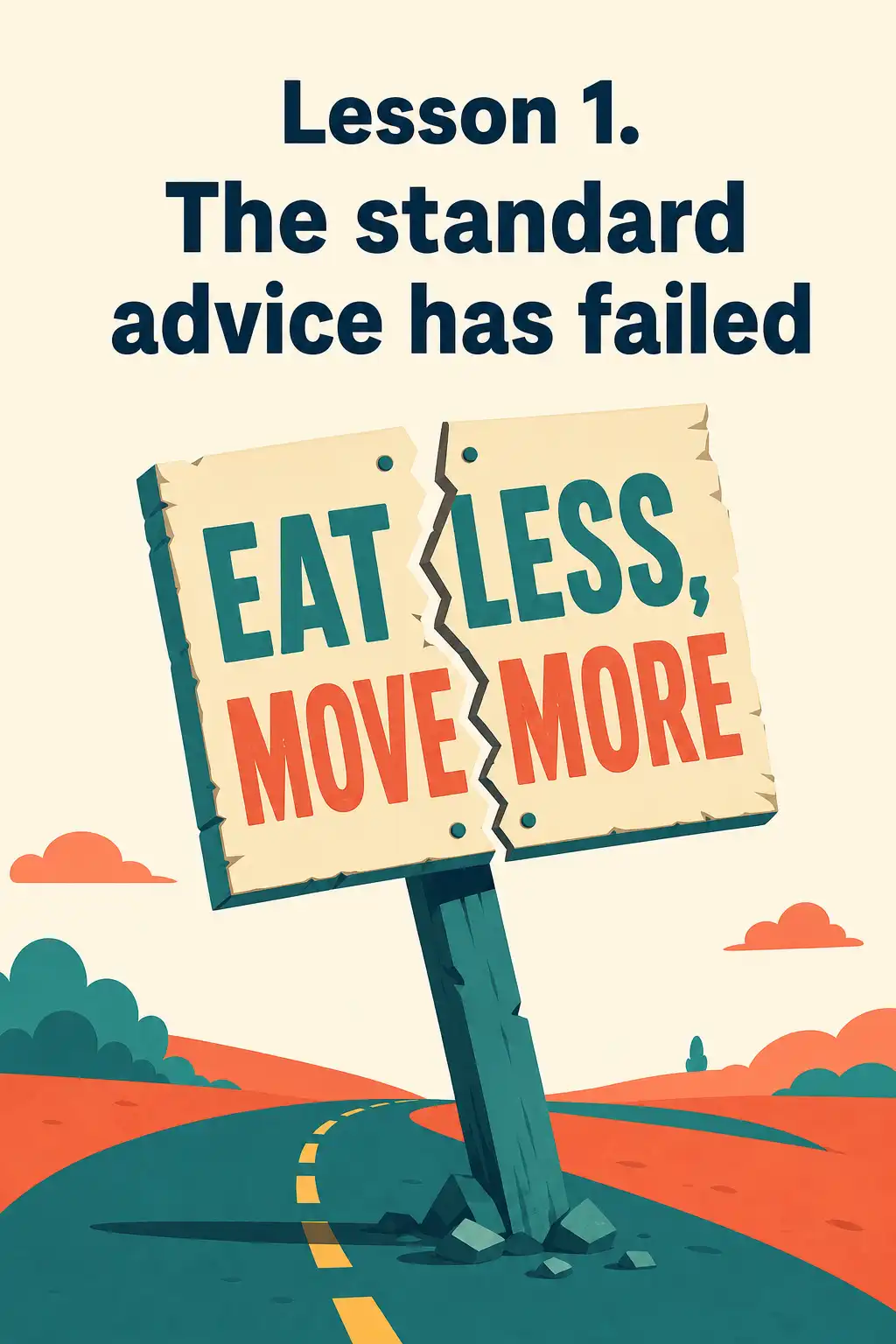
1. The standard advice has failed
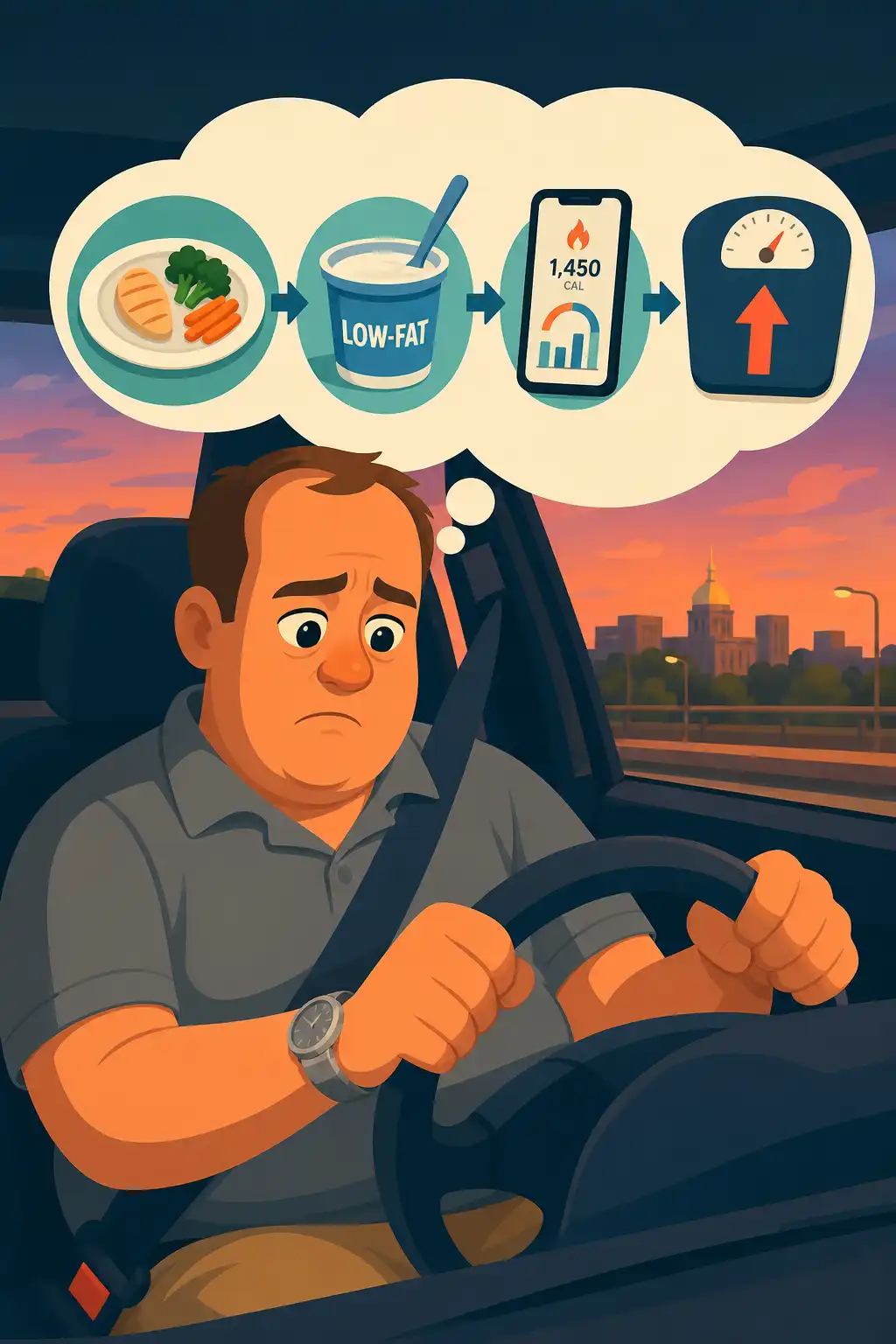
Dave, a 47-year-old insurance claims adjuster in Des Moines, drives home replaying the appointment in his head. He followed every rule. Smaller portions, low-fat everything, a tracking app that pinged him at every meal. And he's heavier than when he started.
That weekend, his sister mentions Dr. Jason Fung, a Toronto kidney specialist who kept asking a strange question. Why did his diabetic patients gain weight on the very treatments meant to help them?
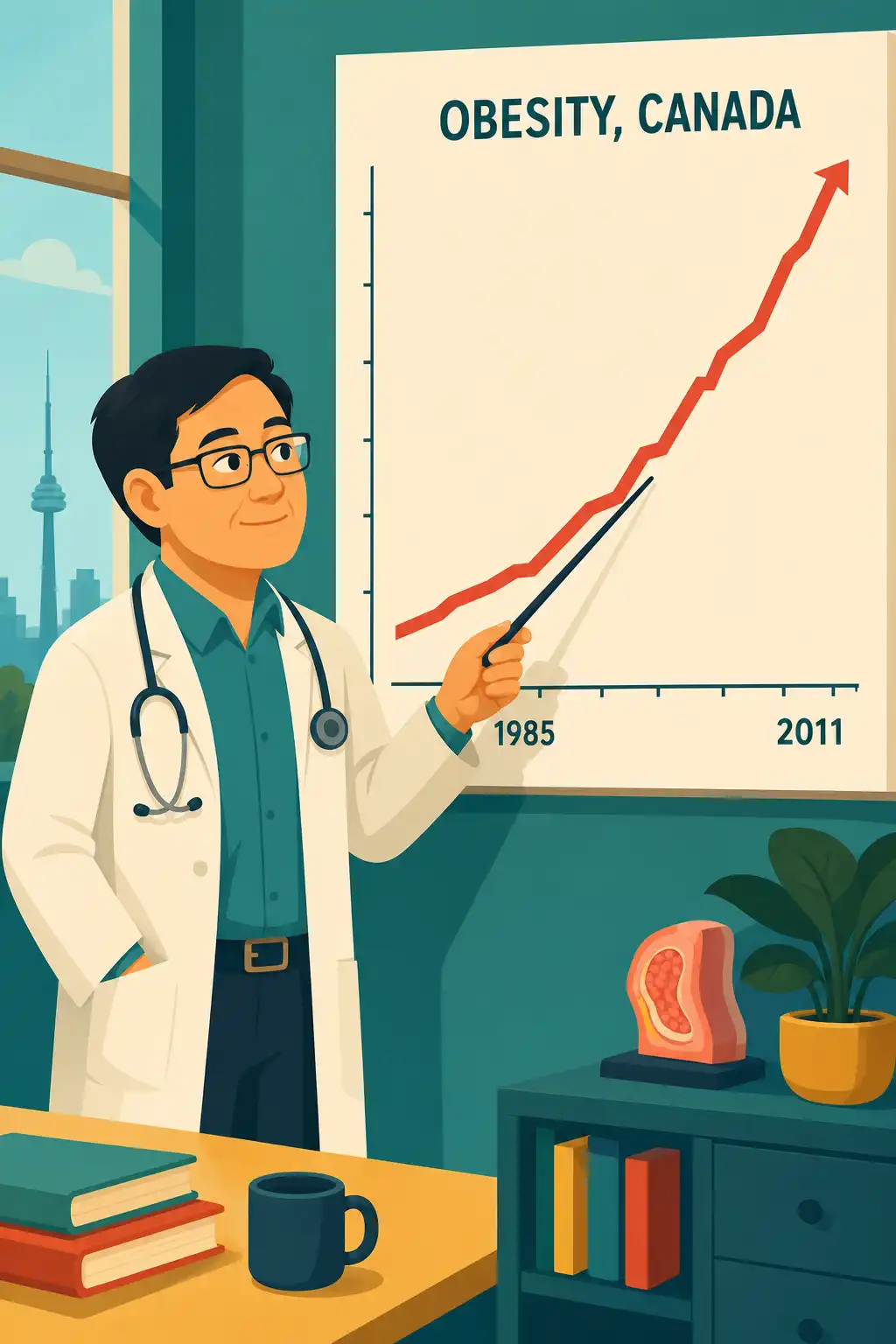
Fung noticed medicine was treating symptoms, not root causes. And the standard advice, eat less and move more, had failed on a massive scale. Obesity rates in Canada tripled between 1985 and 2011.
If that advice really worked, Fung reasoned, it would have worked by now. Even doctors, some of the most disciplined and educated people around, struggle with their weight. Something in the theory itself must be broken.
Dave feels an odd sense of relief. Maybe his six months of failure weren't a character flaw after all. Maybe he'd been handed the wrong map from the very beginning.
Fung's method appeals to him too. Only human studies from peer-reviewed journals, and a long-term view, because obesity builds over decades, not the few weeks most diet studies actually last.
Watch it come to life
Watch The Obesity Code instead
Explore this summary and the Braintoon library.
2. The calorie deception
Dave begins with the belief he'd trusted his whole life. Cut calories, and the fat simply melts away. But Fung shows this rests on a stack of assumptions that have all been proven wrong.
The biggest one is the idea that calories in and calories out are independent of each other. They're not. Cut your food intake by 30 percent, and your body quietly cuts its energy burn by roughly 30 percent to match.
In the 1944 Minnesota Starvation Experiment, healthy young men ate half their normal food for six months. Their metabolism dropped 40 percent. They became cold, weak, and completely obsessed with food.
And when they finally resumed normal eating, their weight rebounded right above where it started. Dave winces. That's exactly the cycle he has lived through three separate times.
Even massive trials agree. The Women's Health Initiative followed nearly 50,000 women cutting fat and calories for over seven years. The final weight difference versus the control group? Essentially zero.
Hormones fight back too. Ghrelin, the hunger hormone, stays elevated for over a year after weight loss, while the hormones that signal fullness stay stubbornly suppressed the whole time.
3. You can't outrun your diet
Dave's next instinct is to exercise harder, so he digs out his old running shoes from the back of the closet. But Fung has some sobering news on that front too.
He tells the story of Dr. Peter Attia, an elite swimmer who trained for hours every day and yet stayed significantly overweight. If exercise really controlled weight, that shouldn't be possible.
Researchers studied the Hadza, hunter-gatherers in Tanzania who walk up to twenty miles a day. Their total daily calorie burn was roughly the same as typical Western office workers.
Exercise is only about five percent of daily calorie burn. And there's compensation too. People eat more after workouts and unconsciously move less the rest of the day.
Since the 1980s, people have actually exercised more than ever before, and yet obesity kept climbing everywhere. Laziness simply doesn't explain the epidemic.
Dave keeps his morning walks anyway, for his heart, his mood, and his stress. Those are real benefits. He just stops expecting the treadmill to shrink his waistline.
4. Your body defends a set weight
Dave reads about Sam Feltham, a personal trainer who ate 5,800 calories a day as an experiment. On low-carb, high-fat food, he gained under three pounds. His waist actually shrank.
Then Feltham repeated the whole thing with processed, high-carb food at nearly identical calories. He gained 15.6 pounds. Same person, same calories, completely different result.
So a calorie is not just a calorie. Fung explains that different foods trigger vastly different hormonal responses inside the body.
The body defends a set weight like a thermostat. Drop below it, and hunger rises while metabolism slows to a crawl. Rise above it, and appetite falls while calorie burn quietly ramps up.
In one 1960s study, Dr. Ethan Sims overfed volunteers up to 10,000 calories a day. Their metabolisms fired up in response, and afterward most of them returned to their original weight without any effort.
Dave finally sees his real problem. His thermostat is set too high, and every diet he's ever tried was fighting it instead of resetting it.
5. Insulin is the driver
Dave thinks of his aunt with type 2 diabetes, who gained weight steadily after starting insulin injections, even though she was eating carefully. Fung says that's no coincidence at all.
Insulin is the body's storage hormone. It rises after meals and tells the body to stash energy, first as glycogen, like cash in a wallet, then as fat, like a bank account you can't easily withdraw from.
When insulin stays chronically high, the body sits in constant storage mode. In one major trial, diabetics given higher insulin doses gained nearly ten pounds more than those on standard doses.
One study found patients gained nineteen pounds even while eating 300 fewer calories per day. Hormones were overriding the calorie math entirely.
And the pattern holds across medications. Drugs that raise insulin cause weight gain. Drugs that leave it alone are neutral. Drugs that lower insulin produce lasting weight loss.
High fasting insulin also predicts future weight gain, as the San Antonio Heart Study showed. Obesity, Fung concludes, is a hormonal imbalance, not a caloric one.
6. Insulin resistance and constant eating
One thing still puzzles Dave. Why did losing weight get harder every single decade? Fung's answer is insulin resistance, and it explains why long-standing weight is so incredibly stubborn.
The body resists anything persistent. Bacteria resist overused antibiotics. Drug users need bigger and bigger doses. In the same way, cells exposed to constant high insulin stop responding, so the body pumps out even more to compensate.
It's a vicious cycle. High insulin creates resistance, and resistance drives insulin even higher. In one study, a steady insulin infusion made lean, healthy men insulin resistant within just days.
Resistance needs two things to take hold. High levels and persistence. Back in the 1960s, people ate three meals with no snacks, giving their bodies about fourteen low-insulin hours every night. A daily reset.
Dave counts up his own day. Breakfast bar, flavored coffee, lunch, two afternoon snacks, dinner, evening chips. His insulin is elevated nearly every waking hour.
Fung notes that snacking myths, like the idea that grazing keeps your metabolism revved, just aren't supported by the evidence. Food companies invented the snack category. Nobody profits when you simply eat less often.
7. Sugar is the worst offender
Next, Dave confronts his two-soda-a-day habit. Fung explains that table sugar is half glucose and half fructose, and fructose can only be processed by the liver.
Flood the liver with fructose, and it converts the excess into fat, creating fatty liver disease, which directly triggers insulin resistance. Sugar attacks on two fronts at once.
And the damage is fast. Just six days of excess fructose can cause insulin resistance, and eight weeks can produce pre-diabetes in otherwise healthy people.
The stakes are global too. As sugary drinks spread through China, its diabetes rate rocketed from one percent in 1980 to nearly twelve percent by 2013.
Dave switches to diet soda, but Fung warns him off. Artificial sweeteners still raise insulin, sometimes even more than sugar does, and trials show no meaningful weight loss from diet drinks.
So Dave moves to water, black coffee, and tea. He starts reading labels too, and quickly spots sugar hiding under dozens of different names in sauces, dressings, and packaged snacks.
8. Stress and sleep move the scale
Then a brutal quarter hits. A claims backlog, late nights, five hours of sleep. Despite eating carefully, Dave's weight starts creeping upward again. Why?
Fung points to cortisol, the stress hormone. Prednisone, a synthetic version doctors prescribe, reliably causes weight gain. That proves a direct causal link, not just an association.
Ancient stress was brief and physical. Escape the danger, then recover. Modern stress is chronic and psychological, keeping cortisol, blood sugar, and eventually insulin elevated with no outlet.
Sleep matters just as much. Even a single bad night can raise cortisol by over 100 percent and reduce insulin sensitivity, while scrambling the hunger hormones leptin and ghrelin.
So Dave treats recovery as part of the plan. A firm bedtime, phone charging outside the bedroom, and a short walk at lunch to decompress.
Fung is clear that stress reduction, whether it's mindfulness, yoga, or simply better sleep, isn't a luxury. It's an essential piece of managing weight.
9. Eat real food, then stop eating
Three months before his follow-up physical, Dave pulls it all together. Fung notes that every diet works briefly because each one lowers insulin somehow, so combining strategies makes the most sense.
The what is clear. Cut added sugars, reduce refined grains like white flour, keep protein moderate, and eat more natural fats, fiber-rich vegetables, and even a little vinegar.
But food choices only fix meal-time spikes. Breaking insulin resistance requires recurring stretches of very low insulin, and the only way to get there is to stop eating for a while. Fasting.
Fasting isn't starvation, Fung stresses. It's deliberate and controlled, and it's been practiced across cultures for millennia. And the myths are wrong. The body burns fat, not muscle, and the brain runs perfectly fine on ketones.
Metabolism actually rises during a fast, and a 2011 study found intermittent fasting matched calorie-cutting for weight loss while producing meaningfully lower insulin and insulin resistance.
Dave starts gently, fasting from dinner to a late lunch twice a week, with water and black coffee in between. It's easier than he ever expected.
Watch it come to life
Watch the animated summary
Explore this summary and the Braintoon library.