A detailed summary ofAntifragileby Nassim Nicholas Taleb
Antifragile by Nassim Nicholas Taleb teaches you how to design your work, health, and money so volatility, mistakes, and disorder become fuel instead of threats.







What if the secret
0:00 / 1:00
60-second animated preview
Big ideas, at a glance
Explore the visual guides. Select any image to take a closer look.
The Triad: Fragile, Robust, Antifragile
The Barbell Strategy
Four Tools to Profit from Chaos
Antifragile Summary
What if the secret to thriving in chaos isn't protecting yourself from it, but building a life that actually gets stronger every time the world punches you?
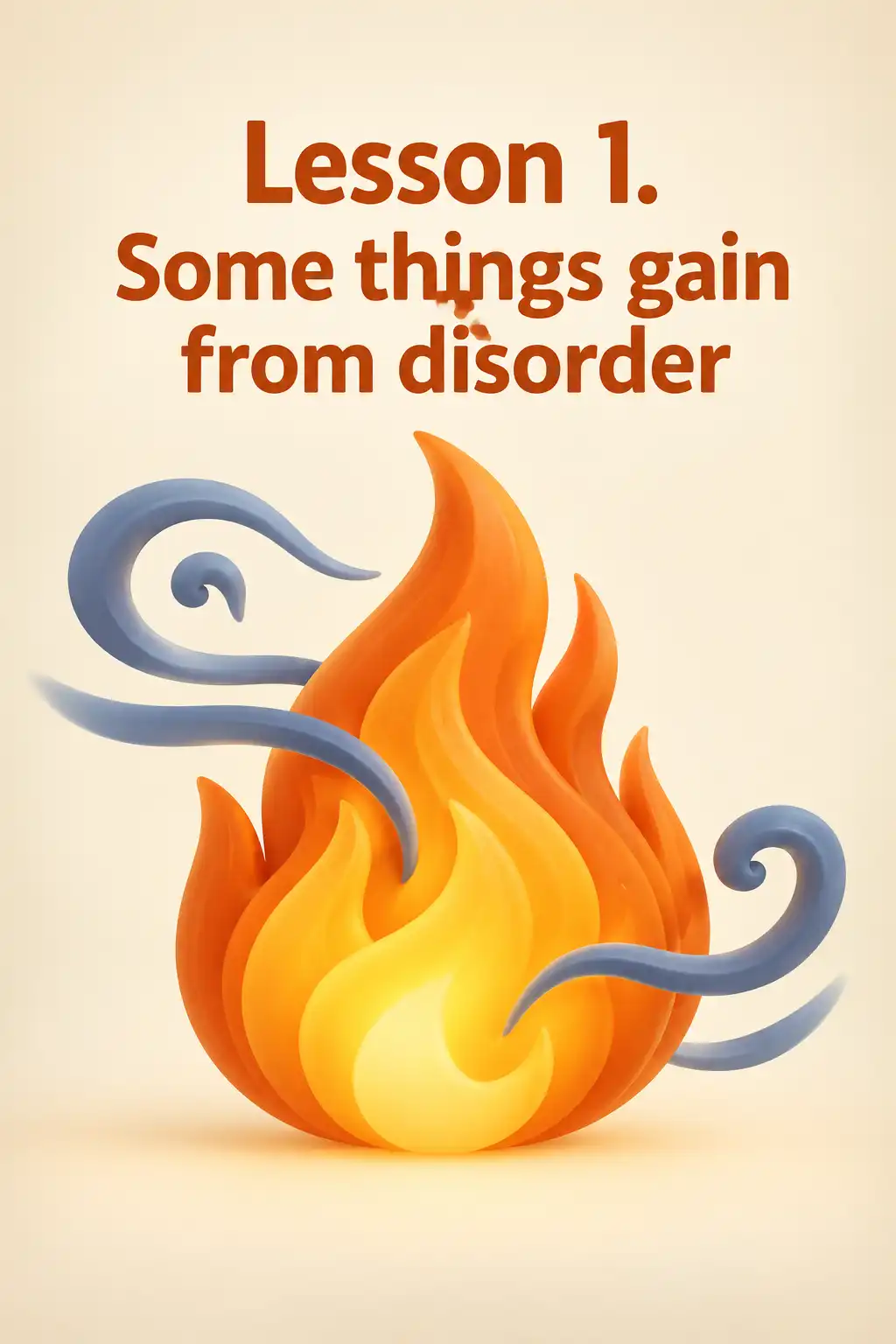
1. Some things gain from disorder
Here's Taleb's favorite image. Wind blows out a candle, but the same wind feeds a fire. Same gust, opposite outcomes. The real question is, which one are you?
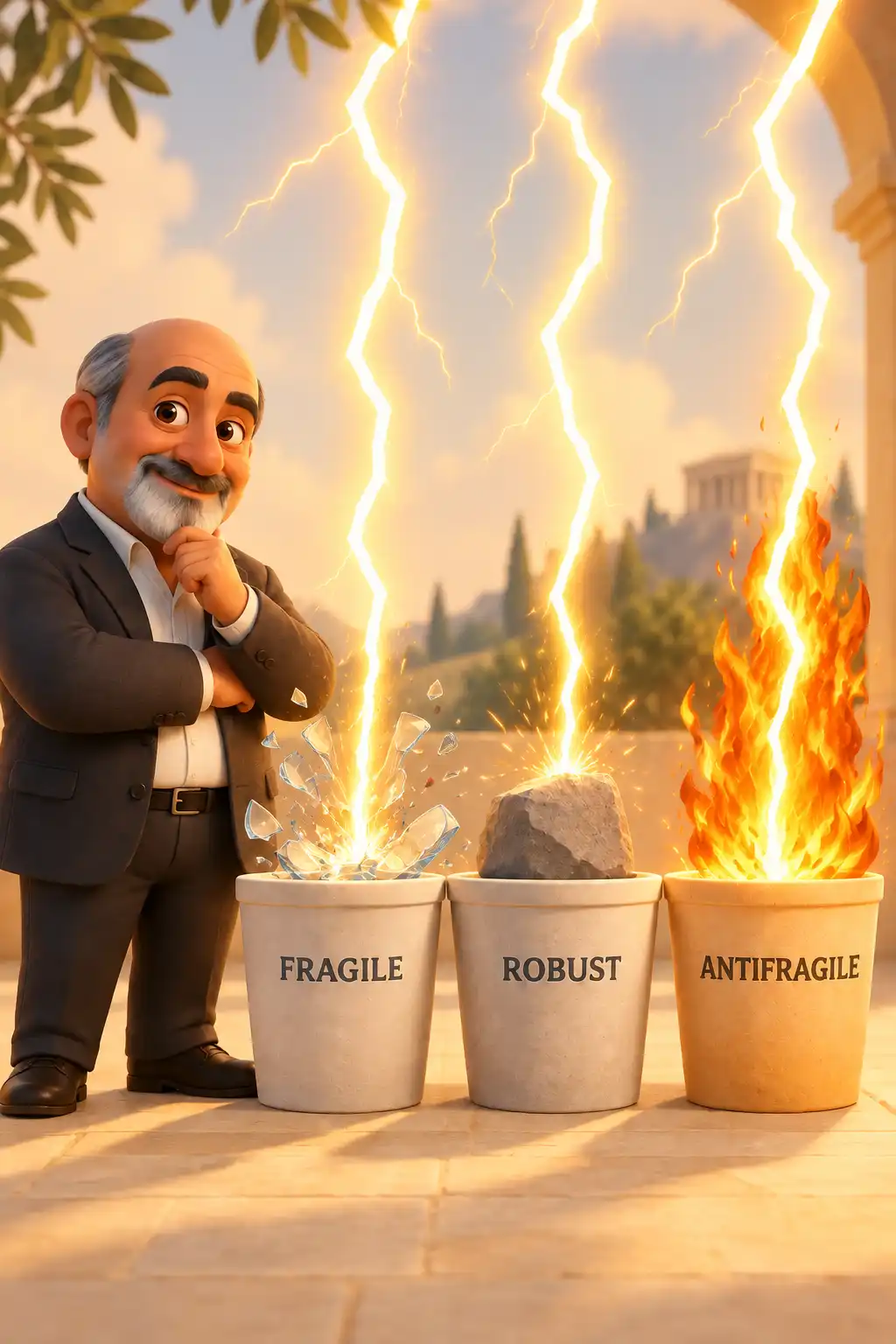
Taleb, a former options trader turned philosopher, sorts everything into three buckets. Fragile things break under stress. Robust things resist it. Antifragile things actually gain from it.
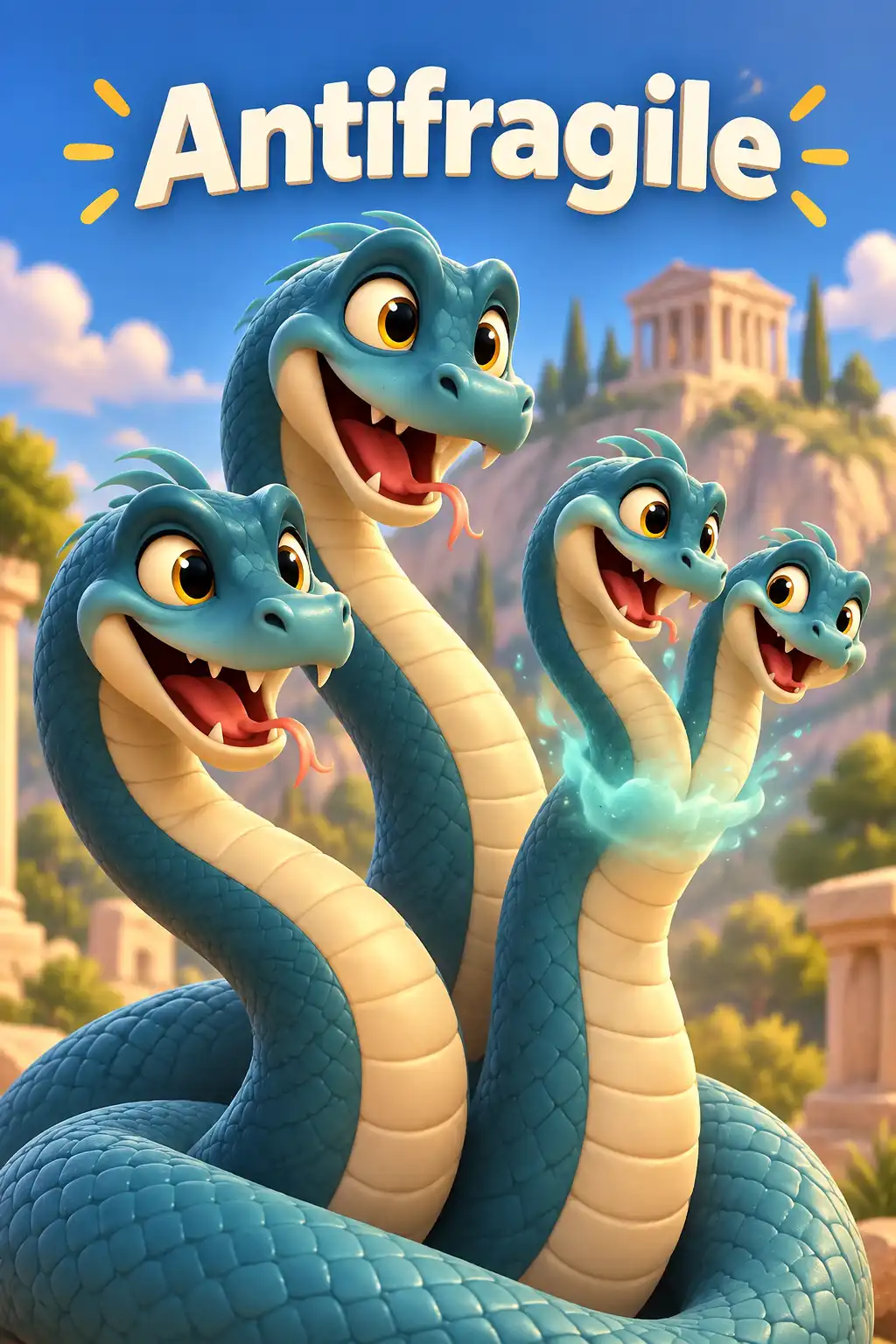
Think mythology. Damocles dines under a sword hanging by a single hair. That's fragile. The Phoenix burns and returns unchanged. That's robust. The Hydra grows two heads for every one you cut off. That, right there, is antifragile.
Weirdly, no language ever had a word for this, even though it's everywhere. Evolution, immune systems, cities, your muscles. They all need shocks to thrive.
The book's promise is simple. You can't predict chaos, but you can build a life that benefits from it. That's a superpower forecasters would kill for.
Meet Kevin, an IT manager in Tampa. Twelve years at one company, a comfortable mortgage, a predictable routine. His entire life is optimized to eliminate surprises. Sounds safe, right?
Watch it come to life
Watch Antifragile instead
Explore this summary and the Braintoon library.
2. Stress makes living things stronger
Small doses of poison can build immunity. It's called hormesis, and ancient kings used it, swallowing tiny amounts of poison every day so assassins couldn't touch them.
Your body works the same way. Bones densify under load. Skin toughens with use. Taleb even points to post-traumatic growth, where people come back from hardship stronger than before.
Overcompensation is everywhere. A speaker who whispers forces you to concentrate harder. Busy people get more done. Deprive a system of stress, and it quietly atrophies.
Taleb calls modern comfort touristification, scripting the randomness out of life. Acute stress plus recovery makes you stronger. Chronic low-grade stress, like a soul-crushing commute, slowly kills you.
Kevin realizes he's been avoiding discomfort for years. Easy projects, familiar tools, zero professional risk. And his skills have quietly gone soft, exactly like an unused muscle.
So he volunteers for the gnarly cloud migration nobody wants. It's stressful, and he messes up publicly, twice. But he learns more in three months than he did in the previous five years.
3. Beware stability that hides fragility
Picture a turkey fed generously every single day. Each meal confirms the butcher loves him. His confidence peaks the day before Thanksgiving. Smooth history, catastrophic ending.
Taleb contrasts two brothers. John earns a steady bank salary. George drives a taxi with variable earnings. John looks safer, but one phone call can zero out his income. George's volatility is information.
Same thing at scale. Small forest fires clear flammable brush and prevent infernos. When Alan Greenspan, America's central banker, smoothed out every economic wobble, risk piled up underground until 2008 exploded.
Taleb calls well-meaning meddlers fragilistas. They deliver small visible benefits while creating huge hidden risks. Suppressing volatility doesn't remove risk. It just stores it up for one giant detonation.
Kevin suddenly sees it. His paycheck has been smooth for twelve years, so he assumed it was safe. He's the turkey, and restructuring season is his Thanksgiving.
He maps his fragilities. One employer, one income, one industry, a mortgage sized for permanent good news. Any single shock takes down the whole structure.
4. Stop predicting, start measuring fragility
Taleb once challenged a conference of economic forecasters to show their past predictions. Silence. He argues the expert track record on big events is basically zero.
But here's the trick. You can't predict a Black Swan, a rare and shattering event, but you can spot fragility beforehand. Taleb saw mortgage giant Fannie Mae sitting on dynamite years early.
His test comes from Seneca, the wealthy Roman Stoic who mentally wrote off his fortune each morning. Fragility means more to lose than gain. Antifragility means the reverse.
So stop asking what will happen. Ask instead, what happens to me if I'm wrong? If your downside dwarfs your upside, you're fragile, and no forecast can save you.
Kevin used to doomscroll layoff rumors like tea leaves. Now he skips forecasts entirely and audits his own exposure instead, one fragile spot at a time.
First move, a real cash cushion. With six months of expenses saved, he doesn't need to predict which disaster hits. He's protected against all of them at once.
5. Barbell your risks, skip the middle
Taleb's practical recipe is the barbell. Be extremely conservative in most things, and extremely aggressive in a few small ones. And skip the moderate middle entirely.
In money terms, park ninety percent somewhere ultra safe and put ten percent in wild speculative bets. Worst case, you lose ten percent. Best case, unlimited upside.
The moderate risk middle sounds sensible, but nobody can actually measure that risk. Great writers knew this. Kafka kept a boring insurance day job while writing masterpieces at night.
Barbell everything. Intense exercise, then complete rest. Hyper-cautious with your survival, hyper-bold with your experiments. The barbell doesn't eliminate uncertainty. It domesticates it.
Kevin barbells his career. The day job stays, boring and stable, funding everything. But nights and weekends become his ten percent, reserved for pure high-risk experimentation.
He starts a scrappy side hustle automating workflows for local small businesses. Most gigs flop or fizzle. Doesn't matter. Losses are capped at a few evenings, while the upside is uncapped.
6. Collect options instead of making predictions
The ancient philosopher Thales got rich by cheaply reserving olive presses before harvest season. When the bumper crop came, he rented them out at a premium. Aristotle credited his astronomy knowledge. Wrong.
Thales needed no special knowledge. He'd bought an option, the right, not the obligation, to act. Tiny cost if wrong, huge payoff if right. Uncertainty made it more valuable.
With options, you don't need to be smart. You just need to spot a good outcome and grab it. One legendary trader got rich on green lumber, thinking it meant painted wood.
Progress itself works this way. The wheeled suitcase took nearly six thousand years to arrive after the wheel. Tinkering and trial and error, not academic theory, drive most real innovation.
Kevin treats every side project as a cheap option. A weekend prototype costs almost nothing, but any one could become a business. He stops needing to guess which.
One flopped automation demo gets forwarded to a client's friend who runs a logistics firm. Suddenly Kevin has a retainer offer he never predicted or planned for.
7. Subtract before you add, trust what's old
Taleb's next tool is via negativa, improvement by removal. Charlatans sell you ten-step recipes to add. Real wisdom is knowing what to subtract. Chess masters win by not losing.
It works in medicine too. Quitting smoking did more for lifespans than most treatments. Taleb argues for intervening only when benefits clearly outweigh harm, and leaving nearly-healthy systems alone.
Then there's the Lindy effect. For nonperishable things, ideas, books, technologies, every year of survival predicts an even longer future. Something around for forty years will likely last forty more.
So distrust neomania, the lust for shiny new things. To glimpse the future, don't add gadgets to the present. Subtract the fragile stuff and see what's left standing.
Kevin goes subtractive. He kills the car loan, the unused subscriptions, the lifestyle bloat. Every dollar of debt removed makes him harder to break.
For skills, he bets Lindy. Trendy frameworks come and go, so he doubles down on fundamentals that have mattered for decades. Databases, negotiation, clear writing.
8. Demand skin in the game
For Taleb, the deepest modern sin is transferring fragility, grabbing the upside while someone else unknowingly eats the downside. Think bankers pocketing bonuses while taxpayers fund the bailout.
The ancient fix was brutal and brilliant. Hammurabi's Code said that if a builder's house collapsed and killed its owner, the builder was executed. Total skin in the game.
Beware the talker's free option. Pundits and forecasters whose advice you act on, but who lose nothing when they're wrong. Taleb's rule is never ask opinions, ask what's in their portfolio.
Eighteen months later, Kevin's company finally swings the axe. Old Kevin would've been devastated. New Kevin negotiates his severance with a grin, because three clients are already waiting.
The layoff, the thing he feared most, actually made him richer. Wind, meet fire. And these days, Kevin only takes advice from people who bleed when they're wrong.
Taleb boils the whole book down to one line. Everything gains or loses from volatility. Fragility is simply what loses. Sort your life into those two piles.
Watch it come to life
Watch the animated summary
Explore this summary and the Braintoon library.