A detailed summary ofThe True Believerby Eric Hoffer
Summary by BrainToonLast updated
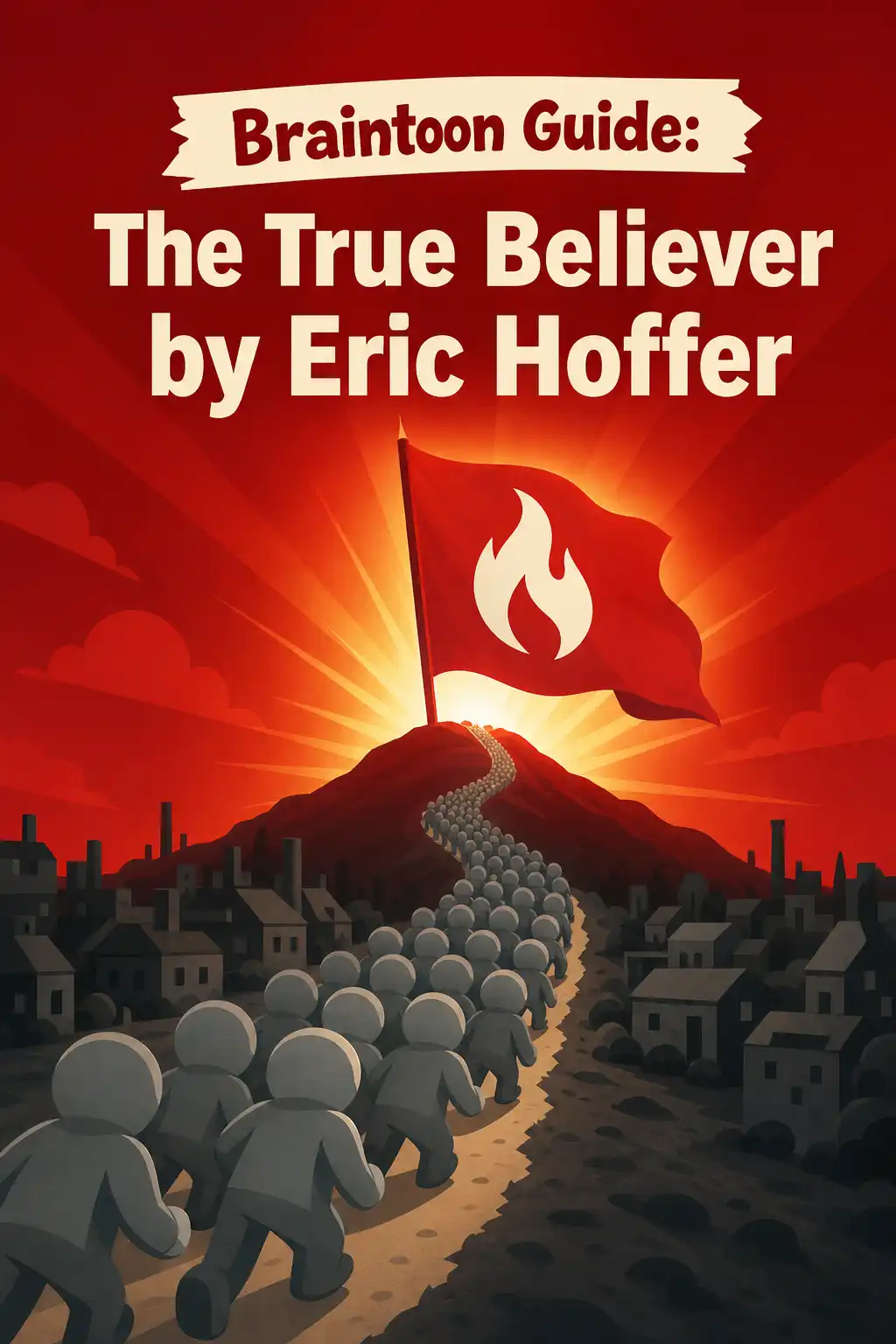
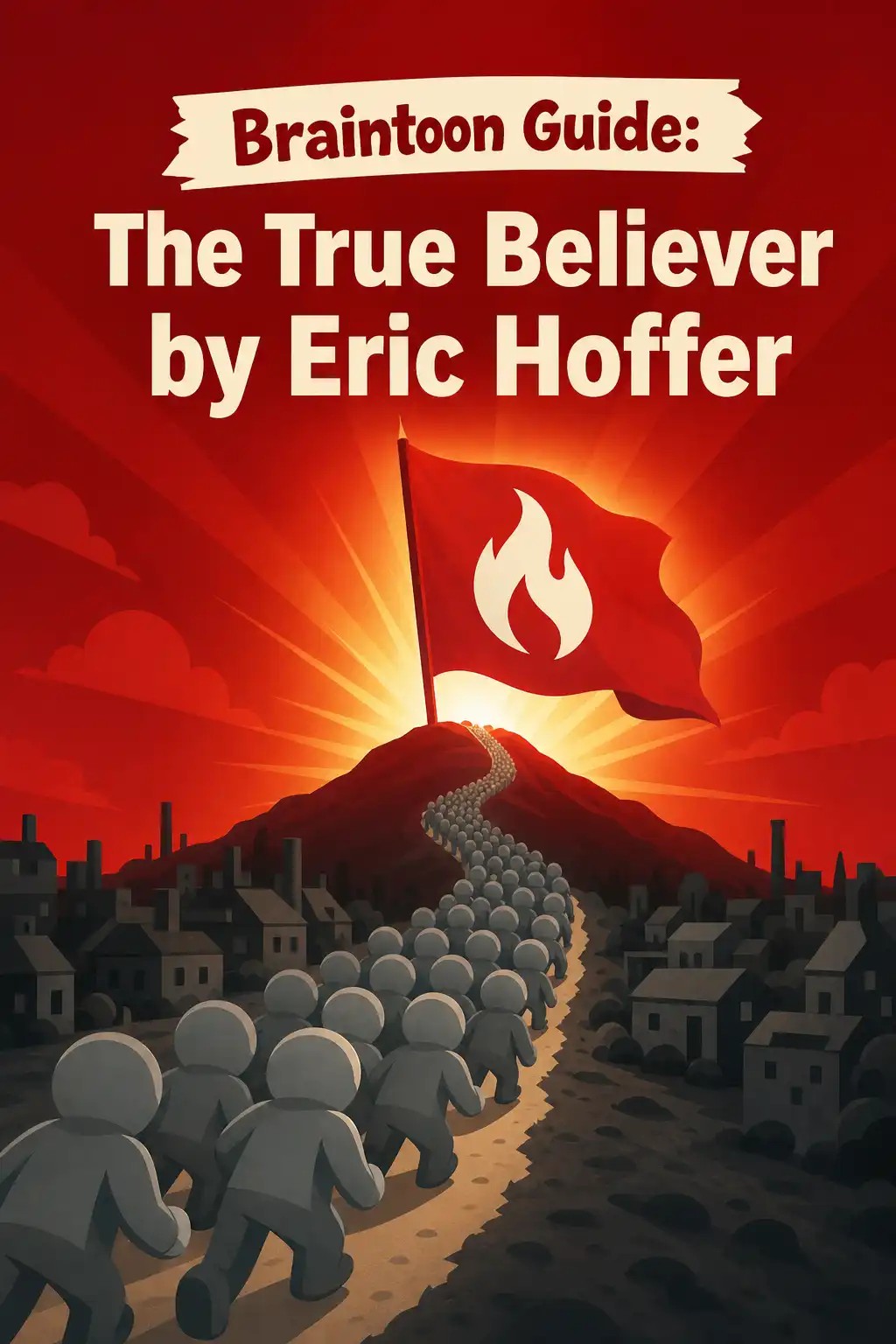
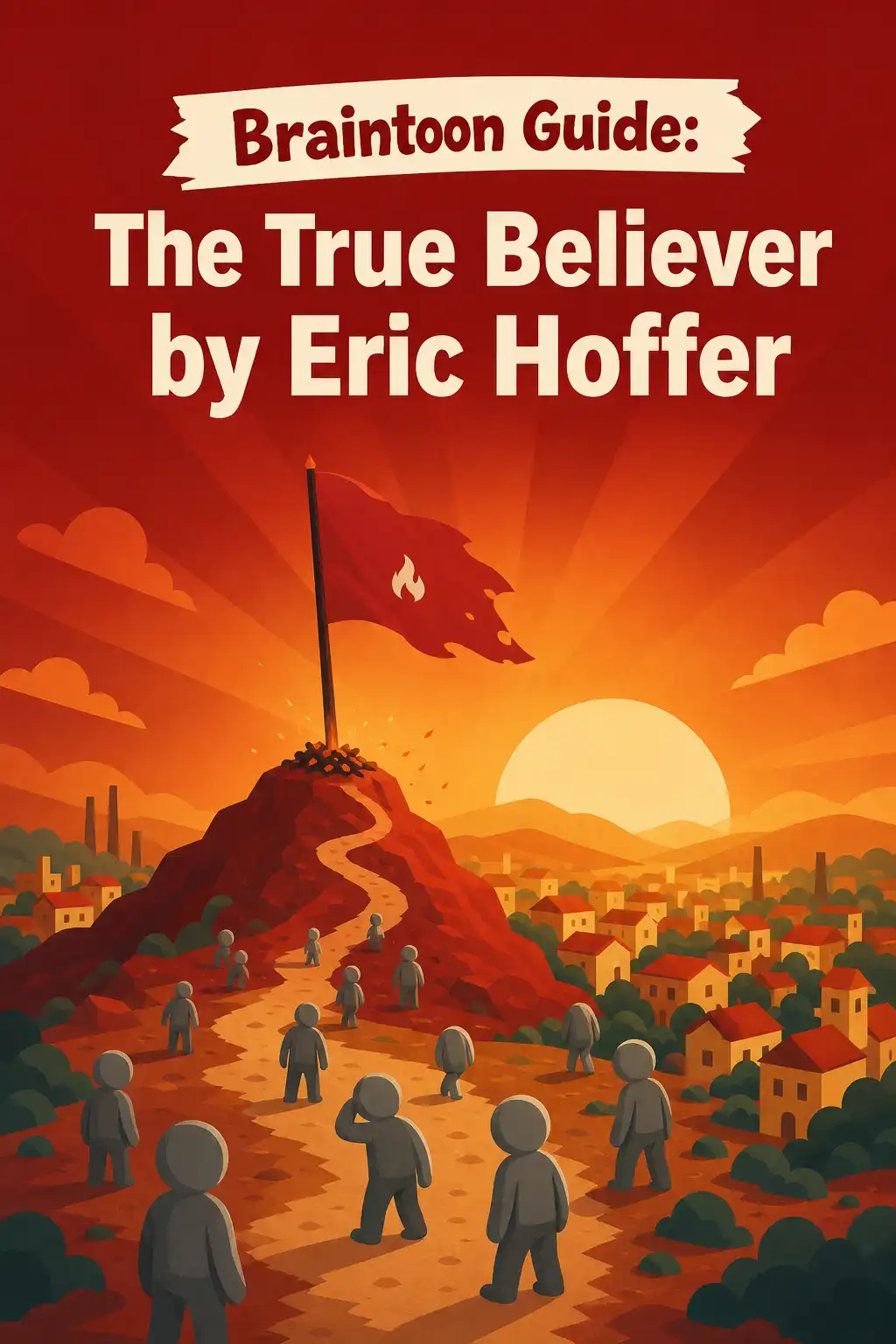
The True Believer by Eric Hoffer explains why ordinary people join mass movements, what those movements do to their minds, and how fanaticism rises, spreads, and eventually burns out.
Watch the first minute





In a packed fairground just outside Harrisburg
0:00 / 1:00
60-second animated preview
Key ideas, illustrated
The Lifecycle of a Mass Movement
Anatomy of a True Believer
The Self-Sacrifice Machine
The True Believer Summary
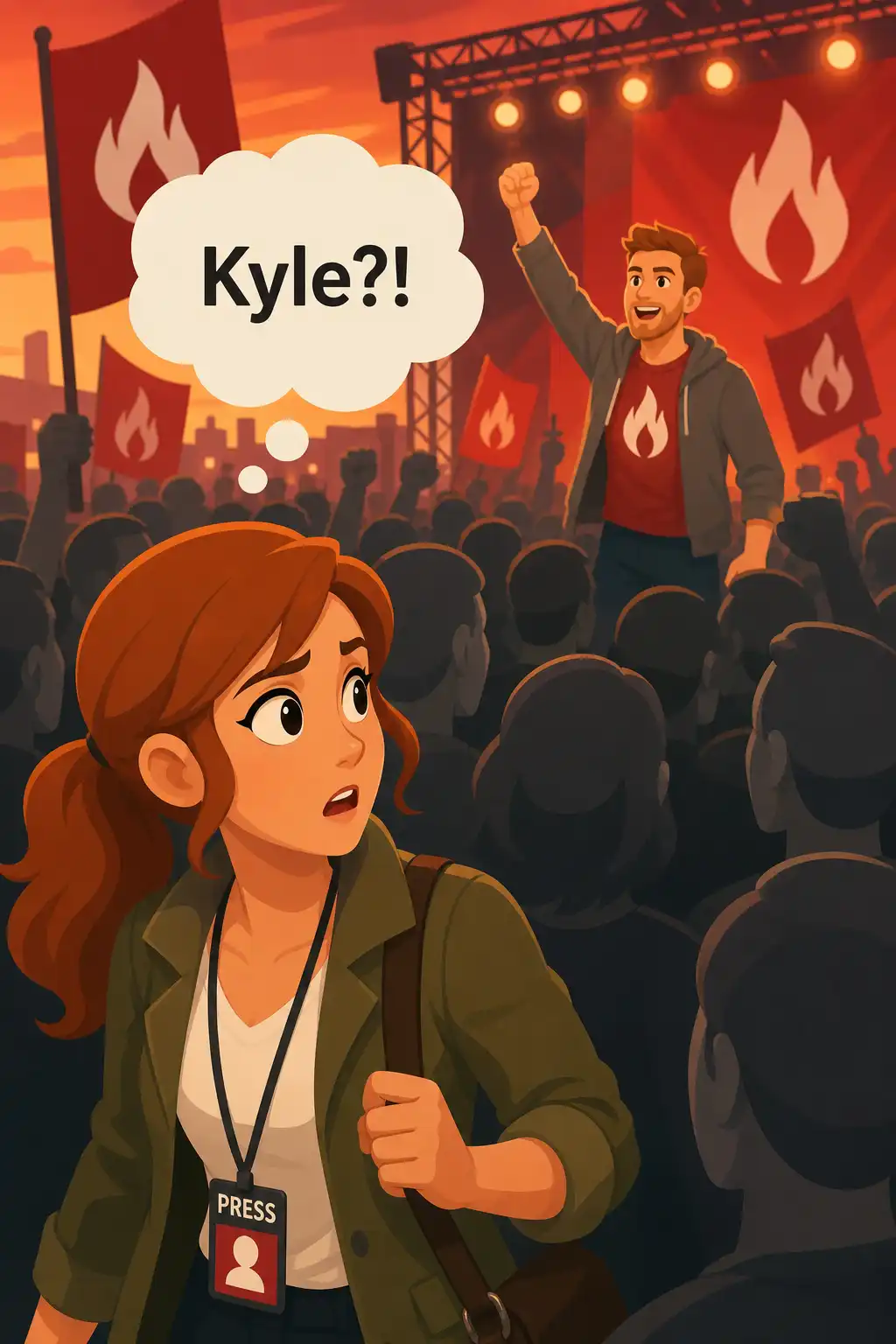
In a packed fairground just outside Harrisburg, reporter Rachel Miller pushes through a chanting crowd, searching for her younger brother Kyle. He quit his job last month to join the movement now roaring around her.
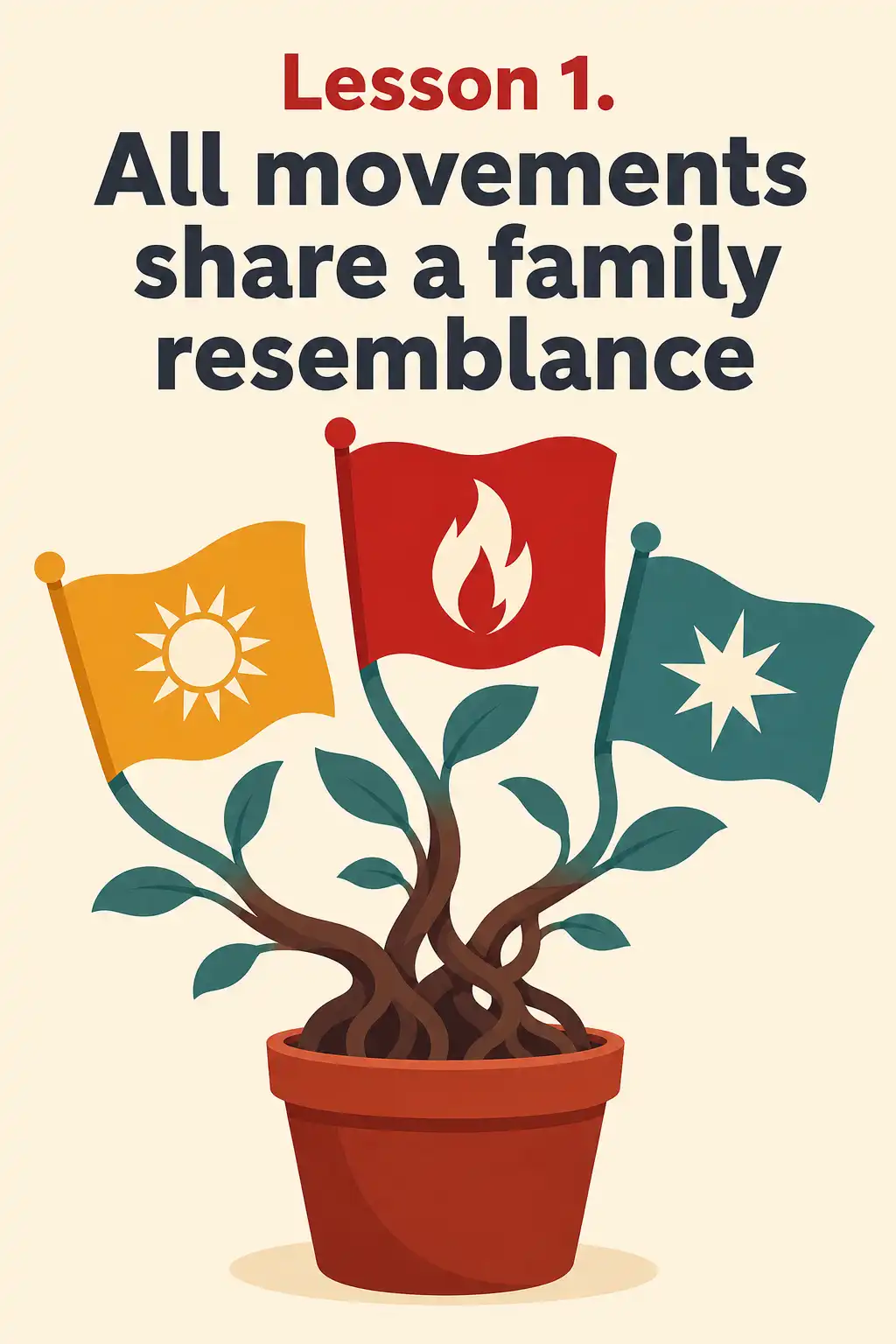
1. All movements share a family resemblance
Backstage after the rally, Rachel finally finds Kyle. He hugs her, glowing, talking in slogans she's never heard him use before. Strangest of all, he seems happier than he's been in years.
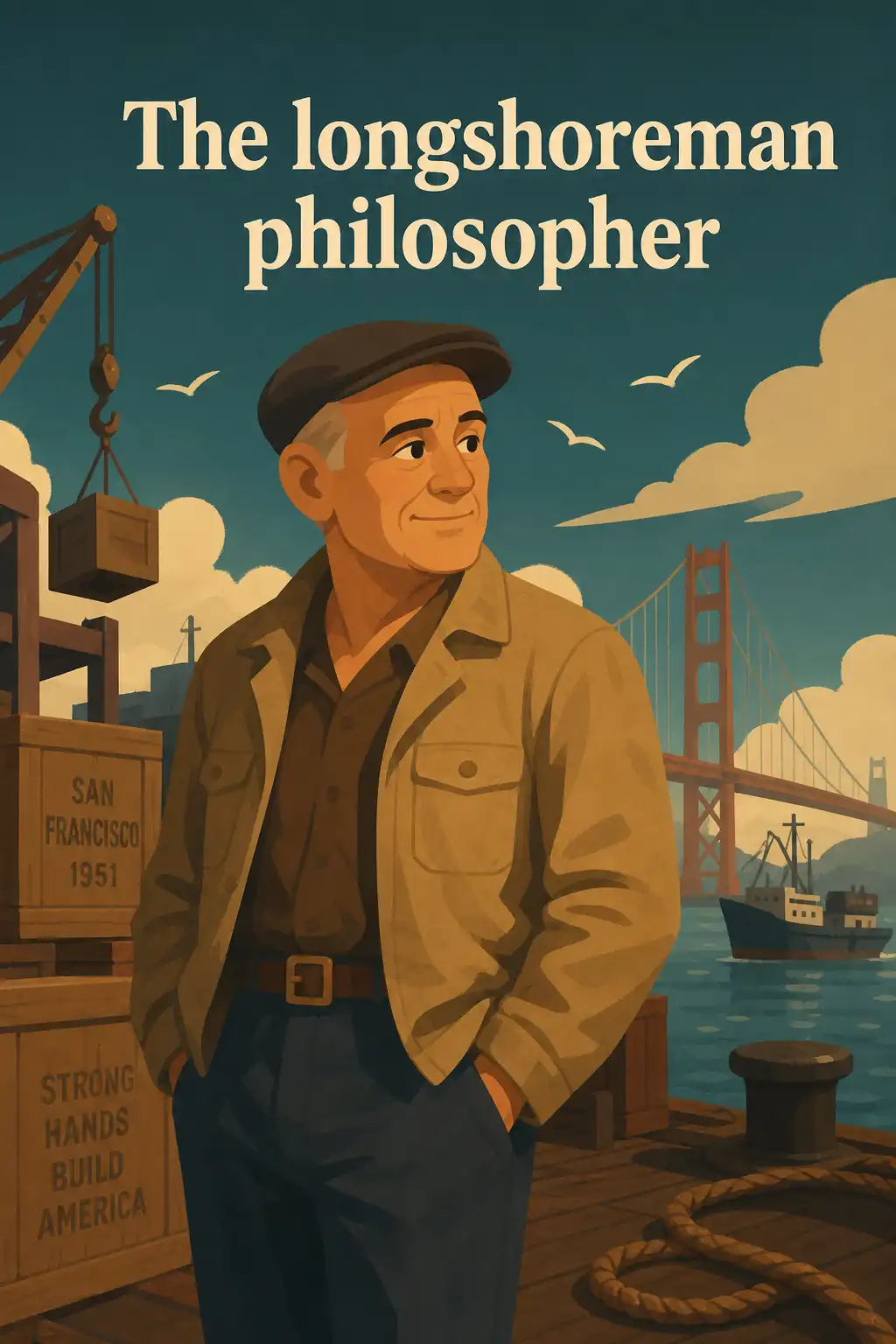
That night, researching the group online, Rachel opens a classic study. It's called The True Believer, written in 1951 by Eric Hoffer, a self-taught philosopher who worked as a longshoreman on San Francisco's docks.
Hoffer's central claim is this. Religious, revolutionary, and nationalist movements differ wildly in doctrine, yet share a deep family resemblance. Think of them as plants from the same botanical family, even if their effects on the world are very different.
All of them breed the same traits in their followers. A readiness to die for a cause. A hunger for united action. Fanatical hope, hatred, and intolerance. And every one of them demands blind faith and total loyalty.
They also draw from the same pool of people. The types attracted to early Christianity, communism, or fascism were remarkably alike in temperament, whatever their beliefs happened to say on paper.
Hoffer's working hypothesis. Frustrated people form the core of every movement's early membership, and frustration alone can produce most of the true believer's traits.
Watch it come to life
Watch The True Believer instead
Explore this summary and the Braintoon library.
2. Movements run on hope, not misery
At breakfast, Kyle tells Rachel the movement will rebuild everything the town has lost. She asks how, exactly. He waves the question away. The details don't matter. The future does.
Hoffer explains that people tend to blame outside circumstances for their personal failures. So the frustrated naturally want the whole world remade. But discontent alone never launches a movement.
The desperately poor rarely revolt. Consumed by day-to-day survival, they actually fear change. What drives radical action is extravagant hope, a reckless faith in a glorious future.
Peter the Great held enormous power, yet failed to fully modernize Russia because he never gave the masses a holy cause to rally behind. The Bolsheviks succeeded a couple of centuries later by making a practical goal feel absolutely sacred.
So here's the recipe for a convert. Discontented but not destitute. Convinced their doctrine is irresistible. Holding an inflated vision of tomorrow. And too inexperienced to grasp how hard the work will actually be.
Rachel mentally checks the boxes for Kyle. Laid off but not starving. Certain the movement can't fail. Zero experience with what actually rebuilding a town would take.
3. The wish to escape yourself
A week later, Rachel interviews members at the movement's storefront office. Different ages, different backgrounds, different stories. But they all say some version of the same sentence. I finally feel like I'm part of something bigger than myself.
Hoffer draws a sharp line here. Practical organizations, like a company or a union, appeal to self-interest, the desire to get ahead. Mass movements appeal to something stranger. The desire to escape yourself.
When people feel their lives are spoiled beyond repair, ambition is useless. What they crave is a whole new identity, and borrowed pride from something larger and holier than they are.
Faith in a cause substitutes for lost faith in yourself. The unemployed, Hoffer noticed, actually flock to whoever sells hope more eagerly than to whoever hands out relief checks.
And because the substitute has to crowd out a self someone desperately wants to forget, it has to be embraced totally. A moderate, part-time substitute simply can't do the job.
Movements are also interchangeable. In pre-Nazi Germany, a restless young man might join the Communists or the Nazis. Rival causes were literally competing for the same discontented people.
4. Who becomes a true believer
Rachel lists out the members she's met. A contractor who lost his business. A veteran home a year. A recent graduate stocking shelves. A bored retiree. A pattern starts forming.
Hoffer says the poorest of the poor rarely join. It's the newly poor, people who recently lost status, who burn hottest. Think of Germany's ruined middle class in the years before the Nazis took power.
Discontent peaks not when things are worst, but when they're improving and still fall short of expectations. French peasants owned more land than ever in the years before 1789, and they revolted anyway.
Freedom itself can be frustrating. When you're free, failure is your own fault. Many people join movements precisely to escape the unbearable weight of individual responsibility.
Strong families and communities protect people from this pull. That's why young movements often attack those bonds first, to free up recruits, then praise family values once they're safely in power.
Misfits, the bored, the guilty. Movements welcome them all. Some even cultivate guilt on purpose, so they can offer the convert redemption through total surrender and belonging.
5. How movements manufacture self-sacrifice
At the next rally, Rachel watches the matching shirts, the flags, the drums, the call-and-response chants. It looks less like politics and more like theater. She's about to learn that's exactly the point.
Hoffer argues that a movement's real engine is united action and self-sacrifice. Doctrine, leaders, even propaganda, are just tools for producing those two things in the followers.
First technique. Absorb the individual into a collective. In Nazi concentration camps, prisoners with strong group ties held on best. Isolated individuals were the most defenseless of all.
Second. Make-believe. Dying and killing feel easier as performance, so leaders wrap violence in uniforms, parades, and stirring music. Spectacle isn't decoration here. It's machinery.
Third. Deprecate the present. If today is worthless, then giving it up costs nothing. Besides, people fight hardest for what they crave, never for what they already have.
Fourth. Doctrine, which works through certainty, not truth. It has to stay vague, because anything fully understood loses its authority. The wall against reality is the feature, not a flaw.
6. Every movement needs a devil
The movement's newsletter lands on Rachel's desk. Every single issue blames the same villain. The outsiders who supposedly gutted the town. That week, Kyle repeats the phrase word for word.
Hoffer's bluntest observation. A mass movement can get by without belief in a God, but never without belief in a devil. The more vivid the enemy, the stronger the movement.
Hitler grasped this fully. He built his entire political rise on scapegoating the Jewish people, and choosing the right enemy proved as strategic to him as choosing the right doctrine.
The fiercest hatreds grow from self-contempt, not from real grievance. People project their feelings of worthlessness outward, and they need allies to validate a hatred they can't rationally justify.
Propaganda, meanwhile, can't pry open a closed mind or create belief out of nothing. It only amplifies what people already feel. That's why fact-checking Kyle keeps failing.
Strangest of all, people imitate what they hate. Oppressed groups start copying their oppressors, and movements often come to mirror the very evils they rose against.
7. Men of words, fanatics, men of action
Six months in, Rachel notices the movement changing. The fiery street preachers are being quietly sidelined. People with clipboards, titles, and budgets run the meetings now.
Hoffer mapped a lifecycle. It starts with men of words, the writers and intellectuals who discredit the old order, often driven by a personal craving for recognition they never got.
Their criticism leaves people hungry for something new to believe in. Then fanatics seize the moment, often failed creatives who thrive in chaos. Jesus wasn't a Christian. Marx wasn't a Marxist.
But fanatics can't stop. Once the old enemy falls, their hatred turns inward, toward purges and factions, unless a practical man of action takes the wheel.
The man of action builds institutions. Hierarchies, offices, rules. He keeps the sacred slogans as a façade while the movement quietly becomes a ladder for the ambitious.
Rachel watches it happen in real time. The movement now sells merchandise, endorses candidates, and collects dues. Careerists are joining, which Hoffer says means the fever has already peaked.
8. How movements end, and what protects us
One rainy night, Kyle shows up at Rachel's door, deflated. It's all committees and fundraising now, he says. She doesn't gloat. She just makes coffee and listens.
Hoffer admitted the active phase of any movement is ugly, however noble its goals may be. Movements with concrete aims burn out. The ones chasing vague utopias have no natural stopping point.
Leadership matters enormously. Gandhi knew when to wind his movement down once its goals were essentially met. Stalin deliberately prolonged his for decades, and terror followed.
Yet Hoffer saw a strange upside too. Mass movements have repeatedly shaken stagnant societies back to life. The same fever that destroys can, sometimes, genuinely renew.
Rachel focuses on what Hoffer said actually protects people. Real ties and real purpose. She helps Kyle reconnect with old friends, find steady work, and start coaching youth baseball again.
By spring, Kyle is building a life he doesn't need to escape. Rachel publishes her series, not mocking the believers, but explaining the frustration that made them ready to believe.
Watch it come to life
Watch the animated summary
Explore this summary and the Braintoon library.