BrainToon
Leadership books usually fall into two camps. Some are about who you need to be. Others are about what you actually do with your team on Monday morning. A good shelf has both.
If you already manage people, our pick is High Output Management, Andrew Grove's practical guide to running a team. If you're not a manager yet, or want the big picture first, start with John C. Maxwell's The 21 Irrefutable Laws of Leadership.
From there, choose by the problem in front of you: feedback, team trust, culture, purpose or decisions.

1. High Output Management by Andrew S. Grove
Best for:
Intel's former CEO on the everyday work of managing, from meetings and reviews to coaching and training.
15 min animated summary
Inside our summary
- Your output is your team's output
- Meetings are where management happens
- Match your style to task-relevant maturity
This is our pick for anyone who manages people, especially if you're new to it and still working out what the job involves day to day.
Andrew Grove, Intel's former CEO and chairman, starts from one idea that reframes everything: a manager's output is the output of their team. Your own work counts mostly through how much it lifts what others produce.
From there, the book gets concrete. Grove treats meetings as the place where management really happens. He argues that performance reviews exist to improve future performance, not just to grade the past. He also insists that training is the manager's job, not something to hand off.
One especially useful idea is matching your style to what Grove calls task-relevant maturity. How much direction someone needs depends on their experience with that specific task, not on how senior they are overall.
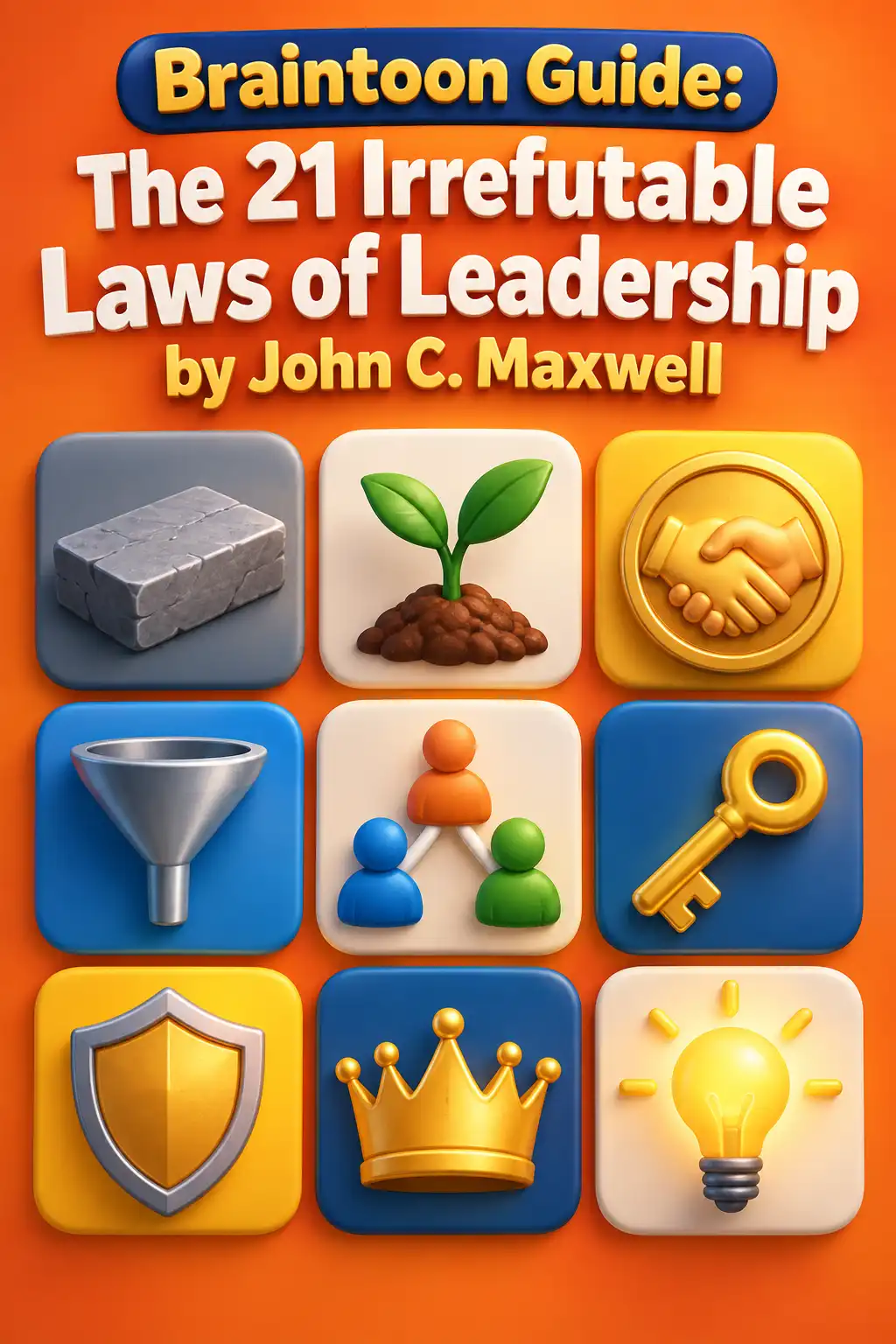
2. The 21 Irrefutable Laws of Leadership by John C. Maxwell
Best for:
A friendly, big-picture introduction to leadership as influence, trust and growing other leaders.
11 min animated summary
Inside our summary
- Lead through influence, not your title
- Build trust by serving people first
- People buy into you before your vision
If you aren't a manager yet, or you lead informally on a project or in a volunteer group, this is where we recommend starting.
John C. Maxwell's core claim is that leadership is influence, not a title. That makes the book useful long before anyone gives you direct reports. He also argues that your leadership ability caps how far everything else can go, which is a motivating reason to keep developing it.
The ideas are easy to grasp. Build trust by serving people first. Model the behavior you want, and connect with people before you ask anything of them. Maxwell also argues that people buy into you before they buy into your vision. Later lessons turn to growing yourself, giving power away and multiplying leaders.
It gives you the big picture rather than hands-on management tools. Once you have a team to run, High Output Management covers the mechanics.

3. Radical Candor by Kim Scott
Best for:
Kim Scott's guide to caring about people while challenging them honestly enough to help them grow.
10 min animated summary
Inside our summary
- Care personally, challenge directly
- The four quadrants
- Career conversations
Choose this one if, for you, the hardest part of leading is the conversations. That might mean telling someone their work isn't there yet or asking what your team really thinks of you.
Kim Scott's framework is easy to remember: care personally and challenge directly. She warns against what she calls the kindness trap, where avoiding hard truths feels nice but holds people back. Her four-quadrant map helps you see where your own feedback tends to go wrong.
It's especially handy for first-time managers because of its range. Beyond feedback, it covers asking for feedback before giving it and telling the difference between rock stars and superstars on your team. It also covers career conversations and better meetings.
Grove focuses on systems and leverage, while Scott focuses on the relationship underneath. If conversations worry you more than processes, this may be the better first read.
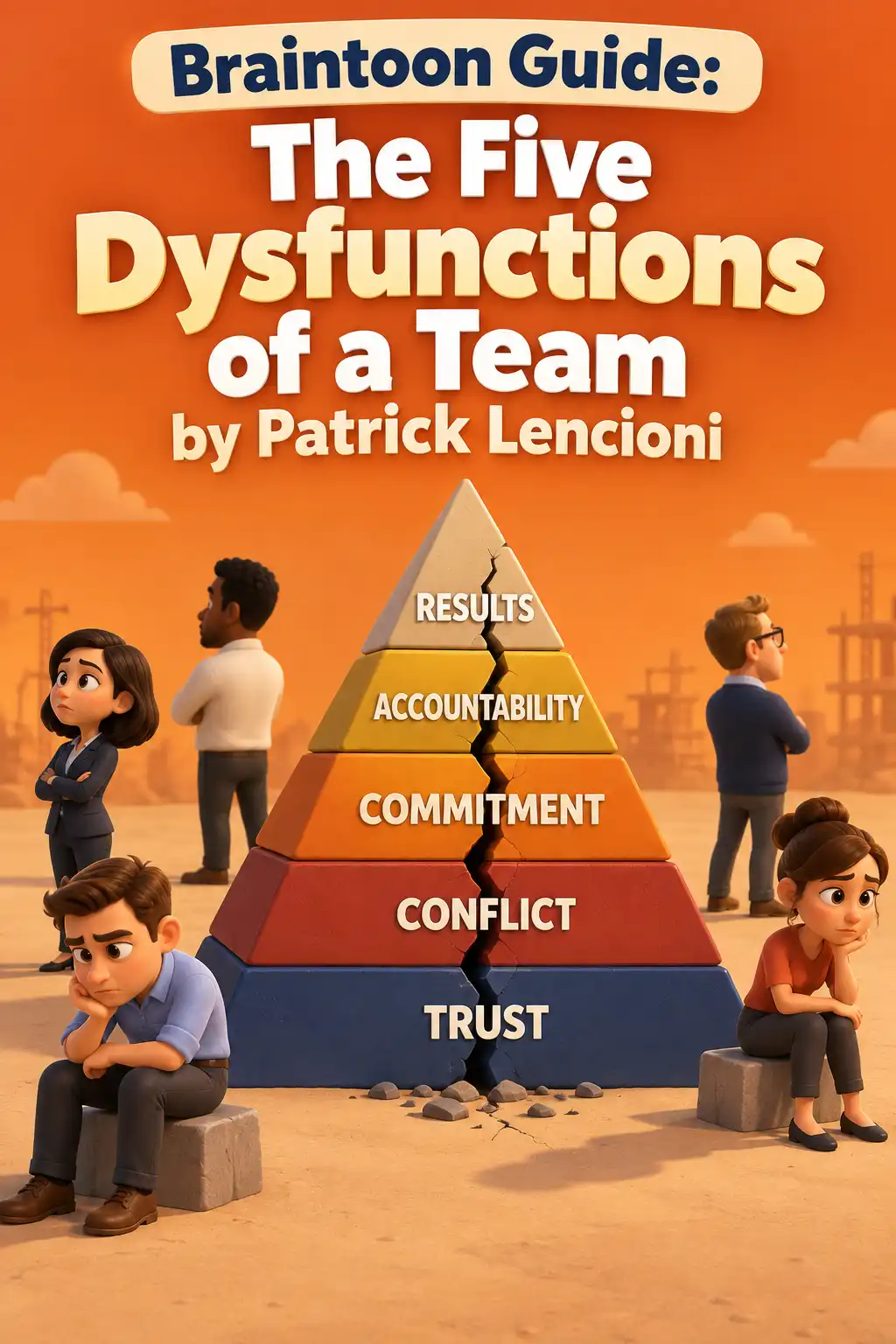
4. The Five Dysfunctions of a Team by Patrick Lencioni
Best for:
Patrick Lencioni on why teams fall apart, from missing trust to dodged accountability.
12 min animated summary
Inside our summary
- Trust means daring to look weak
- A team that never argues is broken
- Let peers hold each other accountable
This is the book for a frustrating situation: a team full of capable people that still doesn't get anywhere together.
Patrick Lencioni names five hidden reasons teams fall apart and treats them as a chain. It starts with trust, which he frames as daring to look weak in front of colleagues. From there come some of his sharpest points. In Lencioni's view, a team that never argues is broken, and people should disagree and then commit anyway.
He also argues that accountability works best between peers, not only from the boss. A team, he says, needs one scoreboard that everyone owns, and you shouldn't tolerate a talented person who damages the team.
It's especially useful for leadership teams, where politeness can hide real disagreement. The final lesson is about working the whole chain continuously, so expect an ongoing practice rather than a one-time fix.
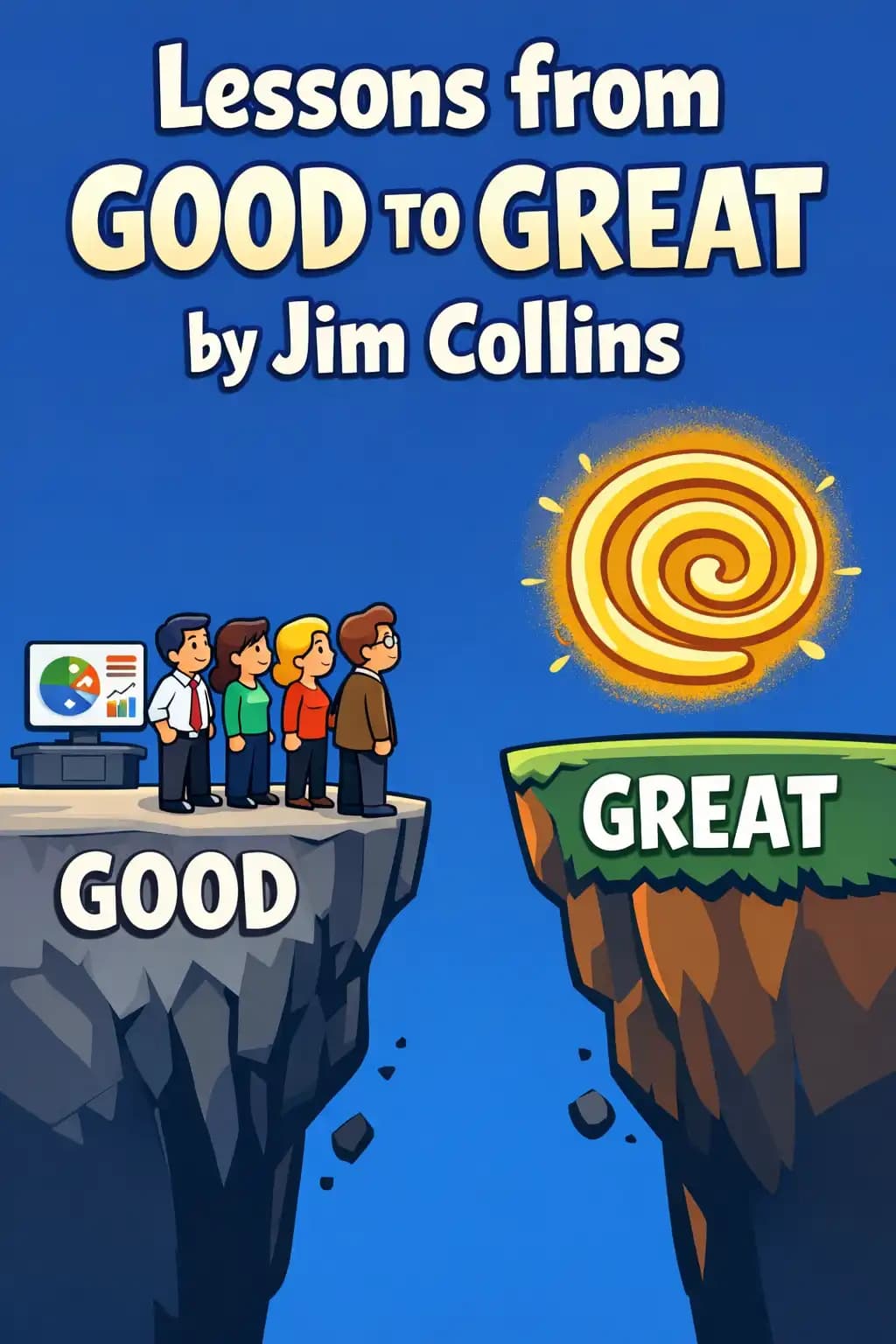
5. Good to Great by Jim Collins
Best for:
Jim Collins's study of how ordinary organizations make the leap to lasting excellence.
10 min animated summary
Inside our summary
- Level 5 leadership — humble and relentless
- First who, then what — build the team before the plan
- Push the flywheel — small wins compound into momentum
Good to Great is less about running a team this week and more about leading an organization over years.
Jim Collins set out to test whether greatness can be built rather than left to luck, and his leadership lessons come from that research. The best known is Level 5 leadership: leaders who are humble and relentless at the same time.
Several other ideas matter for senior leaders. Collins argues for getting the right people in place before settling the plan and for facing the brutal facts before choosing a strategy. He also recommends simplifying around what he calls a Hedgehog Concept. He describes a culture of discipline as freedom within a framework and compares progress to a flywheel, where small wins compound into momentum.
If you're shaping where a company goes over the long run, this has more to offer than the day-to-day management books on this list.

6. No Rules Rules (by Netflix co-founder) by Reed Hastings and Erin Meyer
Best for:
How Netflix swapped most of its policies for judgment, candor and context.
13 min animated summary
Inside our summary
- Build the team before removing rules
- Replace policies with judgment
- Lead with context, not control
This is our pick for leaders asking a culture question: how much freedom can you safely give people?
Reed Hastings, Netflix's co-founder, and Erin Meyer describe how the company ran with almost no formal policies. The key detail is the order. They built a team of exceptional people first, then steadily removed controls. In place of policies, they relied on judgment and led with context rather than control.
Candor runs through the book too. One lesson sums up the feedback standard: say only what you'd say to someone's face. Another describes seeking out dissent widely before one person makes the final call.
Some practices, such as paying top of market and skipping bonuses, are specific choices that won't fit every workplace. Read it as one company's approach, especially useful if your company is growing fast and the rules keep piling up.

7. Start With Why by Simon Sinek
Best for:
Simon Sinek on leading with the belief behind your work before explaining what you do.
13 min animated summary
Inside our summary
- The Golden Circle works inside out
- Hire believers and let them spread it
- Growth quietly erodes the why
Reach for Start With Why when your team knows what it's doing but not why it matters.
Simon Sinek argues that leaders and organizations earn lasting loyalty by communicating the belief behind their work before explaining what they do. His Golden Circle turns this into a simple model that works from the inside out. He contrasts it with manipulation, which he says can buy a sale but not loyalty.
For leaders, the most useful parts are about keeping that purpose alive. Sinek stresses clarity, discipline and consistency. He recommends hiring people who share the belief and letting them spread it. He also warns that growth can quietly erode the why.
The book is built around one big idea, so it's narrower than the broader picks here. That focus is also its strength if your main job right now is giving people something to rally around.

8. How To Win Friends and Influence People by Dale Carnegie
Best for:
Dale Carnegie's classic on handling people, building real connections and gently changing minds.
12 min animated summary
Inside our summary
- Don't criticize, condemn, or complain
- Become genuinely interested in others
- Lead with praise and encouragement
This isn't a management manual, but almost every leadership task depends on the people skills it teaches.
Dale Carnegie's advice is plain and still easy to use. Don't criticize, condemn or complain. Give honest, sincere appreciation, and become genuinely interested in others. He also argues that you can't win an argument. Instead, he suggests admitting mistakes, starting friendly, letting the other person talk and seeing things from their side.
The final lesson brings it back to leadership directly, with leading through praise and encouragement.
We recommend it for anyone who has to win people over without much authority to lean on, whether you're a new team lead earning trust or someone bringing a skeptical group along. If you already get on well with people but struggle to deliver tough feedback, Radical Candor is the better choice.

9. The 7 Habits of Highly Effective People by Stephen Covey
Best for:
Stephen Covey on the character and habits that make someone worth following.
12 min animated summary
Inside our summary
- Effectiveness starts from the inside out
- Be proactive
- The emotional bank account
The 7 Habits is broader than leadership, which is exactly why it earns a place here. Stephen Covey argues that real effectiveness grows from the inside out, through character, principles and habits.
The early habits are about leading yourself: being proactive, beginning with the end in mind and putting first things first. Later habits turn toward other people. Covey's emotional bank account offers a memorable way to think about trust in relationships. He also recommends thinking win/win, seeking first to understand and finding synergy with others.
It suits people who suspect their leadership challenges start with their own priorities, reactions or follow-through. If you want management techniques, other books on this list will serve you better. If you want a steadier foundation to lead from, this is a strong choice.

10. Principles by Ray Dalio
Best for:
Ray Dalio's system for making decisions, learning from mistakes and building an idea meritocracy.
11 min animated summary
Inside our summary
- Use the five-step process to get what you want
- Make decisions like a bettor, not a debater
- Build an idea meritocracy, then struggle well
Principles is for leaders who like systems and don't flinch at blunt honesty. Ray Dalio distills the life and work rules he used to build Bridgewater into the world's largest hedge fund. He also encourages readers to write down principles of their own.
The decision-making ideas are the main draw. Dalio urges you to be a hyperrealist about how things are and to treat pain plus reflection as the route to progress. His most memorable instruction is to make decisions like a bettor, not a debater. He lays out a five-step process for getting what you want and calls for radical open-mindedness about being wrong.
For founders and executives, the organizational ideas matter too. Dalio says you should build around the fact that people are wired differently and create an idea meritocracy.
It's closely tied to Dalio's own experience, so it rewards readers who already have the basics and want a more demanding framework.
A suggested reading order
You don't need to read these in order. Start with High Output Management if you already lead a team, or The 21 Irrefutable Laws of Leadership if you don't yet. After that, pick whichever book matches the challenge you're facing: Radical Candor for hard conversations, The Five Dysfunctions of a Team for a stuck team, No Rules Rules for culture, Start With Why for purpose and Principles for decision-making.
How we chose these books
We chose these ten from the summaries currently available on BrainToon, focusing on books that help people lead others well, with or without a title. Several summaries in our library touch on leadership but are mainly business history, company strategy or general success advice, so we left them out in favor of books centered on leading people. A few popular leadership titles aren't in our summary library yet, so they don't appear here. The ranking reflects how widely useful we think each book is for this topic, not a required reading path.