BrainToon
Entrepreneurship books pull in different directions. Some teach you how to test an idea. Others help you fix a business that's already running your life. Others simply show what the early years feel like.
If you're starting something new, we recommend beginning with The Lean Startup. Eric Ries offers a clear way to find out whether people want what you're building before your time and money run out.
Already running a business? Look at the picks on systems and cash. If you need encouragement more than method, the founder stories are here too.
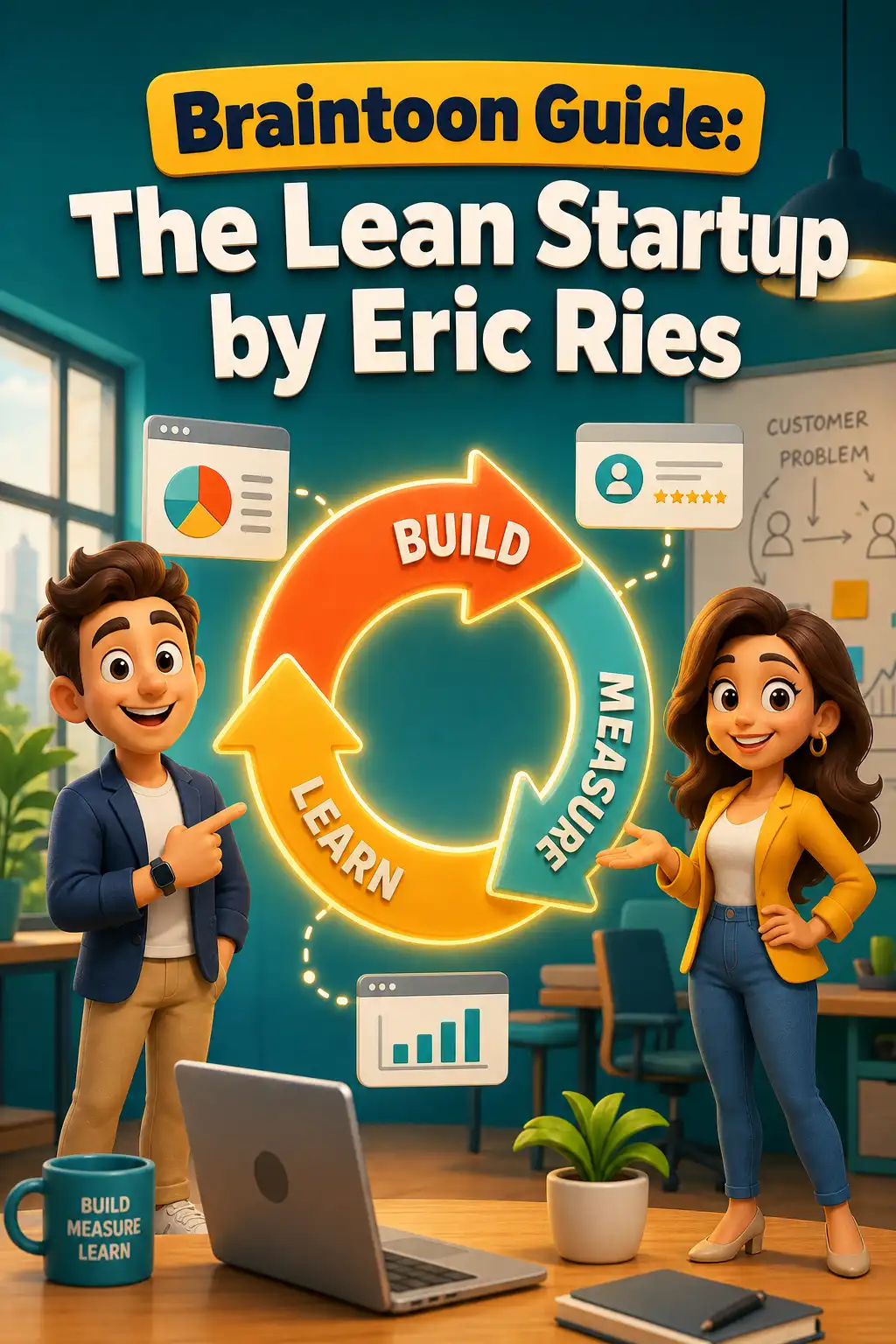
1. The Lean Startup by Eric Ries
Best for:
How to test a business idea with real customers before your time and money run out.
12 min animated summary
Inside our summary
- Test your leaps of faith
- The minimum viable product
- Pivot or persevere
If you have an idea and aren't sure it will work, this is our pick to start with. Eric Ries argues that most startups fail by building something nobody wants, not from lack of effort.
His answer is to treat your plan as a set of guesses and test the riskiest ones early. The summary covers his minimum viable product, the simplest version that lets you learn from real customers. It also covers how to measure real progress instead of just staying busy.
For many readers, the most useful part is the pivot-or-persevere decision. This is Ries's way of judging when to change course and when to keep going.
Ries treats entrepreneurship as a kind of management, something you can do deliberately rather than by instinct. The book is clear and practical, which is why it's both our best overall pick and our suggested first read.
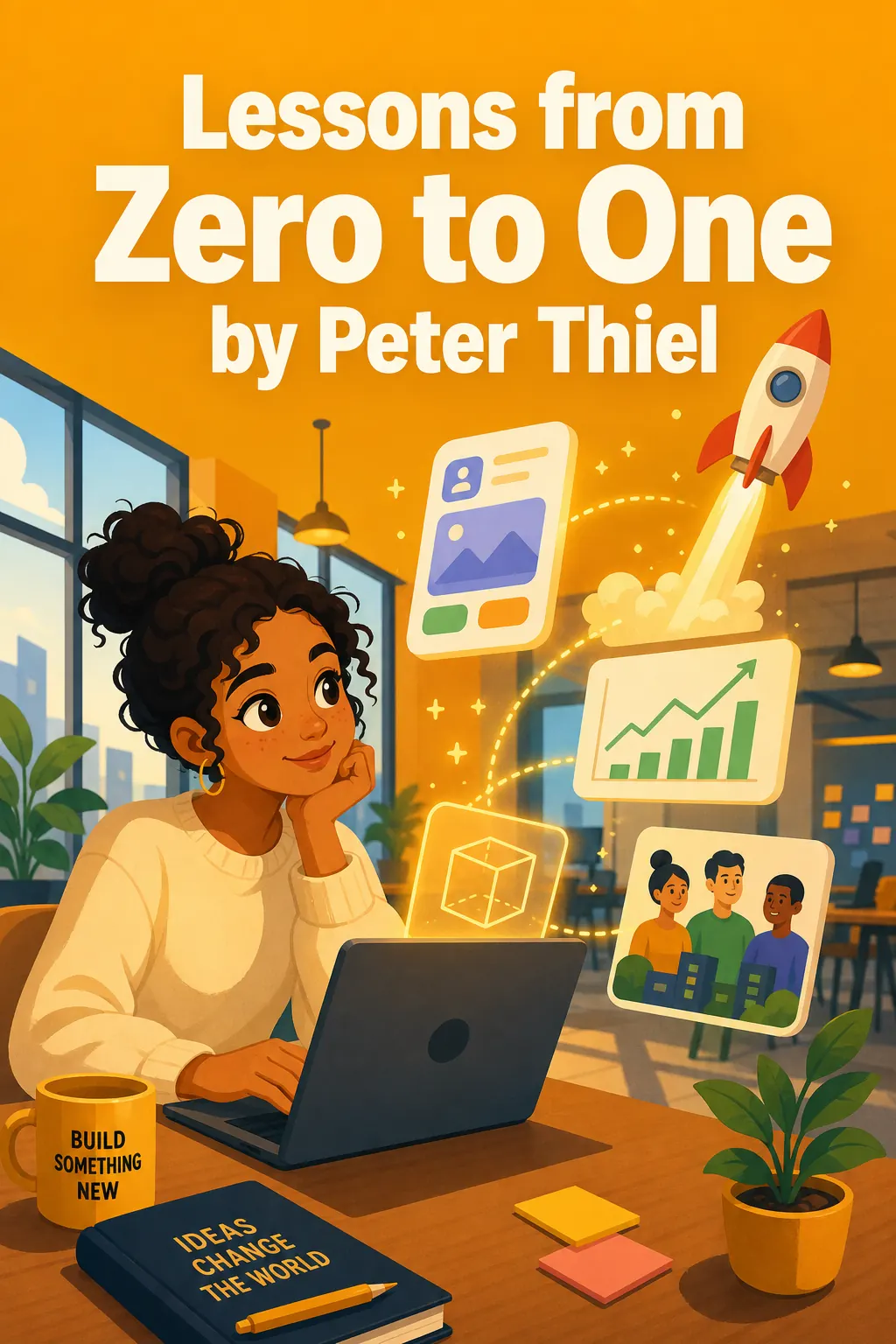
2. Zero to One by Peter Thiel
Best for:
Peter Thiel's case for building something genuinely new instead of copying what already exists.
13 min animated summary
Inside our summary
- Competition is for losers
- The power law matters
- Look for hidden secrets
Where The Lean Startup is about testing, Zero to One is about ambition. Peter Thiel wants founders to build something truly new rather than another version of what's already out there.
He's deliberately provocative. One lesson is titled 'Competition is for losers.' In it, Thiel argues that lasting businesses escape competition rather than win it, ideally owning their niche outright. He also urges readers to question what everyone believes and to look for hidden 'secrets' that others have missed.
Other lessons cover the power law, the idea that a few big wins matter far more than many small ones. Another looks at how early choices about founders and culture shape a company.
It's our pick for tech founders and big-picture thinkers. If you're opening a bakery or a consultancy, parts of it will feel distant. Still, its central question is worth anyone's time: what would make your business hard to copy?
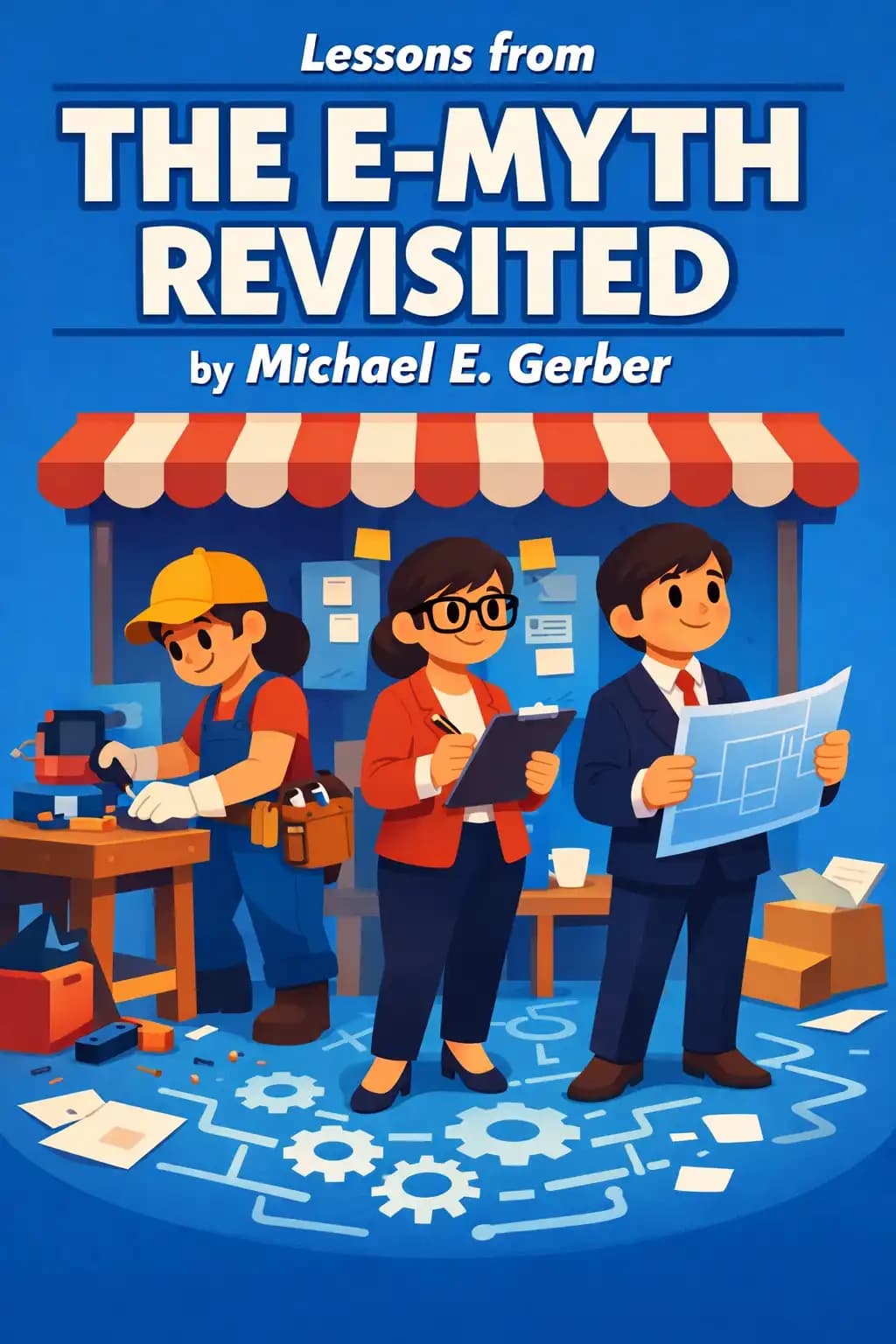
3. The E-Myth Revisited by Michael E. Gerber
Best for:
Why so many small businesses stall, and how building systems lets yours run without you.
12 min animated summary
Inside our summary
- Three people inside you
- Build your franchise prototype
- Organize around roles, not people
If you already run a business and it's running you, this is the one to read. Michael Gerber argues that many small businesses struggle because people who are good at the work start them, then get buried in doing everything themselves.
Gerber calls the moment someone decides to go it alone an 'entrepreneurial seizure.' He describes three competing roles inside every owner, and he shows what goes wrong when the day-to-day doer crowds out the other two.
His fix is to build your business as if you'll franchise it, even if you never will. That means repeatable processes and an organization built around roles rather than particular people. Then the business doesn't depend on you filling every seat.
It's our pick for owners stuck doing everything, especially those running a shop or service business who feel trapped in it.

4. Shoe Dog by Phil Knight
Best for:
Phil Knight's candid story of how a cash-strapped side venture survived long enough to become Nike.
13 min animated summary
Inside our summary
- Selling shoes with no cash in the bank
- Winning in court, nearly dying at the bank
- What Knight makes of it decades later
Shoe Dog isn't a how-to. It's Phil Knight telling the story of Nike from the inside. It's the book we'd hand someone who needs reassurance that the early years are hard for almost everyone.
Knight starts as a shy Oregon runner with a side venture importing Japanese shoes. Then come years of selling with almost no cash in the bank and a painful break with his supplier. After that he faces a court fight, a crisis with his bank and a huge customs bill before the company finally goes public.
The honesty is what makes it worth a founder's time. Many success stories rush past the stretch where everything nearly falls apart, but Knight stays there. The final part steps back as he reflects decades later.
Read it for motivation and perspective, not a checklist. It's good company when you're in a rough patch.
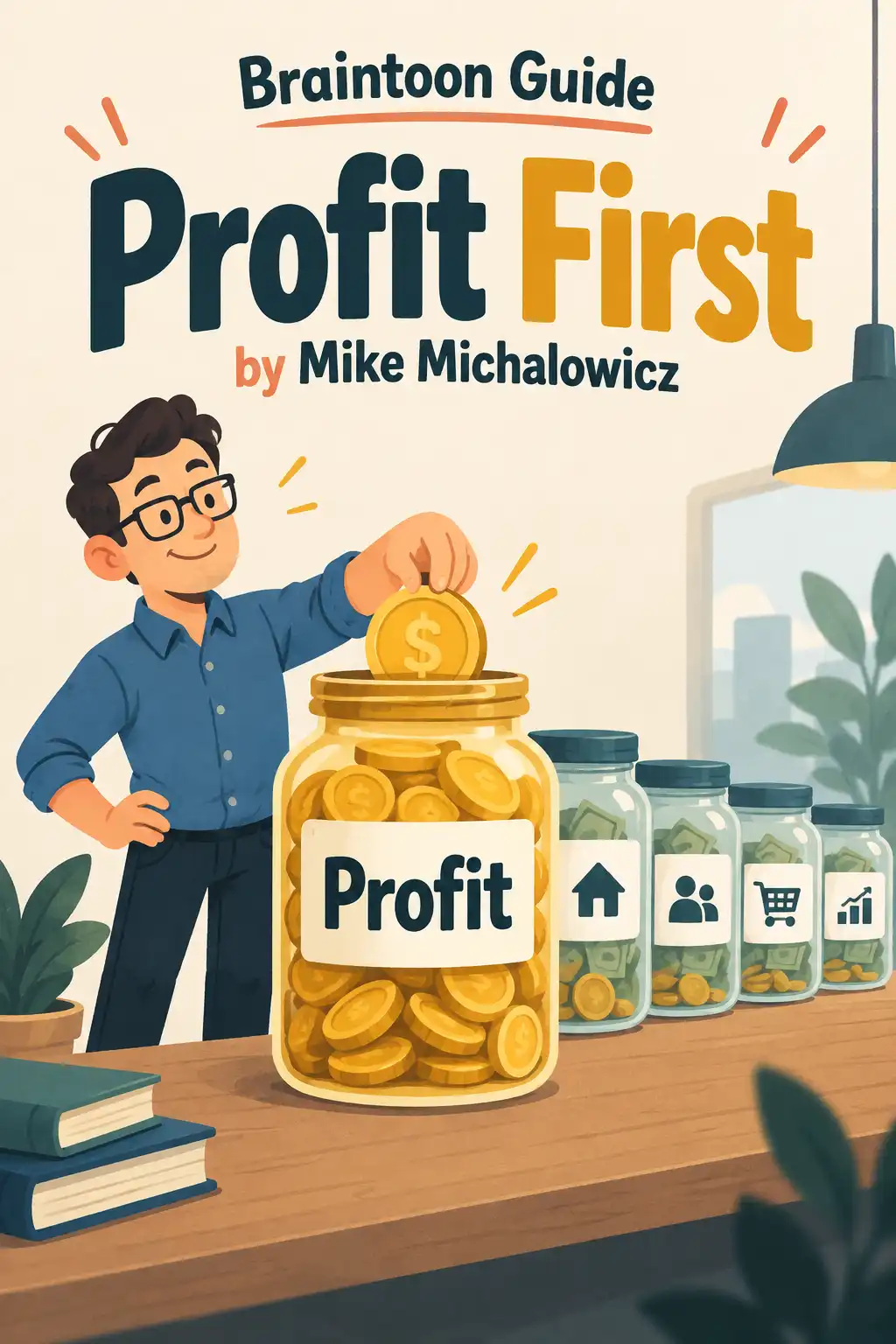
5. Profit First by Mike Michalowicz
Best for:
A simple cash system that makes sure your business actually pays you.
14 min animated summary
Inside our summary
- Why the standard formula fails
- Five accounts instead of one
- How owners break the system
Plenty of businesses look busy and still never seem to have money. Mike Michalowicz's diagnosis is simple. Owners treat profit as whatever is left over, and often nothing is.
His fix flips the usual formula. You take profit off the top first and run the business on what remains. To make it stick, he suggests using five bank accounts instead of one. That way you don't accidentally spend money you meant to keep.
We like that his system changes your setup instead of relying on willpower. The summary also covers facing your real numbers, keeping a regular rhythm for moving money, and the common ways owners break the system.
It's our pick for cash-strapped owners who need a practical money habit more than another strategy book. It pairs naturally with The E-Myth if you're fixing a business you already run.
6. Sam Walton: Made in America by Sam Walton
Best for:
Sam Walton's own account of building Walmart on low prices, frugality and treating staff as partners.
13 min animated summary
Inside our summary
- Low prices can make more money
- Sharing profits pays for itself
- Competitors are a free classroom
Sam Walton's memoir has practical lessons running all the way through it. It suits retail and local business owners, and anyone competing on price.
Walton's central bet was that low prices could make more money, not less. He opened in small towns other chains ignored and shared profits with employees. He also treated competitors as a free classroom.
Frugality ties it all together. Walton argues that keeping costs low keeps you close to customers, and that you can keep thinking small even as you grow.
If Shoe Dog is about surviving early chaos, Made in America is about growing steadily on thin margins. It's down-to-earth, and its ideas translate easily to any customer-facing business, from a shop to a restaurant.
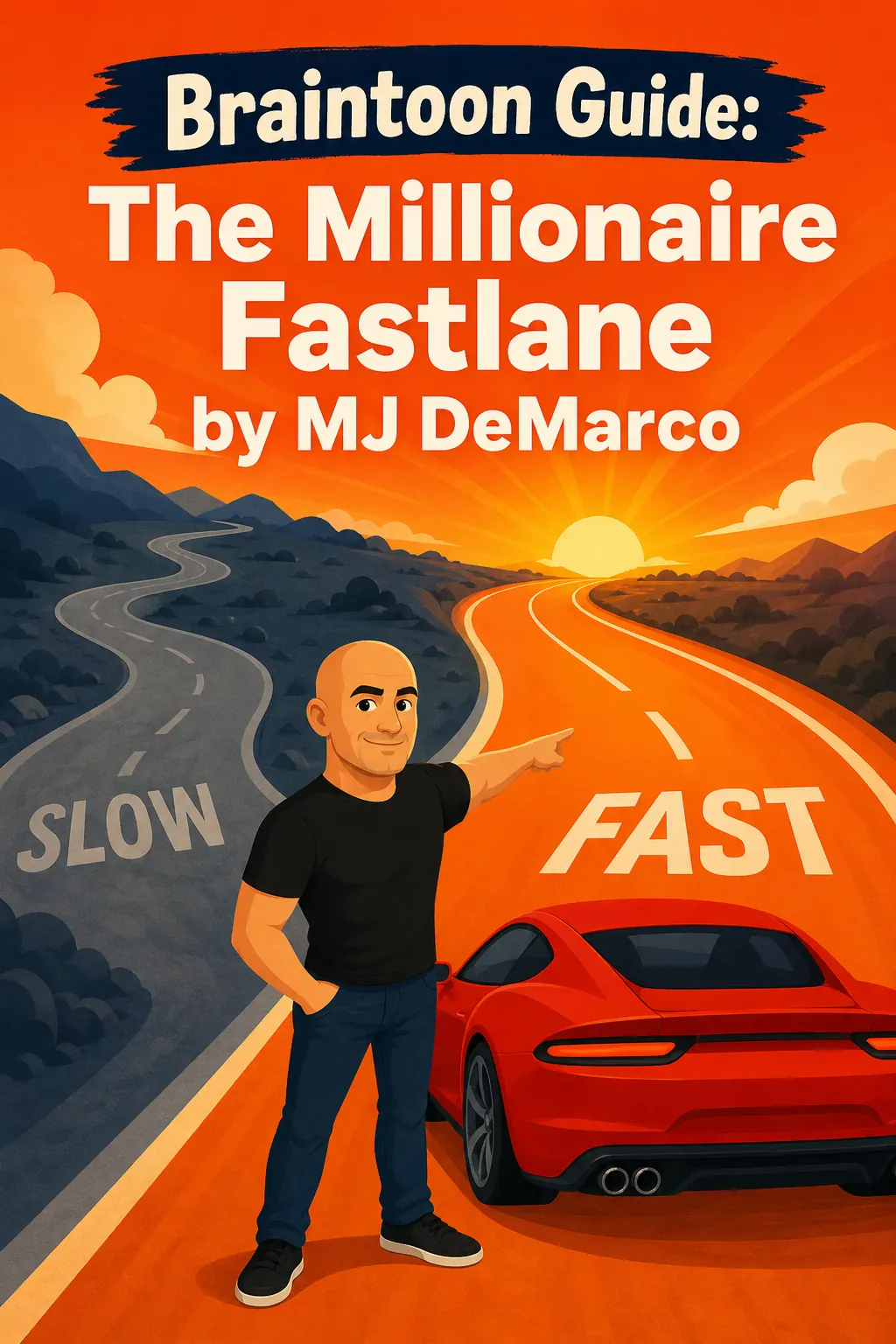
7. The Millionaire Fastlane by MJ DeMarco
Best for:
A blunt argument for building a business instead of slowly saving for retirement, plus a test for judging ideas.
13 min animated summary
Inside our summary
- Three roadmaps, three destinations
- Build the machine, don't lift the stones
- Test your road with CENTS
MJ DeMarco wrote this for people who doubt the standard plan of working, saving and retiring late. He calls that path the Slowlane. He argues that building a business is the faster road to wealth.
The most practical part is his CENTS test, a checklist for judging whether a business idea can really grow. He also separates trading your own hours for money from building a 'machine' that earns without you doing all the lifting.
DeMarco stresses that execution beats a brilliant idea, and he's upfront that this route takes time and commitment.
It's our pick for choosing a business model, especially if you're weighing whether to leave a day job. The tone is pushy and openly wealth-focused. If that energizes you, great. If it puts you off, The Lean Startup covers idea testing in a calmer voice.
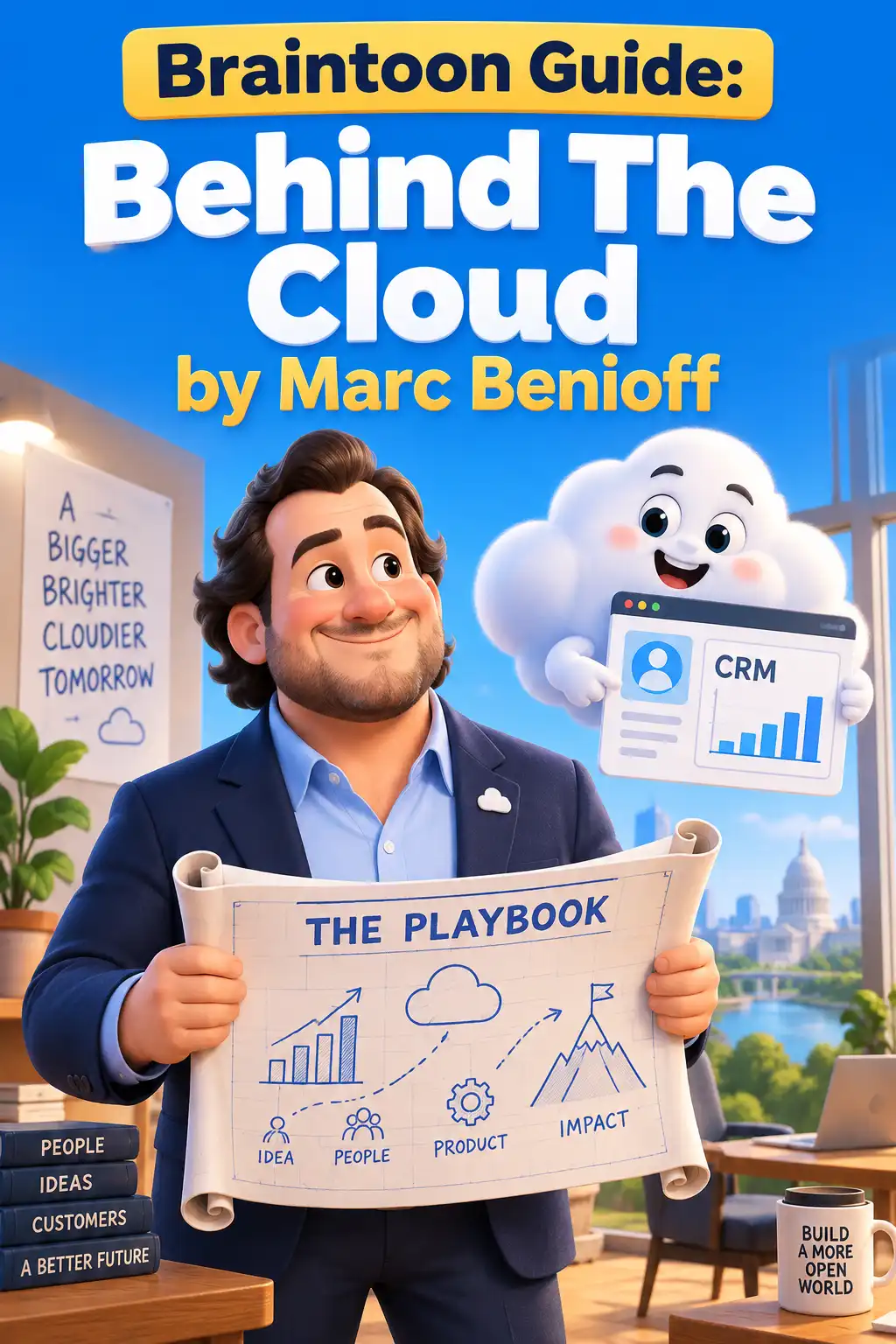
8. Behind The Cloud by Marc Benioff
Best for:
Marc Benioff's Salesforce story, told as a playbook for marketing and growing a young company.
11 min animated summary
Inside our summary
- Market like a revolutionary, not a vendor
- Let happy customers do your selling
- Remove the buyer's risk and hold your price
Marc Benioff tells how Salesforce grew from a rented apartment into a billion-dollar cloud company. He writes it as a playbook, so it reads more like advice than memoir.
Much of it is about getting noticed as a newcomer. Benioff urges founders to market like a revolutionary, not a vendor. He also wants them to let happy customers do the selling and to take the risk out of trying the product while holding firm on price.
Other lessons cover planning for the company you want to become and dropping strategies that stop working. Benioff also covers shipping fast and hiring for attitude. He makes a case for building giving into a company from day one, which you won't find in most startup books.
It's our pick for software and subscription founders, and for anyone marketing a company nobody has heard of yet.
9. The 4-Hour Workweek by Tim Ferriss
Best for:
Tim Ferriss on building a small, low-maintenance business that buys you freedom now rather than decades from now.
12 min animated summary
Inside our summary
- Define your worst case
- Outsource and automate
- Build a muse
The 4-Hour Workweek is less about building a big company and more about designing a flexible life now, not after retirement. Tim Ferriss sees a small, low-maintenance business as one way to get there.
He starts by asking what you actually want and has you spell out your worst case, so fear stops making the decisions. From there he gets practical. He says to cut unimportant work, protect your attention, and outsource and automate tasks. He also says to build what he calls a 'muse', a business meant to bring in income without taking over your time.
It's our pick for a lifestyle business, and for anyone who values independence more than scale. If you dream of a fast-growing startup, The Lean Startup or Zero to One will suit you better.
10. Grinding It Out: The Making of McDonald’s by Ray Kroc
Best for:
Ray Kroc's story of building McDonald's through detail, simplicity and persistence, starting in his fifties.
13 min animated summary
Inside our summary
- Simplicity was the real innovation
- Control the land to control the standards
- Grow alongside suppliers and operators
Ray Kroc was a fifty-two-year-old milkshake-machine salesman when he began building McDonald's into a global restaurant system. That alone makes this our pick for late-career starters who worry they've missed their chance.
It's a story, but the lessons come through clearly. Kroc argues for starting with small details rather than grand ideas, and he treats simplicity as the real innovation. He also explains why controlling the land helped him enforce standards, and why he grew alongside his suppliers and operators.
If The E-Myth's idea of systems appeals to you, Grinding It Out shows that same obsession with consistency at work in a real company. It's especially useful for franchise builders and anyone whose business depends on doing the same thing well every time.
A suggested reading order
You don't need to read these in order. If you're starting from scratch, The Lean Startup is the best first step. Add Zero to One if you're aiming for an ambitious tech venture, or The Millionaire Fastlane if you're still deciding what kind of business to build.
If you already run a business, The E-Myth Revisited and Profit First work well as a pair. One fixes how the work gets done, and the other fixes where the money goes.
The founder stories, Shoe Dog, Made in America and Grinding It Out, fit in whenever you want perspective or a lift.
How we chose these books
We chose these ten from the summaries currently available on BrainToon. We favored books that help you start, run or grow your own business, and we mixed practical methods with founder stories. We left out books that are mainly about marketing tactics, real estate or personal finance, or general success mindset, since they fit other guides better. A few well-known entrepreneurship books aren't in our catalog yet, so they don't appear here.