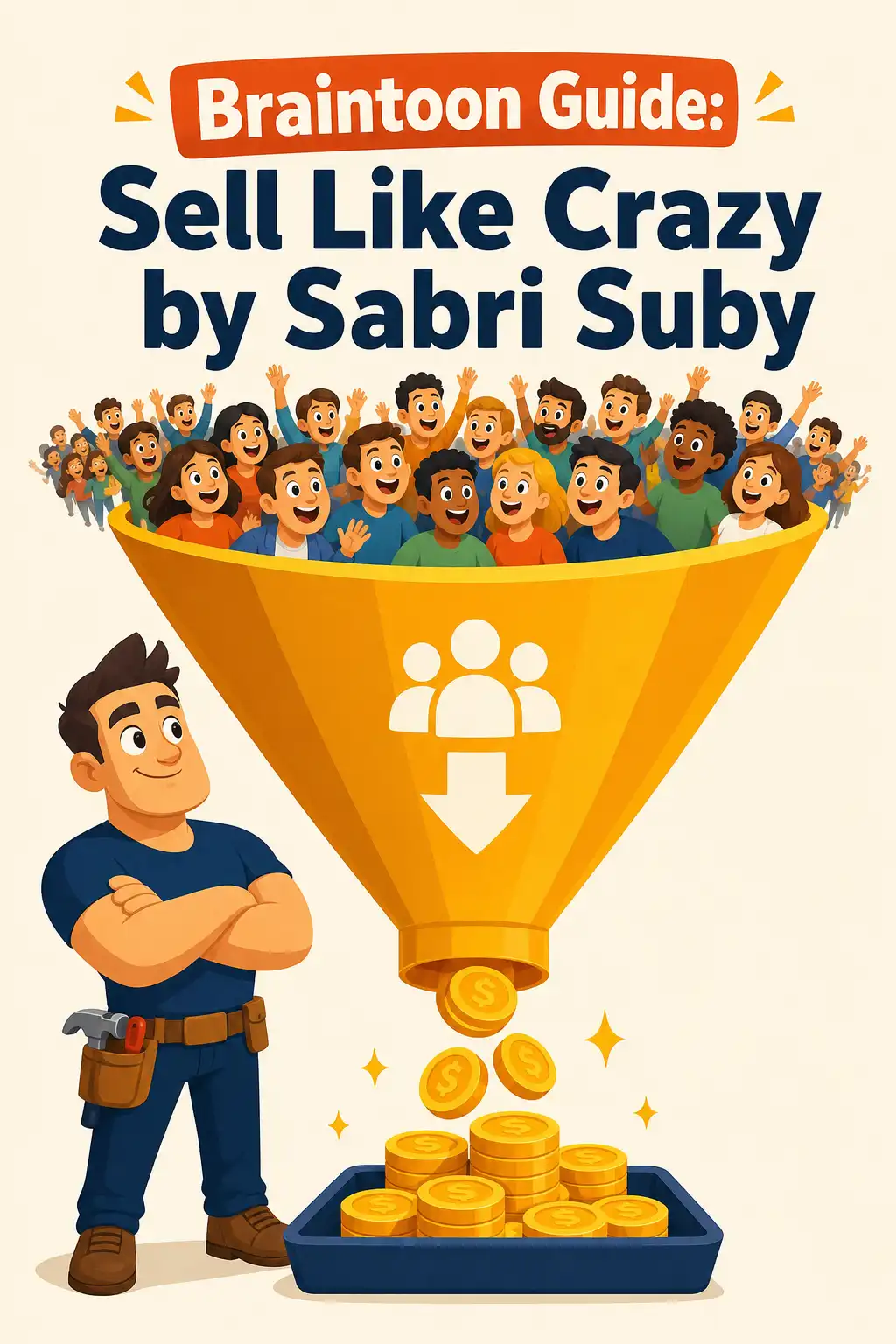
A detailed summary ofSell Like Crazyby Sabri Suby
Sell Like Crazy by marketing entrepreneur Sabri Suby is a step-by-step playbook for attracting a flood of dream customers and turning any business into a predictable selling machine.
Watch the first minute




Nate hauls his tools out of a
0:00 / 1:00
60-second animated preview
Key ideas, illustrated
Suby's Selling Machine
The Larger Market Formula & The Godfather Offer
Sell Like Crazy Summary
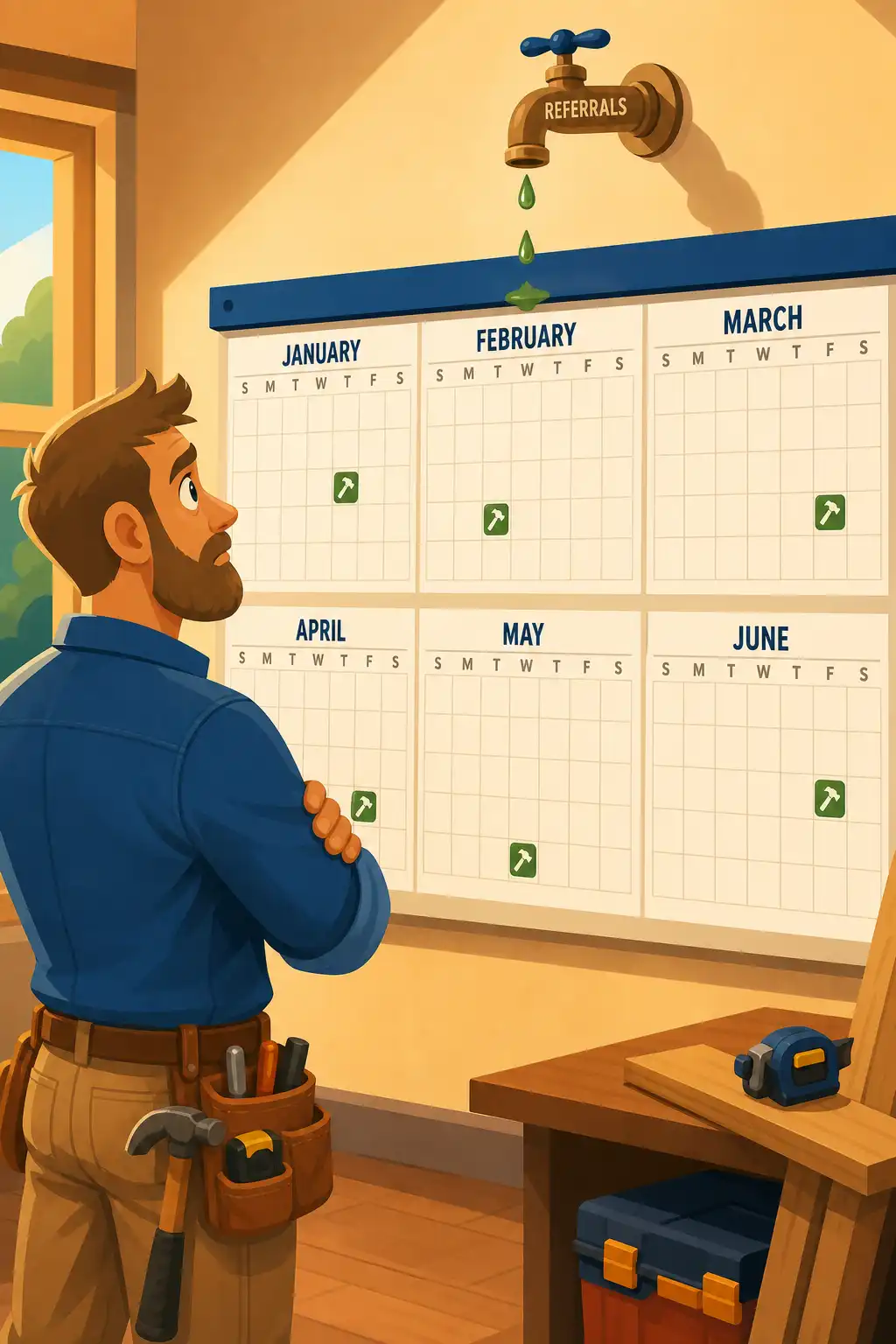
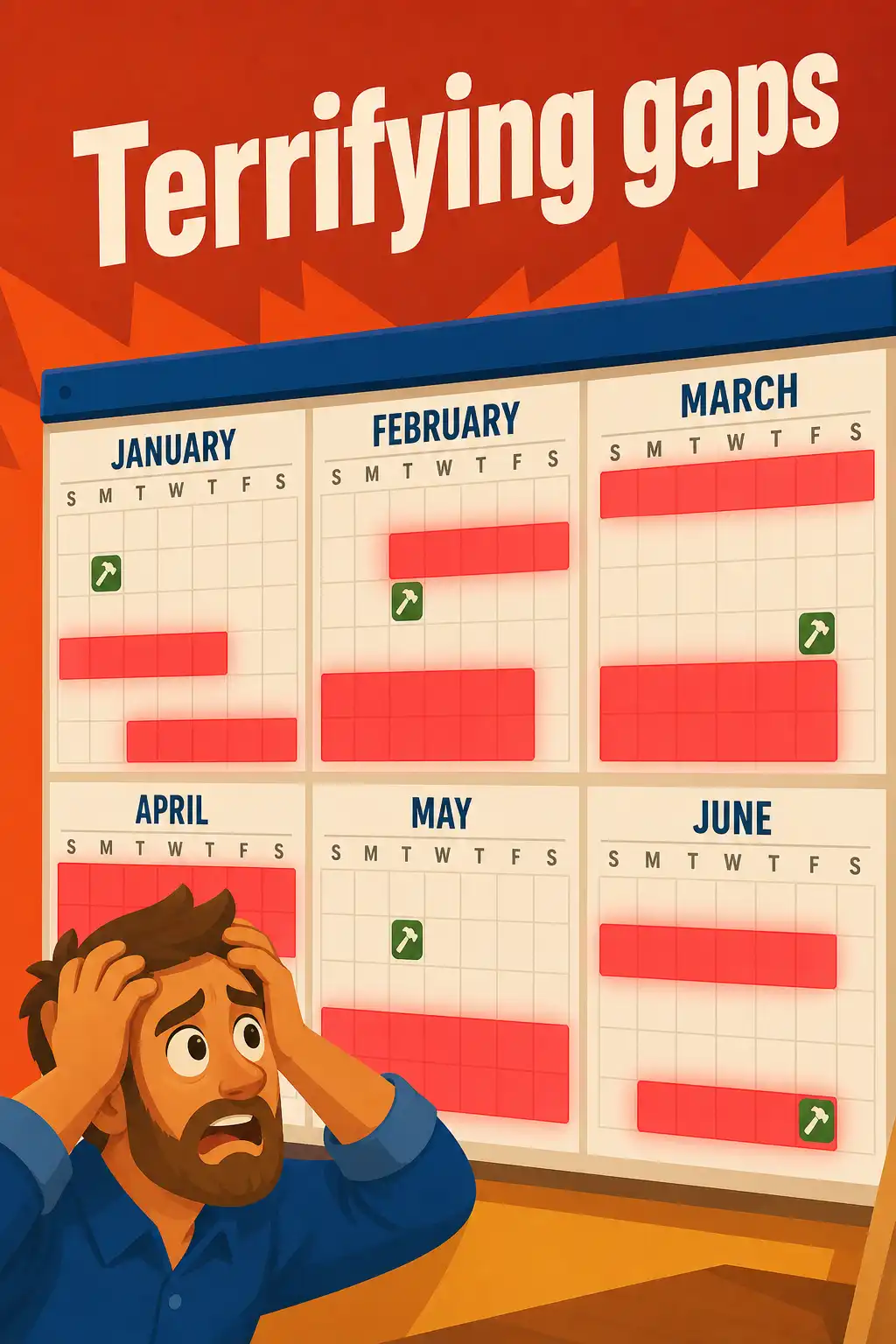
Nate hauls his tools out of a gleaming, just-finished kitchen in Boise, shakes the happy homeowner's hand, then climbs into his truck. And there, staring back at him, is a job calendar that's completely blank.
1. Your real business is selling
Nate's remodeling work is beautiful, and his referrals prove it. But those referrals only trickle in randomly, so every few months he faces terrifying gaps with zero income lined up.
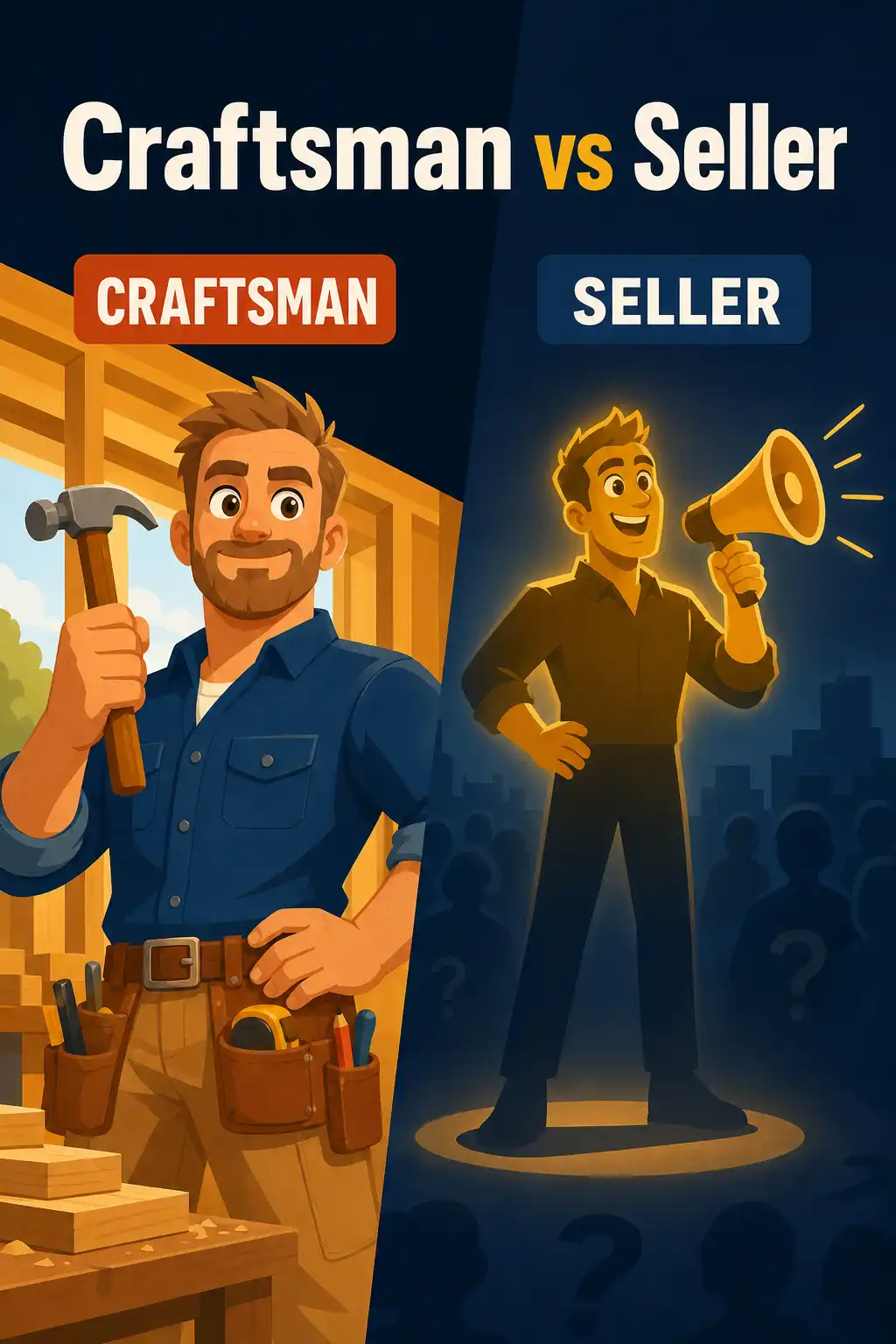
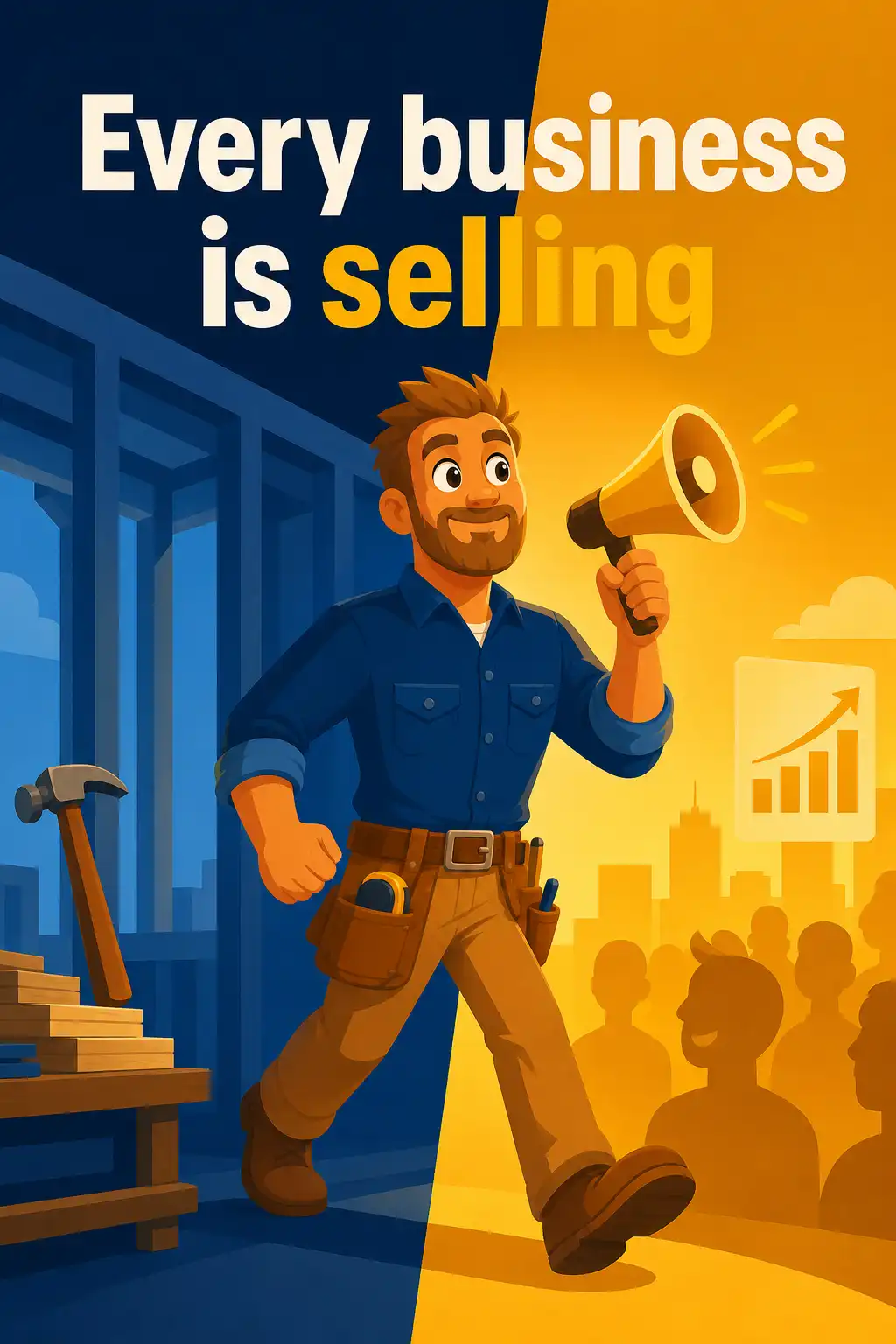
Sabri Suby would say Nate is making a classic mistake. He thinks of himself as a craftsman, when in reality every business owner is in the business of selling.
Suby knows this struggle firsthand. He grew up in Byron Bay, Australia, raised by a single mother working multiple jobs, and took his first sales job as a teenager, making hundreds of cold calls a day.
He was terrible at it, at first. Then he started treating sales like a game, became the top producer at every company he worked for, and later built his agency King Kong from his bedroom with nothing but an old laptop and $50.
His core message is blunt. Most businesses fail within a decade, and the survivors aren't the most talented ones. They're the ones who can generate revenue consistently and profitably.
A brilliant chef who opens a catering company still goes broke without marketing. Skill gets you in the game, but selling is what keeps you in it.
Watch it come to life
Watch Sell Like Crazy instead
Explore this summary and the Braintoon library.
2. Focus on the vital four percent
Monday morning, Nate tracks his time honestly. Supplier runs, invoice chasing, email, sweeping job sites. Almost nothing he does actually brings in new customers.
Suby calls these "little chores," and says they quietly kill growth. Billionaires like John Paul DeJoria, who built both Paul Mitchell and Patrón Spirits into billion-dollar companies without even using email, ruthlessly protect their time.
The famous 80/20 rule says twenty percent of your activities produce eighty percent of your results. Suby applies that rule twice. Just four percent of activities drive roughly sixty-four percent of revenue.
For Suby, that four percent means crafting offers, writing sales copy, and building sales funnels. Everything else can be delegated, outsourced, or dropped entirely.
Nate does the math. If his time is worth a hundred dollars an hour, paying someone twenty dollars to run errands isn't an expense. It's actually profit.
So he hands supplier runs to his apprentice and hires a part-time bookkeeper. Suddenly he has ten free hours a week to work on marketing.
3. You have an offer problem, not a traffic problem
Nate's first instinct is to boost a few Facebook posts, like he tried last year. Two hundred dollars vanished, and his phone never rang once.
Suby understands. He spent hundreds of thousands of dollars on guru courses and gimmicks that never worked, before finally studying legendary advertisers like David Ogilvy and Eugene Schwartz.
Those masters understood human psychology deeply, and their principles helped Suby generate hundreds of millions of dollars for his clients. His biggest insight? Most businesses obsess over the wrong things.
Marketers debate landing page software and button colors endlessly. But a basic funnel carrying an irresistible message will always beat a slick funnel carrying a weak one.
Traffic itself is a commodity. Anyone can buy clicks from Google or Facebook within hours. The real problem is conversion, turning strangers into paying customers.
Suby calls great ads "salesmanship multiplied." It's one powerful pitch delivered to thousands of people around the clock, instead of one conversation at a time.
4. Know your dream buyer deeply
So who exactly is Nate selling to? He realizes he's been chasing anyone with a kitchen and a pulse, which Suby says is exactly the wrong approach.
Suby's Larger Market Formula says only three percent of any market is ready to buy right now. Most businesses fight over that tiny sliver and ignore everyone else.
Meanwhile, seventeen percent are gathering information, twenty percent know they have a problem, and sixty percent don't yet realize they need you. That ignored ninety-seven percent is the real opportunity.
Before anything else, Suby's Halo Strategy demands deep customer research. Not just age and gender, but real fears, frustrations, and desires, in your buyers' own words.
So Nate digs through Reddit remodeling threads, Google auto-suggest, and review sites. A pattern quickly emerges. Homeowners are terrified of contractors who blow budgets and disappear mid-project.
Suby provides nine questions for building a dream buyer avatar, covering things like where they hang out online, what keeps them up at night, and what a typical day looks like.
5. Give value before asking for anything
Now Nate needs those nervous homeowners to raise their hands. Suby's answer is what he calls the High-Value Content Offer, genuinely useful information given away for free, before asking for anything in return.
The proof is old. Back in 1948, Merrill Lynch's Louis Engel ran a newspaper ad packed with pure education instead of a sales pitch. It eventually pulled in three million leads.
The lesson? Demonstrating value beats bragging about yourself every single time. And the people who read long, detailed content are exactly the ones most likely to buy.
So Nate writes a simple six-page guide titled "The 7 Costly Mistakes Boise Homeowners Make When Hiring a Remodeler, and How to Avoid Every One."
Titles matter enormously. Suby tells the story of a book called Astro-Logical Love that sold two thousand copies, then went on to sell 2.3 million after being renamed, without changing a single word inside.
Nate builds a simple opt-in page. A bold headline hitting the pain point, curiosity-driven bullets, a mockup image of the guide, and a form asking only for name and email.
6. Make an offer they can't refuse
Emails start flowing in. But when Nate offers a "free quote," prospects go quiet. Suby's diagnosis is simple. Weak, vague offers that sound like every competitor's.
His fix is the Godfather Strategy, an offer so compelling that refusing feels foolish. Start by selling what people actually want, not just what you happen to sell.
First, build a detail sheet. List every feature, then translate each one into a benefit. A certified latex mattress is a feature. Waking up refreshed is a benefit.
Suby points to Casper, the mattress company whose 100-night free trial helped take them from zero to hundreds of millions of dollars in sales in just a few years.
A Godfather Offer stacks seven elements together, including a rationale explaining your generosity, clear value-building, smart pricing, free bonuses, genuine scarcity, and a power guarantee that reverses the risk.
Guarantees scare business owners, but Suby says fewer than five percent of customers ever actually claim one. If you won't back your work, why should a stranger trust you?
7. Sell the click, not the product
With a real offer ready, Nate finally turns on paid traffic. But first, Suby insists he learn his unit economics. Cost per lead, cost per acquisition, and lifetime value of a customer.
If an average kitchen remodel nets Nate fifteen thousand dollars in profit, then spending even a thousand dollars to win one new customer is a spectacular bargain.
Suby's key insight about ads is this: their only job is to sell the click, not the product. Yet most ads try to close the whole deal in one line.
He shows a Google search for divorce lawyers where every single ad blends together. His alternative teases a free checklist, "22 Tipoffs Your Husband May Be Cheating," and stands out instantly.
On Facebook, ads that look like news articles get read, while anything obviously promotional gets scrolled past. So Nate styles his ad like a helpful local story about remodeling mistakes.
Match your message to audience temperature. Cold prospects are strangers, Suby says, and pitching them hard is like proposing marriage on a first date.
8. Nurture, diagnose, and keep building
Leads pour in, but most people download Nate's guide and then go silent. Suby expected this. Remember, ninety-seven percent of any market simply isn't ready to buy yet.
His Magic Lantern Technique sends those prospects two or three short videos of genuinely helpful advice, each one ending with a soft invitation to book a call.
So Nate films himself walking through how to plan a remodel budget and how to properly vet any contractor. Trust rises with every video, and skepticism quietly falls away.
When calls get booked, Suby says to sell like a doctor. Diagnose before prescribing. Ask where it hurts, listen carefully, and only offer a solution that genuinely fits.
Behind it all, email becomes Nate's engine. Suby cites research showing email returns around forty-four dollars for every dollar spent, and unlike social media, nobody can take your list away.
The trick is sounding personal, never commercial. Barack Obama's 2012 campaign famously raised $690 million online partly using plain, friendly subject lines like a simple "Hey."
Watch it come to life
Watch the animated summary
Explore this summary and the Braintoon library.