BrainToon
Whether you're new to sales or already working big deals, the right book can sharpen how you find buyers, run conversations and handle pushback. These picks cover each of those stages, plus a few broader books on persuasion and people skills.
If you want one book, our pick is SPIN Selling. It's built on years of research into real sales calls and is especially strong on asking good questions.
If you're newer to sales, start with Gap Selling. It covers similar ground in a more direct, everyday style.
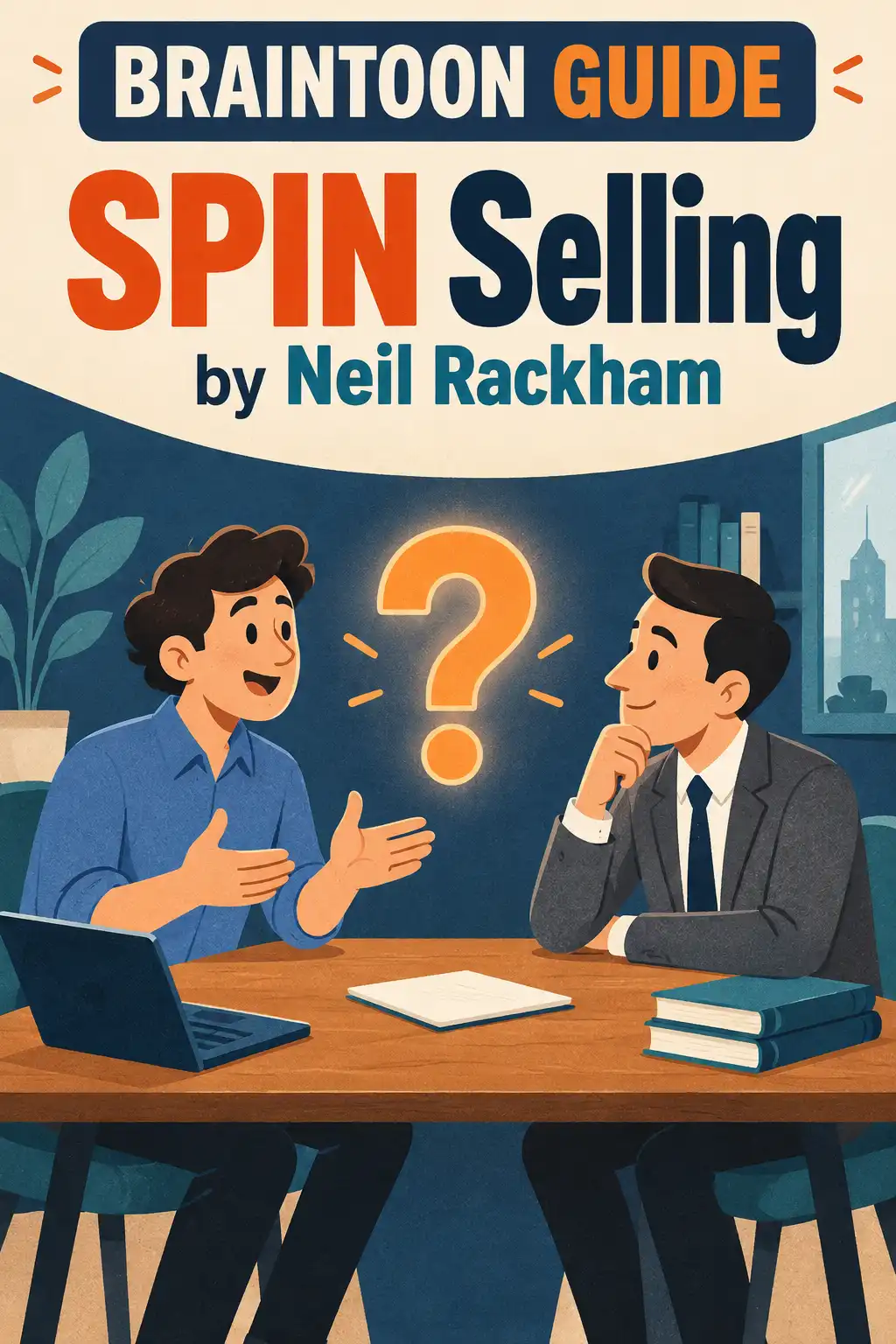
1. SPIN Selling by Neil Rackham
Best for:
A research-based method for winning large sales by asking the right questions in the right order.
12 min animated summary
Inside our summary
- Why closing techniques backfire on big deals
- Implication questions make problems feel serious
- Most objections are self-inflicted
We recommend SPIN Selling to anyone who handles bigger, longer sales, where one conversation rarely closes the deal. Neil Rackham's central argument is that big sales are not just small sales scaled up. He argues that closing techniques that work for quick sales can backfire on larger deals.
Instead, he offers a disciplined sequence of questions that builds the customer's own sense of need. The book draws on twelve years of research into more than 35,000 sales calls, so it has unusually strong evidence behind it.
Two ideas make it especially useful for discovery calls. Rackham highlights implication questions, which help a buyer see how serious a problem really is. He also argues that customers should state the benefits themselves rather than hear them from you, and that most objections are self-inflicted.
If your sales usually close in a single call, you'll get less from it.

2. Gap Selling by Keenan
Best for:
A plain-spoken guide to discovery that frames every sale around the gap between a buyer's problems and the future they want.
13 min animated summary
Inside our summary
- The gap is what you actually sell
- The deal is won in discovery
- Find the reason behind the change
Gap Selling is our starting pick, especially if you're new to sales or want a straightforward guide to discovery. Keenan's core idea is easy to remember. Every sale lives in the distance between where a buyer is now and where they want to be, and your job is to help them see that gap clearly.
From there, Keenan argues that understanding the buyer's problems matters more than being liked, and that the deal is won in discovery. He pushes you to find the real reason a buyer wants to change. He also argues for showing less and confirming more as you work toward each next step.
It covers much the same territory as SPIN Selling. The difference is tone: Gap Selling is more direct and everyday, which makes it an easier way into the subject.
3. The Challenger Sale by Matthew Dixon and Brent Adamson
Best for:
An argument that top B2B sellers win by teaching customers something new and taking control of the conversation.
14 min animated summary
Inside our summary
- Five kinds of salesperson and a surprising winner
- Teaching that leads somewhere specific
- Managers and the long road to change
The Challenger Sale suits B2B reps who suspect that being helpful and friendly isn't enough. Matthew Dixon and Brent Adamson describe five kinds of salesperson. They argue that the most successful type isn't the relationship builder, but the seller who can teach customers something new, tailor that insight and take control of the conversation.
That's a useful reframe if you feel stuck as an order-taker. The authors say customers want to learn, not just buy, and that good teaching should lead somewhere specific. They also cover tailoring the message to each stakeholder and being assertive without becoming aggressive.
Sales managers get material on coaching and on the long road to changing how a team sells. That's why we recommend it to leaders as well as reps. Its focus is business-to-business selling, so consumer-facing sellers may find less that applies.
4. Fanatical Prospecting by Jeb Blount
Best for:
A no-excuses guide to keeping your pipeline full by starting new conversations every day across every channel.
13 min animated summary
Inside our summary
- Prospect today or slump in ninety days
- Guard your golden hours like a CEO
- Give a reason, ask directly, then shut up
If your problem is an empty calendar rather than weak meetings, this is the book we'd hand you. Jeb Blount focuses on the part of sales many people avoid: starting new conversations every single day, by phone, email, social media and in person.
Blount argues that prospecting is what separates top performers from everyone else. He warns that skipping it today can lead to a slump around ninety days later. He also treats interrupting people as part of the job, so the real question is how to do it well.
The practical habits stand out. Blount recommends tracking your numbers, guarding your best selling hours and working from prioritized lists. He also advises giving a clear reason for reaching out before asking directly. There's useful material on bouncing back from rejection, too.
It says less about running a meeting once you've booked it. The discovery picks above cover that.
5. The New Strategic Selling by Robert B. Miller, Stephen E. Heiman, and Tad Tuleja
Best for:
A repeatable process for mapping everyone involved in a complex sale and spotting trouble before a deal slips.
13 min animated summary
Inside our summary
- Why confident salespeople lose deals
- Four roles in every buying decision
- Treating red flags as early warnings
The New Strategic Selling is for deals where several people have a say, and the person you talk to most may not be the one who decides. Robert B. Miller, Stephen E. Heiman and Tad Tuleja offer a repeatable process for mapping every decision-maker and building win-win relationships instead of relying on closing tricks.
Our summary covers the four roles they see in every buying decision, how to treat red flags as early warnings and how to read the way buyers feel about change. The authors also explain why confident salespeople lose deals, which is a useful warning when an opportunity looks safe.
SPIN Selling focuses on the sales conversation itself. This book looks at the whole deal: who's involved, where the risk lies and which customers are worth pursuing. Choose it if your deals tend to stall when more people get involved.
6. Never Split the Difference by Chris Voss
Best for:
Hostage-negotiation techniques from a former FBI negotiator that translate well to pricing talks and tough late-stage conversations.
11 min animated summary
Inside our summary
- Mirror their words to open doors
- Label emotions to defuse them
- Use calibrated questions to steer
Chris Voss draws on FBI hostage negotiation, and his book covers negotiation in general rather than sales. We still recommend it to sellers because his tools fit naturally into pricing talks and late-stage pushback.
Voss starts from the idea that emotions run the show. He teaches techniques such as mirroring someone's words, labeling their emotions to defuse them and using calibrated questions to steer the conversation. Some of his advice cuts against common sales habits. He suggests letting the other side say no, and he argues that a yes means little until you know how it will happen.
It's a good fit if you tend to freeze or give ground when a buyer pushes back. It won't help you find prospects or run discovery. When a deal gets tense, though, it's one of the most practical books here.
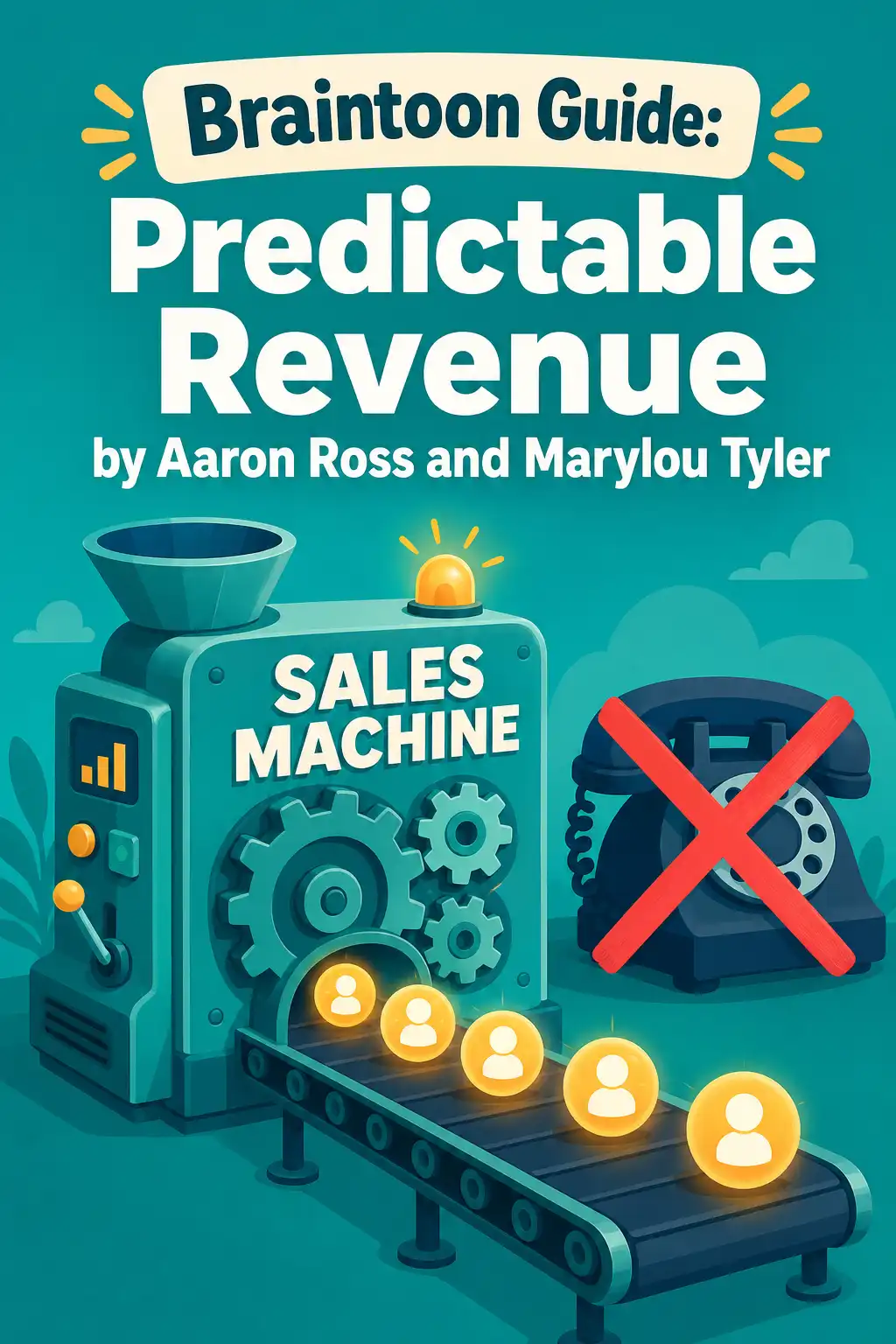
7. Predictable Revenue by Aaron Ross and Marylou Tyler
Best for:
A blueprint for building an outbound sales system that produces a steady stream of qualified leads without cold calling.
11 min animated summary
Inside our summary
- Stop cold calling, start asking for referrals
- Specialize your sales roles
- Seeds, nets, spears, and real metrics
Predictable Revenue is less about how you sell and more about how a sales operation is built. Aaron Ross and Marylou Tyler show how to create an outbound system that produces a steady stream of qualified leads without cold calling.
That makes it a strong choice for founders and sales leaders. The authors argue that hiring more salespeople won't fix a struggling team on its own. Instead, they recommend specializing sales roles, defining your ideal customer first and asking for referrals. Our summary also covers their seeds, nets and spears categories for lead sources, their approach to metrics and their case for selling toward customer success, not just the close.
Its stance on cold calling makes a useful contrast with Fanatical Prospecting, which treats calls as central. If you're deciding how a team should work, this is the more relevant of the two.
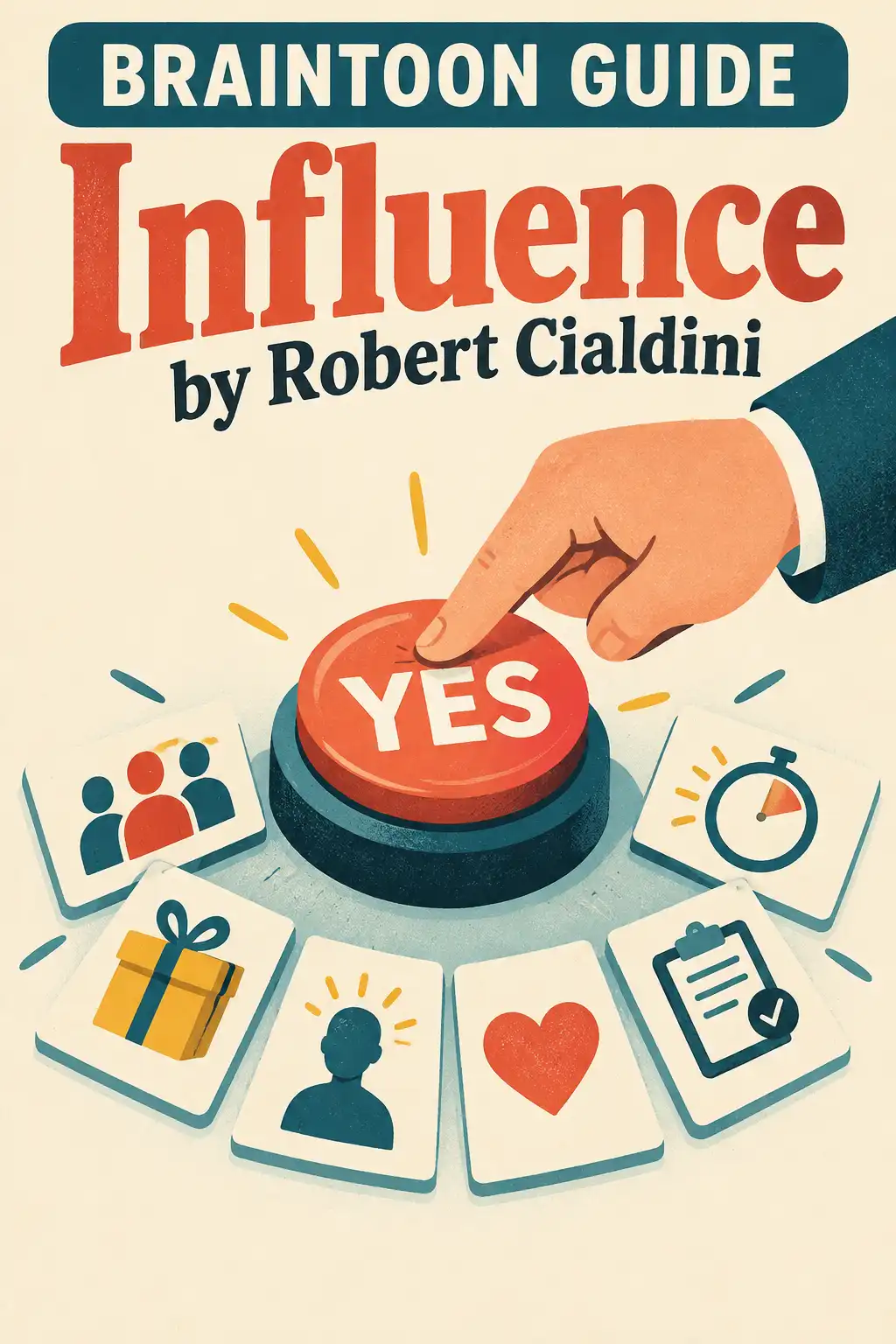
8. Influence by Robert Cialdini
Best for:
A research-backed look at the psychological principles that lead people to say yes.
12 min animated summary
Inside our summary
- The surprising pull of reciprocation
- Following the crowd, for better or worse
- Small commitments and the fear of loss
Influence explains why people say yes. Robert Cialdini sets out seven principles of persuasion, drawing on scientific research and years spent undercover with salespeople and marketers.
For sellers, its value lies in understanding buyers rather than following a sales method. Cialdini covers reciprocation, liking and the deeper bond he calls unity, along with following the crowd, the pull of authority, small commitments and the fear of loss. He also looks at how people resist these triggers. That helps you spot pressure tactics you'd rather not use, or ones being used on you.
It won't give you a sales process. Choose it if you want to understand what's happening in a buyer's head, and why some of the methods in the other books work.

9. How To Win Friends and Influence People by Dale Carnegie
Best for:
The classic guide to building real connections and gently changing minds, the people skills underneath good selling.
12 min animated summary
Inside our summary
- Become genuinely interested in others
- You can't win an argument
- Get to yes and let them talk
Dale Carnegie's classic isn't about deals at all. It's about getting along with people, which is why it suits anyone in a customer-facing role.
Carnegie's advice is simple to state and harder to practice. He recommends avoiding criticism and complaints, giving honest appreciation, becoming genuinely interested in others and letting them do most of the talking. He also argues that you can't win an argument, a useful reminder if you're tempted to out-debate a hesitant customer.
The book won't walk you through prospecting, discovery or negotiation. Instead, it focuses on the people skills those stages depend on: being someone others are glad to keep talking to. If you're early in a customer-facing job, or building rapport feels forced, it's a warm, readable place to start.