BrainToon
Psychology books can help you understand why you think, decide, love and struggle the way you do. The right one depends on what you're curious about: everyday choices, persuasion, relationships or healing from the past.
If you want one book that changes how you see your own mind, our pick is Thinking Fast and Slow. If you'd rather begin with something lighter and quicker to put to use, start with Mindset.
Every book here has a BrainToon summary, so you can sample the ideas before committing to the whole thing.
1. Thinking Fast and Slow by Daniel Kahneman
Best for:
How two systems in your mind shape your judgments and choices, often without you noticing.
13 min animated summary
Inside our summary
- Two systems run your mind
- Anchors quietly control your estimates
- Framing changes your decisions
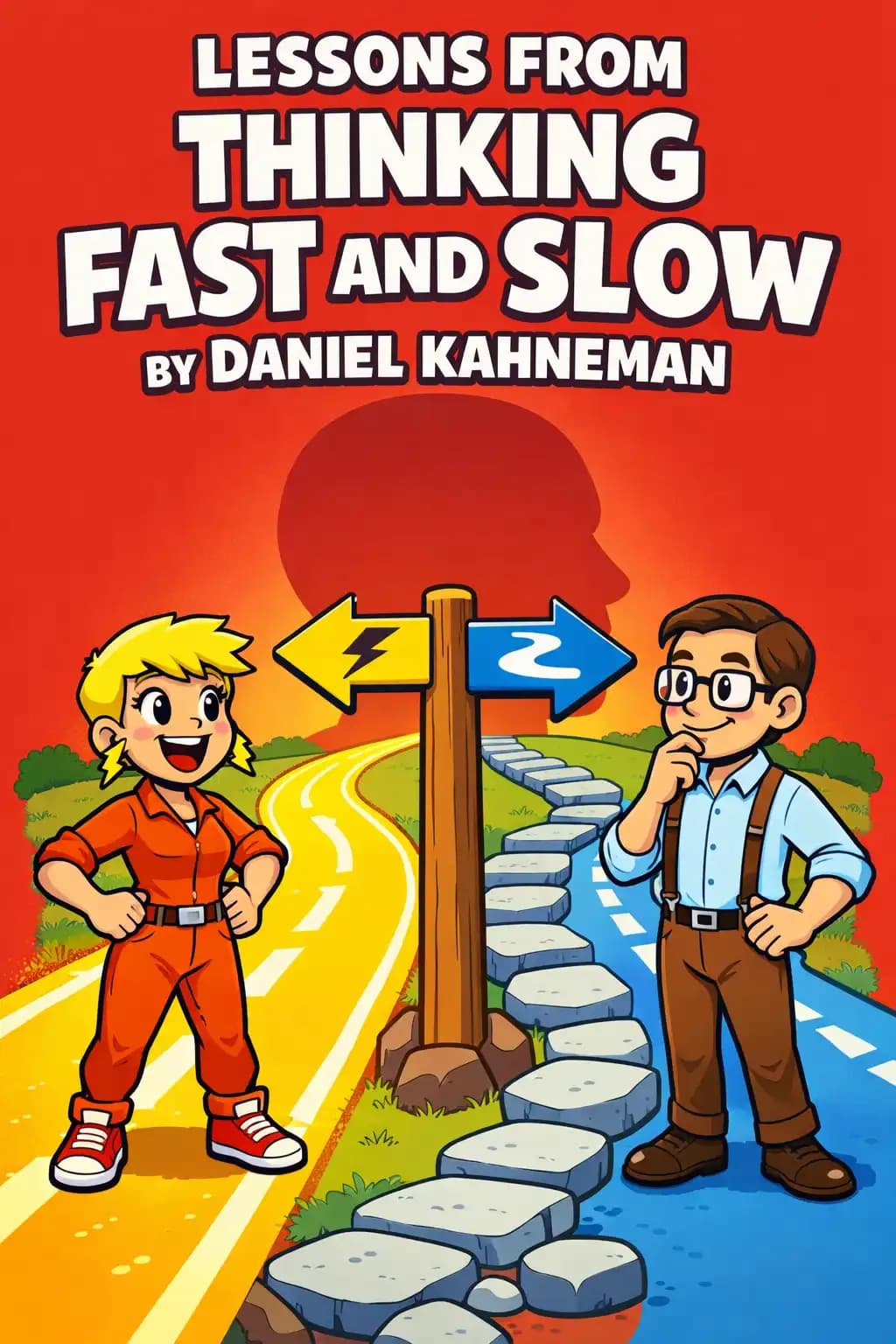
If you read only one psychology book, we recommend this one. Daniel Kahneman, a Nobel Prize winner, describes the mind as two systems. One is fast and intuitive and handles most of daily life. The other is slower and more effortful, and we rely on it less than we think.
That simple split explains a lot. It shows why confident snap judgments so often go wrong, from estimates pulled toward an irrelevant number to choices that flip depending on how they're framed. Kahneman also looks at why losses hurt more than equal gains feel good, why overconfidence is so risky, and how the way an experience ends changes how we remember it.
It's the densest book on this list. It's also the most useful for decision-making and for catching your own biases. Once you know these patterns, you'll start seeing them everywhere.
2. Influence by Robert Cialdini
Best for:
Why we say yes, and how to notice when someone is counting on it.
12 min animated summary
Inside our summary
- Why we run on autopilot
- The surprising pull of reciprocation
- Following the crowd, for better or worse
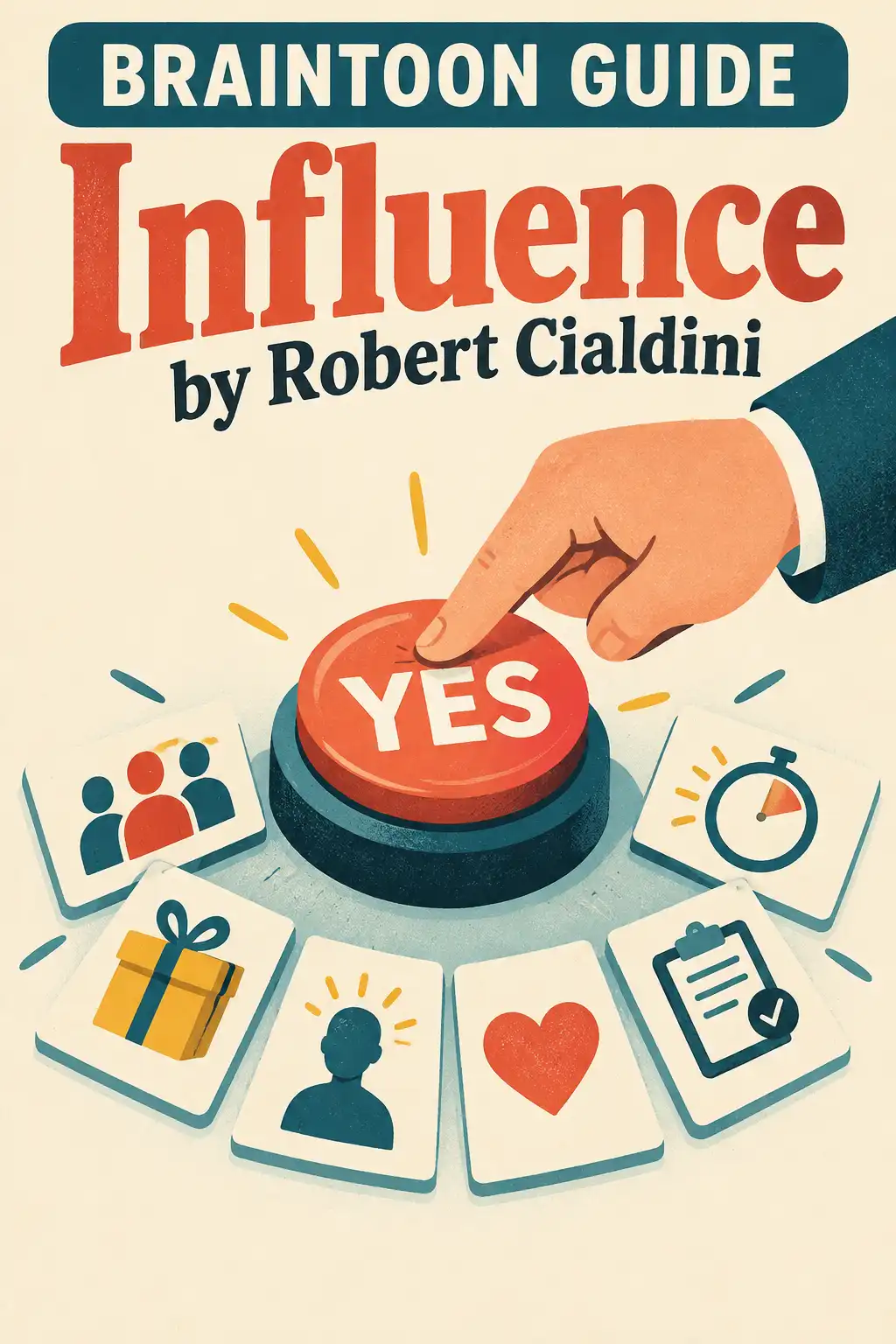
Influence is for anyone who has agreed to something and wondered afterward why they did. Robert Cialdini combines scientific research with years he spent undercover among salespeople and marketers to explain seven principles that push people toward yes.
His core point is that we run on autopilot much of the time, and that makes us easy to persuade. A favor leaves us feeling we owe something back. We follow the crowd, defer to symbols of authority, and stick with small commitments we've already made.
The real value is learning to recognize these triggers as they happen, whether in a sales pitch, an ad or a request at work. That makes the book as useful for resisting manipulation as for understanding persuasion.
Thinking Fast and Slow is about how you make decisions on your own. Influence is about how other people shape those decisions.
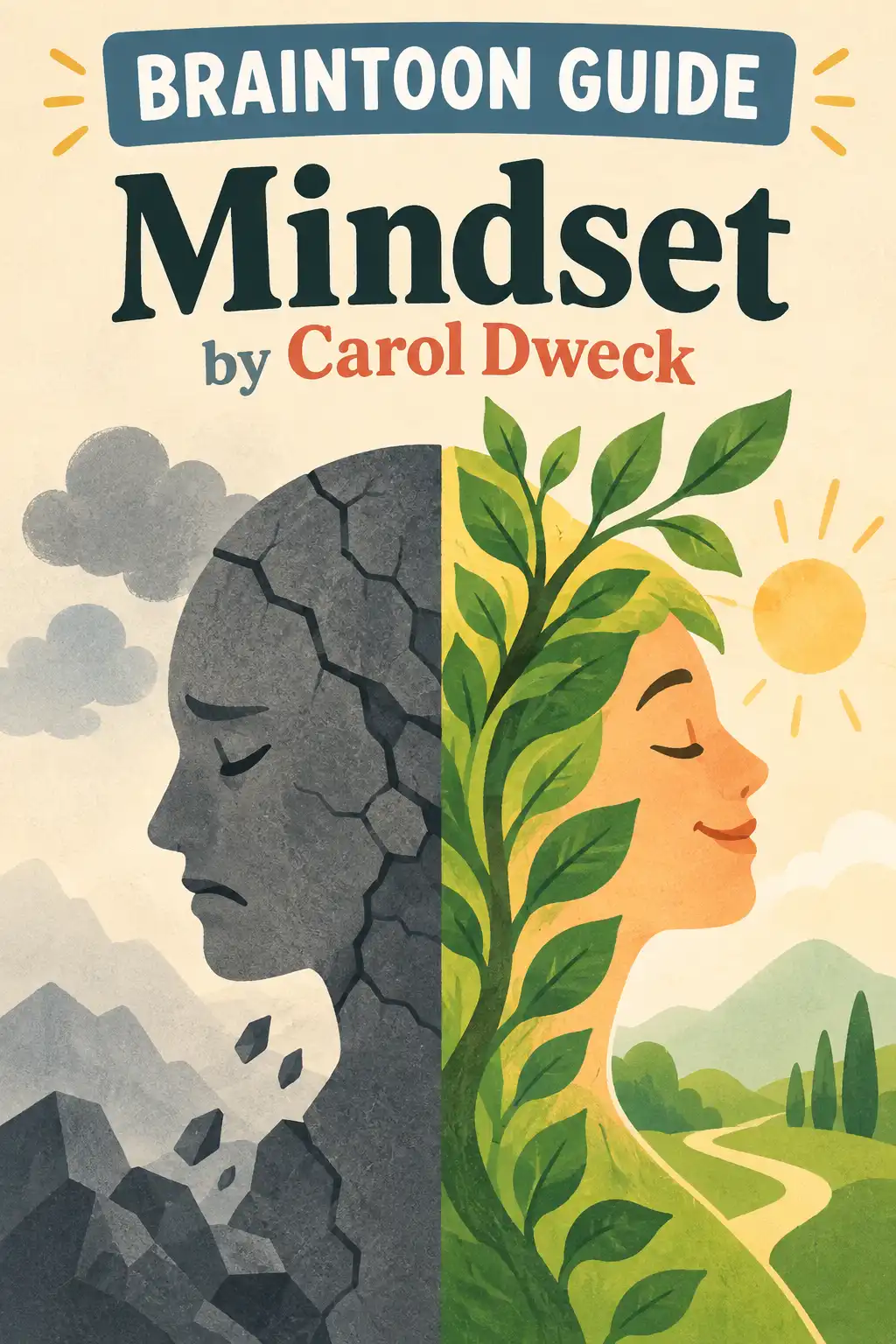
3. Mindset by Carol Dweck
Best for:
How one belief about ability shapes the way you face challenge and failure.
14 min animated summary
Inside our summary
- Two beliefs about ability
- Why praising intelligence backfires
- Changing a mindset takes maintenance
This is our starting pick for anyone new to psychology. Carol Dweck builds the whole book around one idea that's easy to grasp and easy to test against your own life.
She argues that people tend to believe either that their abilities are fixed or that they can be developed. That belief shapes how they handle challenge, effort and feedback. Failure and effort come to mean very different things depending on which view you hold.
Dweck applies the idea to schools, to organizations that worship talent, and to relationships that are supposed to take work. Her case for why praising intelligence can backfire makes the book especially useful for parents and teachers.
She also says a mindset can change. However, she argues that change takes ongoing maintenance rather than a single moment of insight, which keeps the book's promise realistic.

4. The Body Keeps the Score by Bessel van der Kolk
Best for:
How trauma reshapes the brain and body, and the different paths toward healing.
13 min animated summary
Inside our summary
- The Brain's Smoke Detector Goes Haywire
- Trauma Disconnects You from Your Own Body
- Talking Helps, but It Is Not Enough
This is the book to read if you want to understand trauma, whether you live with its effects, support someone who does, or work in a helping profession. Bessel van der Kolk argues that trauma is far more common than most people assume. He also argues that it changes the brain and body, not just memories.
He explains why people can feel stuck reliving the past, why the brain's alarm system can stay switched on, and how trauma can leave people disconnected from their own bodies. He also looks at how childhood experiences shape later life.
What sets the book apart is its focus on recovery. Van der Kolk argues that talking helps but often isn't enough. He explores other approaches, including EMDR, yoga, neurofeedback and the healing power of community.
The subject is heavy. If it touches your own life, it's fine to take the ideas slowly.
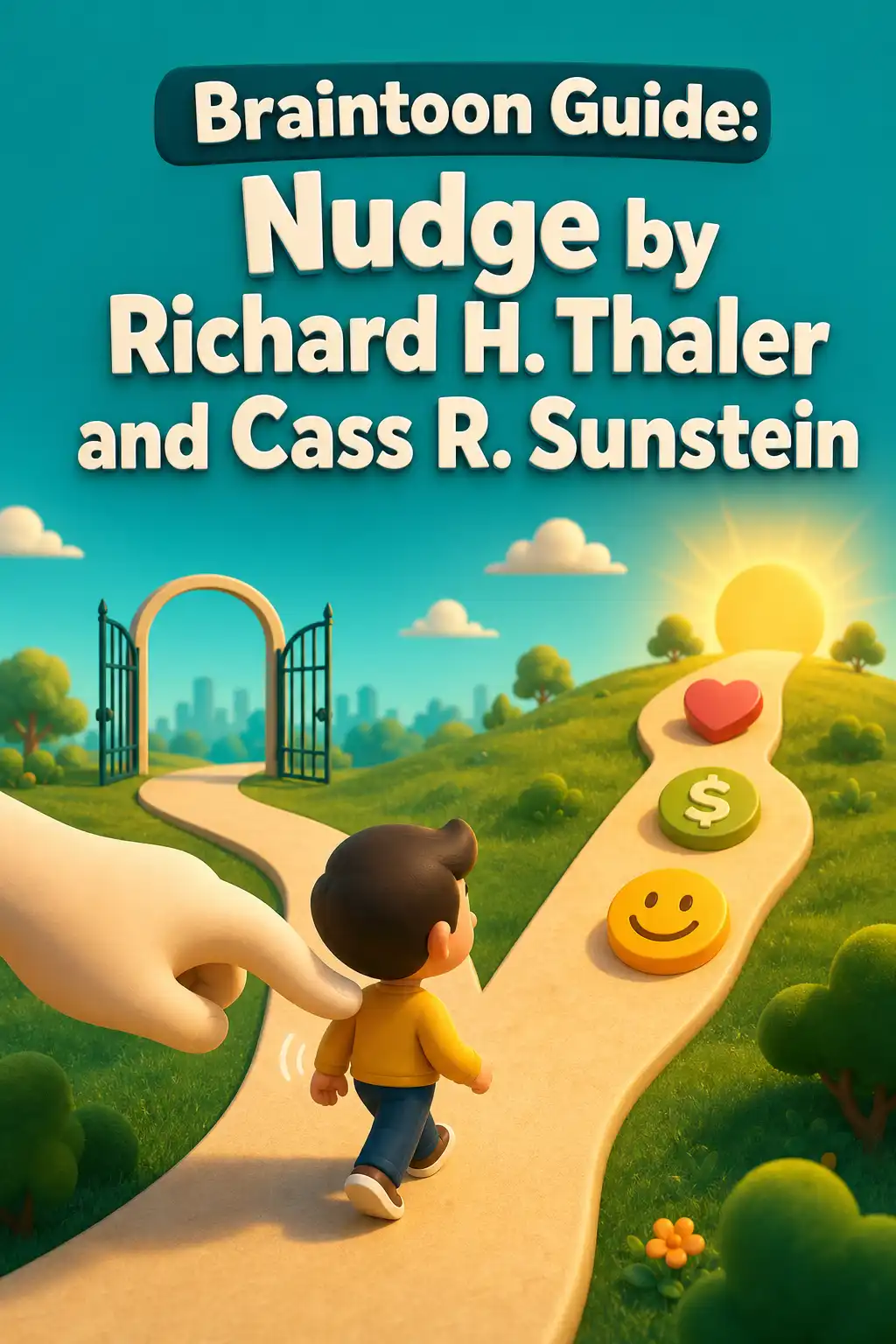
5. Nudge by Richard H. Thaler and Cass R. Sunstein
Best for:
How small changes in the way choices are presented steer what people do.
13 min animated summary
Inside our summary
- You're always nudging, so nudge on purpose
- Give the most help where choices are hard and rare
- Automate your money before willpower fails
Nudge starts from the fact that our mental shortcuts misfire in predictable ways. From there, it asks a practical question: how should choices be set up? Richard Thaler and Cass Sunstein argue that someone is always shaping how options are presented, so it should be done deliberately and for our benefit.
Their central claim is that small design changes can steer people toward better health, wealth and happiness while leaving them free to choose. They cover our impulsive side, our habit of copying other people, and why people need the most help with choices that are hard and rare.
It's a strong pick if you're interested in behavioral economics or if you design choices for others at work. There's a personal angle too. The authors argue for automating your money before willpower runs out, and they insist good nudges should happen out in the open.
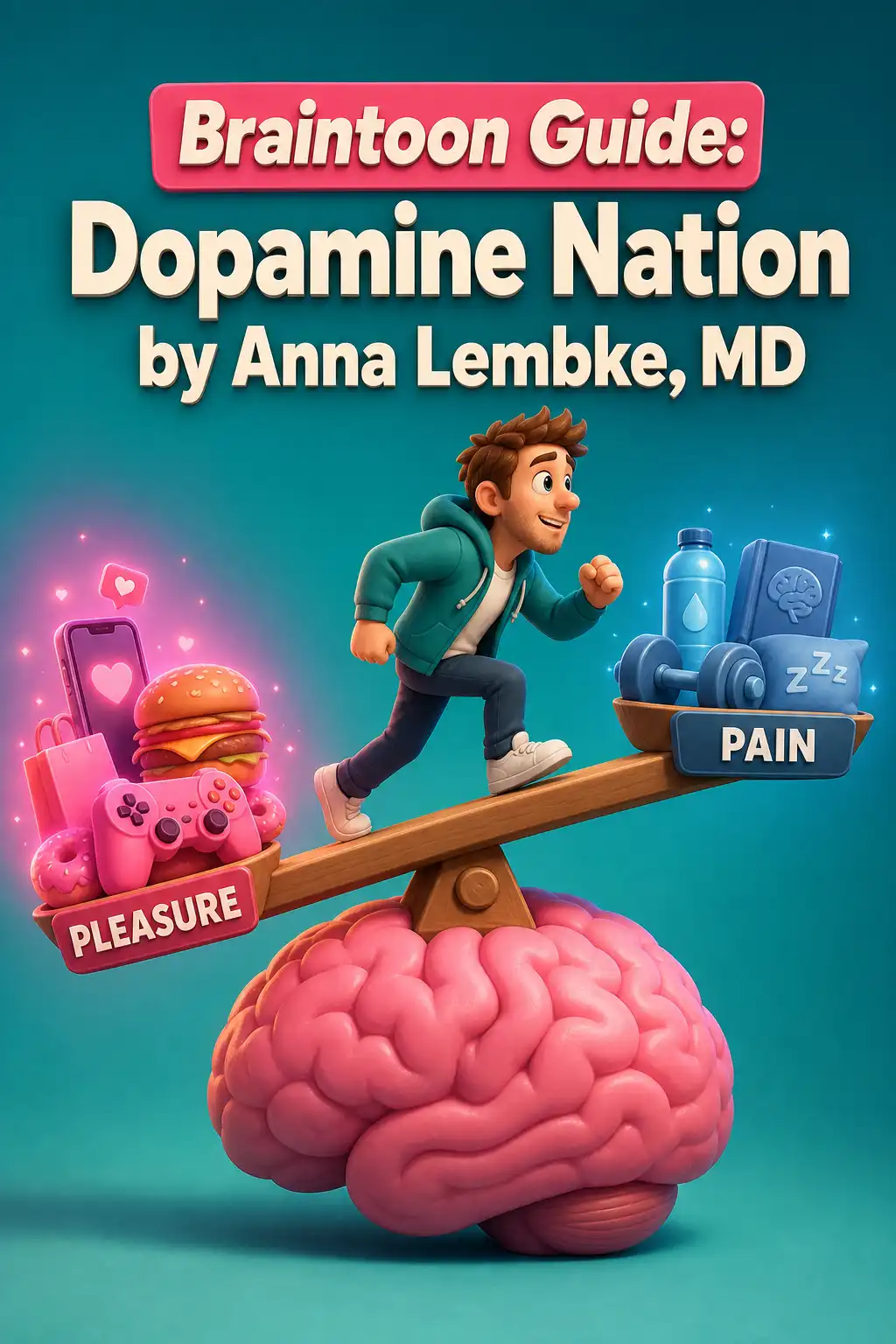
6. Dopamine Nation by Anna Lembke, MD
Best for:
Why endless easy pleasure leaves us feeling worse, and how to restore the balance.
11 min animated summary
Inside our summary
- Your brain runs on a seesaw
- Access is the real drug dealer
- The thirty-day dopamine fast
This book speaks directly to anyone who reaches for their phone without thinking, or whose habits have started to feel less like choices. Anna Lembke, MD, explains that pleasure and pain share the same circuitry in the brain. She compares them to the two ends of a seesaw.
That image helps explain why the highs keep shrinking and why easy, constant access is such a problem. She also argues that running from pain tends to create more of it.
The book stands out for its concrete tools. Lembke describes a thirty-day dopamine fast and ways to put barriers between yourself and temptation. She also explains the value of deliberately leaning into discomfort and the role radical honesty plays in breaking free.
It's a timely, practical read if screens or other compulsions are taking up more of your life than you'd like.

7. The Seven Principles for Making Marriage Work by John Gottman
Best for:
What decades of research on couples reveal about what keeps relationships together.
12 min animated summary
Inside our summary
- The Four Horsemen of Relationship Doom
- Turn Toward Each Other in Small Moments
- Unlock Gridlock by Understanding Hidden Dreams
For couples who want more than general advice, John Gottman is our pick. His principles come from decades of research observing real couples in what he calls the Love Lab.
Gottman identifies four destructive patterns he calls the Four Horsemen. Much of the book is about building the opposite: knowing your partner's world, keeping fondness and admiration alive, turning toward each other in small moments, and accepting your partner's influence.
His approach to conflict is especially helpful. He separates problems that can be solved from gridlocked ones. He suggests the gridlocked kind can be eased by understanding the hidden dreams underneath.
It's practical enough to start using this week. Gottman even proposes a 'magic five hours' a week that couples can invest in each other.

8. Adult Children of Emotionally Immature Parents by Lindsay Gibson, PsyD
Best for:
Making sense of parents who can't connect emotionally, and how their grown children can heal.
11 min animated summary
Inside our summary
- Spotting emotional immaturity
- Why talking never works
- Seeing your parent clearly
This book is for anyone who grew up with a parent who couldn't meet them emotionally and who still carries a loneliness that's hard to name. Psychologist Lindsay Gibson explains why some parents can't truly connect and what that leaves behind in their children.
She helps readers spot signs of emotional immaturity and describes four kinds of immature parents. She also explains why trying to talk things through with them so often goes nowhere. Gibson also looks at the fantasies and roles children can carry into adulthood.
Many readers will find the book validating. Gibson's focus isn't on changing your parent. Instead, she wants to help you see them clearly and find your own freedom.

9. The Courage to be Disliked by Ichiro Kishimi and Fumitake Koga
Best for:
Alfred Adler's psychology as a way to stop living for other people's approval.
11 min animated summary
Inside our summary
- Inferiority is a story, not a fact
- Separate your tasks from theirs
- Stop chasing recognition
If you spend a lot of energy worrying about what others think, this book offers a bold alternative. Ichiro Kishimi and Fumitake Koga draw on the psychology of Alfred Adler, a very different school of thought from the research-driven books elsewhere on this list.
They argue that we have more choice than we realize, even over our feelings. They also treat inferiority as a story rather than a fact. For people-pleasers, the most freeing idea may be separating your tasks from other people's, so you stop carrying problems that aren't yours.
The authors also urge readers to stop competing, stop chasing recognition, build relationships between equals, and contribute rather than perform.
It's best for reflective readers who enjoy questioning their own assumptions about happiness.

10. The True Believer by Eric Hoffer
Best for:
Why ordinary people join mass movements, and how fanaticism rises and burns out.
12 min animated summary
Inside our summary
- Movements run on hope, not misery
- The wish to escape yourself
- Every movement needs a devil
Most books on this list look at the individual mind. The True Believer turns to groups and asks why ordinary people give themselves to mass movements and what those movements do to them.
Eric Hoffer's answers are often surprising. He argues that movements run on hope, not misery, and that many followers are drawn by a wish to escape themselves. He also explores how movements produce self-sacrifice and why every movement needs a devil.
It's a good fit if you're interested in group psychology, extremism, or why movements of any kind take hold. Hoffer traces how fanaticism spreads and eventually fades, and he closes on what protects us from it.
Hoffer writes as a sharp observer rather than a lab researcher. That makes this book a different kind of read from Kahneman or Gottman, but a thought-provoking one.
A suggested reading order
You don't need to read these in order. Pick the book that matches the question on your mind right now. If you're new to psychology and want a gentle start, begin with Mindset. Then try Thinking Fast and Slow when you're ready for something meatier. The more personal books on trauma, family and relationships work well on their own whenever they become relevant.
How we chose these books
We chose these ten from the books available as BrainToon summaries. We looked for books that help curious readers understand how minds work, including how we think and decide, why we're persuaded, and how trauma, pleasure, family and relationships shape us. We left out communication, sales, habit and general self-help titles that only touch on psychology. A few well-known psychology classics aren't in our summary library yet, so they don't appear here.