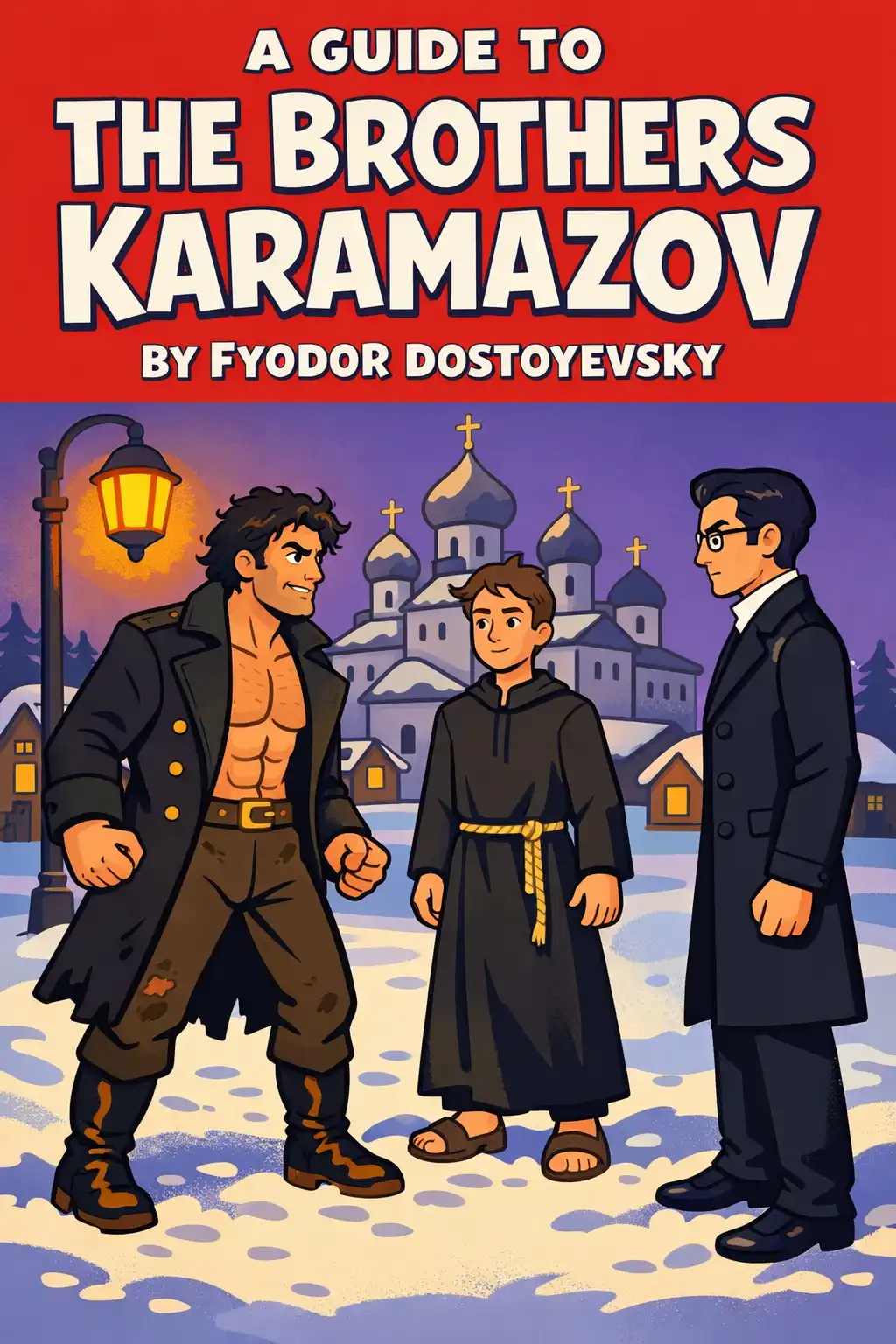
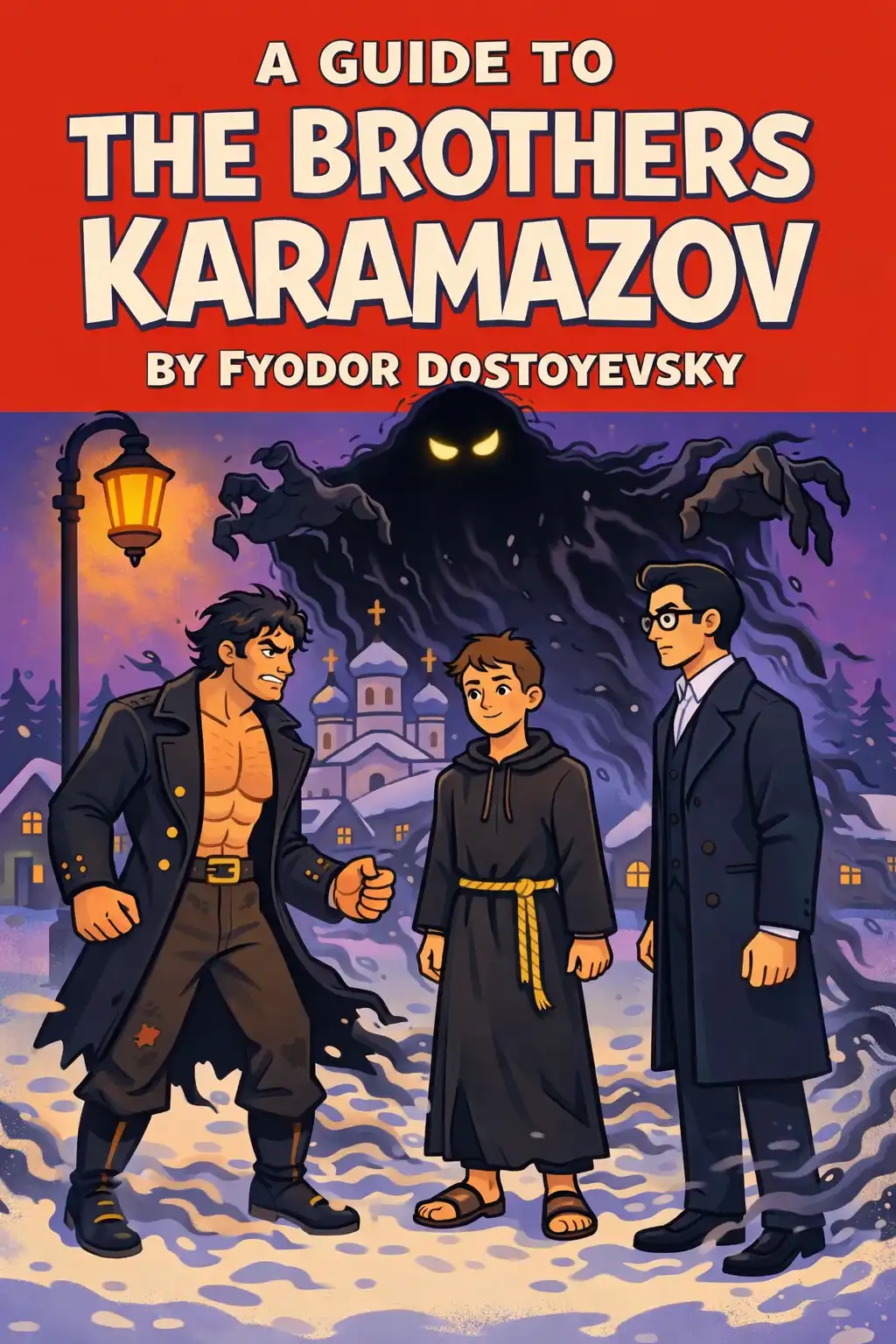

The Brothers Karamazov cover

Book summary: The Brothers Karamazov by Fyodor Dostoyevsky

10 min read9 key partsText + animated summary

What if the most dangerous thing a father could do isn't commit a crime, but raise sons who each carry a piece of his darkness inside them?

One-sentence summary

"The Brothers Karamazov" by Fyodor Dostoyevsky is a story about faith, guilt, and a murder that tears apart one of the most dysfunctional families in all of literature.

Reading about The Brothers Karamazov is one thing.

Watching it is faster, more fun, and you'll actually remember it.

Part 1: A Family Built on Neglect

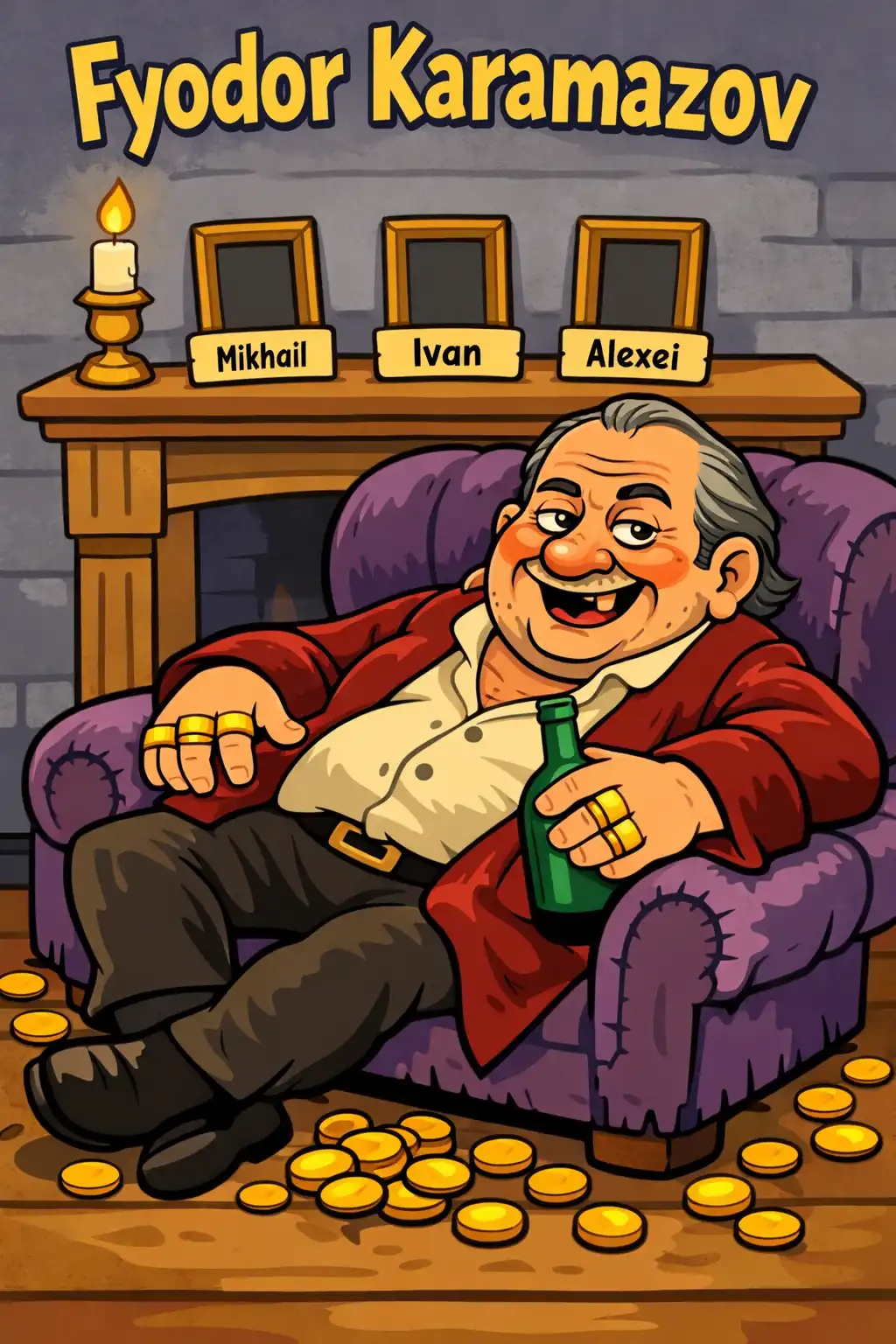
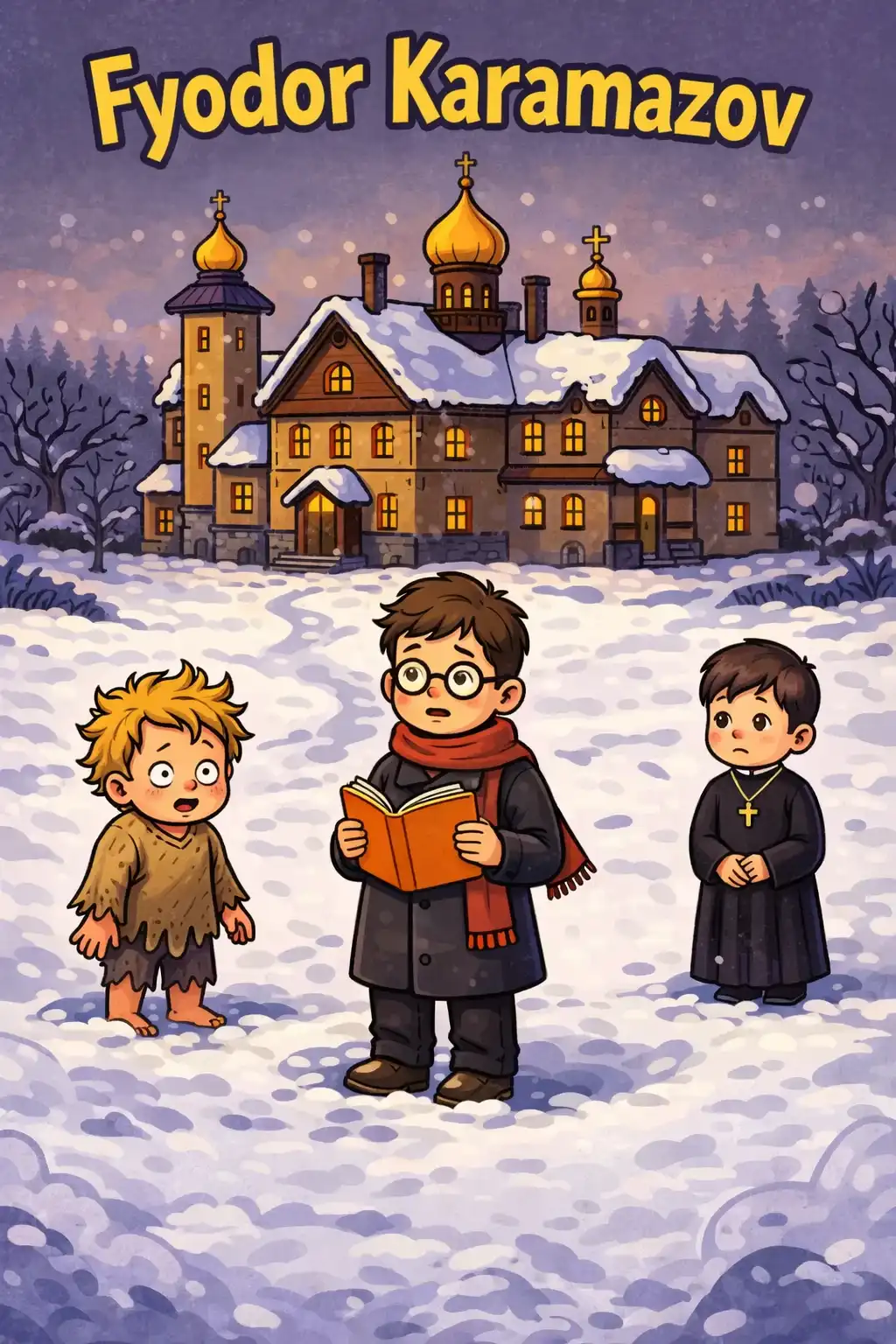
In a small Russian town lives Fyodor Karamazov, a wealthy, crude, and morally bankrupt landowner. He has fathered three sons by two different wives, and he barely raised any of them.

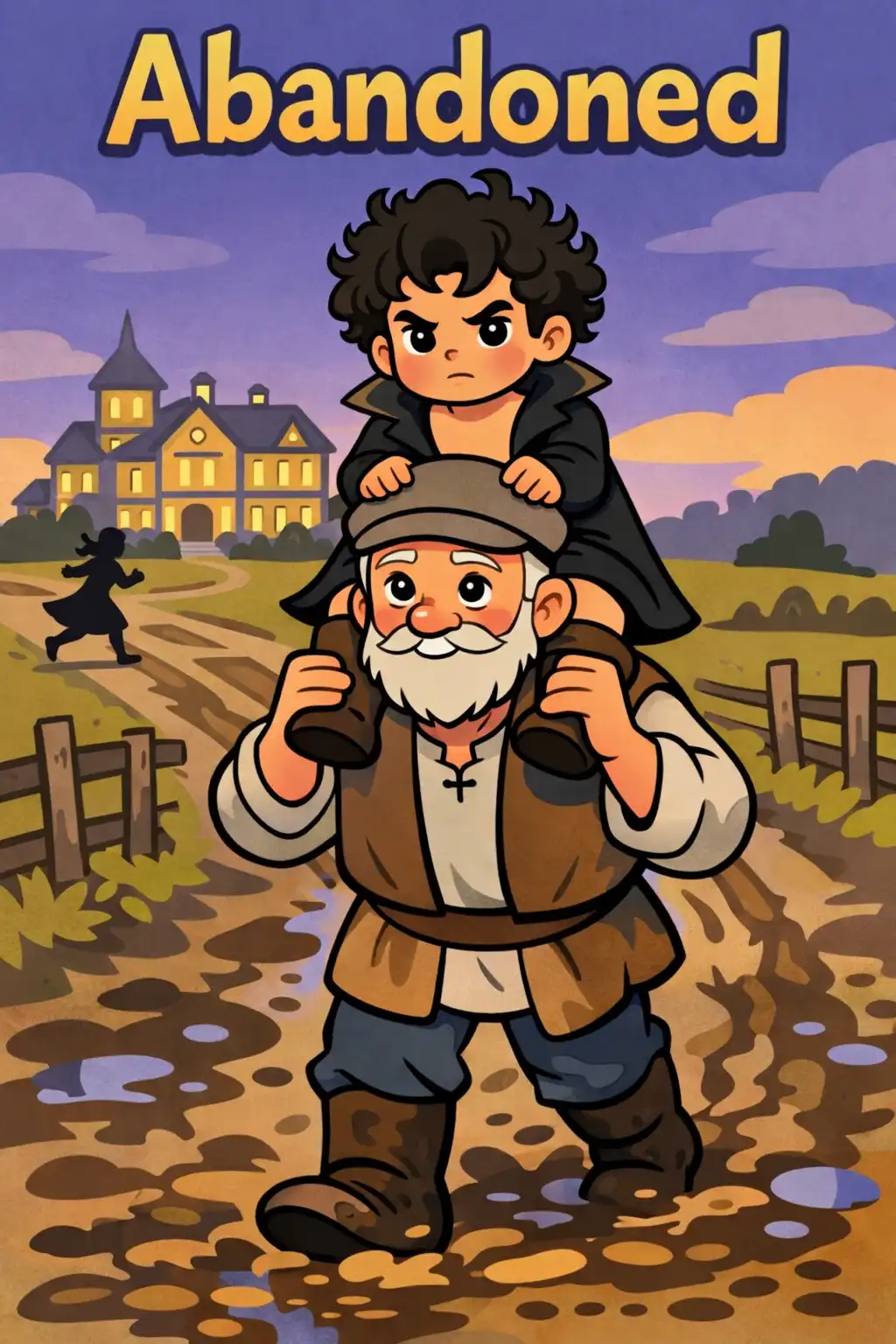
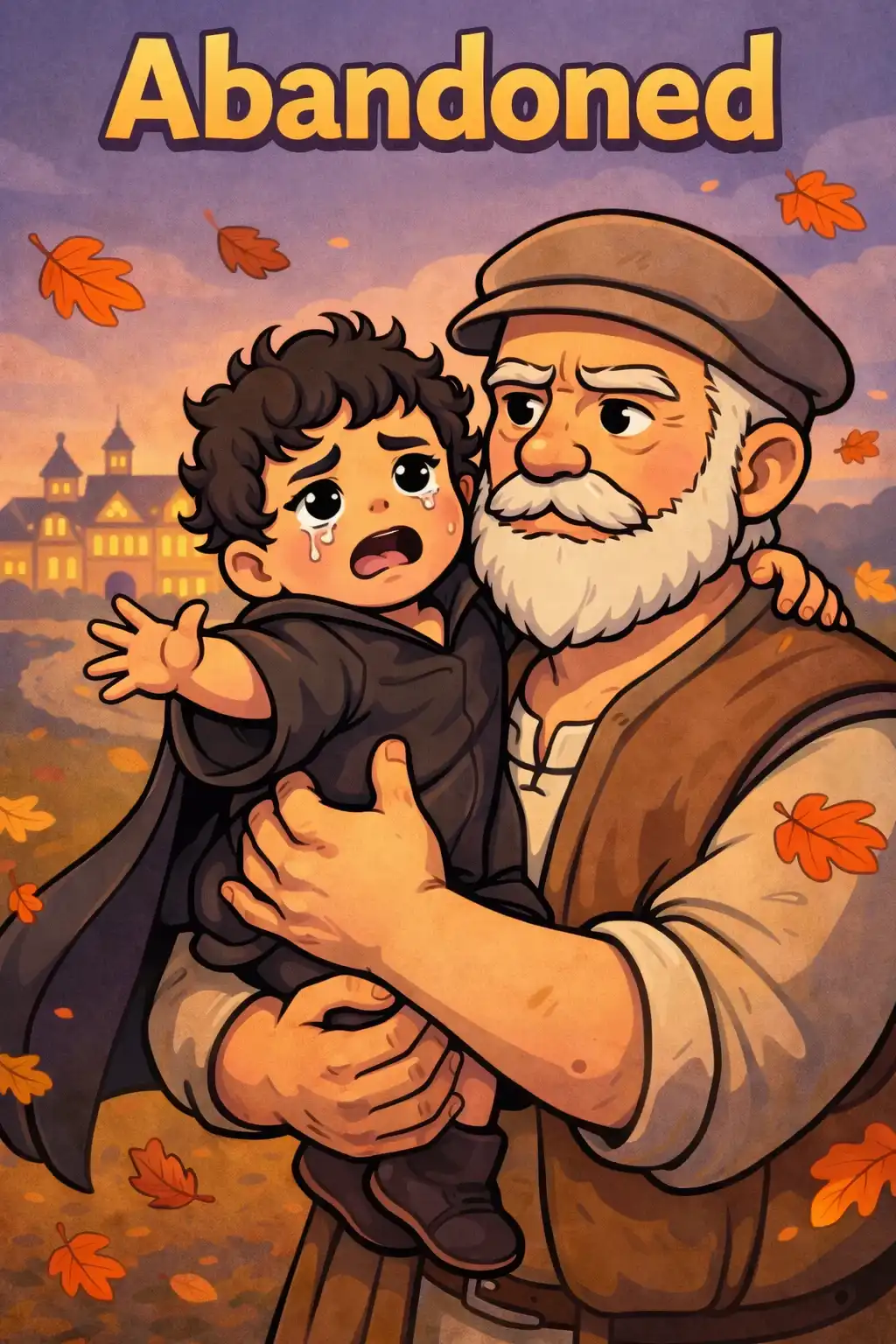
His eldest son, Dmitri, was abandoned as a toddler after his mother fled the marriage. A loyal servant named Grigory basically raised the boy on his own.

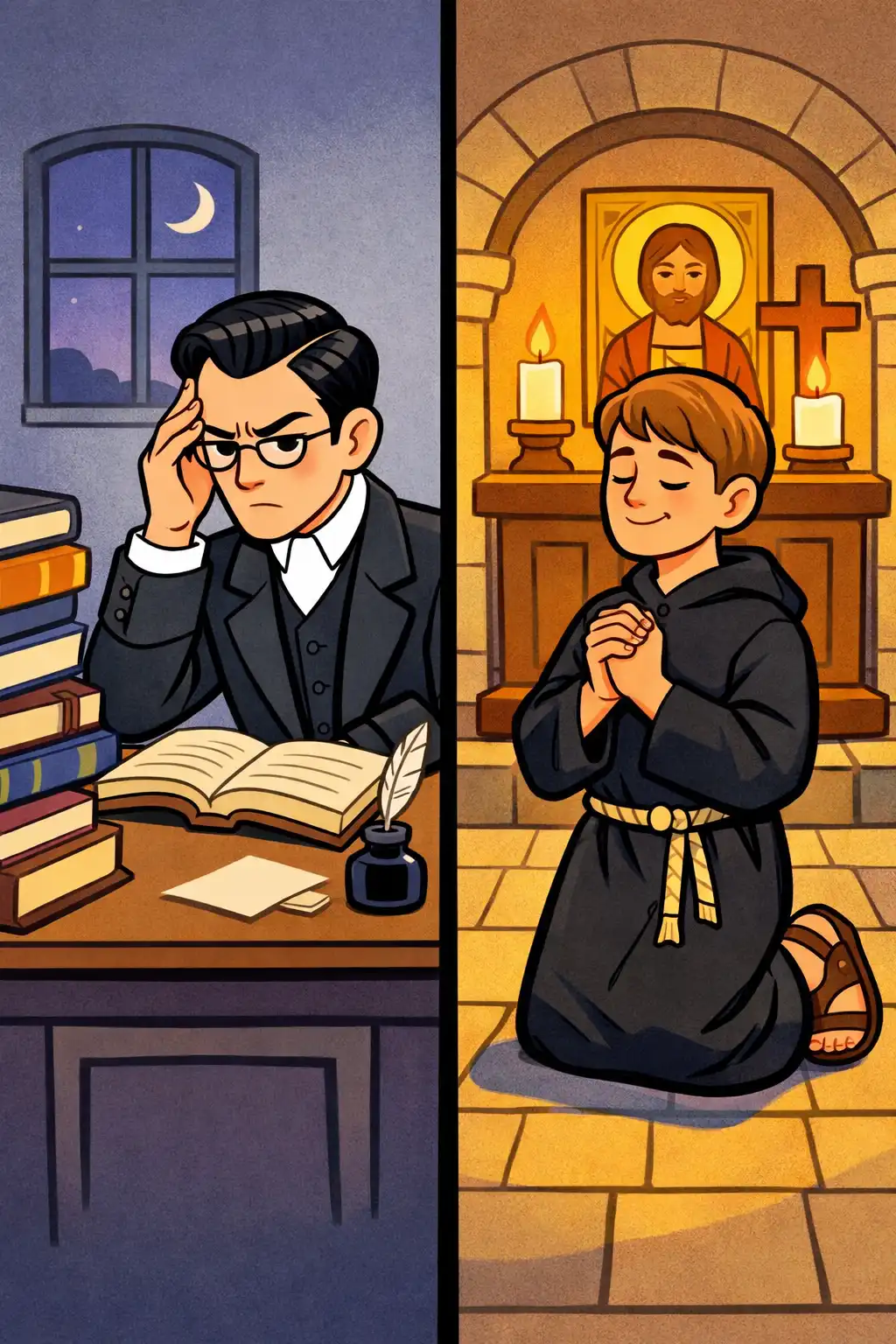
The middle son, Ivan, is a brilliant intellectual who questions everything. The youngest, Alyosha, is a gentle and deeply spiritual young man who is training to become a monk at the local monastery.

Then there is Smerdyakov, the family's cook, who is widely rumored to be Fyodor's illegitimate fourth son. He was born to a disabled homeless woman who died giving birth to him.

None of these sons were truly raised by their father. Fyodor forgot about them, neglected them, and spent the money that should have been their inheritance. Now, all of them have gathered back in town.

At a meeting arranged by the wise monastery elder, Father Zosima, the family's simmering hatred erupts out in the open. Dmitri publicly accuses his father of cheating him out of his money.
Part 2: Dmitri Pours Out His Soul

After the disastrous scene at the monastery, Dmitri pulls his younger brother Alyosha into a crumbling garden summerhouse. He pours out his soul, reciting poetry by Schiller and weeping openly.

He tells Alyosha about a woman named Katerina Ivanovna. She is proud and dignified, but she once came to Dmitri desperate for money to save her father from a public disgrace.

Instead of humiliating her, Dmitri silently handed over five thousand roubles and bowed. She bowed to the floor in return. After that, the two became engaged.

But here is the problem. Dmitri has fallen wildly in love with someone else, a bold and cunning local woman named Grushenka. And this is the twist that sets everything in motion.

His own father, old Fyodor, is also obsessed with Grushenka. Fyodor has set aside three thousand roubles, hoping she will come to him instead of Dmitri.

So now father and son are rivals for the same woman. Money and jealousy are fueling a hatred between them that Dmitri warns could end in murder.

Part 3: Ivan's Rebellion Against God

At a tavern, Ivan sits down with Alyosha for a deeply personal conversation. He tells his brother that he accepts God exists, but he refuses to accept the world that God created.

Ivan describes horrifying true stories of children being tortured and beaten. He asks a devastating question. How could any future divine harmony ever justify the tears of even one innocent child?

Ivan says he is "returning his ticket." He does not deny God. He simply refuses to participate in a universe that is built on that kind of suffering.

Then Ivan shares something he wrote, a poem he calls "The Grand Inquisitor." In it, he imagines Christ returning to earth during the Spanish Inquisition, only to be arrested by the very Church that claims to serve him.

The Grand Inquisitor argues that ordinary people cannot handle real freedom. They need bread, miracles, and authority. And the Church gave them exactly that, by quietly serving the devil instead of Christ.

Christ's only answer is a gentle kiss on the old man's lips. Alyosha says the poem secretly praises Jesus. The brothers part warmly but sadly, each carrying opposite beliefs about the world.

Part 4: Zosima's Legacy and Alyosha's Crisis of Faith

Father Zosima, Alyosha's beloved mentor at the monastery, shares his life story with the monks before he dies. He speaks of universal love and the idea that every person bears responsibility for the sins of all.

After Zosima passes, everyone expects his body to show miraculous signs of holiness. Instead, a smell of decay rises from the coffin. His enemies in the monastery mock his memory gleefully.

Alyosha is devastated. He wanted justice, some kind of divine sign honoring this good man's life. Instead, all he got was humiliation. His faith begins to crack under the weight.

He wanders to Grushenka's house, half expecting to fall into sin. But her genuine kindness disarms him completely. She tells him a parable about the power of sharing even one small good deed.

Later, back at the monastery, Alyosha falls into a dream. He sees a wedding feast where Zosima appears joyful and alive. He wakes up transformed, throws himself on the earth outside, and weeps with love for the whole world.

Something unshakeable enters his soul that night. Three days later, following Zosima's final instructions, Alyosha leaves the monastery to go live in the world among ordinary people.

Part 5: Dmitri's Desperate Night

Dmitri is frantic. He took three thousand roubles from his fiancée Katerina, money she had entrusted to him, and he spent it on a wild night out with Grushenka. His conscience will not let him rest.

He tries everything to raise the money and pay Katerina back. He visits Grushenka's elderly protector, chases a timber merchant out into the countryside, and begs a wealthy woman named Madame Hohlakov for a loan.

Every single attempt fails miserably. And when he finally returns home, he discovers that Grushenka has vanished. She has rushed off to meet the Polish officer who abandoned her years ago.

Convinced she has gone to his father's house instead, Dmitri climbs the garden fence and peers through the lit window. Old Fyodor is inside, dressed up and waiting anxiously for Grushenka.

Dmitri pulls out a brass pestle in a fury. But then the old servant Grigory spots him and grabs his leg, shouting "Parricide!" Dmitri strikes Grigory on the head and knocks him down.

He presses a handkerchief to the bleeding servant's wound, then races off to the village of Mokroe, where Grushenka has actually gone. He is carrying pistols and a wad of mysterious banknotes.

Part 6: The Arrest at Mokroe

At the village inn in Mokroe, Dmitri finds Grushenka sitting with her former lover, the Polish officer. But instead of resorting to violence, Dmitri breaks down in tears and then joins the party.

When the Polish officers are exposed as card cheats and thrown out of the room, Grushenka realizes her old love was never worth her years of misery. She turns to Dmitri.

She confesses that it is Dmitri she truly loves. They embrace passionately. For one brief, beautiful moment, everything seems possible between them.

And then the police fill the room. Dmitri is formally charged with the murder of his father, Fyodor Karamazov. The old man has been found dead, his skull battered in.

During a grueling overnight interrogation, Dmitri insists he is innocent. He reveals a secret he has been hiding. Half the money he was carrying came from a cloth pouch he had sewn around his own neck.

He had kept half of Katerina's money hidden there for a whole month, feeling like a scoundrel but telling himself he was not quite a thief. The lawyers do not believe his story. He falls asleep on a chest, utterly exhausted.

Part 7: Smerdyakov's Confession

While Dmitri sits in prison awaiting trial, Ivan is tormented by guilt. He remembers that before he left town, the servant Smerdyakov had dropped hints that Ivan's absence would clear the way for something terrible to happen.

Ivan visits Smerdyakov three times, trying to get at the truth. At first, the servant deflects everything smoothly. But with each visit, he grows bolder, eventually accusing Ivan of silently wanting his own father dead.

On the third and final visit, Smerdyakov confesses outright. He says he faked his epileptic fit on the night of the murder, lured old Fyodor to the window with a secret signal, and killed him with a heavy paperweight. Then he pulls out the stolen money to prove it.

But Smerdyakov insists that Ivan is the true moral murderer. Ivan left town knowing full well what might happen. His departure was silent consent. "You wanted it," Smerdyakov tells him coldly.

Ivan takes the money as evidence and vows to confess everything at the trial. But that night, alone and burning with fever, he is visited by a hallucination. The devil appears to him in ordinary human form.

The devil mocks Ivan using his own philosophy, repeating the idea that without God, everything is permitted. Ivan hurls a glass at the apparition. Then there is a knock at the door. It is Alyosha, bringing terrible news. Smerdyakov has hanged himself.

Part 8: The Trial and Its Verdict

The courtroom is packed with visitors from across Russia. The women tend to sympathize with Dmitri. The men are mostly hostile. And everyone is curious to see the two rival women, Katerina and Grushenka, face each other.

The prosecution builds what seems like an overwhelming case. Witnesses describe Dmitri's violent threats against his father, his jealousy, and the brass pestle. Each piece of evidence looks more damning than the last.

But the defense lawyer, a man named Fetyukovich, is brilliant. He dismantles witnesses one by one, exposing contradictions and showing that no single piece of evidence is truly certain or conclusive.

Then Ivan stumbles to the witness stand, feverish and half out of his mind. He produces the stolen money and declares that Smerdyakov was the real killer. He also confesses his own moral guilt in letting it happen.

In the chaos that follows, Katerina snaps. She produces a letter that Dmitri had written while drunk, a letter in which he outlined a plan to kill his father. This destroys whatever sympathy the jury had been building for Dmitri.

The jury deliberates for just one hour. The verdict is guilty on all counts, with no recommendation for mercy. Dmitri faces twenty years of hard labor in the Siberian mines.

Part 9: A Stone and a Promise

Woven throughout the novel is a smaller but deeply important story. It is about a boy named Ilyusha, the young son of Captain Snegiryov, the man Dmitri had publicly humiliated by dragging him through the marketplace.

Ilyusha, ashamed and angry on behalf of his father, fought his classmates every day and raged against the world. Eventually, he fell gravely ill. Alyosha quietly gathered the schoolboys together and organized visits to comfort him.

When Kolya Krassotkin, the boy Ilyusha admired most, finally comes to visit and brings the lost dog everyone thought was dead, the sick boy's joy is overwhelming. But it is also brief.

Ilyusha dies. His heartbroken father scatters flowers over the tiny coffin and crumbles bread at the grave so that sparrows will come and visit, just as the boy had wished.

Afterward, the boys all gather at a large stone that was Ilyusha's favorite spot. Alyosha gives them a heartfelt speech, urging them never to forget this moment of shared love and goodness.

He tells them that even a single kind memory from childhood can be enough to save a person from evil later in life. The boys respond with tears and cheers.

You've read the summary. Now watch it.

The animated version covers the same ideas — faster, and in a format you'll actually remember.