A detailed summary ofThe 48 Laws of Powerby Robert Greene
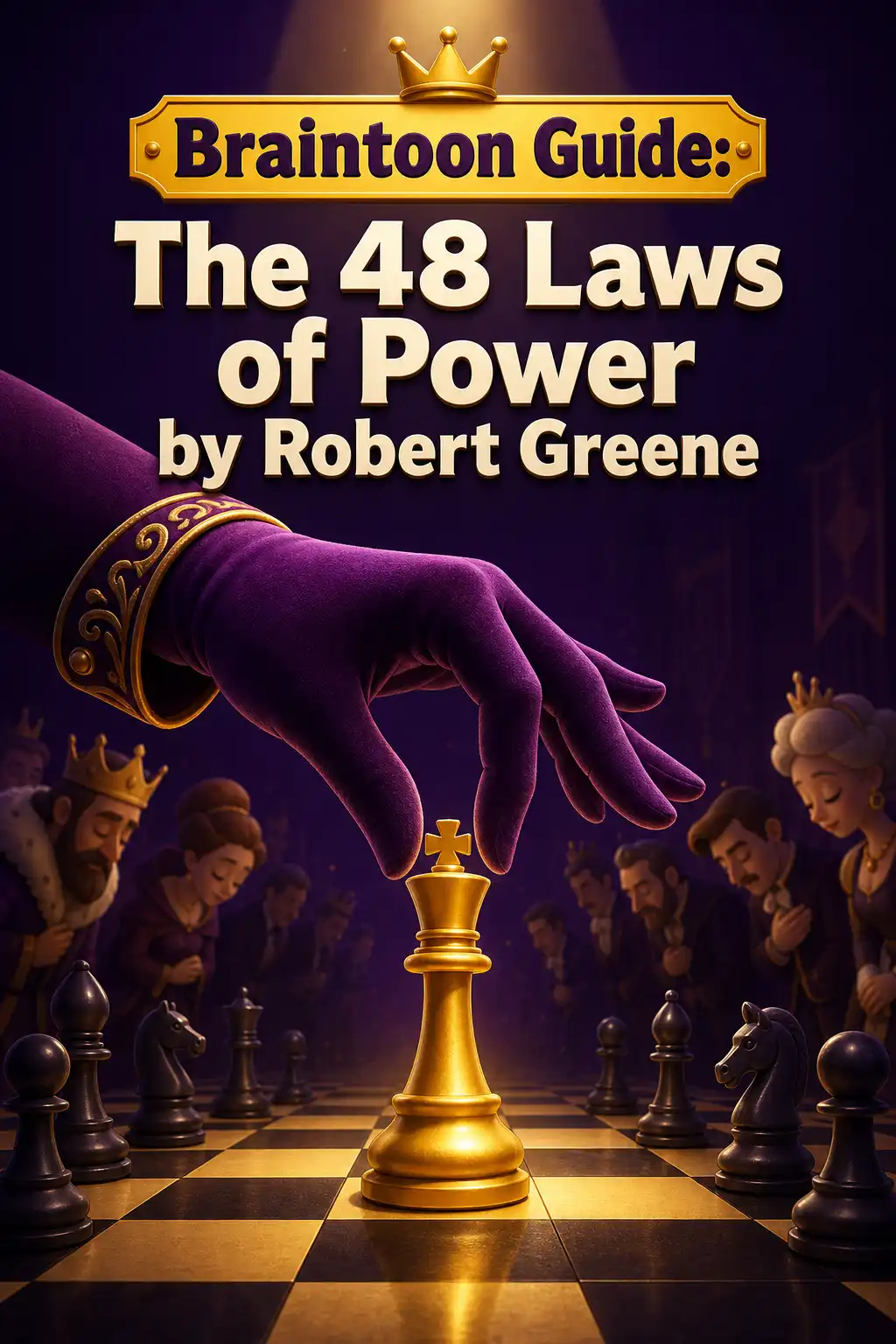
The 48 Laws of Power by Robert Greene distills three thousand years of history into blunt, practical laws for gaining power, defending yourself, and understanding how people really operate.
Watch the first minute









Have you ever watched someone less talented
0:00 / 1:00
60-second animated preview
Key ideas, illustrated
Power Lessons from History
How to Become Indispensable
The Naive Player vs. The Power Player
The 48 Laws of Power Summary
Have you ever watched someone less talented than you get promoted, and quietly wondered what invisible game they were playing that you never even knew existed?
1. The game you're already playing
Here's an uncomfortable idea. Everyone wants power, but nobody's allowed to admit it. Greene argues that feeling powerless makes us miserable, yet openly chasing power looks ugly. So we all pretend we're not playing.
Greene's solution comes from the old royal courts of Europe, where courtiers flattered kings while quietly outmaneuvering rivals. Everything looked polite on the surface. Underneath, it was constant, calculating strategy, dressed up as good manners.
He argues that modern workplaces run the same way. People who take fairness and honesty too literally get crushed by shrewder operators. The trick, Greene says, is an iron hand inside a velvet glove.
And you can't opt out. Greene claims that people who loudly refuse to play power games, flaunting their honesty or their weakness, are often the subtlest players of all. Refusing to play is itself a move.
So which skills actually matter here? Mastering your emotions, practicing real patience, understanding what actually drives other people, and always taking the indirect route toward your goal instead of charging straight at it.
To see how this works in real life, meet Rachel, a project manager at a Denver architecture firm. She's talented, hardworking, and completely open about her ambitions. And she keeps getting passed over.
Watch it come to life
Watch The 48 Laws of Power instead
Explore this summary and the Braintoon library.
2. Never outshine the master
Law one: never outshine the master. In 1661, French finance minister Nicolas Fouquet threw a dazzling party for King Louis XIV, hoping to impress him and win even more favor.
Instead, the king felt upstaged. Within three weeks, Fouquet was arrested, and he spent the rest of his life in prison. His brilliance didn't earn favor. It threatened someone more powerful than he was.
Now compare that with Galileo. When he discovered the moons of Jupiter, he dedicated them to the Medici family, his patrons, and named them the Medicean Stars. They felt glorified, and rewarded him with a well-paid court position.
Greene's advice is simple. Make the people above you feel comfortably superior. Let insecure bosses take credit sometimes. Make them the brightest star in the room, at least publicly, and let your own light shine indirectly.
Rachel learns this the hard way. In a client meeting, she corrects her boss's numbers in front of everyone. She's right. And she's promptly frozen out of the next three projects.
So she changes tactics. Now she sends her boss her ideas privately before meetings and lets him present the strongest ones himself. He looks brilliant in front of clients, and she quietly becomes his favorite.
3. Hide your intentions and say less
Would you announce your battle plans to your enemy? Greene says most of us do exactly that, every single day, just by talking freely about our goals at work and online.
Take Otto von Bismarck, the Prussian statesman. In 1850, he secretly wanted war with Austria, so he publicly argued for peace. The grateful king promoted him, handing Bismarck the very power he needed to eventually push for war on his own terms.
Paired with this is law four: always say less than necessary. Louis XIV famously kept courtiers guessing with deliberate silence, forcing them to reveal themselves while he gave away nothing about his own thinking.
The artist Andy Warhol discovered the same thing centuries later. The less he said, the more depth people projected onto him. Talking too much, Greene warns, makes you seem ordinary and out of control.
Rachel used to tell everyone she wanted the senior manager role. The result? A rival quietly undermined her behind the scenes, and colleagues started reading her every win as naked ambition.
Now she keeps her plans vague and her mouth mostly shut in meetings. When she does speak, people lean in to listen. Her silence starts to read as confidence, even mystery.
4. Guard your reputation, court attention
Here's just how powerful a reputation can be. The Chinese general Chuko Liang once sat calmly on a city wall with a handful of soldiers while an army of 150,000 enemies approached.
The enemy army retreated. His reputation for cunning was so fearsome that they assumed the open, undefended city had to be a trap. His name did the fighting for him.
Greene's advice: build your reputation around one clear, powerful quality, and then guard it fiercely. Done right, it works on your behalf before you even enter the room.
Law six adds a twist. Court attention, because whatever goes unseen counts for nothing. Showman P.T. Barnum planted fake news stories about his own exhibits, welcoming praise and mockery equally, because both kept his name alive.
But there's a warning here. Thomas Edison's public campaign to discredit the inventor Nikola Tesla backfired badly, damaging Edison's own image far more than it ever hurt his rival. Attacks can boomerang.
Rachel picks her quality carefully. She becomes the person who never misses a deadline, ever. She mentions it lightly, delivers on it religiously, and lets the stories about her reliability spread on their own.
5. Win through actions, never arguments
When was the last time you won an argument and the loser actually thanked you for it? Greene says pretty much never, because even people who concede in the moment walk away resentful.
When Michelangelo's patron complained a statue's nose was too big, Michelangelo climbed up, pretended to chisel while dropping hidden marble dust for effect, and changed absolutely nothing. The patron was delighted.
The architect Christopher Wren did something similar, building dummy columns to calm a nervous mayor who thought a ceiling would collapse. Both men proved their point through action, without a single humiliating debate.
Law eight adds another angle. Make others come to you. The French diplomat Talleyrand secretly baited Napoleon into escaping exile, knowing France's weakness would doom him. Whoever controls the territory controls the game.
Rachel used to argue budgets line by line with skeptical clients, winning debates and losing goodwill at the same time. Now she just builds two versions of the plan and lets the numbers speak for themselves.
When a client insists on a bad timeline, she runs a small pilot that demonstrates the problem instead of debating it out loud. The client reverses course, believing the new idea was his own all along.
6. Make people need you
Here's a hard truth. Being liked at work is nice, but being needed is power. Greene points to Renaissance mercenaries who won wars for their employers and then got discarded the moment they became replaceable.
Bismarck played it very differently. He attached himself to weak kings and made himself essential to their survival. Eventually, merely threatening to resign was enough to get his way on almost anything.
Greene offers three routes to being needed. A unique skill, deep involvement across many areas, or holding key information. Michelangelo was so irreplaceable that even a proud pope couldn't afford to lose him.
Law thirteen pairs perfectly with this. When you need help, appeal to people's self-interest, never their mercy or gratitude. Gratitude, Greene says, is a burden most people happily discard the moment they can.
When Genghis Khan planned to destroy China's cities, his adviser Yelu Ch'u-Ts'ai saved millions of lives, not by appealing to compassion, but by pointing out how much tax revenue living, functioning cities generate.
Rachel becomes the only person who truly understands the firm's new project software, then quietly weaves herself into three different departments. Suddenly, removing her would hurt everywhere at once.
7. Plan to the end, hide the effort
The Spanish explorer Balboa discovered the Pacific Ocean and learned of Incan gold. But he shared his plans before securing his position, and a rival had him executed. Someone else claimed all the glory.
Greene's law twenty-nine: plan all the way to the end. Bismarck had one clear goal, a unified Germany, and every war he provoked was a calculated step toward it. Once he achieved it, he stopped.
Most people, Greene argues, mistake wishful thinking for planning. They picture the happy ending without ever mapping the obstacles, the rivals, or what actually happens after they win the thing they wanted.
Law thirty adds the finishing touch. Make your accomplishments seem effortless. The escape artist Houdini seemed almost supernatural precisely because he hid years of brutal practice behind a calm, graceful performance.
The Renaissance had a word for this: sprezzatura, the art of making difficult things look easy. Reveal all the sweat behind your success, and you seem ordinary. Hide it, and you seem gifted.
Rachel maps her path to senior manager like a military campaign. Whose support she needs, who might block her, and, crucially, what she'll do after she gets the title, not just before.
8. Win quietly and stay formless
Success is the most dangerous moment. The playwright Joe Orton's soaring fame consumed his overlooked partner with envy, and that envy ended in murder. Appearing too perfect can turn allies into enemies overnight.
Cosimo de' Medici understood this deeply. Though he effectively ruled Renaissance Florence, he dressed modestly, rode a simple mule, and deferred publicly to others. Real power, invisible envy.
Law forty-seven warns against going past your goal. Cyrus the Great built a vast Persian empire, then attacked one tribe too many out of pure overconfidence. That final campaign killed him.
And the final law: be formless. Rigid Sparta crumbled when the world changed around it, while adaptable Athens outlasted its own conqueror. Fixed shapes invite attack. Fluidity keeps enemies guessing.
Rachel finally gets the promotion. But she credits luck and her team openly, shares small struggles honestly, and lets colleagues see her flaws. The envy that sinks so many new leaders never quite finds her.
She also resists the urge to keep conquering, settling into the role before reaching further. And she stays adaptable, knowing today's tactics won't all work at the next level up.
Watch it come to life
Watch the animated summary
Explore this summary and the Braintoon library.