


Thinking Fast and Slow cover

Book summary: Thinking Fast and Slow by Daniel Kahneman

10 min read12 key lessonsText + animated summary

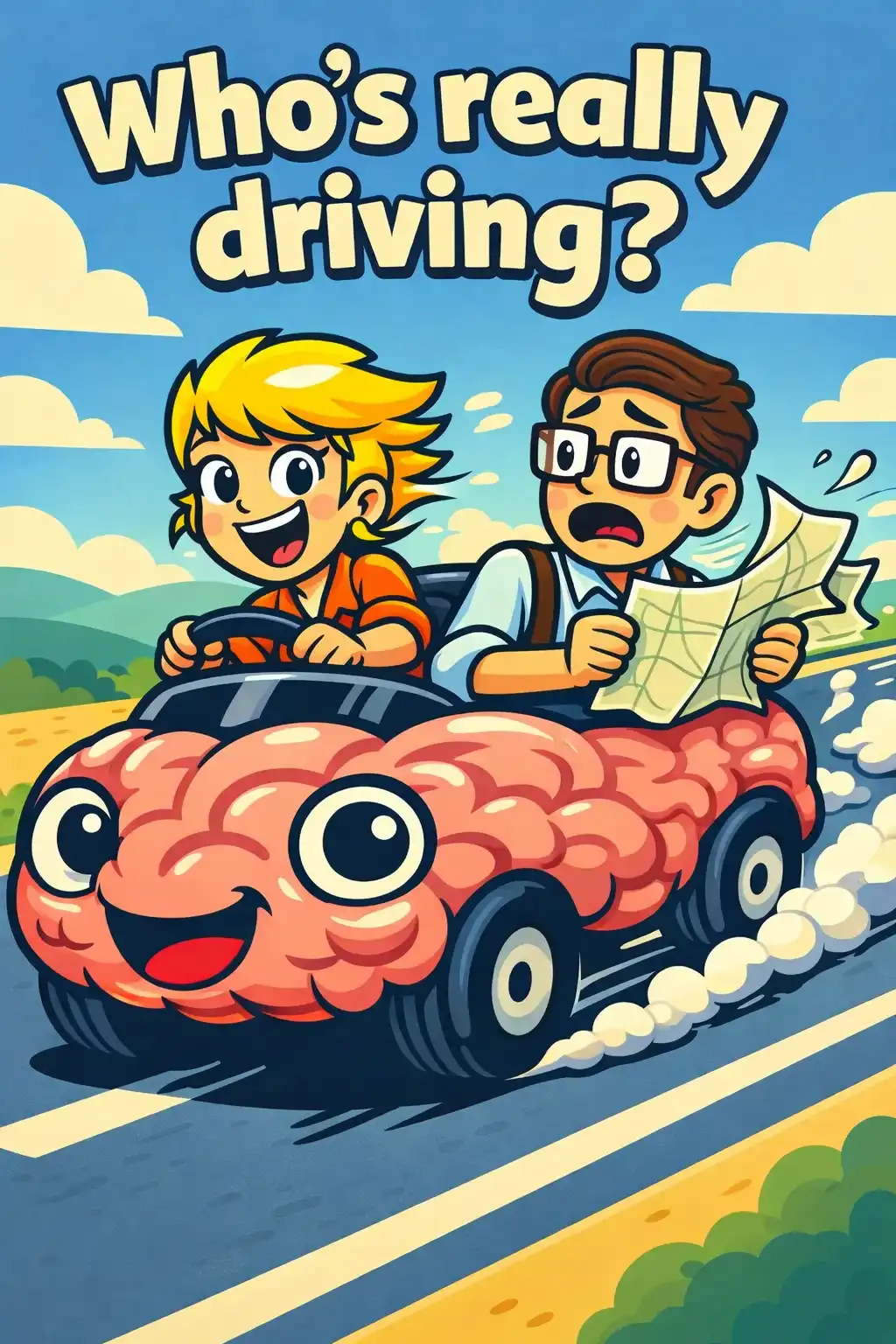
What if most of your decisions aren't actually made by the rational, careful part of your brain? What if the part you think is in charge, is mostly just along for the ride?

One-sentence summary

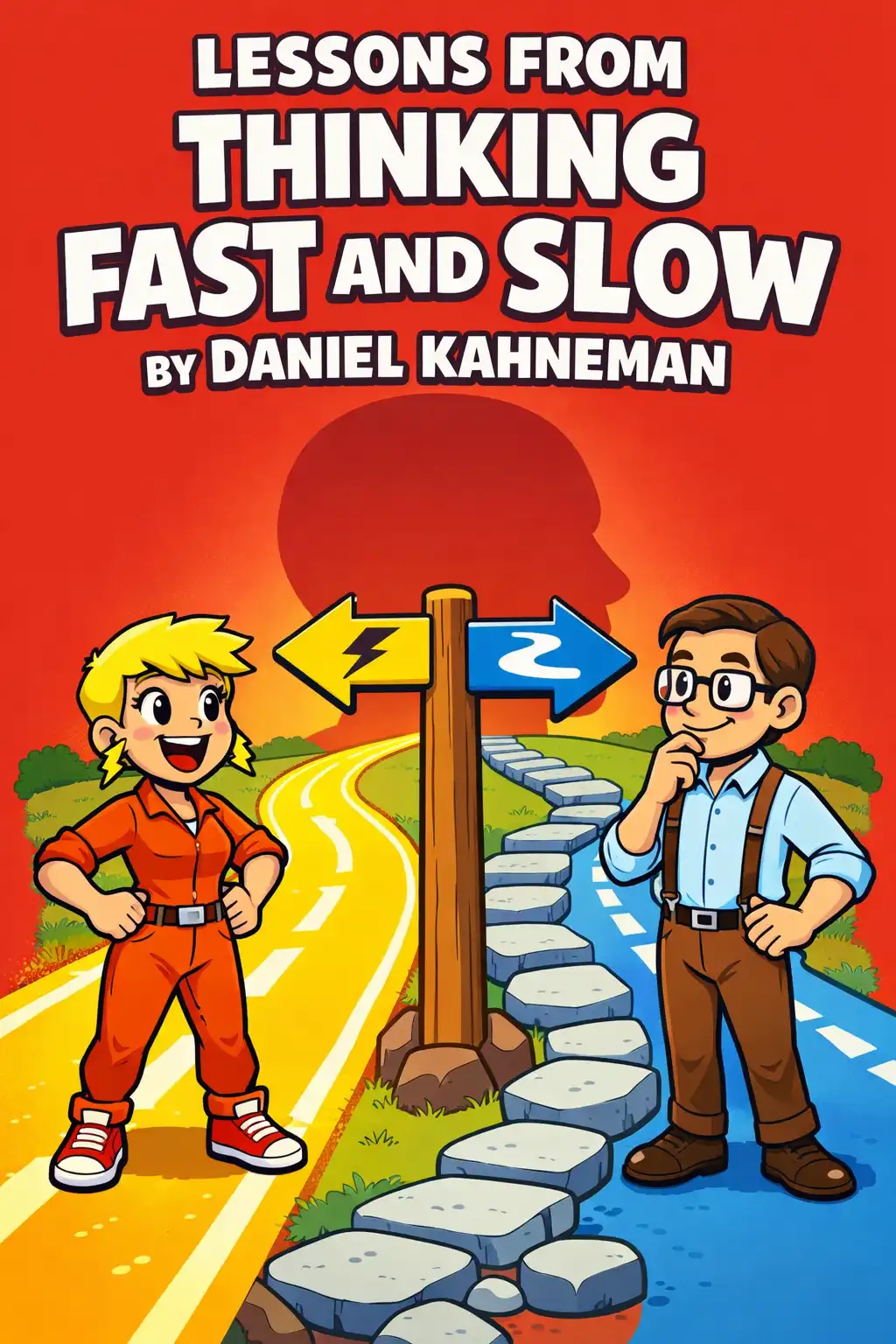
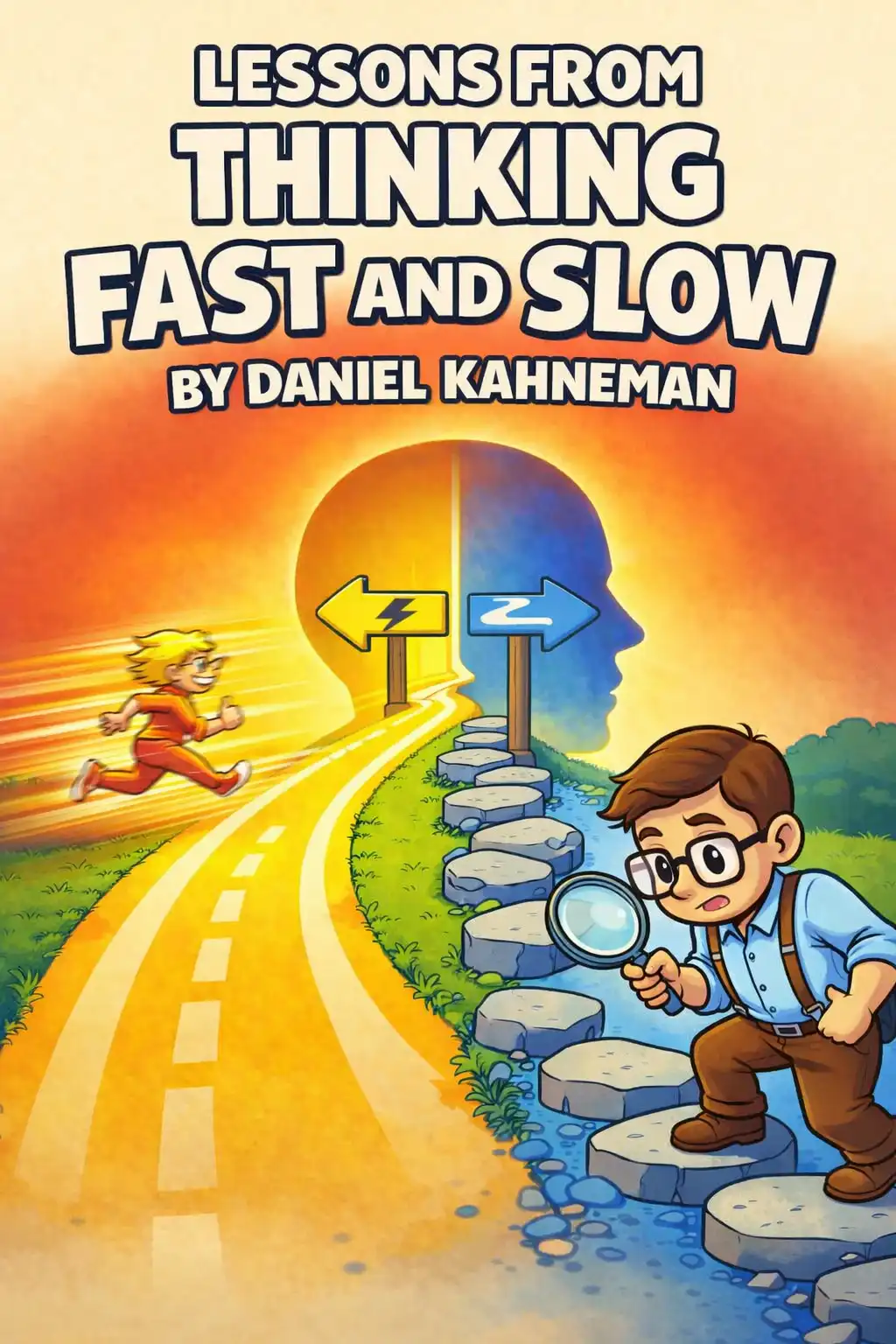
"Thinking Fast and Slow," by Nobel Prize winner Daniel Kahneman, reveals how two competing systems in your mind shape every single choice you make.

Reading about Thinking Fast and Slow is one thing.

Watching it is faster, more fun, and you'll actually remember it.

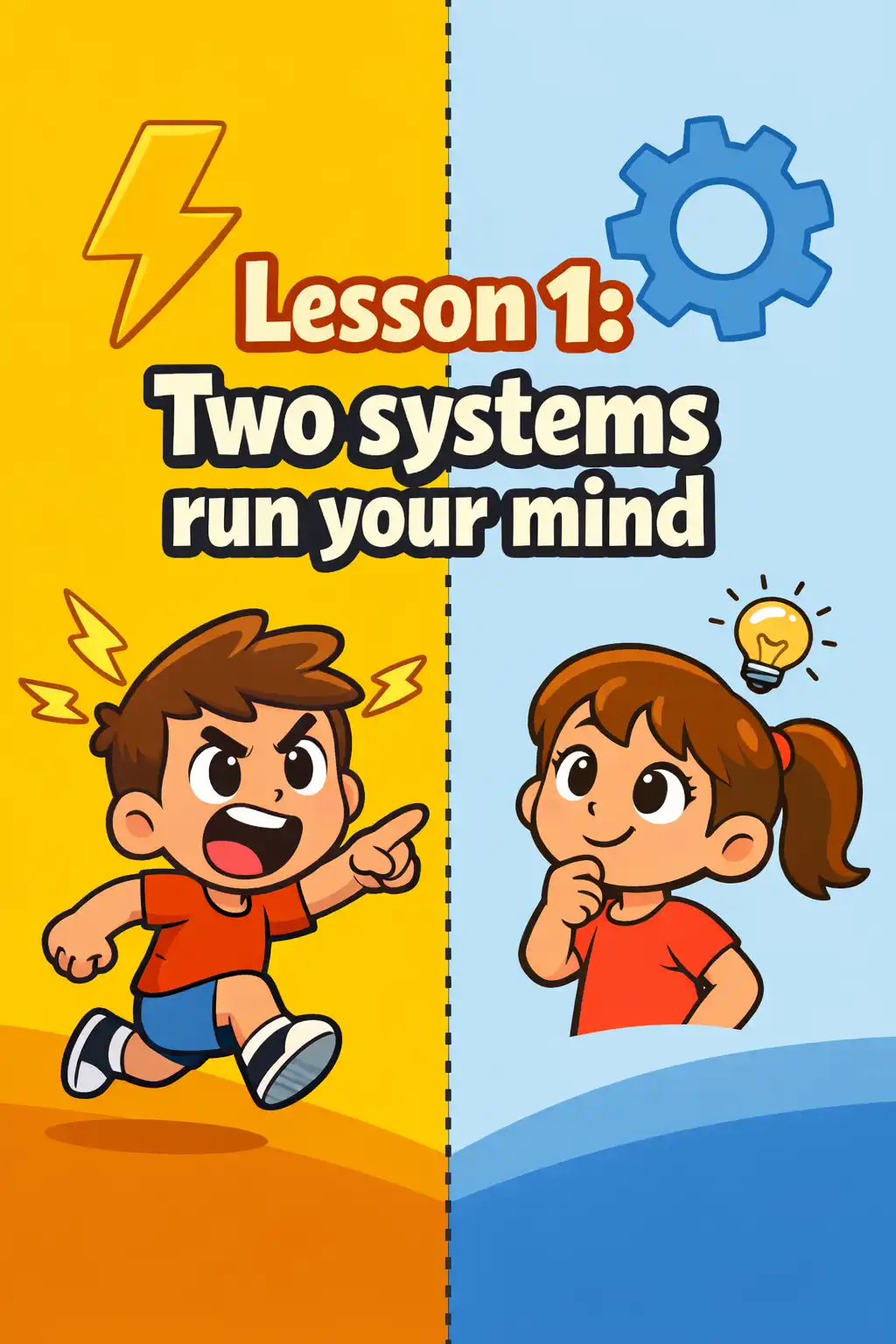
Lesson 1: Two systems run your mind

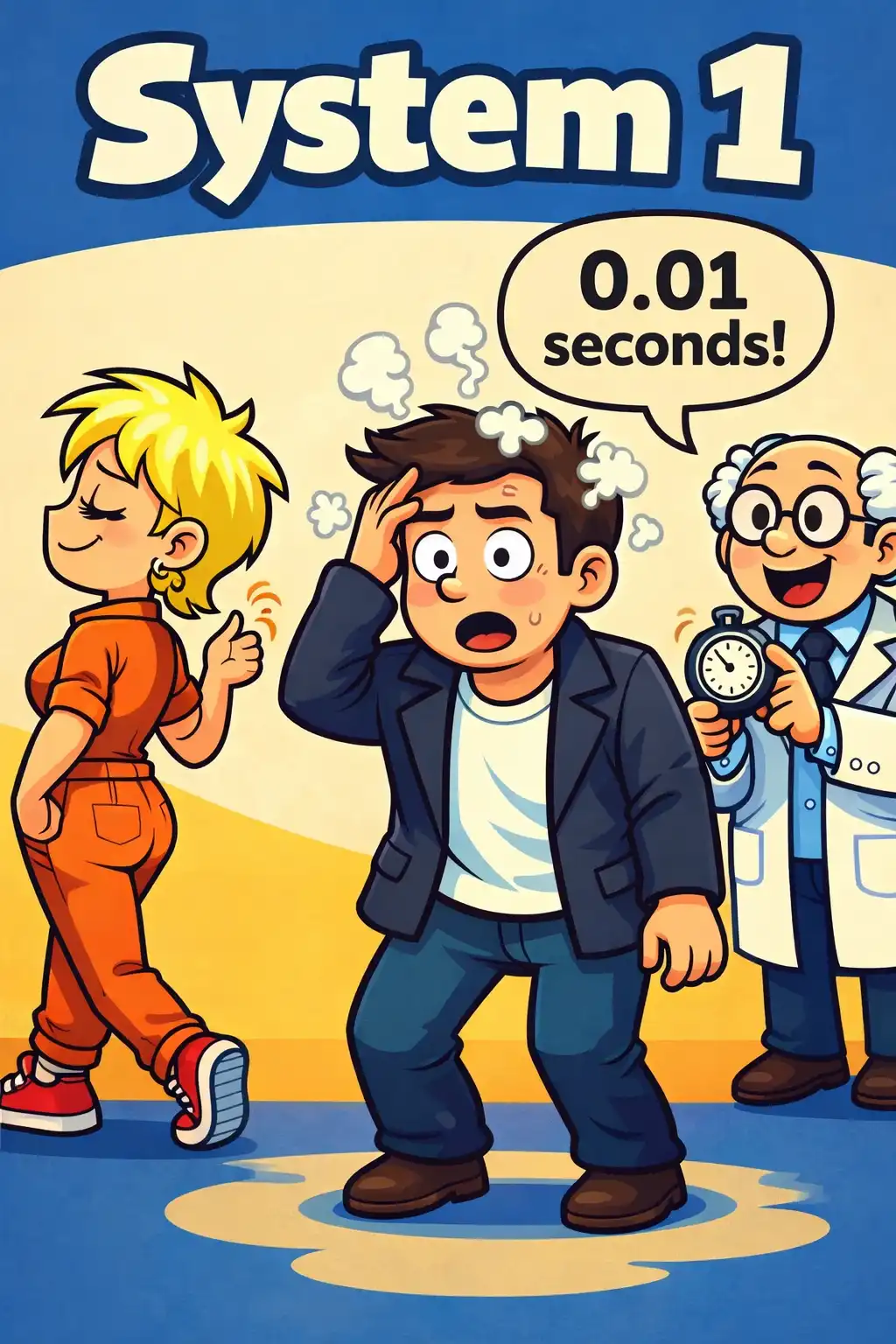
Imagine glancing at someone's face and instantly knowing they're angry. You didn't analyze anything. You didn't run any calculations. You just knew. That's what Kahneman calls System 1.

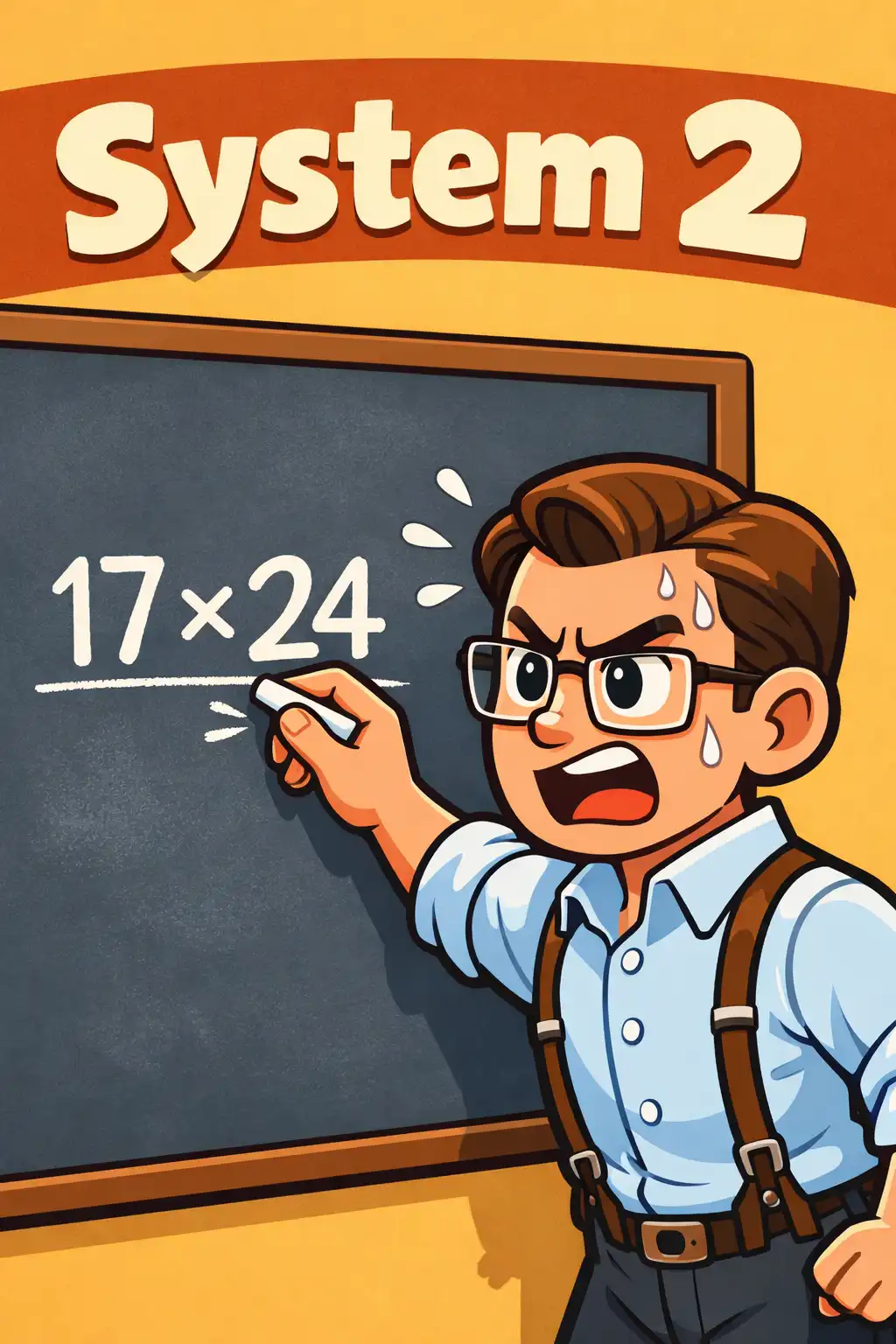
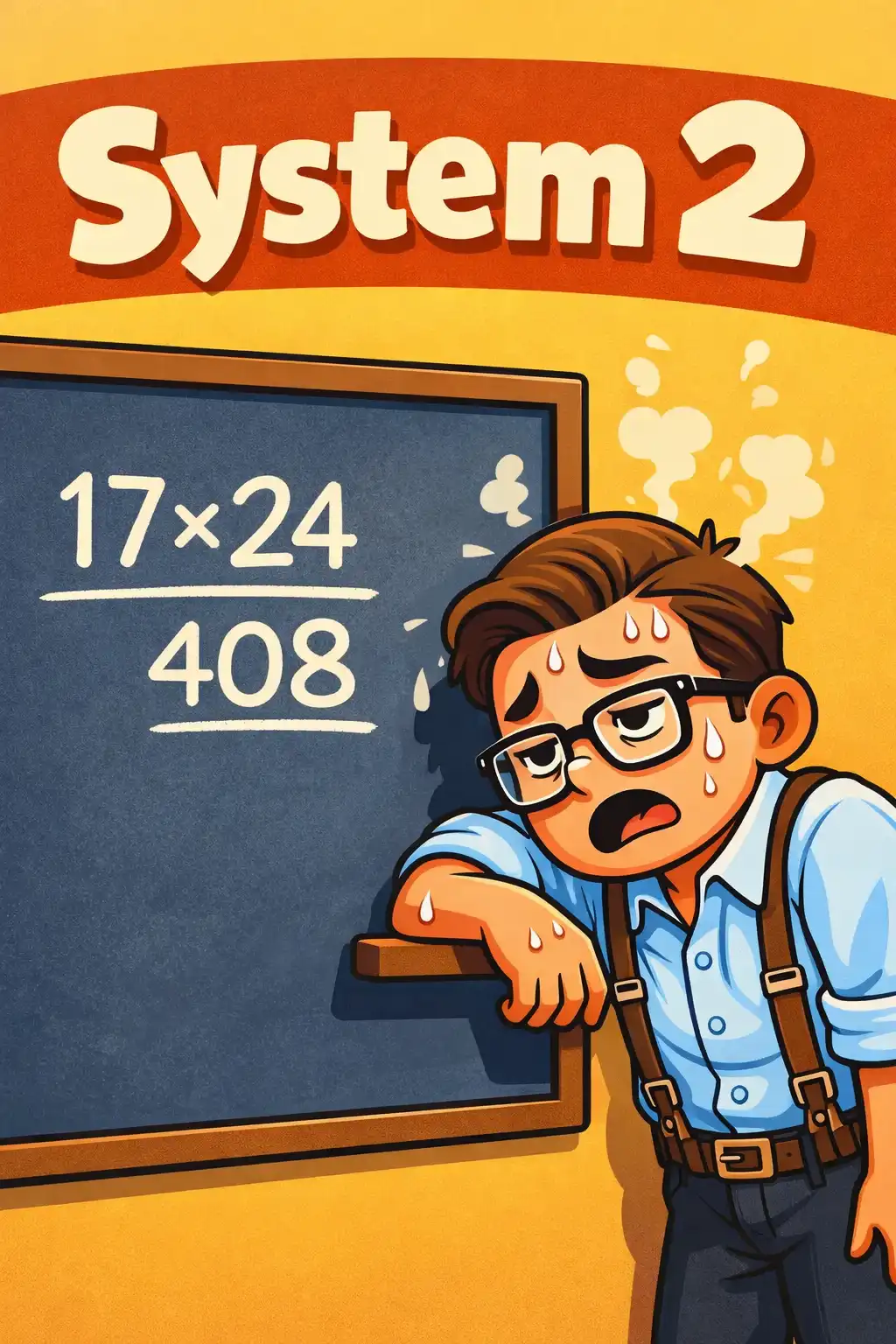
Now try solving seventeen times twenty-four in your head. Feel that effort? That slow, deliberate concentration is System 2 at work.

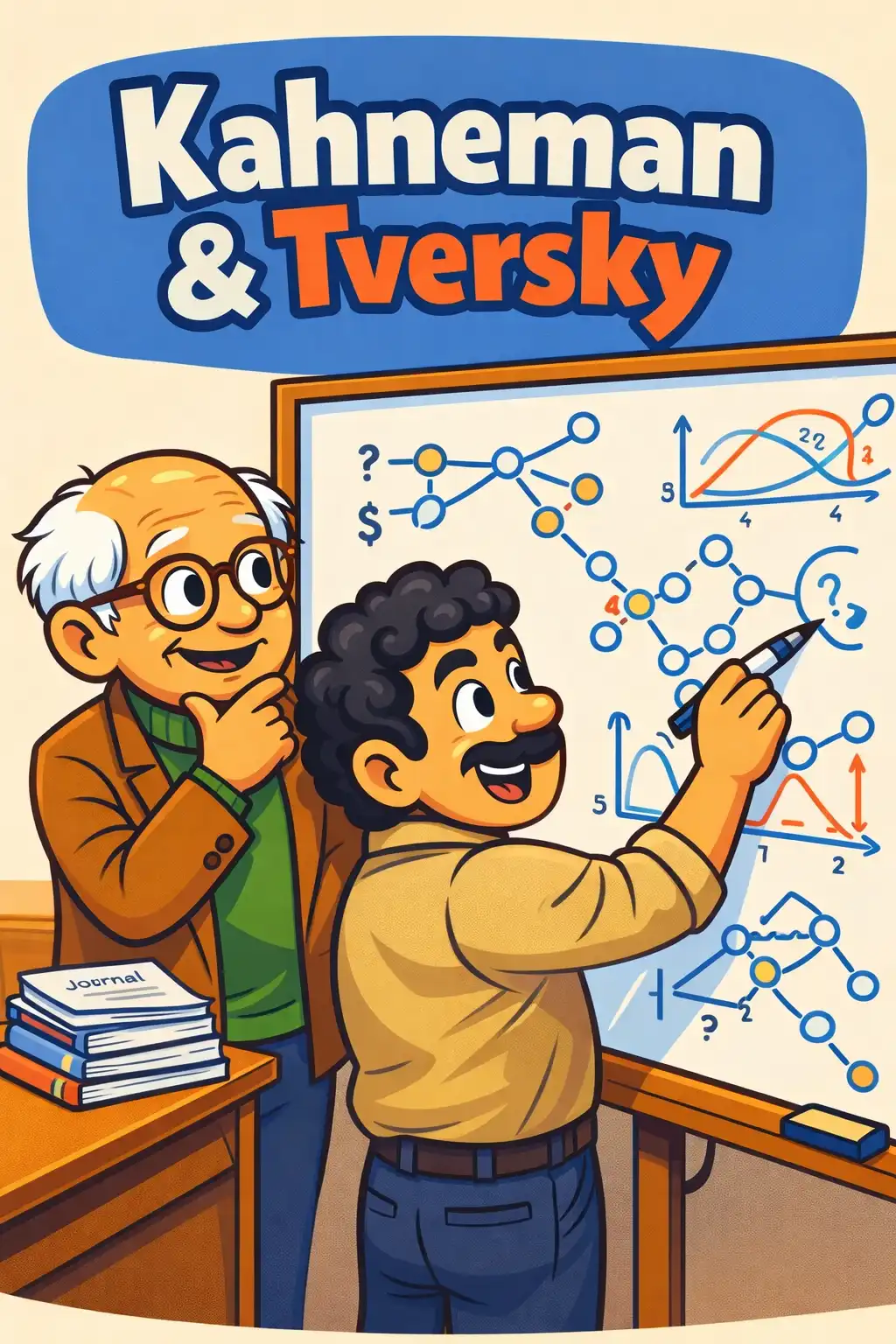
Kahneman spent decades studying human judgment alongside his colleague Amos Tversky, a brilliant Israeli psychologist. Together, their research changed how we understand the mind.

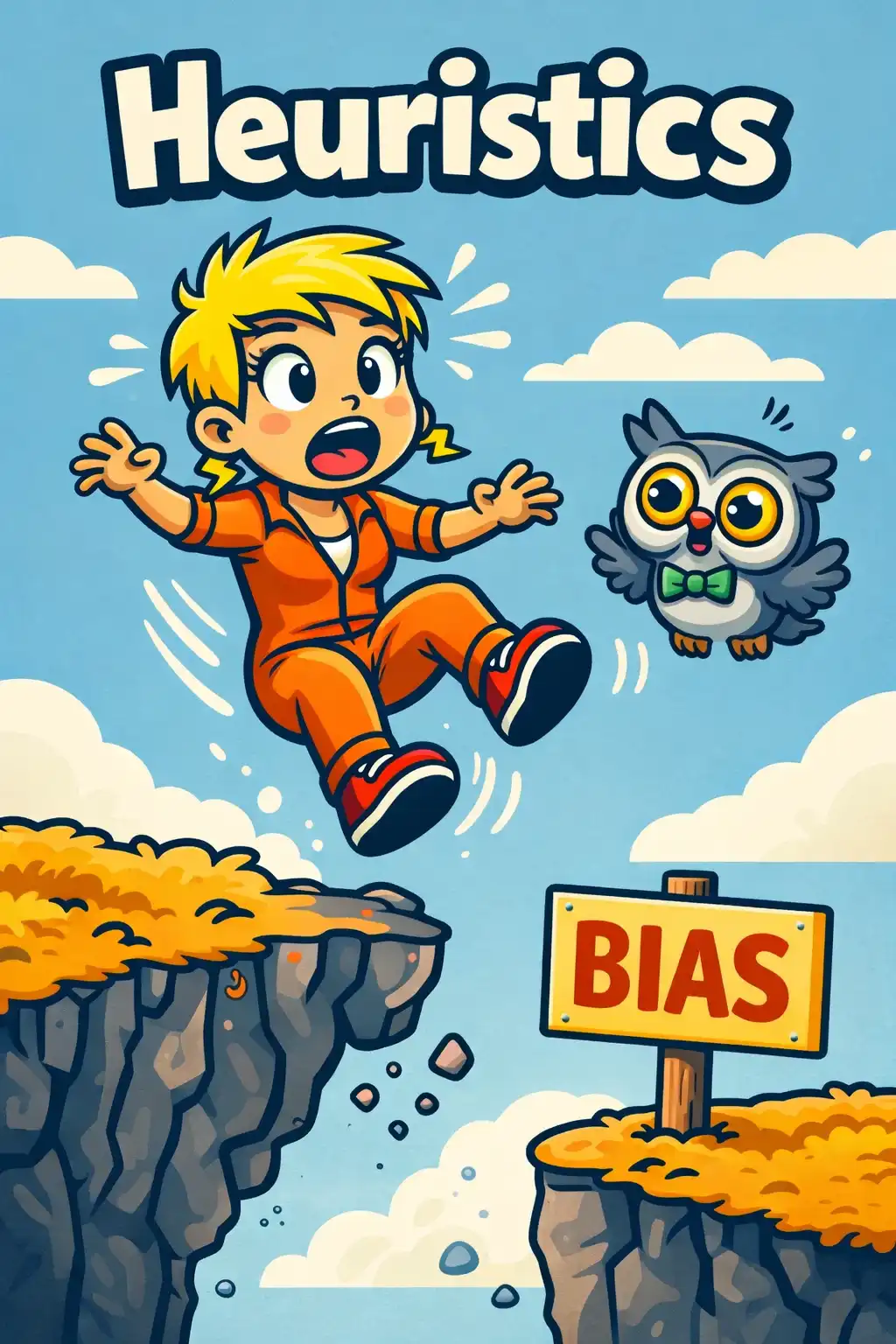
They discovered that we rely on mental shortcuts called heuristics. These shortcuts are usually helpful, but they can also lead to predictable errors, which they called biases.

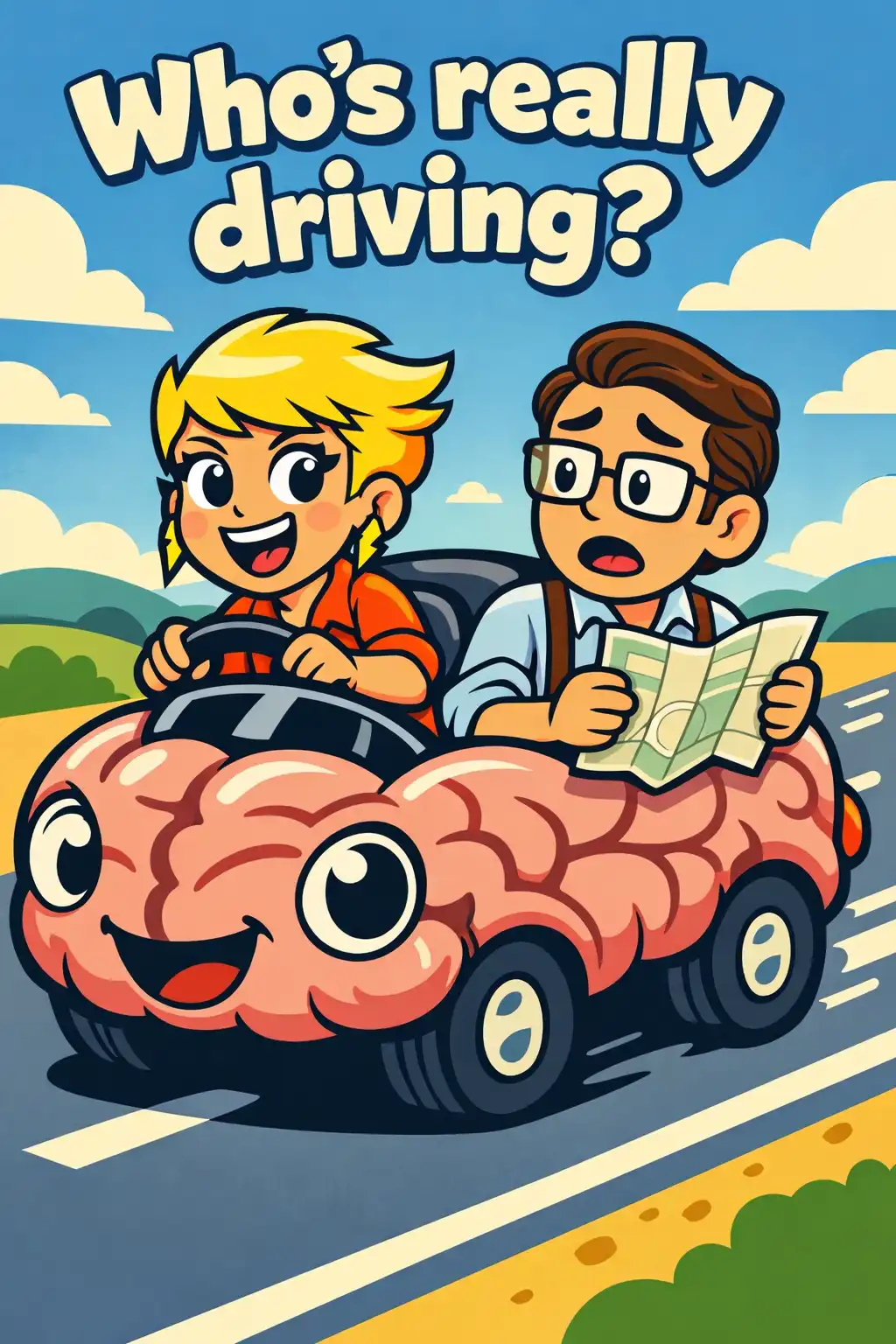
Here's the key insight. System 1 is fast, automatic, and always running in the background. System 2 is slow, effortful, and surprisingly lazy.

We like to believe System 2 is in charge. But most of the time, System 1 is quietly making our decisions, and System 2 just nods along without questioning them.
Lesson 2: Your lazy brain takes shortcuts

Try this famous puzzle. A bat and a ball cost one dollar and ten cents together. The bat costs one dollar more than the ball. So how much does the ball cost?

Most people instantly say ten cents. But the real answer is five cents. System 1 jumped to a wrong answer, and System 2 didn't even bother to check the math.

Kahneman calls this the "law of least effort." Our brains naturally gravitate toward whatever requires the least amount of mental work.

It gets worse. Psychologist Roy Baumeister found that willpower and careful thinking share the same limited energy supply. Use one up, and you drain the other.

So when you're tired, stressed, or mentally overloaded, you're far more likely to accept wrong intuitions, give in to temptation, and judge people based on surface impressions.

Lesson 3: What feels true isn't always true

Think about a slogan you've heard repeated hundreds of times. It probably feels true by now, right? That feeling has a name. Kahneman calls it "cognitive ease."

When something is easy for your brain to process, you feel relaxed and trusting. You end up mistaking that comfortable feeling of familiarity for actual truth.

Authoritarian regimes and advertisers have exploited this for centuries. Repeat a message enough times, and people start believing it, regardless of the evidence.

But here's a useful flip side. When information feels harder to process, like text printed in an ugly or difficult font, people actually slow down and think more carefully.

So a little cognitive strain, while uncomfortable, can actually improve your accuracy. Some friction in your thinking process isn't always a bad thing.

Lesson 4: You see patterns that aren't there

Picture a basketball player who sinks three shots in a row. The fans go wild, convinced the player has a "hot hand." But is the streak real, or is it just randomness?

Tversky and his colleagues studied this carefully. They found the hot hand in basketball is largely a myth. Players and fans are simply imposing order on random sequences.

Kahneman calls this the "law of small numbers." We instinctively expect small samples to behave like large ones. But in reality, small samples are far more variable and unpredictable.

This error once tricked major education foundations into investing heavily in small schools, thinking their size caused better results. In truth, small schools just show more extreme variation in either direction.

System 1 craves causal stories. It would rather invent a reason for a pattern than accept that sometimes, things just happen randomly.

Lesson 5: Anchors quietly control your estimates

Imagine spinning a wheel of fortune that lands on the number sixty-five. Then someone asks you, "How many African countries are in the United Nations?" Your answer drifts toward sixty-five.

That's exactly what happened in Kahneman and Tversky's experiment. Students who saw a higher number on a completely random wheel gave significantly higher estimates afterward.

This is called the anchoring effect. Whatever number you encounter first, even if it's totally irrelevant to the question, pulls your final guess toward it like a magnet.

Real estate agents, experienced judges, and everyday shoppers all fall for anchoring. Even when they confidently insist they weren't influenced at all.

To fight it, Kahneman suggests deliberately arguing against the anchor in your head. That forces System 2 to wake up and push back against the pull.

Lesson 6: Losses hurt more than gains feel good

Imagine finding a hundred dollars on the sidewalk. Feels great, right? Now imagine losing a hundred dollars from your wallet. That pain is roughly twice as intense as the joy of finding it.

This asymmetry is called "loss aversion." It's one of the biggest ideas in Kahneman's "prospect theory," the framework that helped earn him the Nobel Prize in Economics.

Traditional economics assumed people evaluate outcomes based on their total wealth. But Kahneman and Tversky showed we actually judge everything relative to a starting reference point.

This explains so much. Professional golfers putt measurably better when trying to avoid a bogey than when chasing a birdie, because avoiding a loss feels more urgent than pursuing a gain.

In negotiations, each side feels their concessions more painfully than they value what they receive in return. That's why compromise often feels so frustrating for everyone involved.

Even simple experiments with coffee mugs show this. People who were given mugs demanded roughly twice the price that buyers were willing to pay. Just owning something inflates its value in your mind.

Lesson 7: Overconfidence is the most dangerous bias

Picture a team planning a big project. They estimate it will take two years. It ends up taking eight. And the final product is never even used.

That's exactly what happened to Kahneman's own curriculum project in Israel. He calls this the "planning fallacy," our tendency to plan as if everything will go perfectly.

The problem is that we naturally take what he calls the "inside view." We focus on our specific plans and ignore what happened to similar projects in the past.

Entrepreneurs are especially vulnerable to this. Despite a sixty-five percent failure rate for small businesses within five years, most founders genuinely believe they'll personally beat the odds.

Kahneman recommends two powerful remedies. First, use "reference class forecasting." That means studying what actually happened to comparable projects before you start making your own plans.

Second, try what researcher Gary Klein calls a "premortem." Before finalizing a decision, imagine the project has already failed. Then work backward to figure out what went wrong.

Lesson 8: Experts are often no better than algorithms

Think about a doctor diagnosing a patient, or a judge predicting whether someone will commit another crime. Surely years of experience make these experts highly accurate, right?

Psychologist Paul Meehl reviewed twenty studies comparing expert predictions with simple statistical formulas. The formulas won nearly every time, across fields from medicine to criminal justice.

Why? Because humans try to be clever, weighting factors inconsistently. Even the same radiologist will sometimes contradict their own earlier judgment when reviewing the exact same case twice.

Kahneman found that expert intuition is only trustworthy under two conditions. First, the environment must be regular and predictable. Second, the expert must have practiced with clear, timely feedback.

Firefighters and chess masters meet those conditions, so their gut instincts tend to be reliable. Stock pickers and political pundits generally do not, even though they feel just as confident.

Lesson 9: How something ends changes everything

Imagine holding your hand in painfully cold water for sixty seconds. Now imagine doing it for ninety seconds, but the water warms up slightly during the final thirty seconds.

In Kahneman's experiment, eighty percent of people chose to repeat the longer trial, which was objectively more painful overall. They preferred it simply because it ended a little better.

This reveals what Kahneman calls the "peak-end rule." Your memory of an experience is shaped mainly by its most intense moment and by how it ended, not by how long it lasted.

This means you actually have two selves. The "experiencing self" lives through each moment in real time. The "remembering self" writes the story afterward and makes your future decisions.

The remembering self is the one in charge, yet its memory is often distorted. Understanding this gap can help you design better experiences and make wiser choices going forward.

Lesson 10: Money buys happiness, but only up to a point

If you got a big raise tomorrow, how much happier would you actually be six months from now? Most people dramatically overestimate the answer.

Kahneman's research with Gallup survey data found that poverty genuinely worsens daily suffering. But beyond about seventy-five thousand dollars a year, more money stopped improving people's day-to-day mood.

Life satisfaction, though, kept climbing with income. That's because satisfaction is a judgment made by the remembering self, comparing your life to other people's lives or to your own goals.

Kahneman calls this the "focusing illusion." Whatever you're thinking about right now seems more important than it actually is for your overall well-being.

People who become paraplegic, for example, adapt far more than anyone expects. They spend most of their time in reasonably good moods, because their attention eventually shifts to other parts of life.

The lesson? We're bad at predicting what will make us happy. Spending on experiences, social connection, and free time tends to matter far more than most people think.

Lesson 11: Framing changes your decisions

Imagine a doctor telling you a surgery has a ninety percent survival rate. Now imagine them saying it has a ten percent mortality rate. Same fact, but one framing feels dramatically safer.

Kahneman shows that framing effects like this are everywhere. Doctors recommended surgery far more often when outcomes were described in terms of survival rather than death.

Organ donation rates across Europe reveal an even more striking example. Countries that use opt-out forms achieve near universal donation. Countries that require people to opt in see far lower rates.

The perfectly rational person from economic theory would see through these frames instantly. But real humans are deeply influenced by how identical information is presented to them.

Kahneman argues this matters for public policy. Ignoring framing effects doesn't make them go away. Choosing better defaults and clearer language can genuinely improve people's lives.

Lesson 12: Slow down and build better systems

Think about the last important decision you made quickly. Did you pause to check whether System 1 was steering you toward a bias you couldn't see?

Kahneman's big conclusion is hopeful, but honest. System 1 does most of the heavy lifting in daily life, and it usually does a fine job.

But it also generates predictable errors without ever raising an alarm. You won't feel biased. You'll feel confident. And that's exactly the problem.

As individuals, we can improve by learning the vocabulary of bias, slowing down at key moments, and asking whether we'd think differently if the question were framed another way.

But Kahneman believes organizations are even better positioned to help. Structured checklists, independent judgments before group discussion, and simple formulas can all reduce costly mistakes.

"Thinking Fast and Slow" doesn't ask you to stop trusting your instincts. It simply asks you to notice when those instincts might be leading you quietly astray.

You've read the summary. Now watch it.

The animated version covers the same ideas — faster, and in a format you'll actually remember.