
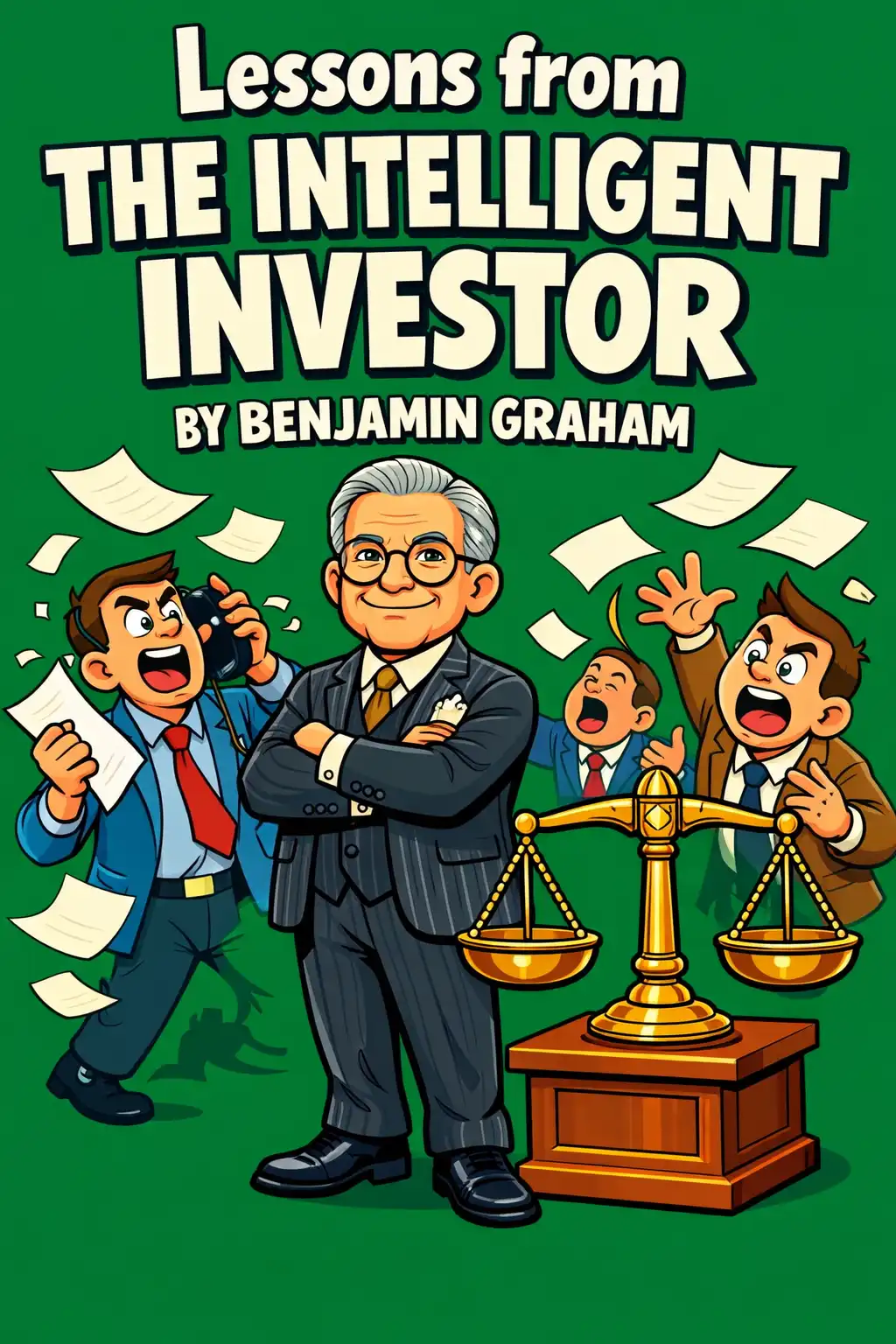









The Intelligent Investor cover

Book summary: The Intelligent Investor by Benjamin Graham

10 min read10 key lessonsText + animated summary

What if the biggest threat to your money isn't a market crash? What if it's your own emotions and the stories you tell yourself about what comes next?

One-sentence summary

"The Intelligent Investor" by Benjamin Graham is widely considered the definitive guide to building wealth through patience, discipline, and rational thinking about the stock market.

Reading about The Intelligent Investor is one thing.

Watching it is faster, more fun, and you'll actually remember it.

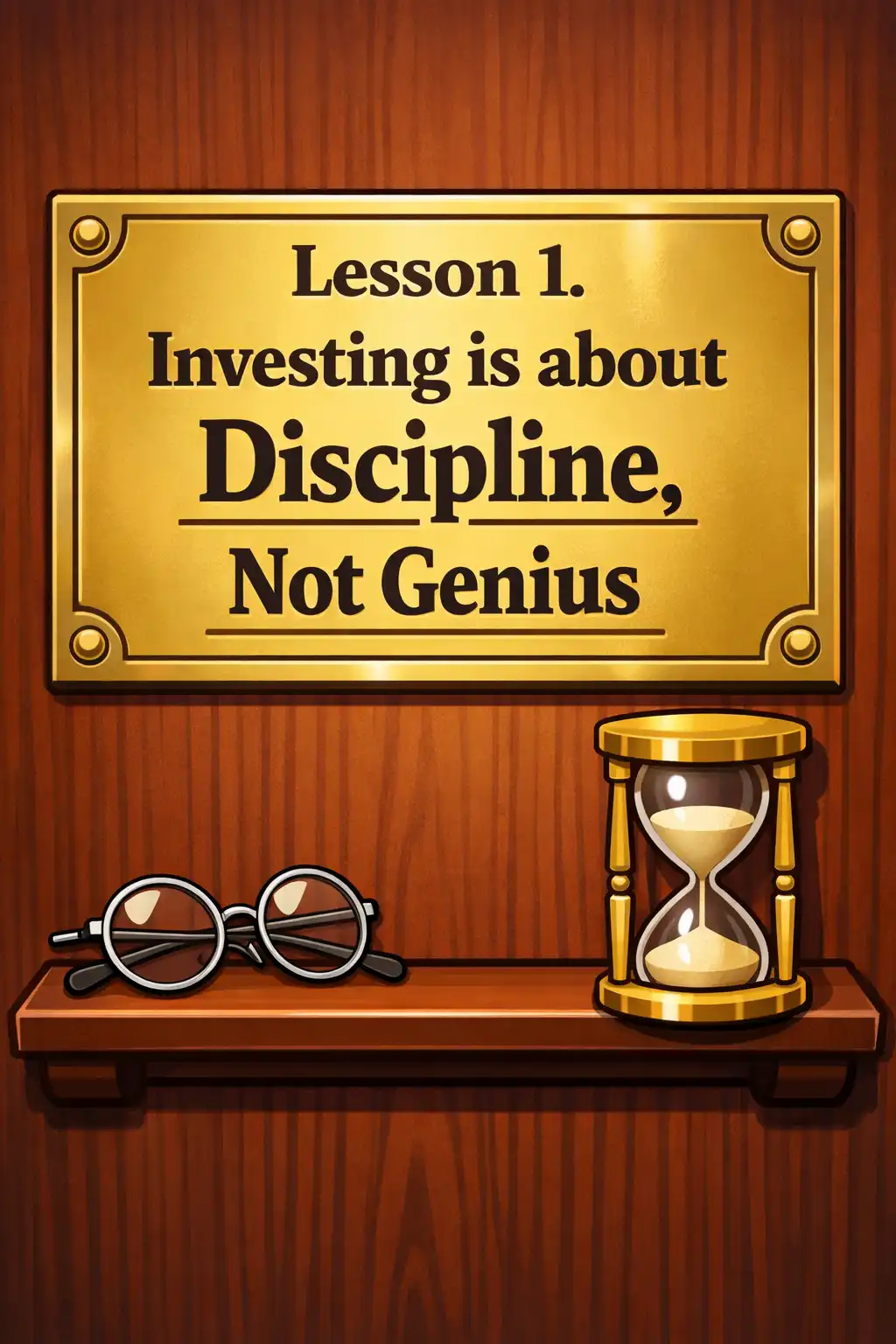
Lesson 1: Investing is about discipline, not genius

Picture a young boy growing up in poverty. His father has just died, and his mother has lost everything in the devastating financial panic of 1907.

That boy was Benjamin Graham. Despite those beginnings, he went on to build one of the most successful and respected careers Wall Street has ever seen.

Graham's core teaching was surprisingly simple. Treat stocks as real ownership in real businesses. Never overpay. And let patience guide every single decision you make.

His most famous student, Warren Buffett, called this the best book on investing ever written. Not because it promises quick riches, but for a deeper reason.

It gives you a framework for thinking clearly when everyone else is panicking. Graham believed successful investing requires emotional discipline, not a high IQ.


Lesson 2: Know the line between investing and speculating

Imagine walking into a casino and calling yourself a financial professional. That sounds ridiculous, right? But Graham noticed something very similar happening on Wall Street.

The financial industry started calling anyone who bought a stock an "investor," regardless of whether that person had done any real analysis at all.

Graham drew a sharp line between the two. A true investment promises safety of your principal and a reasonable return, all based on thorough analysis.

Anything that falls short of that standard is speculation. Now, speculation isn't necessarily evil. But you must never confuse it with real investing.

His practical advice? If you want to speculate, keep it in a completely separate account with money you can afford to lose. Never mix it with your real investments.

Lesson 3: Don't assume growth means profits

Think about the airline industry in the mid-twentieth century. Passenger numbers were booming year after year. Everyone could see that air travel was clearly the future.

But investors who rushed in to buy airline stocks got crushed. Despite explosive growth in the industry, shareholders suffered catastrophic losses.

Graham uses this example to make a powerful point. Obvious growth in an industry does not automatically translate into obvious profits for the people who invest in it.

The price you pay matters enormously. If everyone already knows a sector is booming, that excitement is already baked into the stock price before you buy.

Graham says you should treat buying stocks with the same care you bring to grocery shopping. Always ask, "What am I getting relative to what I'm paying?"

Lesson 4: Balance your portfolio and rebalance it

Imagine a seesaw on a playground. When one side tilts too far, the whole thing feels unstable. Your investment portfolio works the same way.

Graham recommends splitting your money between bonds and stocks. Each should stay between twenty-five and seventy-five percent of your total holdings.

The simplest starting point is a fifty-fifty split. If stocks surge and become seventy percent of your portfolio, you sell some stocks and buy more bonds.

When stocks crash and shrink to thirty percent, you do the opposite. You buy more stocks while they're cheap. This forces you to buy low and sell high, almost automatically.

Rebalancing about twice a year keeps emotion out of the process. It's a disciplined, mechanical habit that protects you from chasing the market's wild swings.

Lesson 5: Meet Mr. Market and use his moods

Imagine you own a small business with a partner who is emotionally unstable. Every single day, he shows up and offers to buy your share or sell you his.

Some days he's wildly optimistic and names a ridiculously high price. Other days he's terrified and practically gives his share away for nothing.

This is Graham's famous parable of "Mr. Market." The stock market behaves exactly like this imaginary partner, swinging constantly between greed and panic.

Graham illustrates this with a real example. In 1938, the Great Atlantic and Pacific Tea Company fell so low that its stock price was less than the cash sitting in its bank accounts.

Everyone was too scared to buy. But within a year, the stock tripled. The intelligent investor uses Mr. Market's offers when they're favorable, and simply ignores them otherwise.

Lesson 6: Nobody can reliably time the market

Think about a weather forecaster who is right just often enough to sound credible, but wrong at exactly the worst moments. That's what market timing looks like.

Graham tested formula plans, technical chart systems, and expert predictions. None of them worked reliably once they became widely known and popular.

He points to something called the Dow Theory, a famous system for predicting market moves. It worked beautifully at first, but once Wall Street discovered it, it largely stopped working.

Instead of trying to predict the future, Graham endorses dollar-cost averaging. That means investing a fixed amount at regular intervals, no matter what the market is doing.

Research showed this simple approach consistently produced solid profits over long periods. Patience and consistency beat any attempt to guess what comes next.

Lesson 7: Look for bargains, not glamour

Picture two stores side by side. One is flashy and crowded, selling overpriced goods. The other is quiet, stocking solid products marked way down. Which is the better deal?

Graham found that stocks with the lowest price-to-earnings ratios, meaning the cheapest stocks relative to their profits, consistently outperformed expensive glamour stocks over time.

He was especially excited about stocks selling below their "net working capital." That means the stock price was less than the company's cash and receivables minus all of its debts.

A study from 1957 showed that buying these deeply discounted stocks produced a seventy-five percent gain in just two years, far outpacing the broader market.

Graham compared companies like Blue Bell, a solid but unglamorous manufacturer priced at eleven times earnings, against H and R Block, which was priced at over a hundred times earnings.

Blue Bell won. The boring company outperformed the popular one. Graham's lesson is clear. Focus on what you're paying relative to what you're getting, not on excitement.

Lesson 8: Read the fine print in earnings reports

Imagine buying a house where the seller hid water damage behind a fresh coat of paint. Companies can do something very similar with their earnings reports.

Graham uses Alcoa's 1970 annual report as an example. That single company reported four different earnings figures, depending on which charges were included or excluded.

Special one-time charges, tax credits carried forward from past losses, and dilution from stock options can all make profits look bigger or smaller than they truly are.

Graham's remedy is straightforward. Look at average earnings over seven to ten years. That smooths out one-time items and reveals a company's true, underlying earning power.

He also recommends reading annual reports from the back forward. Start with the footnotes, because that's where the uncomfortable truths tend to hide.

Lesson 9: Be skeptical of advisers and hot tips

Think about a salesperson who earns a commission every time you buy something. Would you fully trust their recommendation on what to purchase? Probably not.

Graham points out that brokerage houses face this exact conflict of interest. They earn money when you trade, which creates a built-in pull toward encouraging speculation.

A good adviser's real job is not to make you rich overnight. It's to protect you from costly mistakes and deliver steady, reasonable results over time.

Graham says investors should vet any adviser thoroughly. Ask hard questions about their fees and their investment philosophy. And always maintain your own independent judgment.

The deepest value a good adviser provides is protecting you from your own impulsive decisions during those moments when fear or greed starts to take over.

Lesson 10: The margin of safety is everything

Imagine building a bridge designed to hold ten thousand pounds, but then only allowing trucks weighing five thousand pounds to cross it. That extra cushion is your safety margin.

Graham calls the "margin of safety" the single most important concept in all of investing. It is the central idea that his entire book is built around.

For bonds, it means the company earns much more than it needs to cover its interest payments. That cushion can absorb bad surprises without triggering a disaster.

For stocks, it means buying at a price low enough that even if things go wrong, you're still protected. The gap between price and true value is your buffer.

Diversification works hand in hand with this idea. If you spread your money across twenty or more stocks, a margin of safety makes a positive overall result highly probable.

Graham closes the book with a story from his own career. He and his business partner bought a modest stake in GEICO, an unglamorous insurance company that was priced cheaply.

You've read the summary. Now watch it.

The animated version covers the same ideas — faster, and in a format you'll actually remember.