








Outliers cover

Book summary: Outliers by Malcolm Gladwell

10 min read11 key lessonsText + animated summary

What if the most successful people in the world didn't get there because of talent alone, but because of hidden advantages most of us never notice?

One-sentence summary

"Outliers" by Malcolm Gladwell explores the surprising forces behind extraordinary success.

Reading about Outliers is one thing.

Watching it is faster, more fun, and you'll actually remember it.

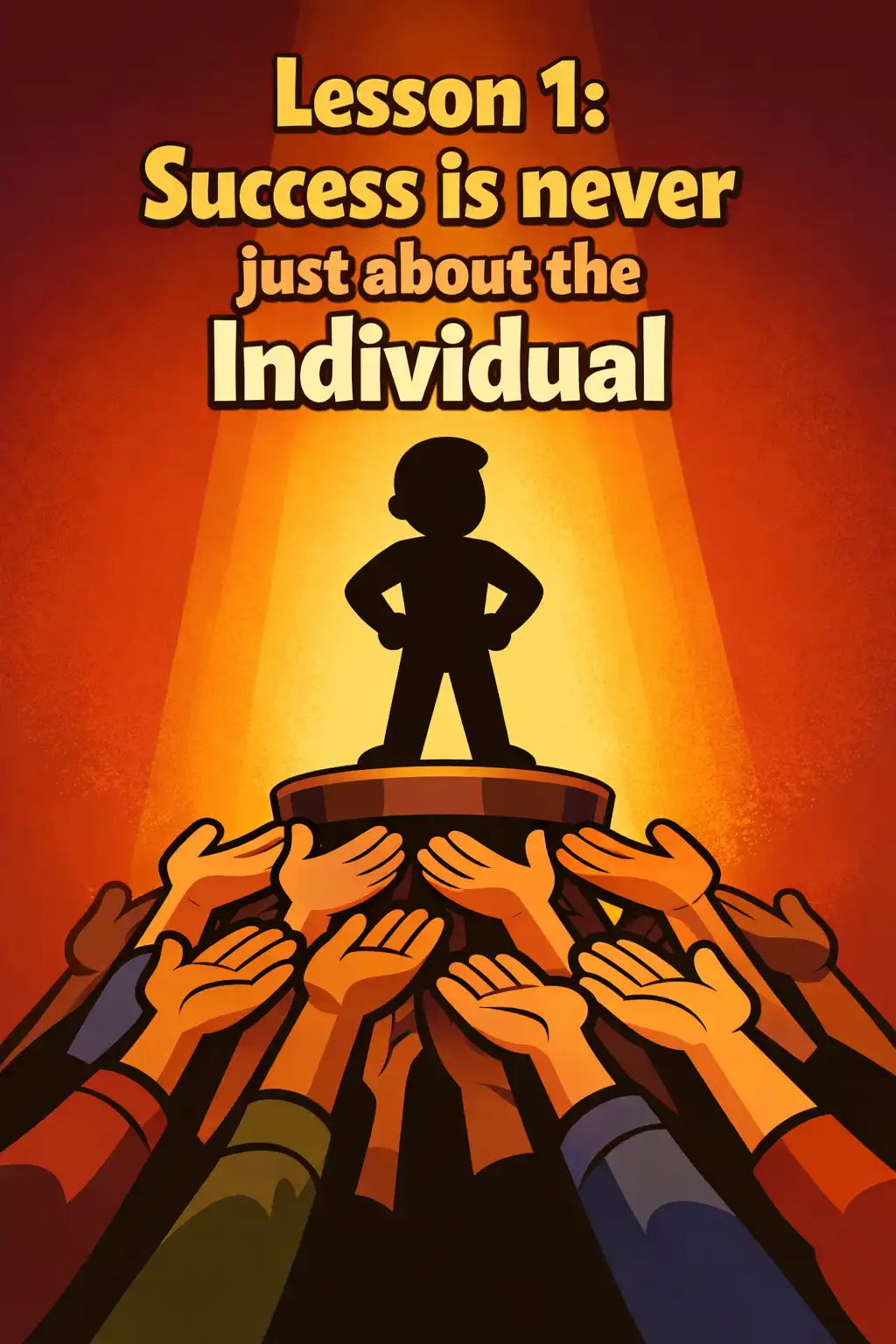
Lesson 1: Success is never just about the individual

Picture a tiny town in Pennsylvania where almost nobody dies of heart disease. No crime, no suicide, no alcoholism. Sounds impossible, right?

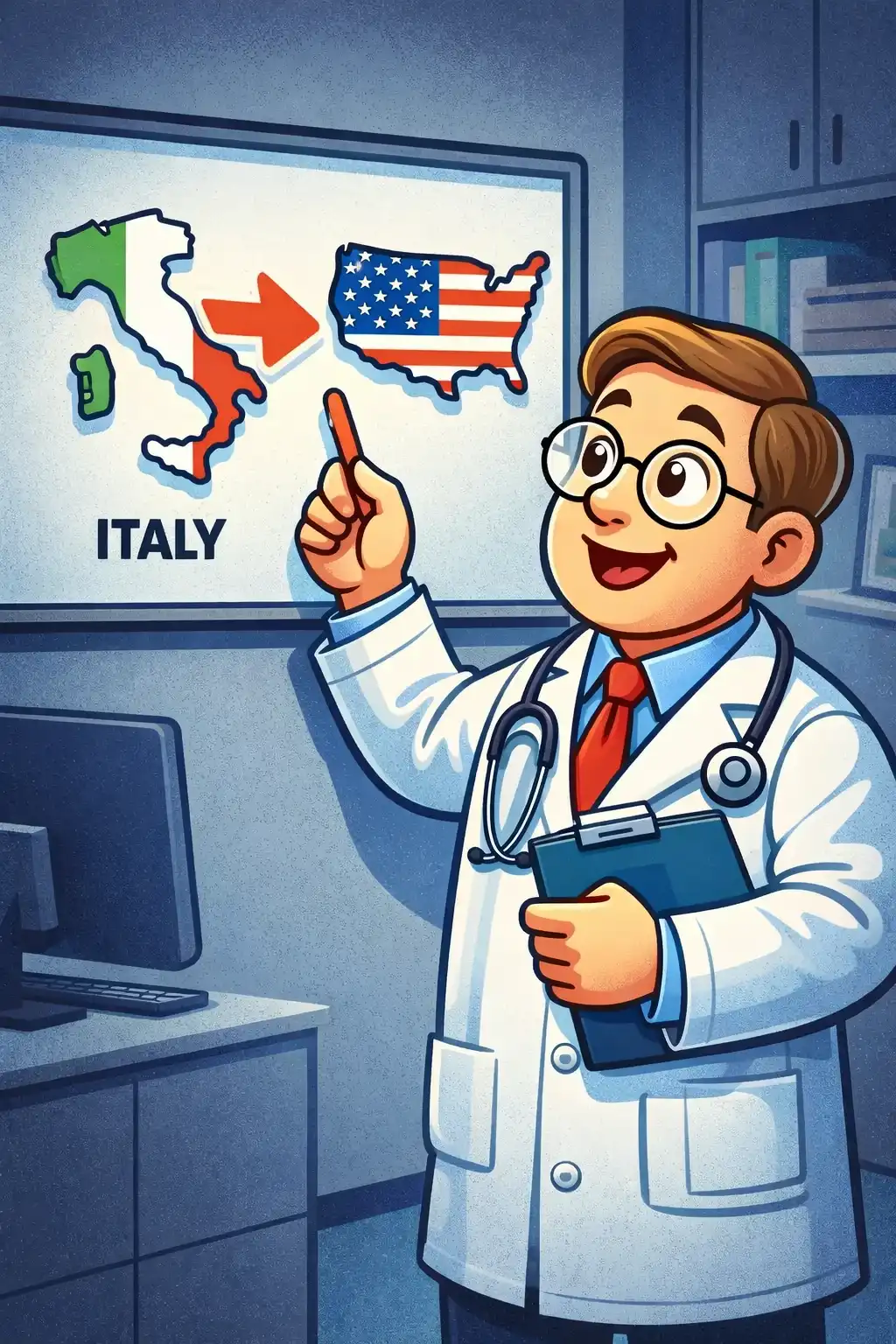
That town was called Roseto. It was founded by Italian immigrants who recreated their close-knit village life after moving to America. A physician named Stewart Wolf decided to investigate.

Wolf ruled out diet, exercise, and genetics. The Rosetans actually ate fatty foods and smoked. The real secret? Their tight-knit community. Their togetherness.

Gladwell uses Roseto to frame his entire book. If you want to understand success, stop looking only at individuals. Look at the world around them.

Gladwell is a journalist known for challenging conventional wisdom. In "Outliers," he argues that opportunity, timing, and culture matter just as much as raw talent.


Lesson 2: Your birthday can shape your destiny

Imagine two boys trying out for the same hockey team. One was born in January, the other in December. Even though they're in the same age group, they're almost a year apart in physical development.

In Canadian youth hockey, the eligibility cutoff date is January first. So kids born in January are the oldest, the biggest, and the most coordinated at tryouts.

Coaches pick those bigger kids for elite squads, where they get better coaching and more practice. By their teens, that small early advantage has compounded enormously.

A psychologist named Roger Barnsley discovered that elite hockey rosters were packed with players born in the first few months of the year. It wasn't a coincidence.

Gladwell calls this "the Matthew Effect." Those who start with a small advantage keep gaining more, while others fall further behind through no fault of their own.

This pattern shows up in schools too. The oldest kids in a grade score higher on tests and are more likely to be labeled "gifted." A birthday shouldn't determine a child's future.

Lesson 3: The 10,000-hour rule

Think about the Beatles. Before they became a global sensation, they spent years playing eight-hour sets in Hamburg's nightclubs, night after night after night.

Over five trips to Hamburg, they performed roughly twelve hundred times. Most bands never play that many shows in their entire careers.

Gladwell draws on research by psychologist K. Anders Ericsson, who studied elite violinists. He found that by age twenty, the best players had each logged around ten thousand hours of practice.

There were no shortcuts. No "naturals" who skipped the work. Once a baseline level of ability is in place, it's the amount of practice time that separates the great from the good.

Bill Gates had a rare chain of lucky access to computers starting at age thirteen, which was almost unheard of in the late 1960s. By the time he dropped out of Harvard, he'd been programming intensely for seven years.

The talent was real. But the opportunity to accumulate those hours was equally important. Mastery requires both the drive to practice and the circumstances that make practice possible.

Lesson 4: Being born at the right time matters more than you'd expect

Here's something wild. Nearly twenty percent of history's seventy-five wealthiest people were Americans born within a single nine-year window, in the eighteen thirties and forties.

They came of age just as railroads and factories were transforming America. If they'd been born too early or too late, that window of opportunity would have slammed shut.

The same pattern holds for the computer revolution. The personal computer emerged around nineteen seventy-five, and the ideal age to seize that moment meant being born around nineteen fifty-five.

Bill Gates was born in nineteen fifty-five. Steve Jobs, also nineteen fifty-five. Bill Joy, the co-founder of Sun Microsystems, nineteen fifty-four. The timing is almost eerie.

Gladwell's point is powerful. Success stories aren't just tales of personal grit. They're stories of people who happened to meet exactly the right moment in history.

Lesson 5: Genius alone is not enough

Imagine having the highest IQ ever recorded and still ending up working as a bouncer on Long Island. That's what happened to Chris Langan, often called America's smartest man.

Langan taught himself to read at age three and could absorb an entire semester of college material in just days. But his life was shaped by poverty and a violent stepfather.

His college scholarship lapsed because his mother forgot to fill out a financial form. He couldn't even get a simple schedule change approved. Each time, he walked away instead of fighting through.

Now compare that to Robert Oppenheimer, the physicist who led the Manhattan Project. As a student at Cambridge, Oppenheimer once tried to poison his tutor. He only got probation and therapy.

The difference wasn't intelligence. It was what Gladwell calls "practical intelligence," the ability to read social situations and persuade people in power. Oppenheimer had it. Langan didn't.

Sociologist Annette Lareau studied how different families raise their children. She found that wealthier parents actively teach kids to advocate for themselves with authority figures. Poorer families tend to let children develop more on their own.

Lesson 6: Disadvantages can become hidden advantages

Picture a brilliant young lawyer in the nineteen fifties being turned away from every top firm on Wall Street, simply because he was Jewish.

That was Joe Flom's reality. He ended up at a scrappy, lesser-known firm handling the kind of work the elite considered beneath them. Things like hostile takeovers and proxy fights.

For twenty years, Flom and other excluded Jewish lawyers quietly mastered these overlooked areas of law. Then the corporate world changed, and takeovers became enormously lucrative.

Suddenly, Flom's firm, Skadden Arps, was the most powerful in America. What looked like exclusion had actually been a twenty-year head start in disguise.

Gladwell also traces how Jewish immigrant garment workers gave their children a model of meaningful, self-directed work. That model built the practical skills and mindset needed to thrive in professional life.

The lesson is that adversity doesn't always hold people back. Sometimes it pushes them toward opportunities that nobody else sees, or that nobody else is willing to take.

Lesson 7: Cultural legacies run deeper than you think

Think about Harlan, Kentucky, in the eighteen hundreds. Entire families were locked in deadly feuds for generations, with violence so common that nobody questioned it.

These settlers originally came from the borderlands of Scotland and northern England. Those were regions where herders had to project toughness to protect their livestock and their livelihood.

They brought that "culture of honor" with them to America. Centuries later, psychologists tested modern southern college students and found the same patterns of aggressive response to insults.

Even wealthy, suburban students from cities like Atlanta showed sharp hormonal spikes when they were insulted. Behavioral patterns from centuries ago were still shaping their reactions.

Gladwell's point is that culture doesn't just fade away on its own. It persists across generations, long after the original conditions that created it have disappeared.

Lesson 8: Communication failures can be fatal

In nineteen ninety-seven, Korean Air Flight 801 crashed into a hillside in Guam, killing two hundred and twenty-eight people. The plane itself was working perfectly.

The first officer noticed dangerous weather conditions, but he could only manage a timid hint to the captain. He said, quote, "Don't you think it rains more in this area?"

Korean culture ranks very high on something called the "Power Distance Index." That means subordinates are expected to defer to authority and never challenge a superior directly.

Gladwell calls this "mitigated speech," the habit of softening what we say out of politeness or deference. In everyday life, it's harmless. In a cockpit, it can be deadly.

Korean Air eventually hired a Delta Airlines executive who made English the mandatory cockpit language. This stripped away the rigid hierarchy built into the Korean language. The results were dramatic.

Since nineteen ninety-nine, Korean Air's safety record has been spotless. Cultural legacies are powerful, but they are not destiny. With awareness and effort, they can be changed.

Lesson 9: Hard work is a cultural inheritance

Imagine tending a rice paddy no bigger than a hotel room, working three thousand hours a year, adjusting water levels and fertilizer timing with surgical precision.

For centuries, rice farmers in southern China lived by proverbs like this one: "No one who rises before dawn three hundred sixty days a year fails to make his family rich."

That culture of relentless, meaningful effort didn't disappear when farming declined. It carried forward into attitudes about education and mathematics across generations in Asian societies.

Asian languages also help with math. In Chinese, numbers are more logical. "Eleven" is simply "ten-one." This makes basic arithmetic more intuitive, giving children an early mathematical advantage.

Researchers even found that countries where students most diligently completed a long, tedious survey also ranked highest in math scores. Persistence and achievement go hand in hand.

Lesson 10: Opportunity can close the achievement gap

Meet Marita, a twelve-year-old in the South Bronx who wakes at five forty-five every morning, attends school until five in the afternoon, then does homework until nearly eleven at night.

She's a student at KIPP Academy, an experimental public school that accepts kids by lottery. There are no entrance exams and no built-in advantages. Just longer days and deeper learning.

Research by sociologist Karl Alexander showed something surprising. Poor and wealthy kids actually learn at similar rates during the school year. The gap grows almost entirely over summer, when poor kids lose ground.

KIPP solves this by adding Saturday classes and three extra weeks in July. Eighty-four percent of its students reach grade level in math, and over eighty percent go on to college.

Marita didn't need a higher IQ. She needed more time and the right environment. KIPP brought the ethos of the rice paddy to the South Bronx, and it worked.

Lesson 11: No outlier succeeds alone

In the epilogue, Gladwell turns the lens on himself. His mother, Joyce, grew up in rural Jamaica and won a scholarship that changed her life forever.

But that scholarship only existed because Caribbean riots in nineteen thirty-seven pressured the British government into funding new education programs. Timing made it possible.

His grandmother Daisy was the fierce driving force behind Joyce's success, borrowing money from a local shopkeeper to send her to university in London. Community and courage made it possible.

Gladwell ends with a question that should stay with all of us. How many more people could flourish if the same kinds of hidden advantages were shared more widely?

That's the real message of "Outliers." Success is never just about you. It's about history, community, timing, and opportunity. And the more we understand that, the more success we can help build for everyone.

You've read the summary. Now watch it.

The animated version covers the same ideas — faster, and in a format you'll actually remember.