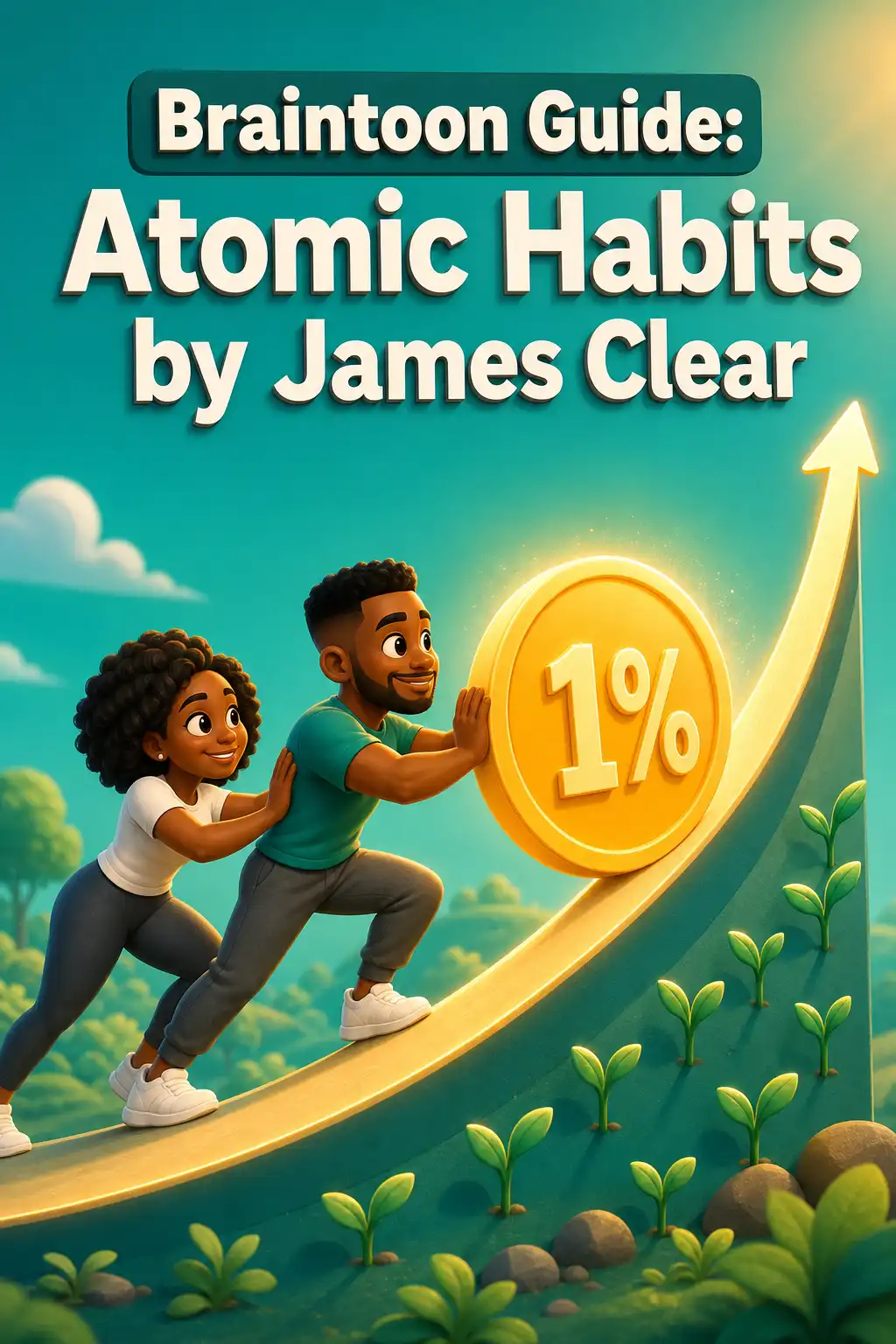
A detailed summary ofAtomic Habitsby James Clear
Atomic Habits by James Clear teaches you a simple, proven framework for building good habits and breaking bad ones. One small, one percent improvement at a time.
Watch the first minute





What if the secret to changing your
0:00 / 1:00
60-second animated preview
Key ideas, illustrated
The Four Laws of Behavior Change
The Plateau of Latent Potential
Identity-Based Habits
Atomic Habits Summary
What if the secret to changing your life wasn't some dramatic transformation, but a series of improvements so tiny you barely notice them happening at all?
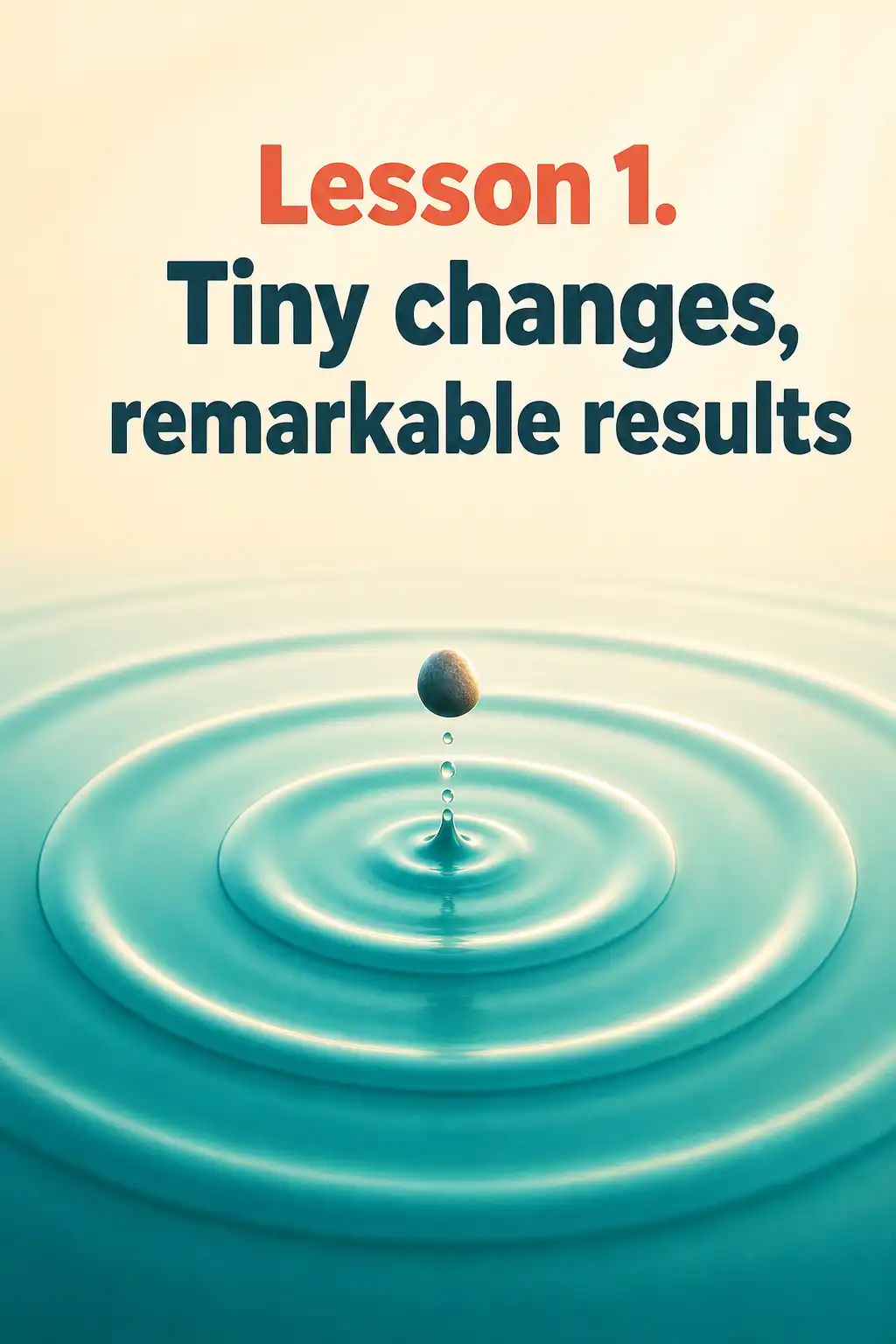
1. Tiny changes, remarkable results
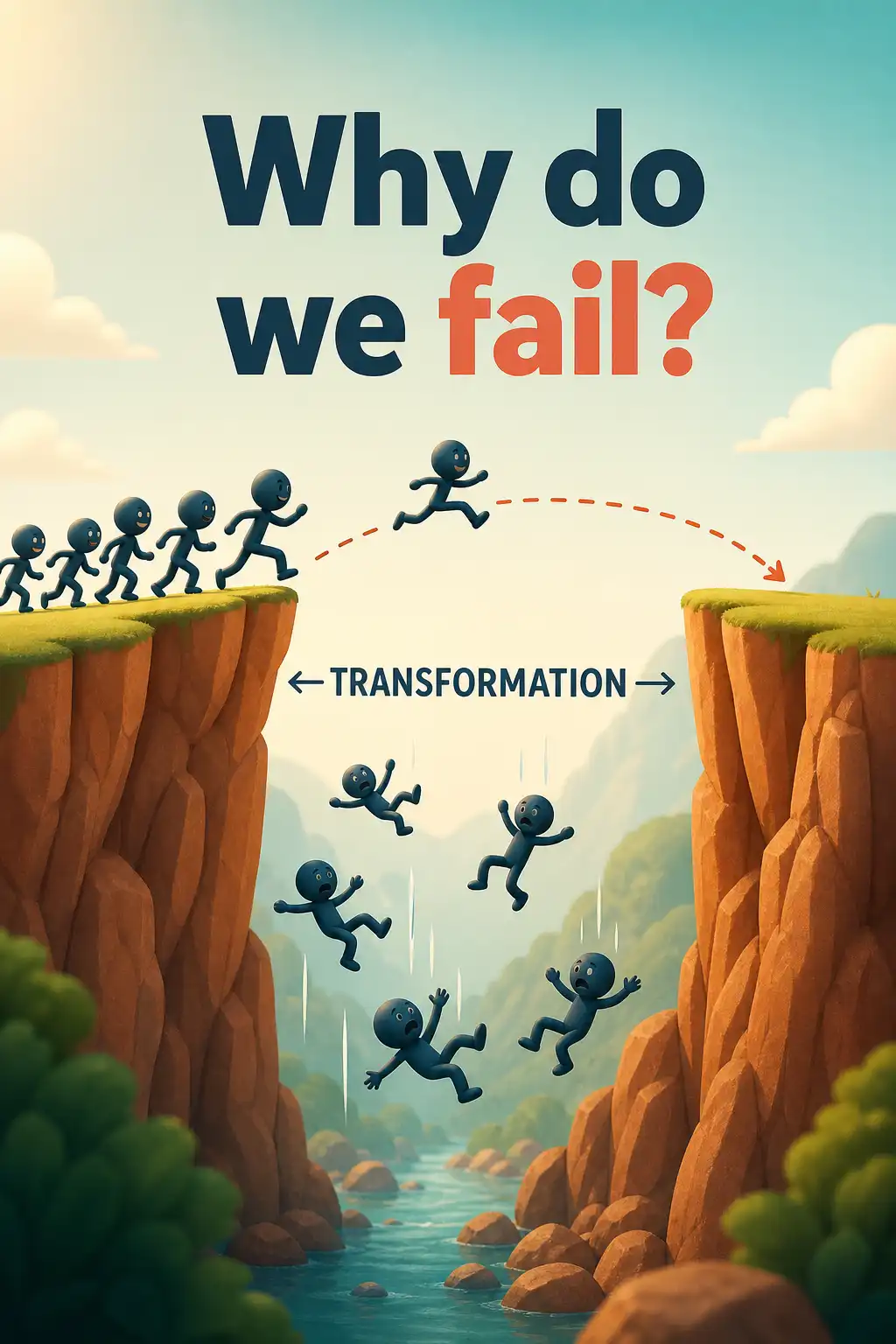
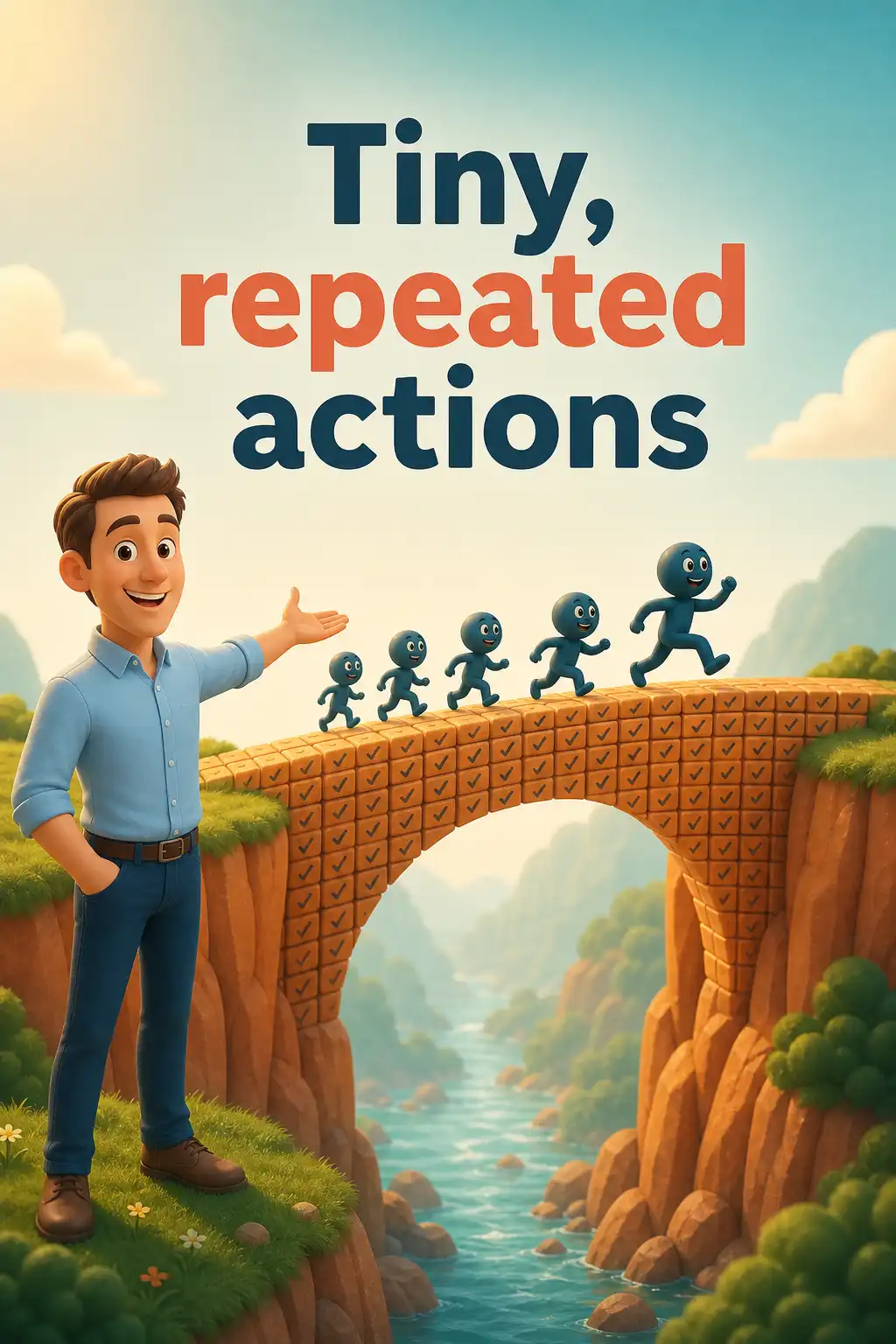
Here's a question. Why do most attempts at self improvement fail? James Clear thinks it's because we aim for huge transformations, when real change actually comes from tiny, repeated actions.
Clear knows this personally. In high school, a baseball bat struck his face, fracturing his skull. Doctors put him in a medically induced coma, and recovery took many long months.
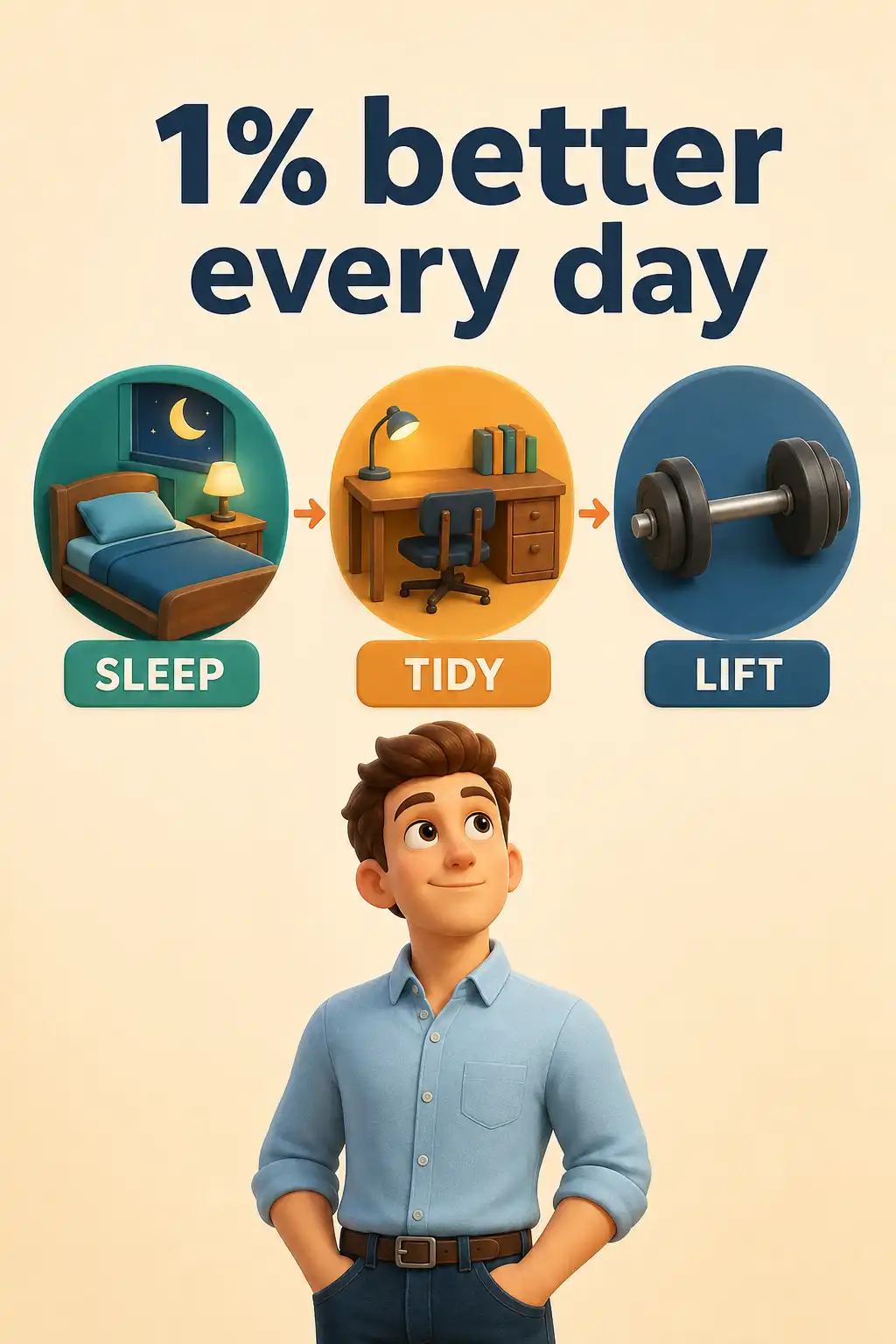
In college, he was still recovering. So instead of chasing big wins, he built small habits. Sleeping early. Tidying his room. Lifting weights. Every day, he got one percent better. By senior year, he was named his university's top male athlete.
That experience became his life's work. His word 'atomic' has a double meaning. Something extremely small, and a source of enormous power. Small habits, he says, are both of those things at once.
The book is organized around four laws of behavior change. Make it obvious. Make it attractive. Make it easy. And make it satisfying. We'll walk through each one in the lessons ahead.
To see these ideas in action, meet Kevin. He's a thirty four year old project manager living in Atlanta. He's tired all the time, out of shape, and scrolling his phone past midnight.
Watch it come to life
Watch Atomic Habits instead
Explore this summary and the Braintoon library.
2. Forget goals, build systems
In 2003, Dave Brailsford took over British Cycling, a team that had won almost nothing for nearly a century. His strategy? Improve everything by just one percent.
They redesigned bike seats. Tested massage gels. They even painted the interior of their team truck white to spot dust. Within five years, they dominated the Beijing Olympics, and then went on to win five Tours de France.
Clear does the math. Improve one percent every day for a year, and you end up thirty seven times better. Decline one percent daily, and you drop nearly to zero.
But progress hides at first. An ice cube warming from twenty five to thirty one degrees looks completely unchanged. Then at thirty two, it suddenly melts. Clear calls this the Plateau of Latent Potential.
This is why Clear says to forget goals and focus on systems. Winners and losers share the same goals. You don't rise to your goals, you fall to your systems.
Kevin's goal was always 'run a 10K,' but he had no system, just bursts of motivation that fizzled out. So this time, he picks one small daily action. A short walk after lunch.
3. Change your identity first
Now for the deepest layer of change. Clear describes three layers. Outcomes, like losing weight. Processes, like your routines. And identity, the beliefs you hold about yourself.
Most people work from the outside in, chasing outcomes. Clear says work from the inside out. Imagine two people refusing a cigarette. One says, 'I'm trying to quit.' The other says, 'I'm not a smoker.'
That second person has changed their identity, and that's the change that lasts. When a behavior conflicts with how you see yourself, your self image almost always wins eventually.
Here's the good news. Identity isn't fixed. Every action is a vote for the kind of person you want to become. Enough votes, and the evidence reshapes your beliefs about who you are.
So Kevin stops saying 'I'm trying to get in shape.' Instead he asks himself, 'What would a healthy person do?' A healthy person walks daily. Takes the stairs. Sleeps before midnight.
Each small choice feels different now. When he laces up his shoes, he's not just exercising. He's casting a vote for the person he's becoming.
4. Make it obvious
So how do habits actually work in the brain? Clear breaks every habit into four stages. A cue triggers a craving, which drives a response, which delivers a reward.
Each stage maps to one of the Four Laws. The first law tackles cues. Make it obvious. Because here's the problem. Most of our cues are completely invisible to us.
One powerful fix comes from a 2001 study. People who wrote down exactly when and where they'd exercise did it 91 percent of the time. The motivation only groups? Around 35 percent.
Clear calls this an implementation intention. 'I will do this behavior at this time in this place.' A related tool is habit stacking. 'After I do X, I will do Y.'
Environment matters too. A hospital researcher boosted water sales dramatically just by rearranging where drinks sat in the cafeteria. We choose what's obvious, not necessarily what's best for us.
Kevin puts this to work. His plan? 'After I pour my morning coffee, I'll put on my walking shoes.' The shoes now sit right next to the coffee maker.
5. Make it attractive
The second law. Make it attractive. Why? Because your brain runs on dopamine, and dopamine actually spikes when you anticipate a reward, not just when you get one.
That's why junk food and social media hook us so easily. They're engineered supernormal stimuli, exaggerated versions of things our ancient brains crave, like salt, sugar, and social approval.
Clear's countermove is temptation bundling. Pair what you need to do with what you want to do. One Dublin student famously rigged his exercise bike so Netflix would only play while he pedaled.
Your community shapes attraction too. We imitate the close, the many, and the powerful. Clear's advice? Join a group where your desired behavior is the normal behavior.
Kevin tries the bundle. He saves his favorite true crime podcast exclusively for his walks. Within a week, he's genuinely looking forward to lunchtime instead of dreading it.
He also joins a Saturday walking group in his neighborhood. Surrounded by people who move every day, exercise starts to feel less like a chore and more like belonging.
6. Make it easy
The third law. Make it easy. Humans follow the Law of Least Effort. We naturally do whatever requires the least energy, which is exactly why the couch usually beats the gym.
Clear's answer isn't more willpower, it's less friction. Prep healthy food in advance. Pick a gym on your commute home. Design your life so the good choice is the easy choice.
And beware of 'motion.' Planning, researching, strategizing. It feels productive but produces nothing. Photography students graded on quantity took better photos than those graded on quality, simply because they practiced more.
For starting new habits, Clear offers the Two Minute Rule. Scale any habit down to two minutes. 'Read before bed' becomes 'read one page.' 'Do yoga' becomes 'unroll the mat.'
One reader lost over a hundred pounds by starting with just five minutes at the gym. Master the art of showing up first. Standardize before you optimize.
Kevin's been wanting to jog, not just walk. So his rule becomes this. Jog for two minutes, then decide. Most days, once he's moving, he keeps going.
7. Make it satisfying
The fourth law. Make it satisfying. In the late 1990s, health worker Stephen Luby was fighting disease in Karachi, Pakistan. Everyone knew handwashing mattered. Almost nobody actually did it.
The breakthrough? Premium soap that foamed richly and smelled wonderful. Handwashing became genuinely enjoyable, and diarrhea rates fell by 53 percent. We repeat what feels good immediately.
That's the trouble with good habits. Their rewards are delayed while their costs are immediate. Bad habits are the exact reverse. So Clear says add a small, instant reward to close the gap.
One powerful version is habit tracking. A stockbroker named Trent Dyrsmid moved a paper clip between two jars after every sales call. Visible progress is deeply satisfying, and it kept him going.
When you inevitably miss a day, follow Clear's rule. Never miss twice. One miss is an accident. Two is the beginning of a new, worse habit.
Kevin buys a wall calendar and marks an X every day he moves. Three months in, the unbroken chain is its own reward. He hates the thought of breaking it.
8. Stay in the game
Final lesson. How do you keep going for years, not just weeks? Comedian Steve Martin spent nearly fifteen years grinding through tiny clubs before his breakthrough. What kept him going?
Clear's answer is the Goldilocks Rule. Motivation peaks on tasks right at the edge of your ability. Not too easy, not too hard. Roughly four percent beyond your current level.
The real enemy of long term progress isn't failure. It's boredom. Successful people feel unmotivated just like everyone else. The difference? Professionals stick to the schedule anyway.
Clear also recommends regular review. The 1986 Los Angeles Lakers tracked detailed player statistics and asked each player to improve one percent over the season. They won back to back NBA championships.
A year in, Kevin runs his first 10K. He's not fast, but he finishes. To keep things Goldilocks sized, he signs up for a half marathon and reviews his training every month.
The strangest part? Nobody around him saw a dramatic transformation. Just a guy who walked, then jogged, then ran. Tiny votes, cast daily, until he simply became someone new.
Watch it come to life
Watch the animated summary
Explore this summary and the Braintoon library.