

Mindset cover

Book summary: Mindset by Carol Dweck

10 min read9 key lessonsText + animated summary

What if your biggest limitation is just a story your brain keeps repeating—and you could learn to tell a better one?

One-sentence summary

Mindset, by psychologist Carol Dweck, explains how our beliefs about talent and ability shape success, relationships, and happiness—and shows practical ways to choose beliefs that help us grow.

Reading about Mindset is one thing.

Watching it is faster, more fun, and you'll actually remember it.

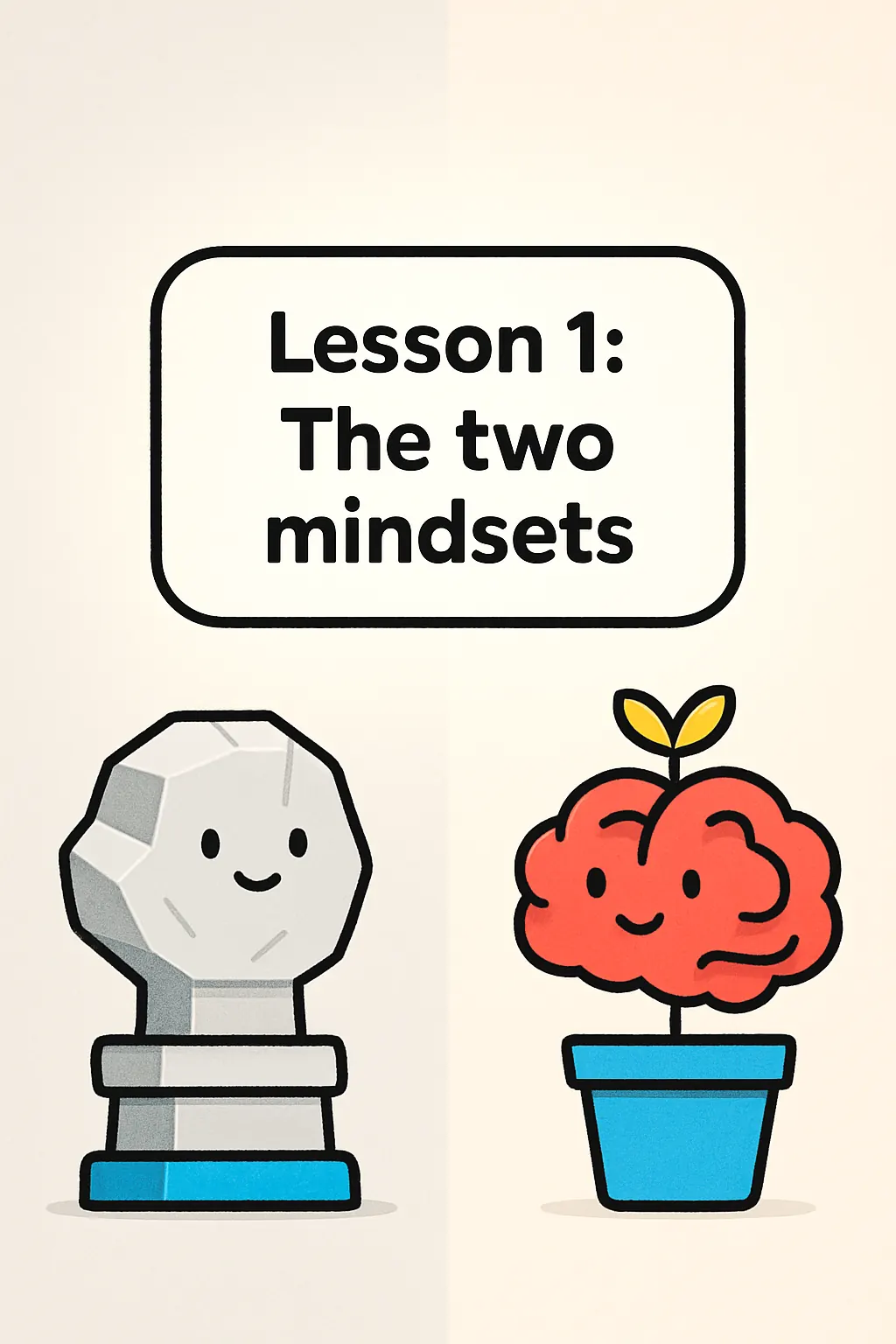
Lesson 1: The two mindsets

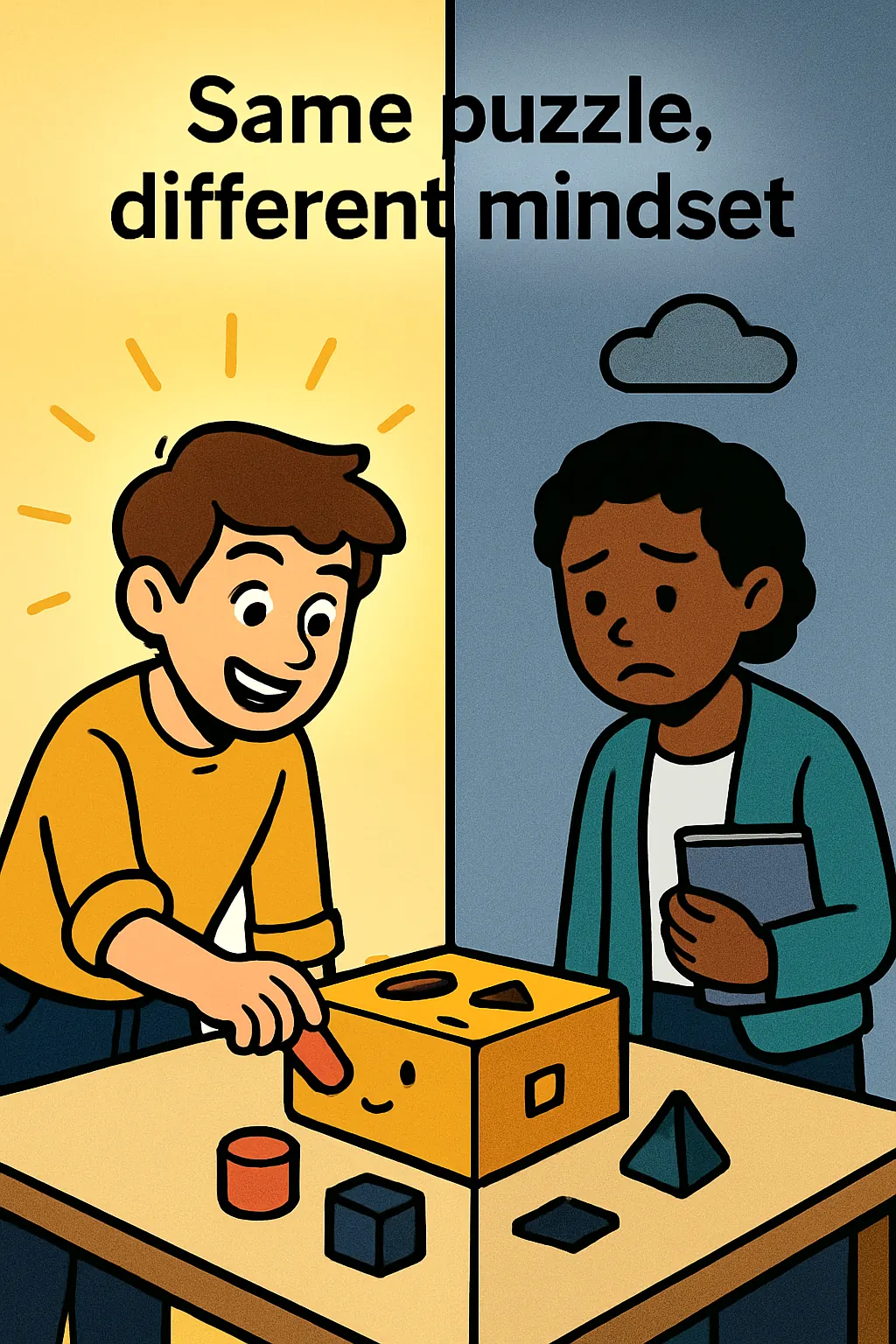
Imagine two kids facing a tough puzzle. One grins and says, 'Cool, I love a challenge.' The other frowns and thinks, 'I’m just not smart.'

Carol Dweck is a psychologist who studies motivation and learning. For years, she kept seeing this split reaction in classrooms and labs.

Her students kept asking for practical tools, so she turned decades of research into a simple idea with surprising power.

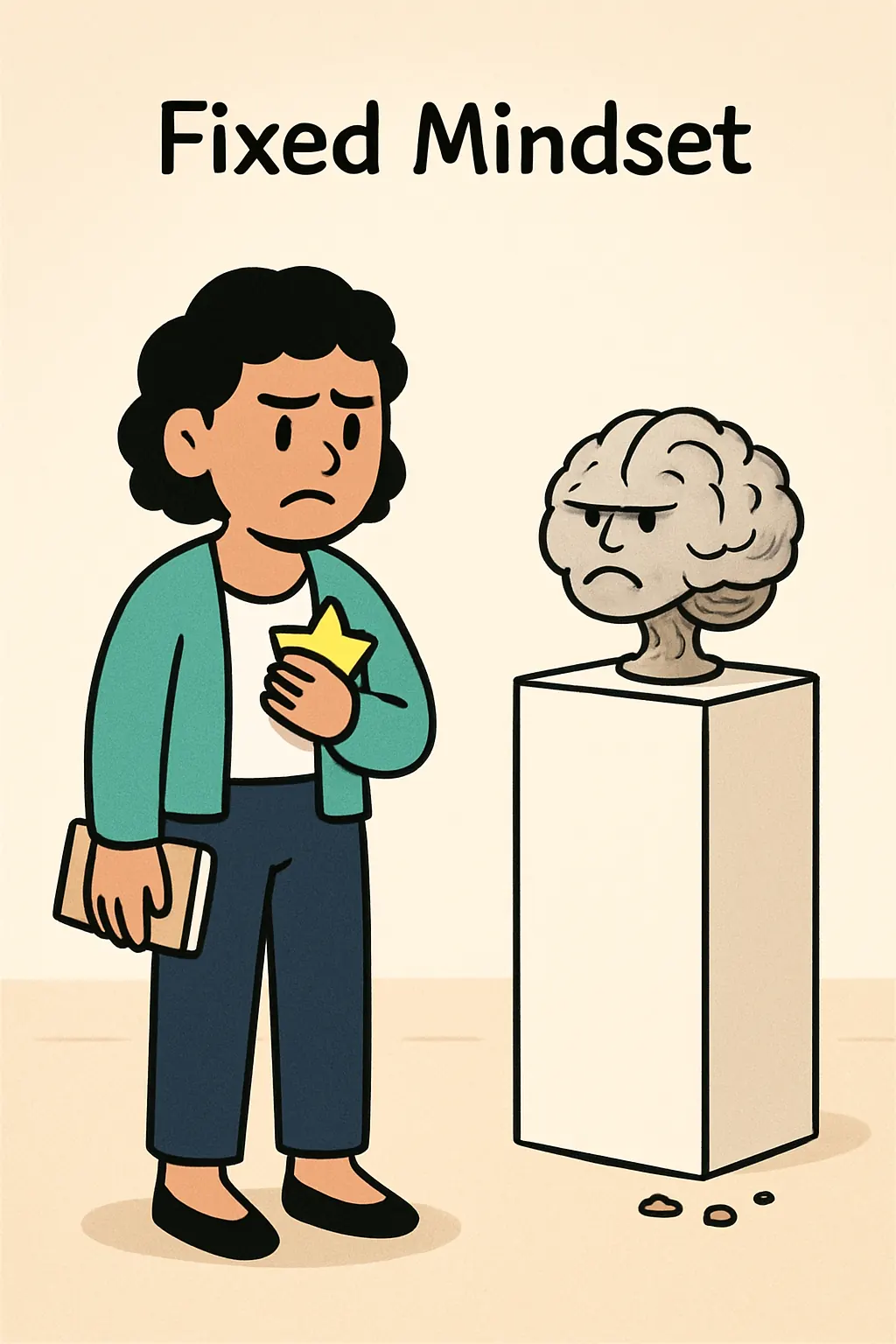
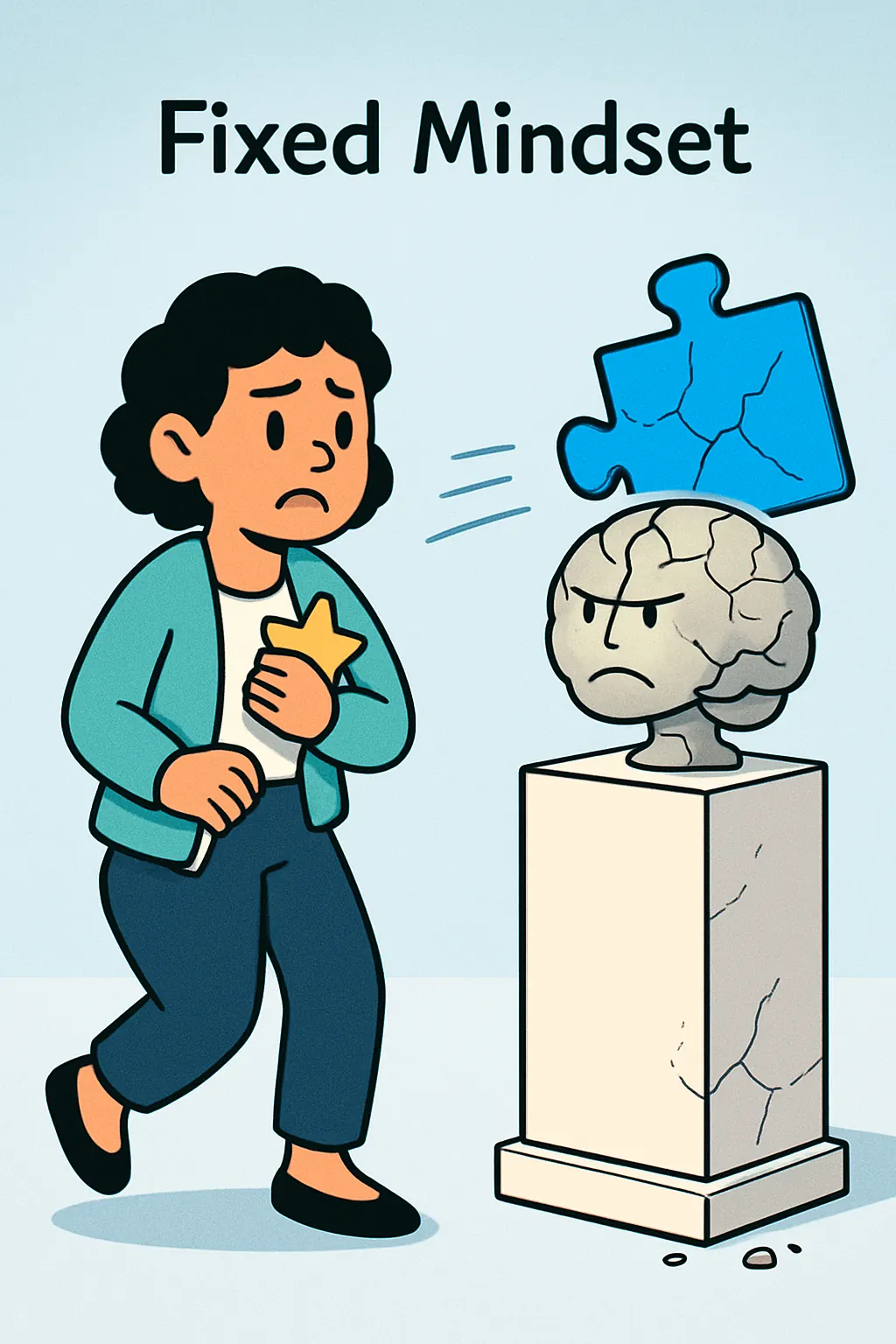
There are two mindsets people tend to use. The fixed mindset says your intelligence and traits are 'carved in stone' and must be proven again and again.

The growth mindset says your abilities can be developed with effort, better strategies, and help from others—like learning a language or a sport.

These aren’t just labels. They act like lenses that color how you see challenges, feedback, and even who you think you are.


Lesson 2: What setbacks say

Picture a rough day. You get a C+ on a test, a parking ticket, then a friend replies with a curt text. Your brain starts stitching these events together.

In a fixed mindset, the story becomes personal: 'I’m dumb, careless, unlikeable.' Your mood sinks, and you pull back to protect your image.

In a growth mindset, the story stays specific: 'That class needs better notes. Pay the ticket. Text the friend and check in.' Then you move on.

Dweck even cites brain studies. People in a fixed mindset tune into judgment—'Did I get it right?'—and miss information about how to improve.

People in a growth mindset lean toward learning. They pay attention to feedback that teaches a next step, even if it stings in the moment.

Over time, this difference snowballs. Growth-minded folks seek help, adjust strategies, and keep going, so they gain more accurate self-knowledge.

Lesson 3: Why effort beats the 'genius' myth

Think of the lone genius in movies, scribbling one perfect idea at midnight. Now zoom out and notice the years of drafts, practice, and helpers.

Dweck reminds us that Thomas Edison—an inventor and business builder—used a large team and a lab to grind toward usable breakthroughs.

Charles Darwin, the naturalist who proposed evolution, tinkered and revised for decades. Mozart, the composer, trained from childhood and refined endlessly.

In school, the genius myth invites a dangerous move called 'low-effort syndrome.' To protect a 'smart' image, students avoid challenge and stop trying.

Dweck’s experiments show why praise matters. Praising kids as 'smart' makes them fragile when work gets hard. Praising process builds an appetite for challenge.

Process praise sounds like, 'Your strategy was clever, and your persistence paid off.' It links effort to outcomes, so effort feels worthwhile.

Lesson 4: Stretch on purpose

Imagine you always play tennis with someone you can easily beat. It feels nice, sure, but your forehand never learns anything new.

Dweck profiles people who deliberately 'played up'—they sought tougher competition to expand their game. Soccer star Mia Hamm, one of the best forwards ever, did this on purpose.

Others turned setbacks into fuel. Patricia Miranda, who became an Olympic wrestler, used early losses to refine tactics and conditioning relentlessly.

In studies, even four-year-olds with a growth mindset picked harder puzzles. They wanted to learn, not just look good to adults.

University students who believed intelligence could grow chose a remedial English class to improve. Fixed-minded peers avoided it, fearing their weakness would show.

Stretching isn’t glamorous. It’s uncomfortable, specific, and repetitive. That’s exactly why it works: your brain adapts to demand.

Lesson 5: How champions think

Picture a locker room after a loss. One player blames the refs. Another studies film, plans drills, and circles the next game date.

Dweck opens with Billy Beane, the baseball prodigy from Moneyball, who wilted under failure until he learned to value process over talent.

Muhammad Ali, the heavyweight boxer, beat stronger opponents with study, strategy, and timing. Michael Jordan built greatness after being cut from his high school team, through relentless practice.

Wilma Rudolph, a sprinter who overcame childhood illness, and Jackie Joyner-Kersee, a heptathlon legend, both credited disciplined daily work more than natural gifts.

Dweck contrasts 'naturals' who fear mistakes. Tennis star John McEnroe raged at setbacks, protecting an image instead of adapting his game under stress.

In youth sports studies, growth-minded athletes define success as improvement and effort. They take responsibility for preparation and bounce back faster.

Lesson 6: Cultures that grow

Imagine two companies. One worships star talent. The other trains people, tells the truth about problems, and rewards learning together.

Dweck points to Enron, the energy company that collapsed, as a warning. A talent-worship culture makes people hide mistakes and fake excellence.

She pairs this with Jim Collins, the business researcher behind 'Good to Great,' who found humble leaders who build systems and teams.

Growth-minded leaders like Lou Gerstner at IBM dismantled elitist structures, listened broadly, and refocused on customers and collaboration to revive performance.

Jack Welch at GE elevated learning and candor, rewarding development across levels. Anne Mulcahy at Xerox learned the business deeply to rebuild trust.

Experiments back this up. Teams primed with a growth mindset share feedback, improve strategies, and avoid groupthink. Fixed teams protect egos and repeat mistakes.

Lesson 7: Love is a verb

Think about a kitchen argument. One partner expects perfect chemistry. The other expects effort, repairs, and learning how to handle each other.

Dweck shows that a fixed mindset turns rejection into identity: 'I am unlovable.' People lash out or seek revenge to protect a fragile self.

A growth mindset still hurts, but it treats conflict as changeable: 'What happened? What is my part? What can we practice to do better?'

She separates three targets: you, your partner, and the relationship. A fixed mindset makes them permanent. A growth mindset sees all three as developable.

Friendships and shyness follow the same pattern. Shy people with a growth mindset treat conversations as practice, so skill rises and nerves recede.

Bullying reflects a judging culture. Programs that teach effort, support victims, and discipline behavior without labels reduce bullying and change school climate.

Lesson 8: How adults pass it on

Picture homework at the kitchen table. One parent says, 'You are so smart.' Another says, 'Let’s map a plan and try a new approach.'

Dweck’s experiments are clear. Praising intelligence raises anxiety and avoidance when work gets hard. Process praise builds resilience and strategy-seeking.

Teachers like Marva Collins, a Chicago educator, combined high expectations with relentless fundamentals and care, showing struggling students how to climb step by step.

Coaches demonstrate culture. Bobby Knight, a successful basketball coach, produced fear and breakdowns. John Wooden built champions by teaching effort, details, and dignity.

Watch for a 'false growth mindset.' That’s praising effort with no learning, or saying, 'You can do anything,' without teaching skills and strategies.

True growth messages sound like, 'Here is what improved. Here is what to try next. And I will help you practice until you master it.'

Lesson 9: Changing your mindset

Imagine a trail through the woods. The fixed path is well-worn. The growth path exists, but you have to walk it often to deepen it.

Dweck says change is real and awkward. New beliefs grow alongside old ones, and the old protective habits will try to pull you back.

She teaches people to catch their fixed voice. Name it—maybe 'Judge Judy'—and answer it with a learning voice that plans the next step.

Her team created Brainology, a program for students about how practice builds brain connections. Classrooms reported calmer effort and better study habits afterward.

Use concrete plans. When, where, and how will you act—especially when you feel discouraged? Feelings can ride along while you take the step.

Keep maintenance in mind. Habits slide without support, so set reminders, enlist a friend, and celebrate useful effort, not just perfect results.

You've read the summary. Now watch it.

The animated version covers the same ideas — faster, and in a format you'll actually remember.