
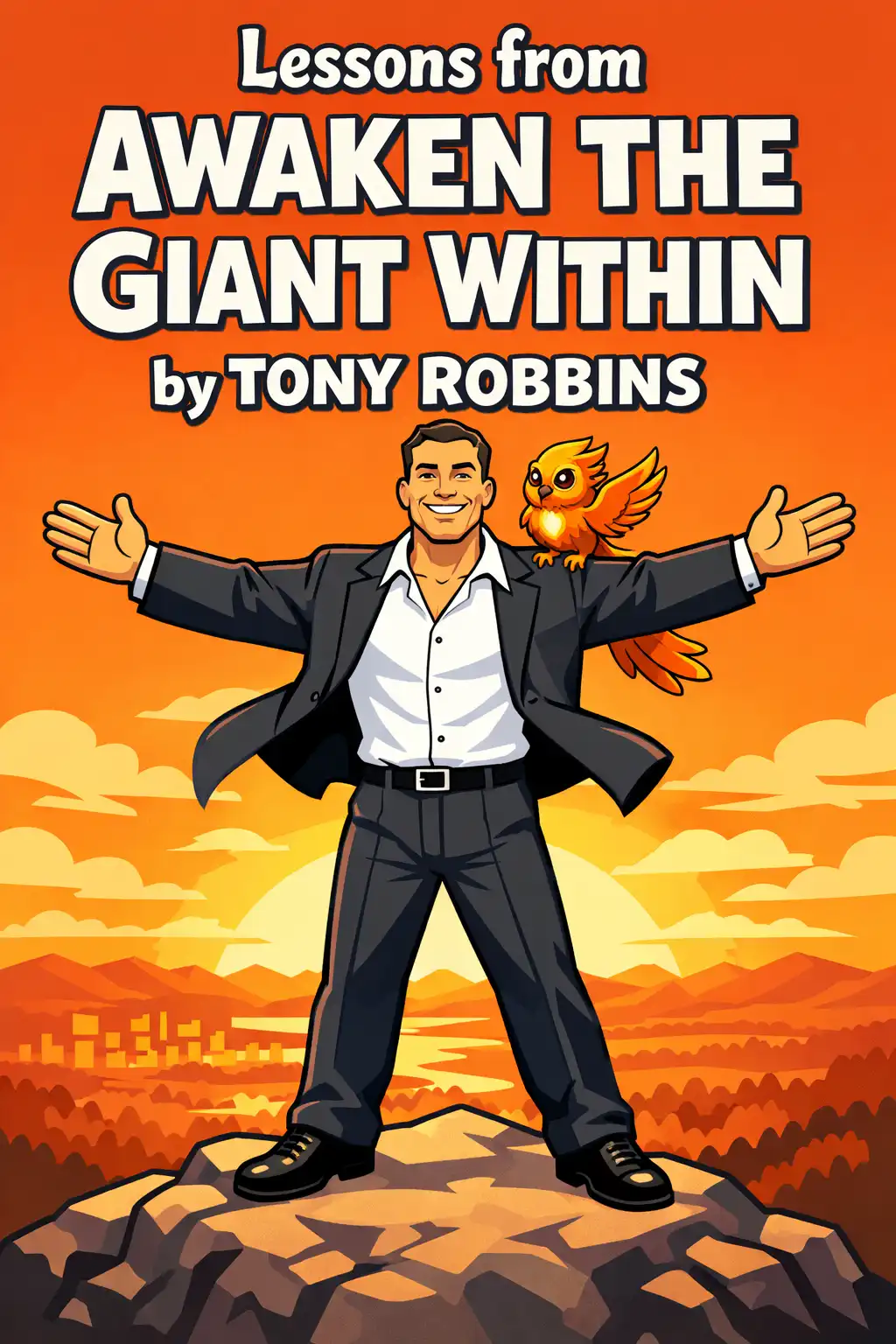
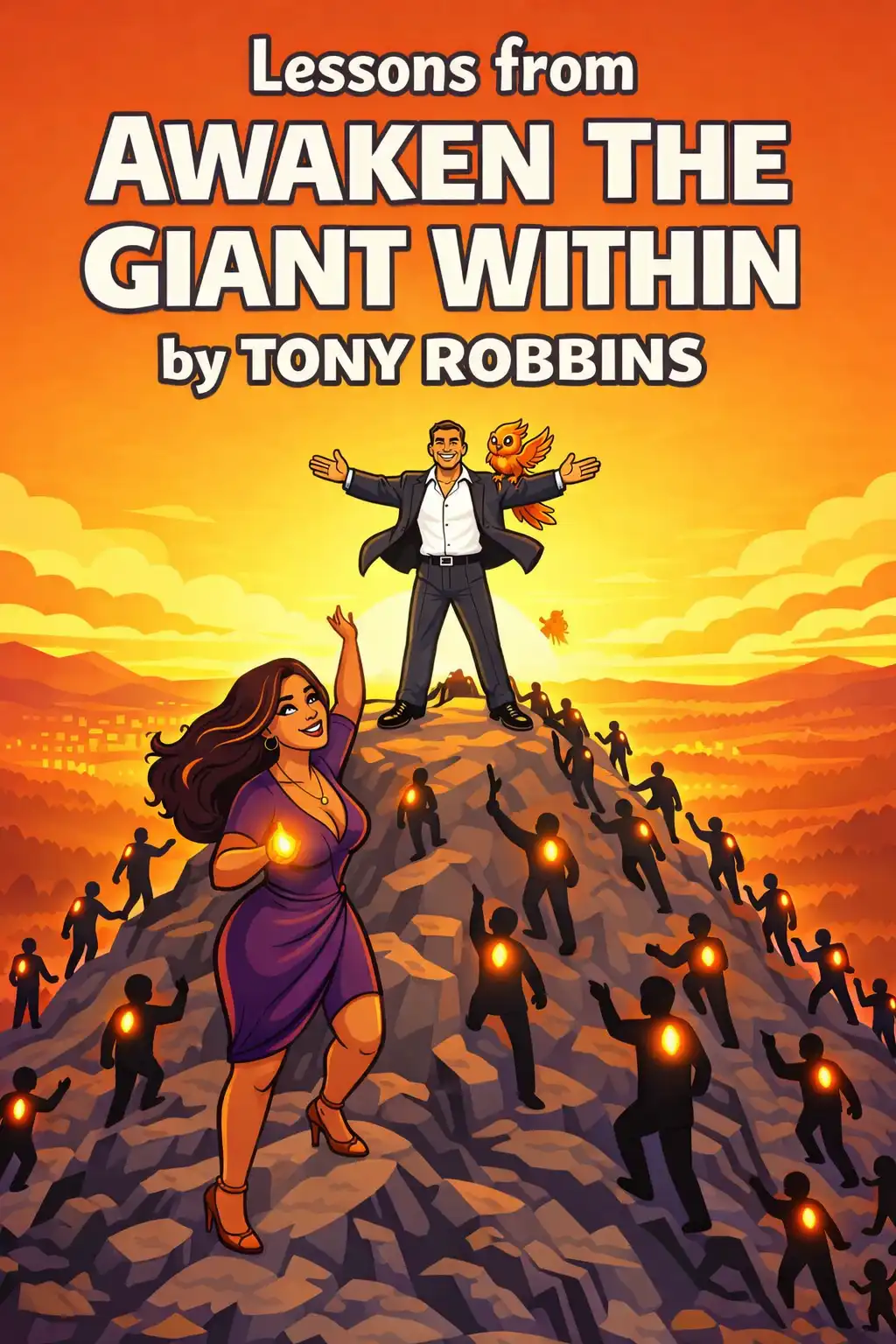







Awaken the Giant Within cover

Book summary: Awaken the Giant Within by Tony Robbins

10 min read12 key lessonsText + animated summary

What if the only thing standing between you and the life you want, is a single decision you haven't made yet?

One-sentence summary

"Awaken the Giant Within" by Tony Robbins is a powerful guide to taking control of your emotions, your habits, and your destiny, starting today.

Reading about Awaken the Giant Within is one thing.

Watching it is faster, more fun, and you'll actually remember it.

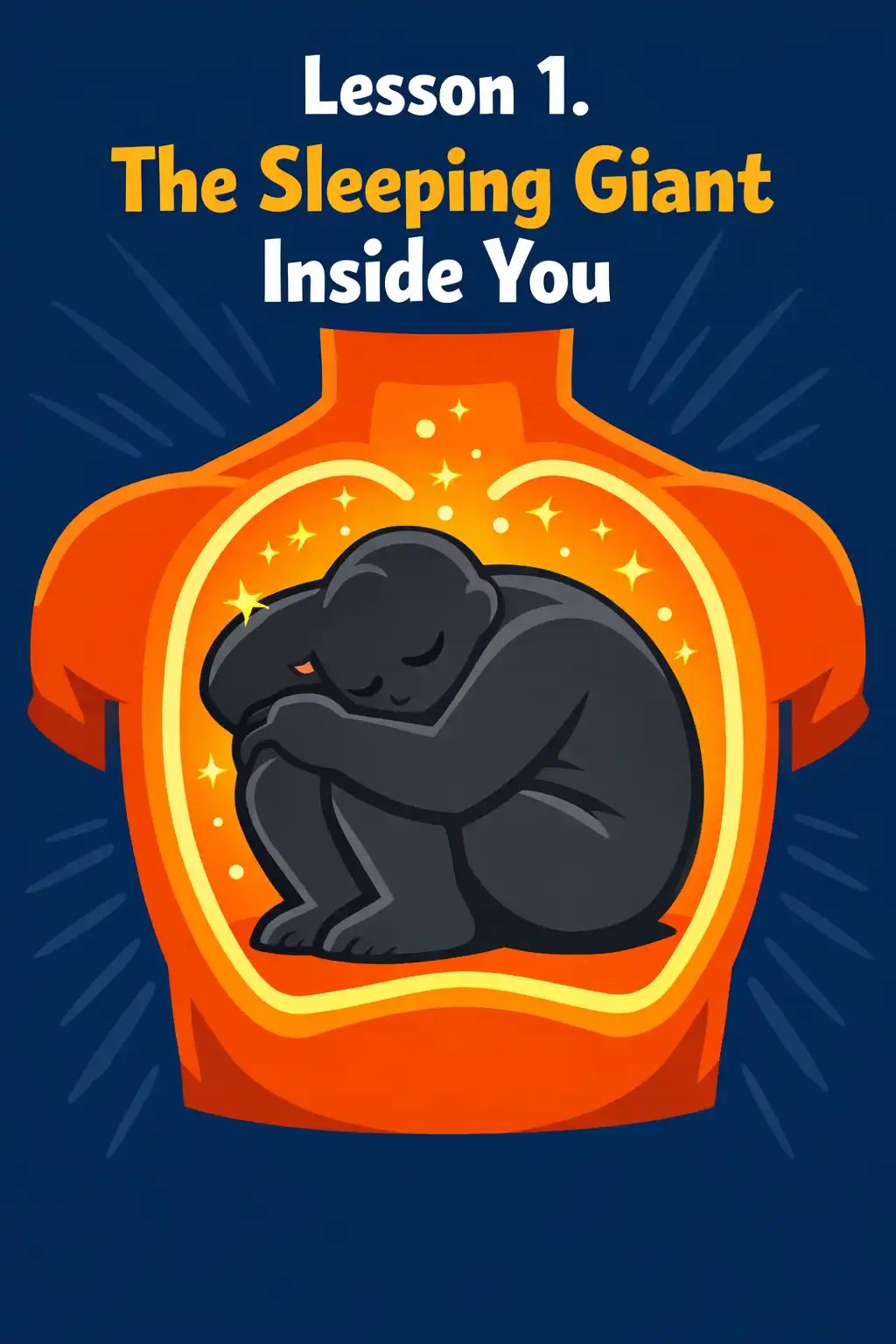
Lesson 1: The Sleeping Giant Inside You

Picture a young man working as a janitor, living alone in a tiny apartment, feeling completely stuck in life. That man was Tony Robbins.

One day, he made a single decision. He told himself he would never again settle for less than he was capable of becoming. That one choice changed everything.

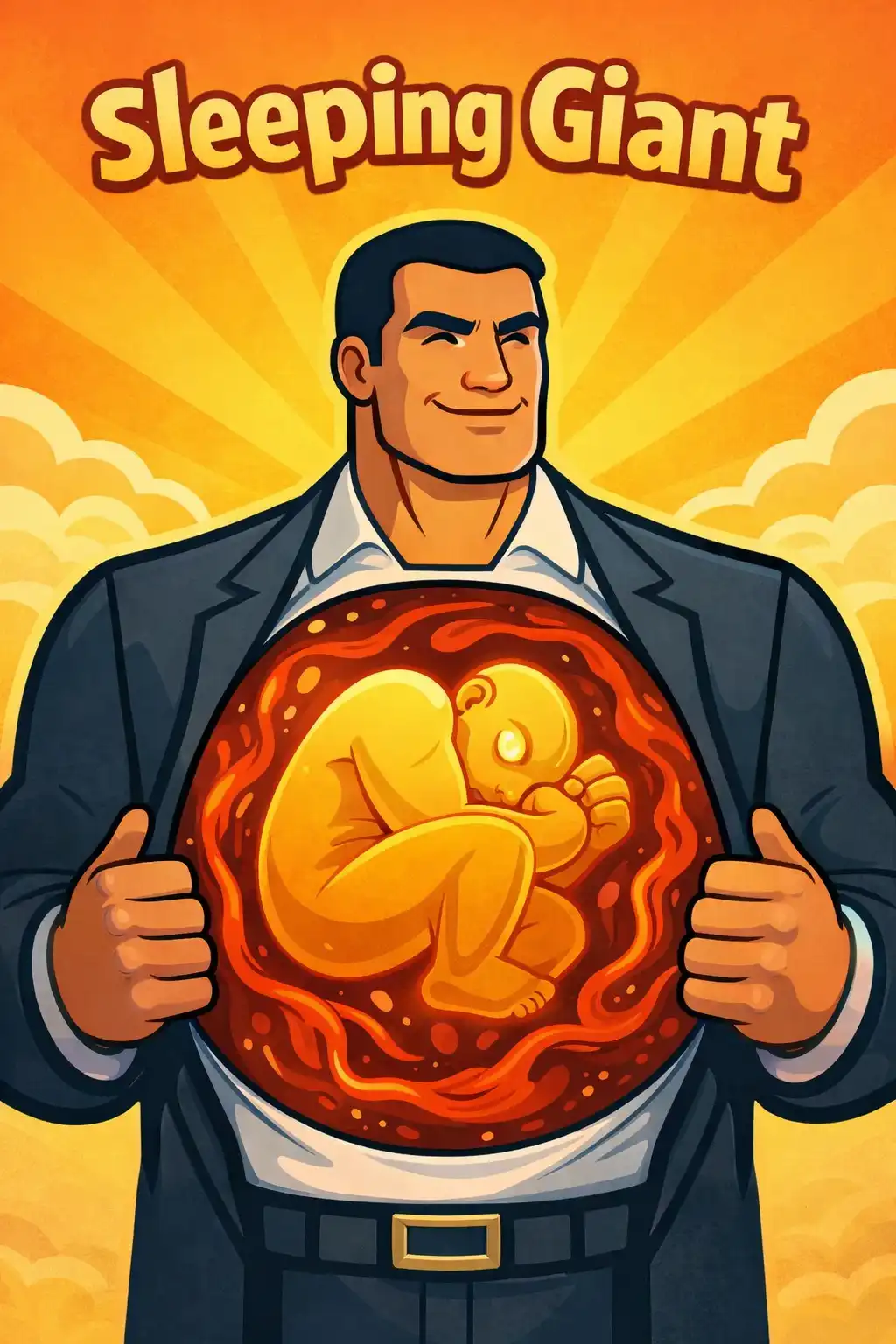
Years later, he was flying his own helicopter to seminars attended by thousands of people. Robbins believes that each of us has what he calls a "sleeping giant" inside.

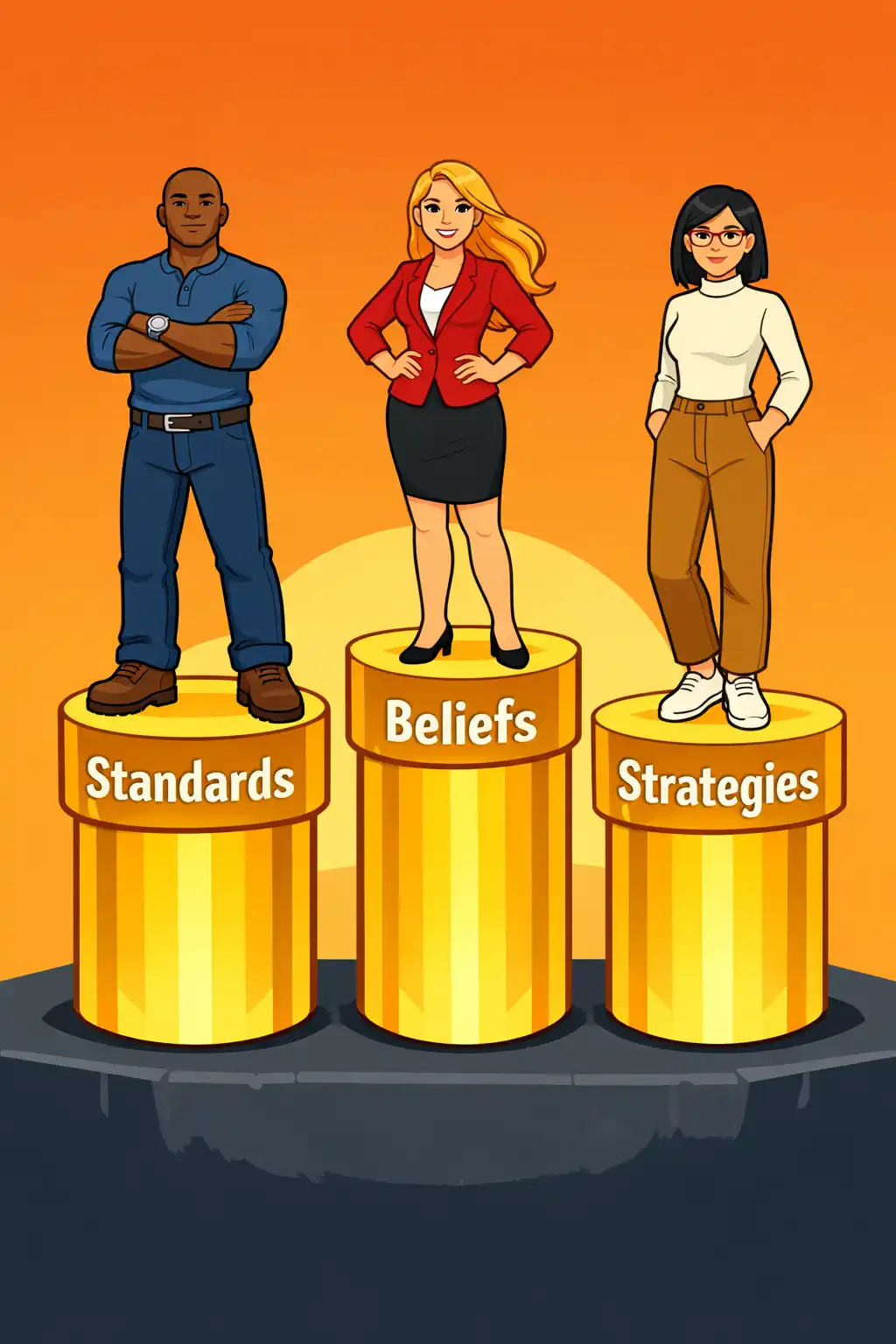
Lasting change, he says, comes from three things. First, raising your standards. Second, replacing your limiting beliefs. And third, finding better strategies to follow.

Even tiny adjustments can make a huge difference. Something as small as changing one word you say every day, or asking yourself a different question each morning, can ripple across your entire life.
Lesson 2: Your Decisions Shape Your Destiny

Think about where you were ten years ago. Now ask yourself honestly. Did outside conditions bring you to where you are today, or did your decisions?

Robbins argues that decisions, not circumstances, determine your destiny. And a true decision means committing fully. It means cutting off all other possibilities.

He points to Rosa Parks, the civil rights activist who refused to give up her seat on a bus in 1955. That one committed decision reshaped an entire nation.

He also tells the story of Soichiro Honda, the founder of Honda Motors. Honda faced factory bombings and repeated rejection before building a global empire through sheer resolve.

Robbins offers a practical challenge. Make one decision you have been putting off. Do it right now. That single act starts building your decision-making muscle.

Lesson 3: The Two Forces That Drive Everything You Do

Imagine two people. One risks his life to save strangers from a plane crash. Another attacks a jogger just for fun. What could possibly drive such different behavior?

Robbins says the answer is surprisingly simple. Everything we do comes from wanting to avoid pain or gain pleasure. These two forces run our entire lives.

Think about procrastination. We put things off because taking action feels more painful right now than avoiding it. But when the pain of doing nothing becomes unbearable, we finally move.

Advertisers understand this well. They link pleasure to their products through emotional conditioning. It is similar to how Pavlov trained dogs to salivate at the sound of a bell.

Robbins says you can consciously redirect these forces in your own life. Link intense pain to the habits you want to drop, and genuine pleasure to the habits you want to build.

Lesson 4: Your Beliefs Become Your Reality

Here is a striking story. Two brothers grew up in the same household with the same abusive, alcoholic father. One brother became an addict himself. The other built a successful life.

When each brother was asked to explain how he turned out the way he did, both gave the exact same answer. They said, "What else could I have become, growing up with a father like that?"

Robbins uses this story to show that events themselves do not shape us. Our beliefs about those events do. And a belief, he says, is really just a feeling of certainty about what something means.

Think of a belief like a tabletop. An idea only becomes a belief when it gains enough "legs" to stand on. Those legs are reference experiences, the moments in your life that seem to support it.

Robbins introduces a concept he calls "CANI." It stands for Constant And Never-ending Improvement. It is inspired by the Japanese philosophy known as kaizen, which means continuous small improvements.

This mindset helped transform Japan's post-war economy and later helped Ford Motor Company achieve dramatic turnarounds. Small, continuous improvements create massive results over time.

Lesson 5: How to Rewire Your Patterns for Good

Imagine you quit a bad habit for a week, maybe two. Then one stressful evening, you slip right back into it. Sound familiar? Most of us have been there.

Robbins developed a system called Neuro-Associative Conditioning, or NAC for short. It is specifically designed to make change stick by rewiring the neural pathways in your brain.

It has six steps. First, decide what you truly want and figure out what has been preventing you from getting it. Most people only focus on what they don't want, which keeps them stuck.

Next, create leverage. Link massive pain to staying the same, and real pleasure to changing now. This kind of internal motivation is far stronger than any outside pressure.

Then, interrupt your old pattern with something unexpected. Create a new, empowering alternative behavior. And condition it through repetition until it becomes completely automatic.

Here is a real example. A friend of Robbins quit smoking the day his young daughter begged him, with tears in her eyes, to please stop killing himself. That emotional moment was his leverage.

Lesson 6: How to Master Your Emotions

Think about Elvis Presley. He had fame, money, and adoration from millions of fans. Yet he spiraled into drug dependency and died tragically at just forty-two years old.

Robbins says Elvis never learned to direct his own emotional state. And here is the key insight. What people really want is not material success. What they truly want is to change how they feel.

You can change your emotional state in two ways. The first is through your physiology, meaning how you use your body. Robbins points out that the word "emotion" literally comes from "motion."

Try it yourself right now. Stand tall, breathe deeply, and smile. You will feel different almost instantly. Simple physical changes create immediate emotional shifts.

The second way is through focus. Your mind works like a camera lens. It only shows you what you tune into. If you ask yourself empowering questions, you get empowering answers.

Robbins also outlines what he calls "ten action signals." These are uncomfortable emotions that actually carry important messages. Fear is telling you to prepare. Frustration is telling you a better approach exists. Loneliness is telling you to reach out.

Lesson 7: Transform Your Life by Transforming Your Vocabulary

Imagine three people all face the same frustrating situation. One says he is "furious." Another says she is "angry." And a third says he is "a bit peeved."

Robbins noticed that these different word choices created completely different emotional experiences. The words we habitually use literally shape how intensely we feel things.

English has about 500,000 words, but most people use only a few thousand on a regular basis. And interestingly, there are twice as many words for negative emotions as there are for positive ones.

Robbins calls this tool "Transformational Vocabulary." The idea is simple. Replace "depressed" with "getting better." Swap "overwhelmed" for "in demand." Change "good" to "spectacular."

He also explores how metaphors shape our lives. One man lost 130 pounds after he stopped seeing his body as just a vehicle and started calling it "a temple." That one word changed everything for him.

Lesson 8: Ask Better Questions, Get a Better Life

Picture a man trapped in a Nazi concentration camp. Every single day, he asks himself one question. "How can I use this experience to help others?"

That man was Stanislavsky Lech. That single question kept him alive. While other prisoners asked "why me," his question gave him a sense of purpose and the will to survive.

Robbins says that thinking itself is really just the process of asking and answering questions. The quality of your life depends directly on the quality of the questions you consistently ask yourself.

He recommends what he calls "Morning Power Questions" to start each day. For example, "What am I grateful for right now?" Or, "What am I most excited about in my life today?"

These questions redirect your focus instantly. They can change your entire emotional state before you even leave the house. That is a powerful daily ritual worth building into your routine.

Lesson 9: Consciously Design Your Values

After a painful business betrayal left him deeply in debt, Robbins traveled to Fiji and did something radical. He sat down and completely redesigned his personal values hierarchy.

He realized he had been chasing achievement in order to feel happy. So he repositioned happiness above achievement on his list. Now, instead of achieving to be happy, he was happily achieving.

Robbins makes an important distinction here. "Ends values" are the emotional states we truly desire, things like love, freedom, and security. "Means values" are the things we think will give us those states, like money or status.

Most people have never consciously chosen their values. They inherited them from family, culture, or media without even realizing it. That is why decision-making often feels so confusing and painful.

Robbins urges you to write down your values, rank them by importance, and then ask yourself a simple question. "Does this order actually serve the life I want to live?"

Lesson 10: Set Goals That Pull You Forward

Imagine a teenager with childhood rickets so severe he could barely walk. That boy was O.J. Simpson, and he went on to break football rushing records that seemed impossible.

Robbins says people do not lack motivation. They have what he calls "impotent goals." A goal has to be exciting enough to get you up early and keep you up late.

He asks you to brainstorm goals across four categories. Personal development. Career and finances. Adventures and experiences. And contribution to others.

For each category, pick the single most compelling one-year goal. Then write down exactly why you are committed to it. Your reasons are what give your goals emotional fuel.

Robbins warns that without a compelling future, people can literally lose the will to live. Goals are not accessories to a good life. They are the engine that pulls you forward.

Lesson 11: Expand Your Identity

During the Korean War, Chinese captors convinced American soldiers to write small essays criticizing their own country. It seemed harmless at first.

But over time, those small acts shifted the soldiers' self-image. Once they began to see themselves as collaborators, they started behaving consistently with that new identity.

Robbins explains that identity is our most powerful belief. Someone who calls themselves "an addict" will likely relapse. But someone who identifies as "a health nut" naturally avoids temptation.

Here is the good news. Your identity is not fixed by your past. It is shaped by how you interpret your past. You can consciously decide who you want to become, starting right now.

Robbins recommends three steps. Write a description of your new identity. Create an action plan that matches it. And then tell people about it, because saying it out loud reinforces the change.

Lesson 12: Become an Everyday Hero

A man named Sam LaBudde spent just 800 dollars to secretly film dolphins being killed on a commercial tuna fishing boat. His eleven-minute video changed an entire industry.

Consumer boycotts followed, and major tuna companies stopped using the nets that were slaughtering dolphins. One ordinary person created extraordinary change.

Robbins insists that all of the world's biggest problems come from human decisions. And that means human decisions can also solve them. You do not need to be superhuman to make a difference.

Small, consistent daily actions add up more than you think. Volunteer an hour. Acknowledge a stranger. Visit someone who is lonely. These simple acts ripple outward in ways you cannot predict.

Robbins closes with this truth. Contribution brings deeper fulfillment than any personal achievement ever could. The giant within you is not just for you. It is for the world.

You've read the summary. Now watch it.

The animated version covers the same ideas — faster, and in a format you'll actually remember.