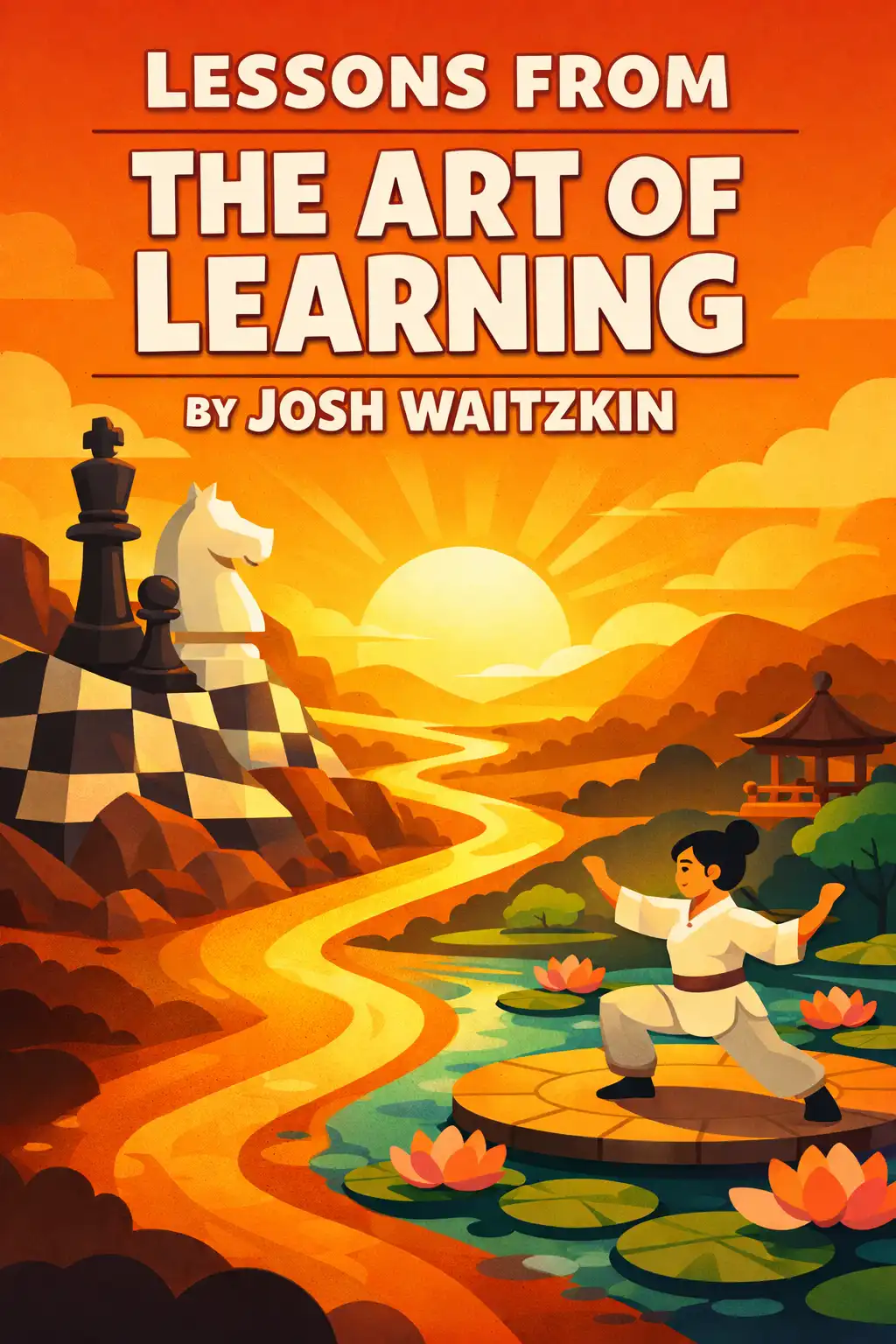

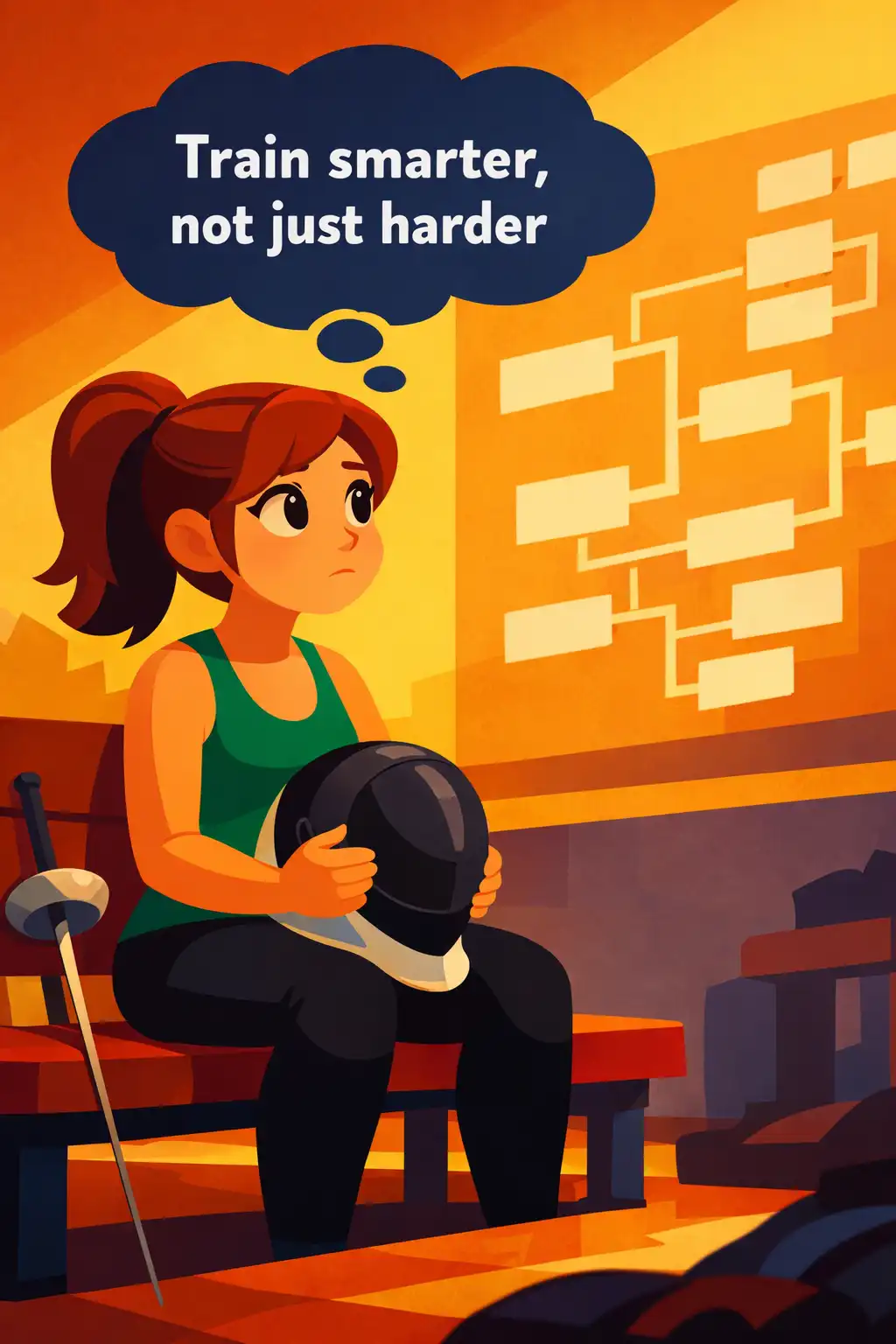
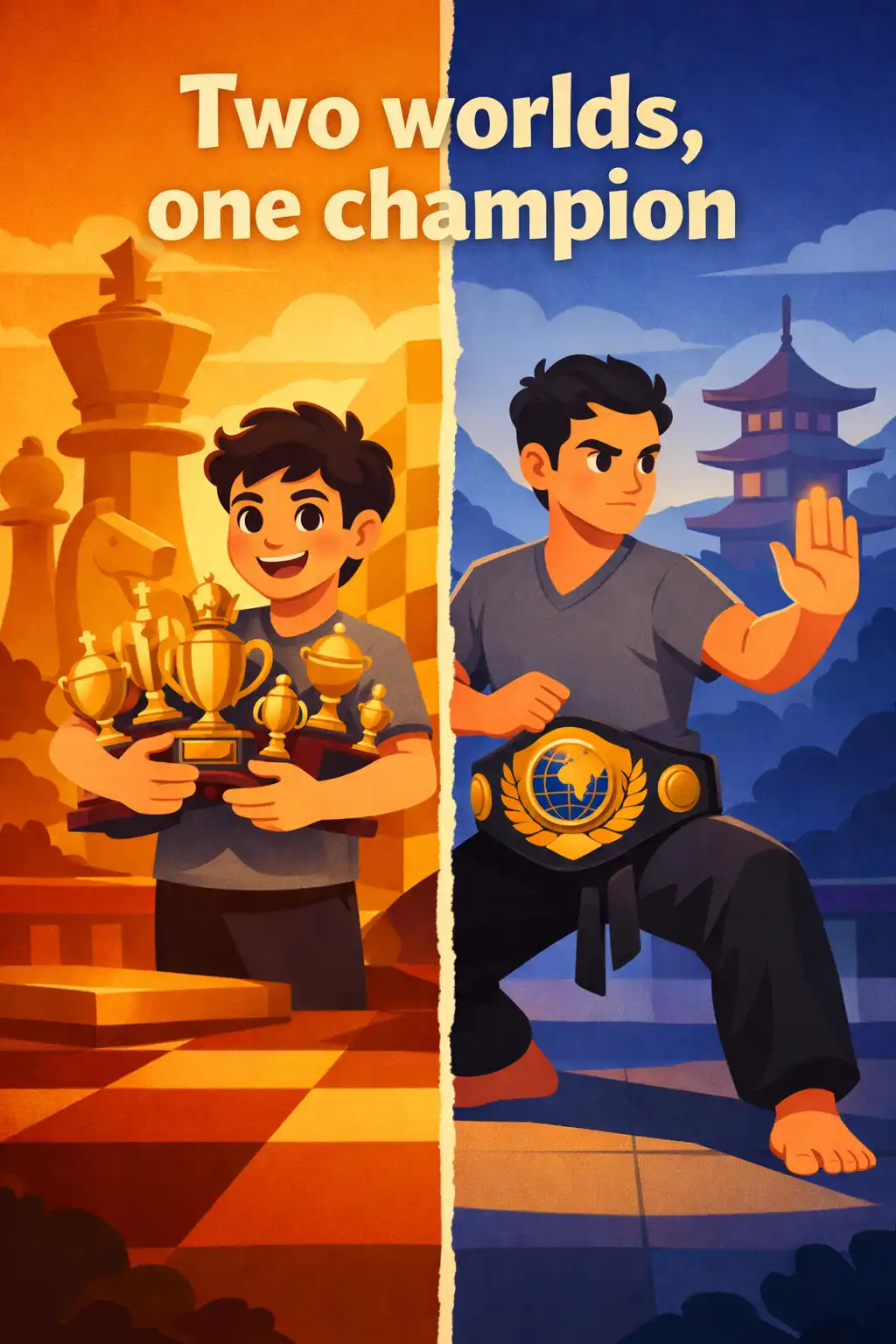
The Art of Learning cover

Book summary: The Art of Learning by Josh Waitzkin

10 min read12 key lessonsText + animated summary

Want a way to turn chaos, pressure, and even injuries into your competitive edge?

One-sentence summary

The Art of Learning, by Josh Waitzkin, shows how a chess prodigy became a Tai Chi champion.

Reading about The Art of Learning is one thing.

Watching it is faster, more fun, and you'll actually remember it.

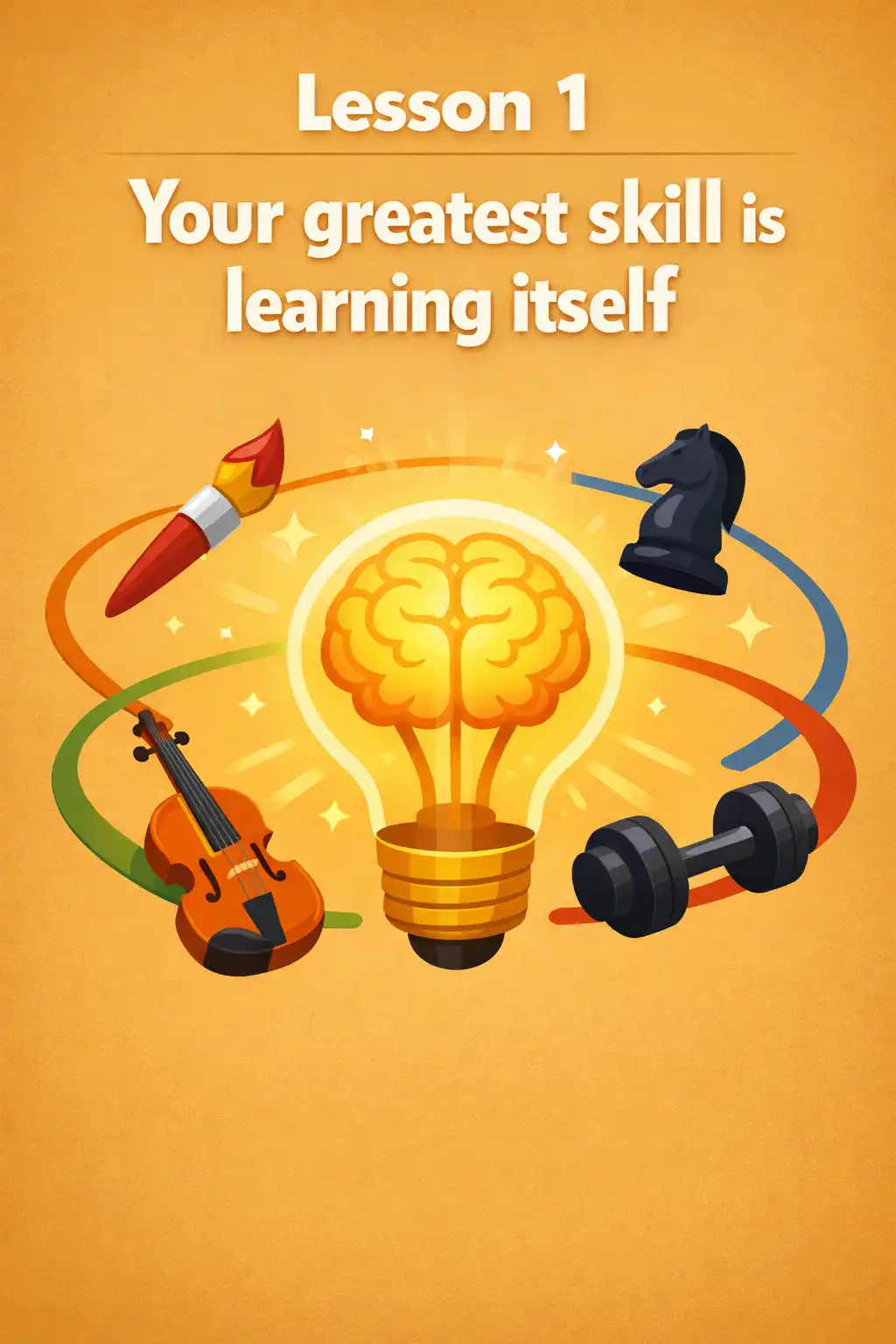
Lesson 1: Josh’s Doorway to Mastery

Picture this: you’re on a tournament floor in Taiwan. Your ribs scream. Teammates yell. You stand up anyway. That moment became Josh’s doorway into his method.

Josh is the chess prodigy from the movie "Searching for Bobby Fischer." As an adult, he became a world champion in Tai Chi Push Hands.

The Art of Learning is his field guide. It shows how skills transfer, how to train focus, and how to turn setbacks into fuel on demand.

Josh says mastery is more about process than talent. Learn the basics so deeply they fade into the background. Then intuition can lead when it matters.

He turns big ideas into small habits: breaths, tiny movements, simple resets. He wants learning to be practical enough for any Tuesday morning.

These lessons follow his path from park chess to world championships. We’ll pause often, explain the why, and keep every story grounded and human.

Lesson 2: Street Meets School

Picture a small kid in Washington Square Park, New York. He stands on a bench to see the marble chessboards while hustlers shout and pigeons flap overhead.

That child is Josh. A kind stranger plays him, and the crowd leans in as the kid makes a real attack instead of random moves.

The park became his rough classroom. Street players taught tricks, nerves, and a love of the fight. It felt chaotic, playful, and incredibly alive.

Then Bruce Pandolfini, one of America’s top chess teachers, noticed him. Bruce added structure without killing the spark, starting with endgames and thoughtful questions.

Together they balanced grit and fundamentals. They delayed tournaments, protected curiosity, and built habits like explaining moves out loud to make thinking clear.

That mix became a real edge. Chaos rattled him less because he had simple anchors. When pressure rose, his foundations carried him through.

Lesson 3: Choose Growth

Imagine a hermit crab on the ocean floor, squeezing out of a shell that feels tight, exposed and awkward until it finds a bigger home.

That is Josh’s favorite growth metaphor. You leave comfort, feel vulnerable, and only then can a new layer form around you.

He leans on psychologist Carol Dweck’s mindset research. Fixed mindset says talent is everything. Growth mindset says effort and strategy build ability, especially after setbacks.

With kids, tiny coaching choices matter. Praise focus and persistence, and they seek challenge. Praise innate genius, and they avoid risk to protect an image.

Josh’s training always returned to fundamentals first. Endgames before flashy openings. Principles before tricks. That slow layering built intuition that survived stressful tournaments.

The lesson is simple and hard. Choose learning over looking good. When you feel shell-less, remember: that is exactly how growth feels up close.

Lesson 4: The Soft Zone

Think about studying while a neighbor blasts music, a dog barks, and your phone buzzes. Do you tighten up, or learn to breathe and flow?

Josh calls that resilient focus the "Soft Zone." Early on, noise shattered his concentration. He trained by inviting distractions until they became part of thinking.

Opponents tapped pieces or kicked under tables. Instead of faking calm, he practiced channeling irritation into sharper awareness and more accurate calculation.

He tells an Indian parable: you can try paving every road to remove thorns, or you can make sandals that handle thorns everywhere.

Practically, start with small daily challenges. Study with background noise sometimes. Practice with a playlist you dislike. Re-center quickly, then continue calmly.

Over time, the world stops needing to be perfect. You become adaptable, which is the real competitive edge when big moments get messy.

Lesson 5: Break the Spiral

Picture making one mistake at work, then rushing to fix it, making two more, and spiraling until you have no idea what you’re doing.

Josh saw this pattern in chess. Players cling to what was winning, reject equalizing options, and overpress until they lose positions that were still salvageable.

He coached kids at P.S. 116, a New York City public school, to breathe, reset, and value clarity over the drama of perfection.

A Manhattan street story nails it: a woman nearly gets hit, argues with the driver, stays angry, and misses the second taxi that actually hits her.

The fix is simple, not easy. Interrupt the spiral. Splash water. Stand and stretch. Take one deep breath. Ask, "What is true now?"

One student, Ian, remembered this at Nationals. He calmed himself after a blunder, found the best move again, and turned a likely loss into a match-winning performance.

Lesson 6: Invest In Loss

Imagine leaning your shoulder into a friend. They push a little. Your body braces automatically. In Tai Chi Push Hands, a standing grappling game, that bracing is the trap.

His teacher, William C. C. Chen, a legendary New York Tai Chi master, taught yielding. Four ounces can redirect a thousand pounds if the timing is precise.

Early training hurt his pride. Advanced classmates like Evan bounced him into walls. Chen called this an investment in loss: step into defeat to learn safely.

That practice built sensitivity. He started to feel intention through touch, noticing tiny pressure shifts that telegraphed where the next wave was heading.

The big takeaway travels anywhere. Create protected periods to be bad on purpose. Rework technique. Accept ugly sessions. Keep notes so you don’t repeat mistakes.

When performance returns, it’s stronger. You didn’t fake confidence. You earned it by surviving vulnerability and turning it into new skill.

Lesson 7: Smaller Circles

Picture tracing giant circles with your arm to learn a punch in slow motion, then shrinking the arc until power fires from inches with no obvious windup.

Josh calls this "Making Smaller Circles." Find the essence of a skill, then compress the outside form while preserving the inside feeling and structure.

Modern life rewards breadth and novelty. He argues for depth. In chess that meant endgames first. In Tai Chi that meant millimeters of alignment and relaxation.

The magic is repetition. Slow practice lets the body encode correct mechanics so you can act without chatter when speed or pressure arrives.

Greats in every field do this quietly. A grandmaster slides pieces like music. A boxer twitches a shoulder and lands power you barely saw begin.

Start large. Get the feeling. Then shrink, and shrink again. Your movements get smaller. Your control gets bigger. Complexity becomes simple because essence leads.

Lesson 8: Slow Down Time

Think of a moment when everything sped up around you, yet you felt calm, like the world slowed and tiny details came into focus.

Josh explains this with chunking. Your brain groups patterns so the conscious mind can relax and notice the one or two details that truly matter.

In chess, beginners memorize moves. Experts feel relationships. Pieces stop being separate things and become coordinated ideas your body seems to recognize.

In grappling, a throw that once looked like a blur becomes dozens of micro-options after thousands of reps. Your eyes don’t speed up. Your filters improve.

Practice carves neural pathways. Then intuition speaks like music. You trust it, double-check big risks, and let it guide creativity under pressure.

The goal is a partnership. Let the unconscious handle massive data. Keep the conscious mind free to spot the one signal that changes everything.

Lesson 9: Adversity Alchemy

Picture breaking your hand mid-match. Pain explodes. Most people stop. Josh kept training—safely—and turned that injury into a learning laboratory.

He trained one-handed, strengthened the weaker side, and used visualization to preserve strength in the injured arm. His doctor was stunned by the recovery.

Soon after, he won a national title. The message isn’t "be reckless." It’s: reframe setbacks as structured challenges that reveal new ways to grow.

He even learned to control two limbs with one, a tactical insight born from constraint. Limitation focused attention and unlocked creative leverage.

You can safely manufacture micro-adversity. Work left-handed for ten minutes. Remove a tool. Change the environment. Then integrate the gains back smoothly.

Over time, adversity stops being an enemy. It becomes a teacher that sharpens presence, renews motivation, and keeps learning fresh and alive.

Lesson 10: Recover to Win

Imagine trying to run a marathon by sprinting every mile. You’d explode halfway. Josh realized he was doing that mentally and learned to recover on purpose.

At the Human Performance Institute, a training center for elite performers, he studied stress-and-recovery cycles. Short rests extend total focus much longer than nonstop effort.

Between chess moves he learned to release. Look away. Breathe. Let tension drop. Then reengage with fresh eyes, instead of staying clenched for hours.

He built a personal trigger. For a client named Dennis, a financial producer, it started with playing catch with his son, then became a short ritual.

Next he condensed it. Fewer steps. Fewer minutes. Eventually one deep breath carried the same state. His body learned that breath meant calm focus now.

Build your trigger slowly. Practice daily when life is easy. Trim steps only after consistency. When pressure spikes, a tiny routine will carry you back.

Lesson 11: Train Your Voice

Picture a balance beam. As a child you jog across laughing. Under bright lights the same beam shrinks to a terrifying tightrope. Pressure can distort your natural style.

Josh worked with two brilliant coaches. Yuri Razuvaev was a calm Russian mentor who nurtured strengths. Mark Dvoretsky was a demanding system builder who imposed structure.

Both teach valuable lessons. But trying to play like someone else muted Josh’s attacking voice and left him feeling disconnected from the game he loved.

The fix is integration. Stretch into new skills without snapping your identity. Keep your temperament, and add tools that make your style more complete.

When you train like this, creativity returns. The playful kid on the beam comes back—now with adult precision—able to improvise without losing balance.

Always ask, "Does this method deepen me or replace me?" If it replaces you, rethink it. If it deepens you, double down deliberately.

Lesson 12: Build and Express

Imagine studying tape with a friend for years, pausing on blinks and footfalls, turning sudden flashes into step-by-step techniques you can repeat on command.

That was Josh and Dan Caulfield, a fierce training partner. They built the "Anaconda" strategy: pressure slowly, cut off escapes, and win by shaping momentum and psychology.

At the 2004 Worlds in Taipei, judging felt political and rules kept shifting. Josh’s team adjusted by trusting principles over memorized plays.

He won Fixed Step outright and shared Moving Step after a brutal final with Buffalo, a local star. Respect grew on that podium alongside heavy bruises.

The larger lesson matters more than medals. Make small circles. Build triggers. Invest in loss. Slow time. Align training with who you are becoming.

Thanks for walking through Josh Waitzkin’s playbook with me. Take one deep breath right now. Then practice something tiny until it feels simple.

You've read the summary. Now watch it.

The animated version covers the same ideas — faster, and in a format you'll actually remember.