








The Four Agreements cover

Book summary: The Four Agreements by Don Miguel Ruiz

10 min read9 key lessonsText + animated summary

What if nearly everything you believe about yourself is a lie? A lie that someone else planted in your mind long before you were old enough to choose what to believe?

One-sentence summary

The Four Agreements, by Don Miguel Ruiz, is a guide to personal freedom.

Reading about The Four Agreements is one thing.

Watching it is faster, more fun, and you'll actually remember it.

Lesson 1: The Dream We Were Born Into

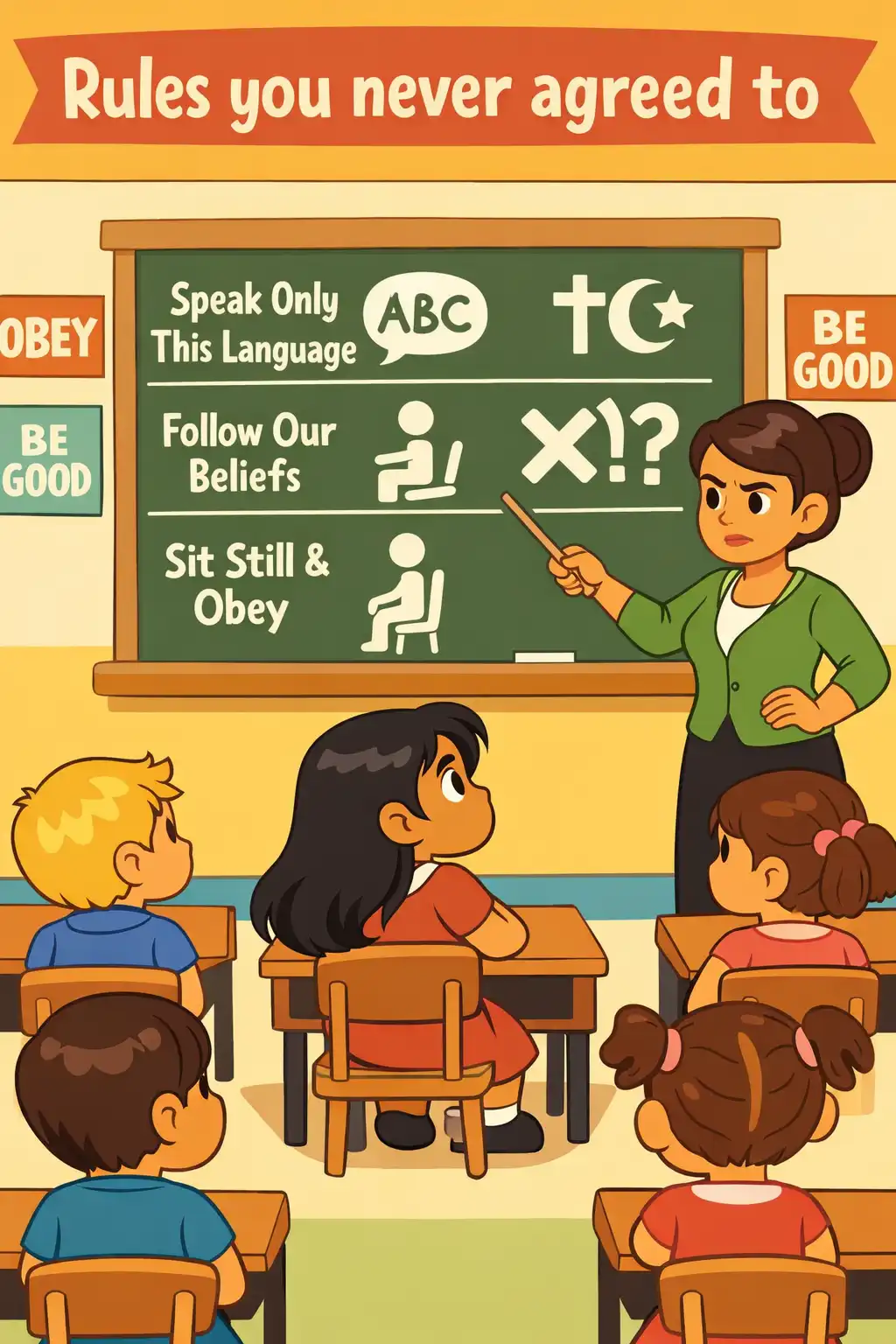
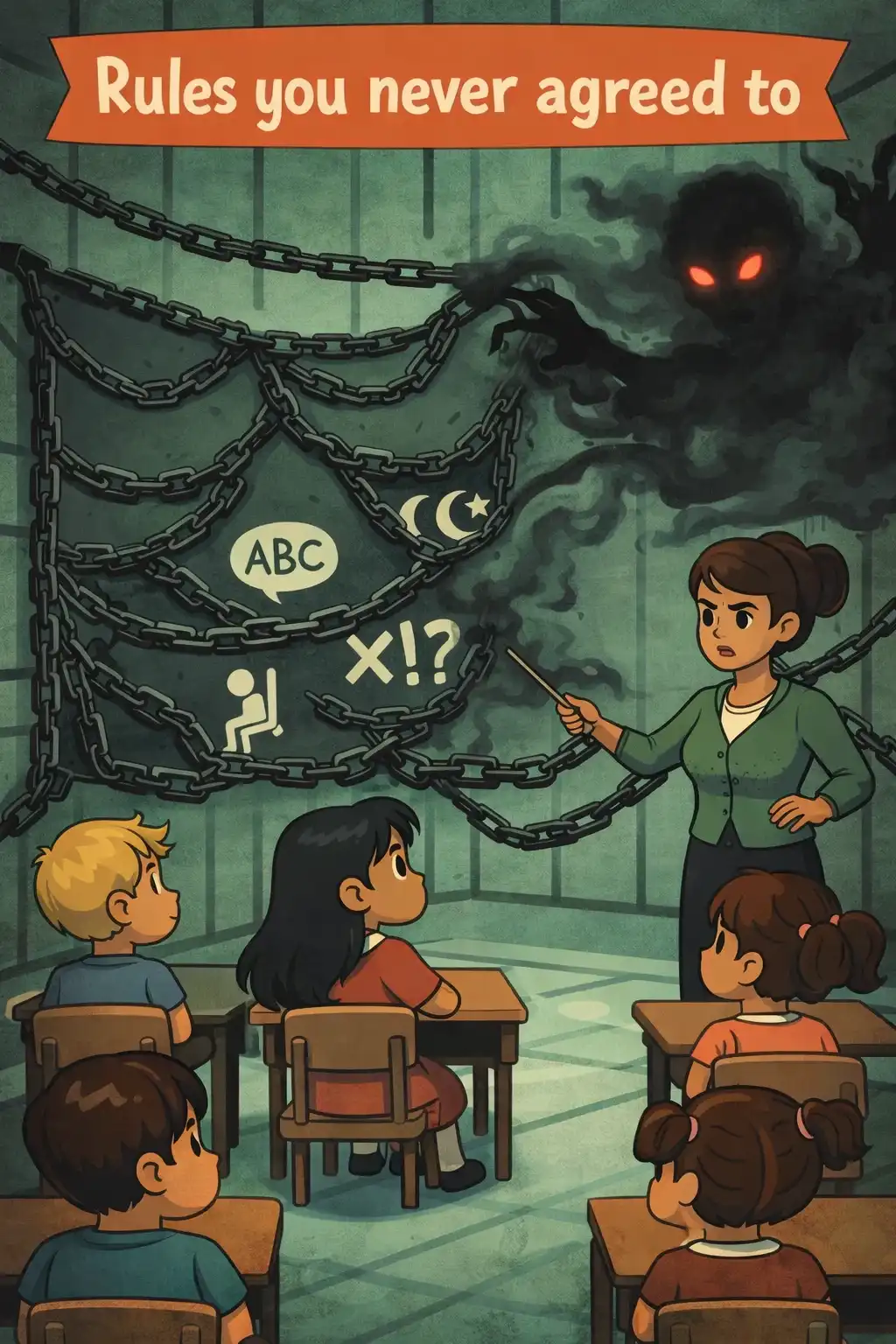
Picture yourself as a small child, sitting in a classroom, absorbing rules you never agreed to. Language, religion, how to behave. All of it was chosen for you before you could think for yourself.

Don Miguel Ruiz, a Mexican spiritual teacher from the Eagle Knight lineage of the ancient Toltecs, has a name for this process. He calls it "domestication." And he says it shapes who we become.

Now, the Toltecs were ancient masters of spiritual knowledge who gathered at a place called Teotihuacan in Mexico. The name literally means "where man becomes God."

Ruiz explains that through punishment and reward, we learn as children to fear rejection and crave approval. Over time, we start pretending to be someone we're not, just to fit in.

Eventually, we carry around what Ruiz calls an "inner Judge," a voice that criticizes everything we do. And alongside it lives an "inner Victim" that absorbs all the blame, guilt, and shame.

Here is a striking claim Ruiz makes. He says that ninety-five percent of the beliefs stored in our minds are lies. And yet, we suffer tremendously because we treat those lies as though they were the truth.
Lesson 2: How Agreements Shape Your Reality

Think about a time you told yourself, "I'm not smart enough," or "I could never do that." Now ask yourself, where did those words originally come from? Were they really yours?

Ruiz explains that every belief you hold is an agreement you made, often without even realizing it. These agreements define what you feel is possible for you, and what you feel is impossible.

Fear-based agreements drain what Ruiz calls your "personal power." That is the energy you are born with, the energy that rebuilds each day after you rest.

The problem is that most of that energy gets spent just maintaining your old limiting beliefs. That leaves almost nothing left over for creating the life you actually want to live.

But here is the key insight. Each time you break an old agreement, the power that was being used to maintain it comes back to you. And now that energy is available for something better.

Ruiz says that by adopting just four new agreements, you can reclaim enough energy to change the entire system of beliefs that has been holding you back your whole life.

Lesson 3: Be Impeccable With Your Word

Imagine a little girl who loves to sing. One day, her mother is in a bad mood and snaps at her, "Stop it! Your voice is ugly." Just a few careless words.

But those words become like a spell. That girl may never sing again for the rest of her life. All because of one sentence spoken in a moment of frustration.

This is exactly why Ruiz calls the first agreement the most powerful one. "Be impeccable with your word." It means using your language in the direction of truth and love, not harm.

Ruiz defines "impeccable" as meaning "without sin." And sin, he says, simply means going against yourself. So being impeccable means never using your words to harm yourself or anyone else.

He points to gossip as the worst form of word misuse. He compares it to a virus that spreads emotional poison from person to person, corrupting minds along the way.

So what is the alternative? Start by speaking love to yourself. Tell yourself how wonderful and capable you are. These positive seeds gradually replace the fearful ones that were planted long ago.

Lesson 4: Don't Take Anything Personally

Think about the last time someone criticized you and it stung for days. You replayed their words over and over, wondering what you did wrong. Does that sound familiar?

Ruiz introduces the second agreement: "Don't take anything personally." Whatever someone says or does is a reflection of their own dream, their own beliefs. It is not about your reality.

For example, if someone calls you stupid, they are projecting their own beliefs and their own emotional poison onto you. Taking it personally means swallowing that poison as though it actually belonged to you.

Ruiz uses himself as an example. Whether people call him the best or the worst, an angel or a devil, it does not affect him. Why? Because he already knows who he is.

And here is the surprising part. He says you should not take compliments personally either. When someone says how wonderful you are, that is still about their perception. It is not an objective truth about you.

When you stop taking things personally, emotions like anger, jealousy, and sadness lose their grip on you. You can move through the world with your heart wide open, free from fear.

Lesson 5: Don't Make Assumptions

Picture this. Someone smiles at you in a shopping mall. And just from that one brief moment of eye contact, you start imagining a whole relationship, building an entire fantasy in your head.

Ruiz uses this exact kind of example to introduce the third agreement: "Don't make assumptions." We constantly create stories in our heads and then believe those stories are true.

In relationships, this causes real damage. We assume our partner knows what we want without us ever saying it out loud. Then we feel hurt and betrayed when they do not deliver.

We tell ourselves, "You should have known." But how could they? Ruiz says the cure for assumptions is having the courage to ask questions and to communicate clearly.

We also make assumptions about ourselves. We overestimate or underestimate what we are capable of, and that creates unnecessary inner conflict and self-doubt.

Ruiz explains that real love means accepting people as they are, without assuming your love will somehow change them. That assumption, he says, always leads to disappointment and blame.

Lesson 6: Always Do Your Best

Imagine two runners finishing a marathon. One is disappointed despite running a fast time. The other is thrilled just to cross the finish line. The difference is not the result. It is their internal standard.

Ruiz introduces the fourth and final agreement: "Always do your best." But he adds something crucial. Your best will never be the same from one moment to the next.

When you are healthy and well-rested, your best is naturally higher. When you are tired or sick, your best drops. And that is okay. Both are still your best, and both are enough.

Ruiz shares a story about a man who asks a Buddhist Master how long it takes to reach enlightenment if he meditates four hours a day. The Master says, "About ten years."

So the man offers to meditate eight hours a day instead, hoping to speed things up. The Master replies, "Then it will take twenty years." The point is that you are here to live and to love, not to exhaust yourself by trying too hard.

Doing your best means taking action because you love the action itself, not because you are expecting a reward. When you approach life this way, work stops feeling like work.

Lesson 7: Healing Through the Power of Forgiveness

Imagine your entire body covered with infected wounds. Every time someone touches you, the pain is excruciating. So you start avoiding all human contact just to protect yourself.

Ruiz uses this vivid metaphor to describe what he calls the "emotional body." We all carry invisible wounds filled with anger, sadness, envy, and hate from years of domestication.

The cure, Ruiz says, is forgiveness. Not because other people deserve it, but because you deserve to stop paying for old injustices over and over again.

The process starts with forgiving your parents, your siblings, and your friends. Then forgiving God, or life itself. And finally, the hardest step of all, forgiving yourself completely.

How do you know the forgiveness is real? Ruiz says it is when you can see someone who once hurt you, and you no longer feel an emotional reaction. That is when the wound has truly healed.

Ruiz says becoming what he calls a "spiritual warrior" means learning to feel your emotions deeply, but choosing when and how to express them, rather than letting those emotions control you.

Lesson 8: Embrace the Present Moment

What would you do differently if you knew you only had one week left to live? Would you still spend your time worrying about what other people think of you?

Ruiz introduces a concept called the "angel of death." It comes from Toltec teachings, and it uses the awareness of your own mortality to help you live more fully right now, in this moment.

Think about it. If today were your last day, you would tell the people you love exactly how you feel. You would stop trying to please everyone and start doing whatever brings you genuine joy.

The angel of death teaches that nothing truly belongs to us. Everything we have can be taken away at any moment. But right now, in this moment, we can enjoy what is here.

By surrendering to this truth, the weight of the past begins to dissolve. Each morning becomes a gift. And gratitude for simply being alive starts to replace the anxiety of old fears.

Lesson 9: Dream a New Dream for Your Life

Close your eyes for a moment and imagine looking at the world where love radiates from everything around you. The trees, the sky, every single person you meet.

Ruiz says this is not a fantasy. This is what he calls "the new dream." And it is entirely possible, because others before you have achieved it simply by changing the agreements they live by.

Throughout history, great teachers like Moses, Buddha, Jesus, and the Toltec masters have all described this same state of being. They just used different names for it. The Promised Land. Nirvana. Heaven. The New Dream.

Ruiz reminds us of something important. We suffer only because we choose to suffer. We always have a choice. We can live in fear, or we can choose to live in love.

And if you fall back into old habits along the way, do not judge yourself. Just stand up and begin again. Today is always the beginning of a new dream.

The Four Agreements are simple, but they are not easy. Be impeccable with your word. Don't take anything personally. Don't make assumptions. And always do your best.

You've read the summary. Now watch it.

The animated version covers the same ideas — faster, and in a format you'll actually remember.