
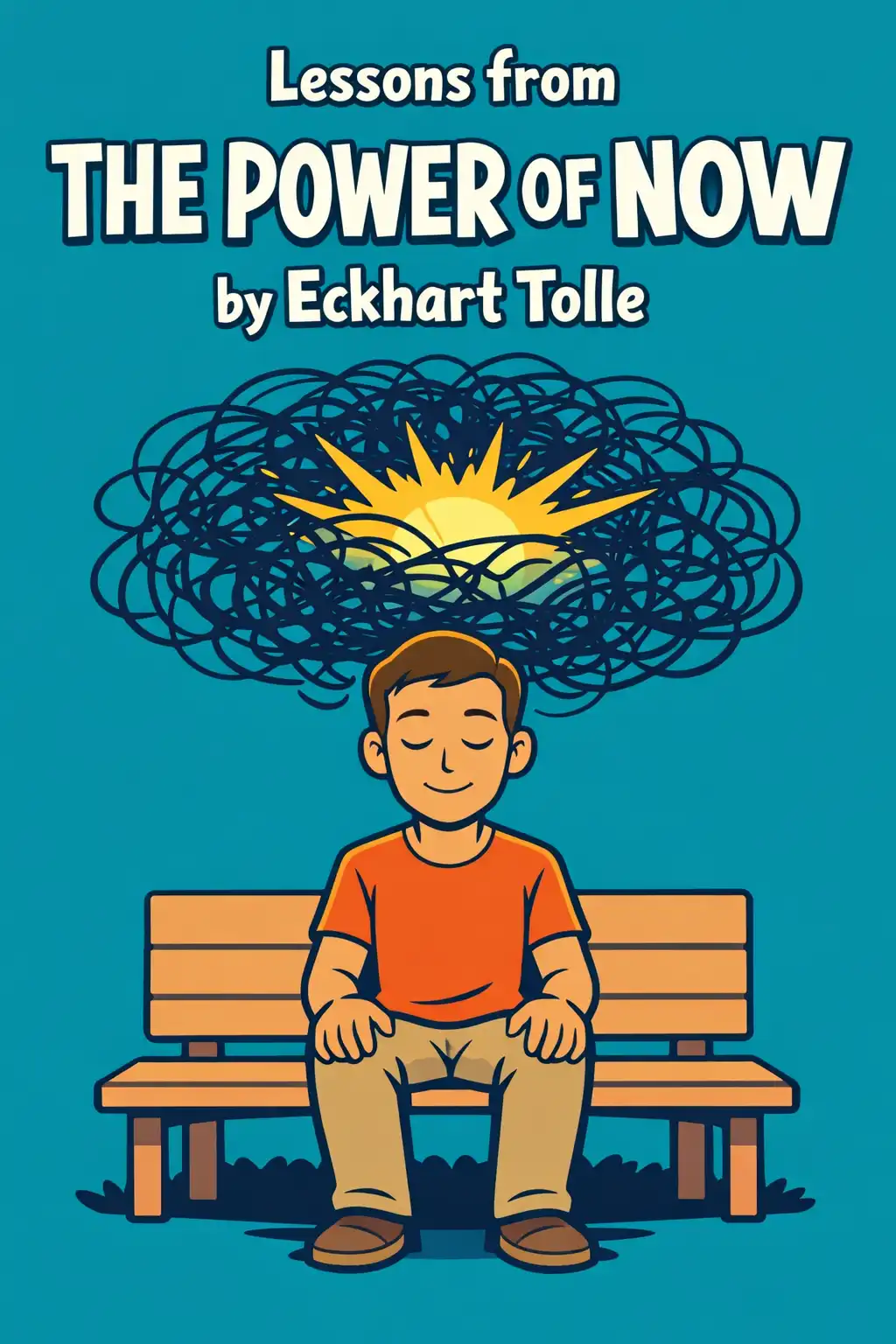
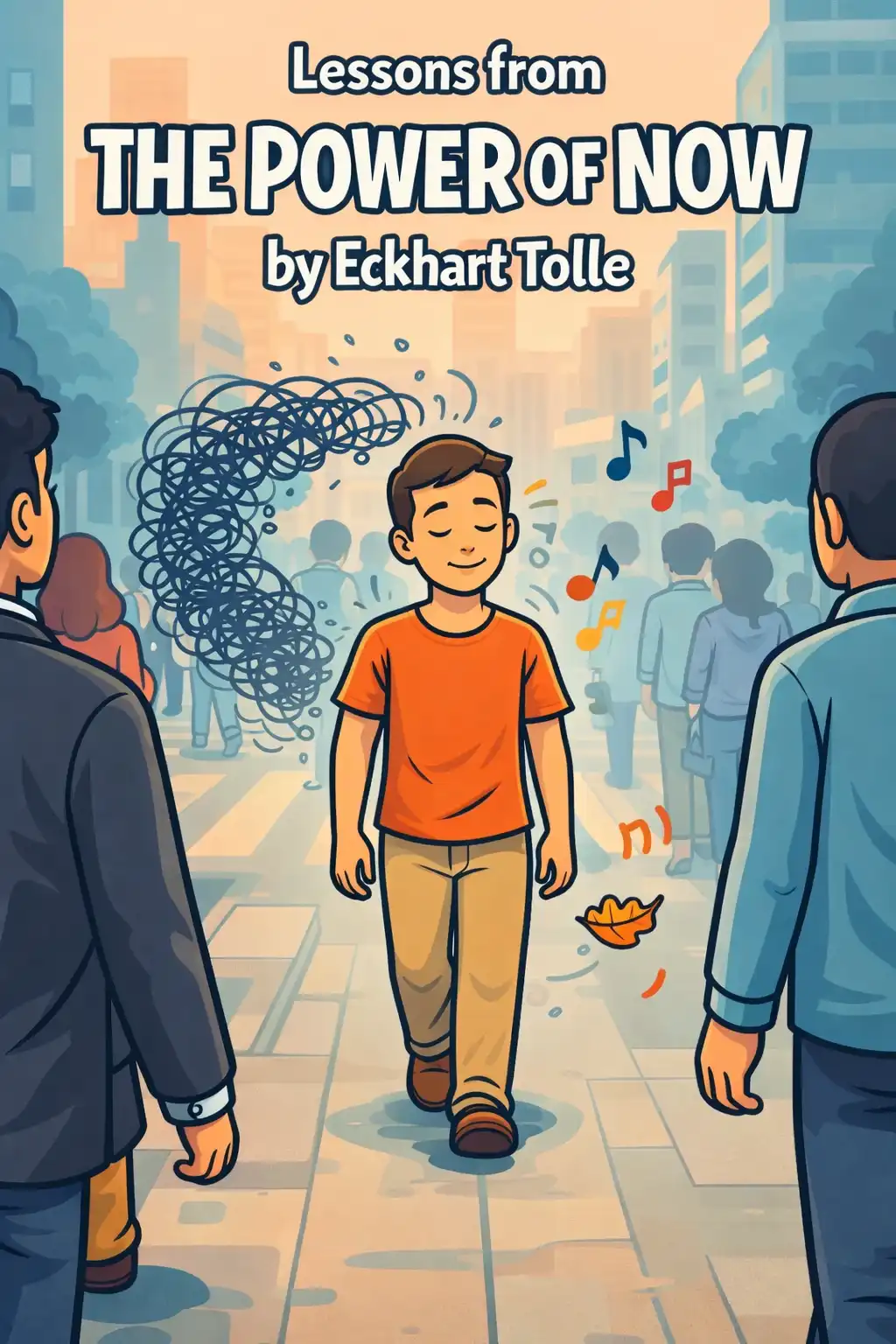







The Power of Now cover

Book summary: The Power of Now by Eckhart Tolle

10 min read10 key lessonsText + animated summary

What if the anxious voice in your head is not actually "you," and you could step out of its grip in the next sixty seconds?

One-sentence summary

The Power of Now by Eckhart Tolle shows you how to wake up from constant thinking.

Reading about The Power of Now is one thing.

Watching it is faster, more fun, and you'll actually remember it.

Lesson 1: Why This Book Matters Now

Picture this. It is 1 a.m. You are stressed and scrolling for answers. Then a single idea lands like warm light in a dark room.

Eckhart Tolle wrote The Power of Now as a practical guide, not a dense theory book. Readers used the ideas right away, which is why it spread quietly, one person to another.

It began in 1997 with a tiny print run. Because people kept sharing their results, it grew into a worldwide bestseller and was translated into many languages.

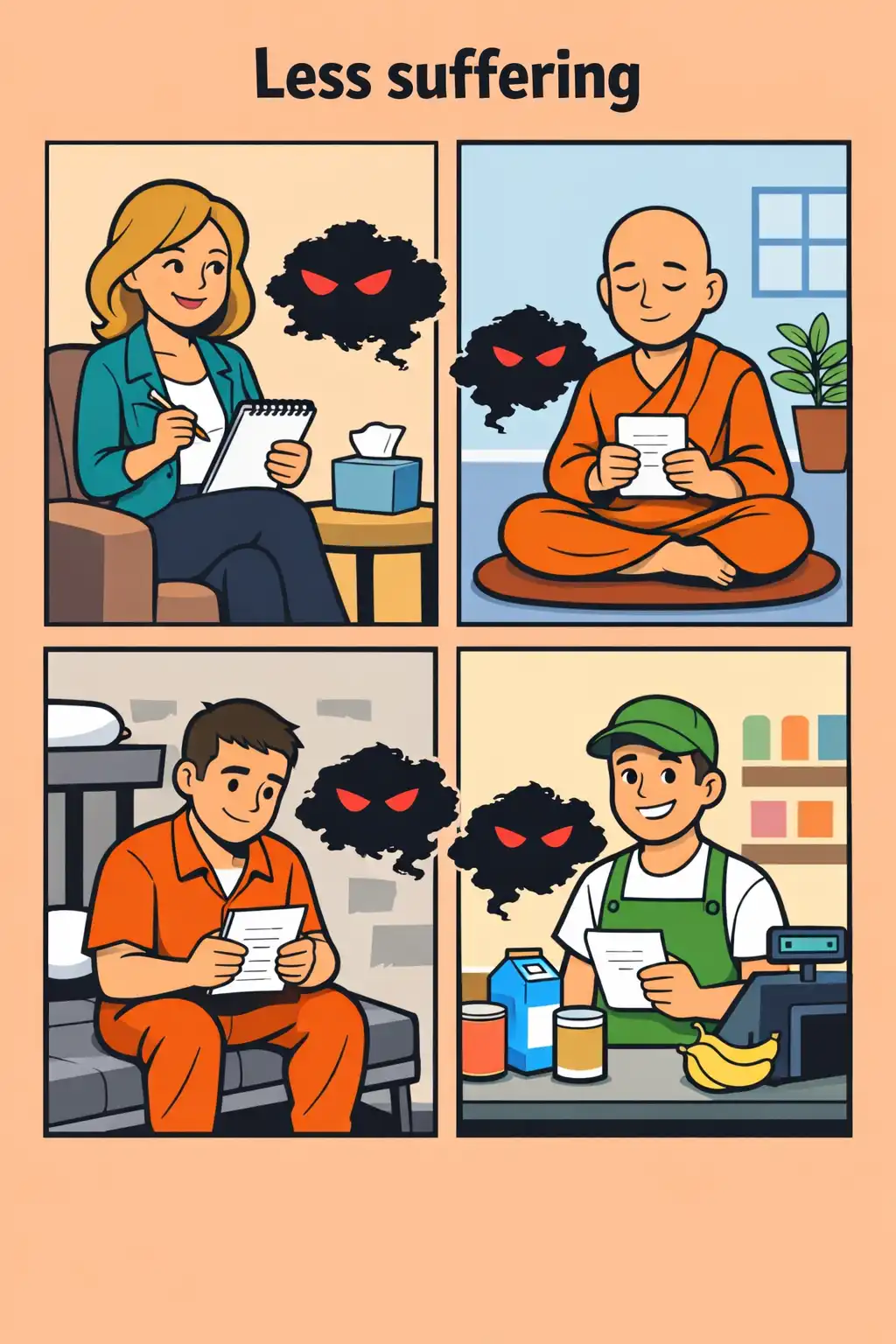
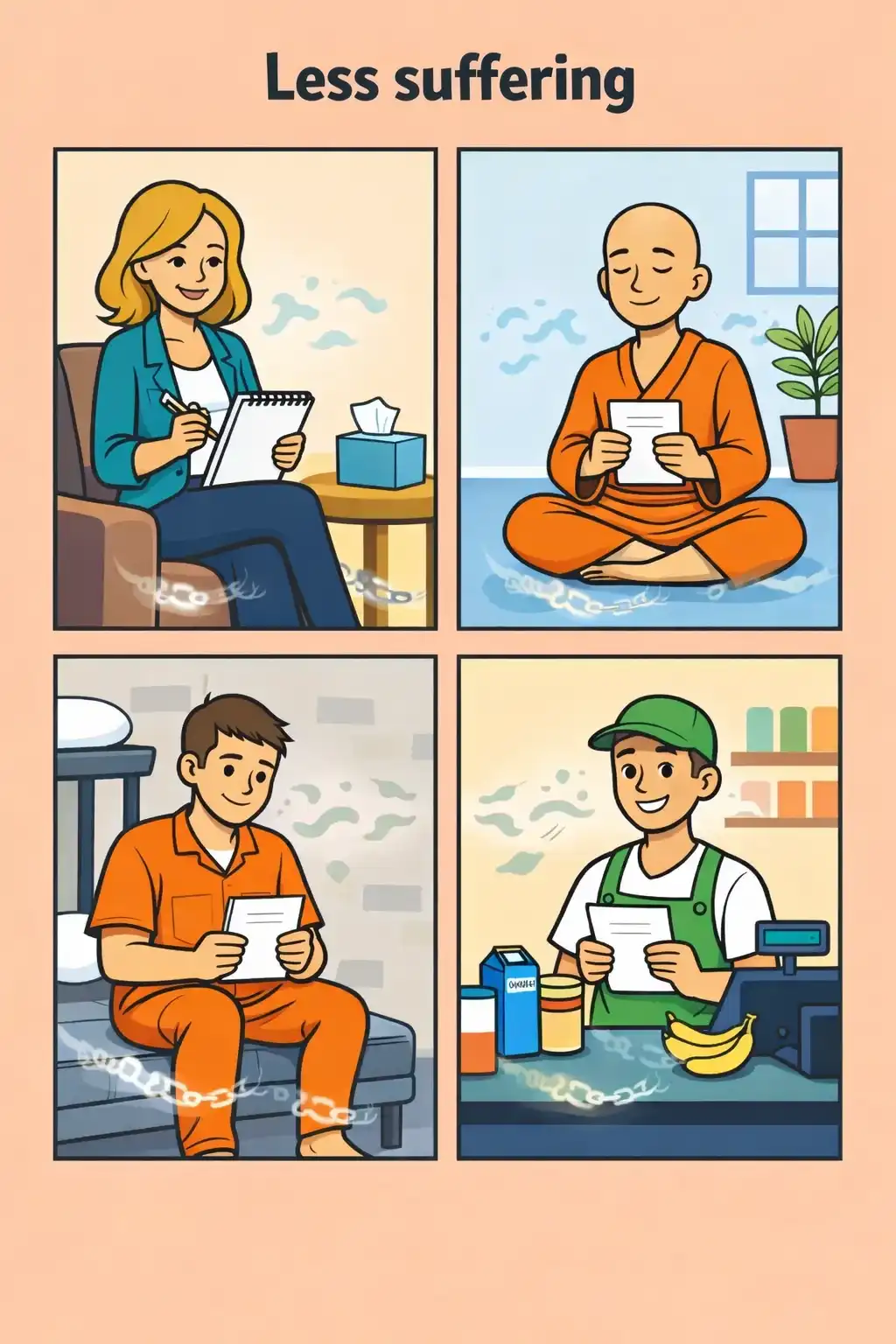
Tolle heard from ordinary people, therapists, monks, and prisoners. They described less suffering, fewer spirals of thought, and a surprising freedom from the weight of personal history.

He also admits the book will not land for everyone. If you are deeply identified with thinking, these ideas can feel like a threat, because they challenge the ego's favorite habits.

Context helps. Tolle's teaching came from his own breakdown and awakening. It began with one night of crushing anxiety that forced a radical shift.

Lesson 2: How the Awakening Happened

Think about a time when your mind felt like a crowded room full of arguments. Every voice was loud, and you could not find the door out.

Eckhart Tolle lived that way until around age thirty. He felt constant anxiety and episodes of suicidal depression that seemed impossible to escape.

One night, at his lowest point, a strange question appeared. He thought, "Am I one or two?" In that instant, the mental noise stopped.

He surrendered into what felt like a vast void. At dawn he woke to simple wonder, as if the world were new.

Over months the peace stabilized. Tolle realized something crucial. Experiences come and go, yet an underlying presence can remain.

When people asked how to get it, he would say they already had it. The presence was there, but their minds were too noisy to notice.

Lesson 3: You Are Not Your Thoughts

Imagine a beggar sitting on a dusty box for years, not knowing it is filled with gold. He searches the streets for coins and never looks inside.

That is Tolle's parable. The "gold" is your inner treasure, which he calls Being. You can find it only in the present moment.

The main obstacle is identification with thought. We treat the voice in our heads as who we are, which creates a false self, or ego.

Tolle's first practice is simple. Watch the thinker. Listen to the voice like a radio playing nearby, without agreeing and without arguing.

As you watch, you may notice tiny gaps. There is a second of no commentary. In that space, a quiet ease appears.

Tolle is not anti-thinking. He says thinking is a tool. Real creativity arrives when thought alternates with stillness, not when you are addicted to thought.

Lesson 4: Feel Emotions Fully, Without Stories

Picture yourself snapping at someone, then realizing it was not really about them. It was a tight, hot feeling that was already brewing inside.

Tolle explains emotions as the body's reaction to mental patterns. When thoughts and emotions loop together, the surge can feel overpowering.

Instead of explaining the emotion with more stories, locate it physically. Feel it in the chest, the belly, or the throat, and sense the raw energy directly.

This is not repression. It is the opposite. You let the emotion be there without feeding it with more thinking or more resistance.

Tolle says much suffering comes from a basic inner pain. The mind tries to cover it with cravings, distractions, and quick external fixes.

Love, joy, and peace are different in his view. They arise from presence. They do not depend on circumstances.

Lesson 5: Stop Resisting the Present Moment

Think about being stuck in traffic. The real misery is often not the cars. It is the inner voice saying, "This should not be happening."

Tolle says pain is often self-created through resistance to what is. An unobserved mind rejects the present moment and then suffers from that rejection.

His advice is radical and practical. Make the Now your primary focus. Use past and future only for real planning and needed learning.

Acceptance means an inner yes to this moment. You can still take action, yet the yes dissolves the tension that blocks clarity.

He introduces the pain-body, a buildup of old emotional pain that can "take over" when triggered. It feeds on drama, anger, or depression.

The cure is presence, not a fight. Watching the feeling breaks identification. Fear loses fuel when you stop living in future projections.

Lesson 6: Time Is Not Your Life

Imagine planning a vacation so obsessively that you miss today's meals, conversations, and sunsets. Later you wonder why life feels empty.

Tolle says the core delusion is confusing time with life. We live in memory and anticipation, while the only real moment is now.

He separates clock time from psychological time. Scheduling, deadlines, and learning are useful. Nonstop revisiting of the past and hunting the future creates suffering.

This is why emergencies can bring sudden presence. Attention is forced into the moment, and egoic problems disappear for a while.

Practice being the watcher. Notice thoughts and emotions as events, so your response is fresh instead of conditioned and reactive.

Many so called problems require mental time to exist. In the Now there is only a situation to handle or to accept.

Lesson 7: Build Presence Into Every Day

Picture standing in line and feeling the restless itch of waiting. It seems like real life will start once the line disappears.

Tolle says presence first comes in flashes, seconds at a time, then longer. Challenges will either deepen unconsciousness or strengthen awareness.

Try a quick check in. Ask, "Am I at ease right now?" Notice body tension, resentment, or mental complaining.

When negativity appears, you have options. Change the situation, speak honestly, or drop resistance. Carrying it only poisons your inner space.

Tolle warns about a passive acceptance that hides ego. True surrender dissolves the pattern itself, so it stops appearing so often.

He also reframes purpose. Outer goals matter, yet your inner purpose is the quality of consciousness in each step. This step is always now.

Lesson 8: Stillness, Silence, and the Living Body

Imagine sitting quietly and waiting for the next thought like a cat at a mouse hole. You are alert and curious, not tense.

Try this experiment. Wait for the next thought. If you stay alert, you will notice a clear stillness before thoughts return.

Presence is rooted in the body. Keeping some attention inside the body helps stop the mind from dragging you away.

True presence feels like a different kind of waiting, poised and awake. Tolle even reads some of Jesus' parables as teachings about staying conscious now.

In stillness, beauty shows up. There is a nameless essence beyond labels. We often miss it because we only name things mechanically.

Silence carries presence too. Teachers can help by reflecting it, yet Tolle warns not to depend on any person or group as your source.

Lesson 9: Enter the Inner Body

Close your eyes and notice your hands from the inside. Not their shape, but a gentle aliveness, like a subtle buzzing or warmth.

Tolle calls this the inner body, a formless field of living energy. He says it is a reliable doorway into Being.

Try it step by step. Feel the hands, then the feet, then the abdomen and chest, until the whole body feels like one field of awareness.

Keep a little attention in that inner body while walking, washing dishes, or speaking. Then presence becomes your background, not a rare event.

The body is not a spiritual obstacle. Denying it backfires. Transformation happens through awareness that includes and honors the body.

If forgiveness feels hard, notice the emotion and the grievance story. Release the story, because holding it blocks your access to presence.

Lesson 10: Portals, Love, and Surrender

Imagine believing the next achievement, retreat, or perfect partner will finally save you. Then notice how the relief never lasts for long.

Fulfillment is not a future event. It is presence now. Relationships reveal this because ego clings, fears loss, and swings between love and hate.

Tolle is blunt. Relationships do not create your pain. They reveal it. The practice is to watch the pain-body and the urge to blame.

When one partner holds steady presence, old roles can soften. Honest speech without attack, plus listening without defense, becomes a spiritual practice.

There are other portals into presence. Sense the silence between sounds. Notice the space around objects. Take one conscious breath to pause the mental commentary.

He distinguishes happiness from inner peace. Happiness depends on conditions. Peace comes from accepting what is, even during loss or illness.

You've read the summary. Now watch it.

The animated version covers the same ideas — faster, and in a format you'll actually remember.