BrainToon
Business is a big subject. The right book depends on what you're trying to build or fix: a new idea, a team, a sales pipeline or a cash problem.
If you want one book that applies almost anywhere, our pick is Good to Great by Jim Collins. If you'd rather ease in with a story, start with Shoe Dog, Phil Knight's gripping account of keeping early Nike alive.
From there, use the quick-picks table to jump to whatever matches your situation.
1. Good to Great by Jim Collins
Best for:
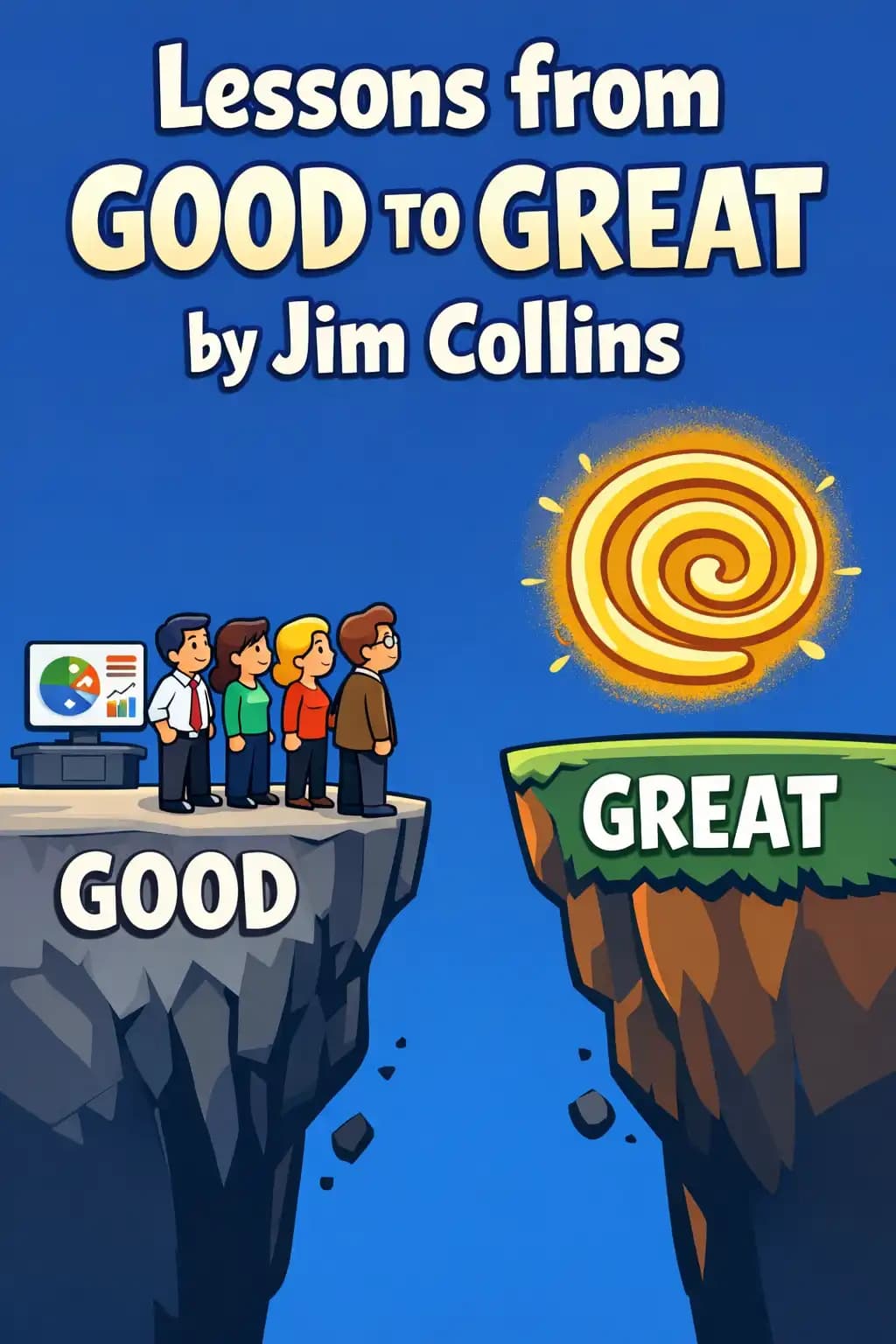
Jim Collins's study of how ordinary companies made the leap to lasting, exceptional performance.
10 min animated summary
Inside our summary
- First who, then what — build the team before the plan
- The Hedgehog Concept — simplify to amplify
- Push the flywheel — small wins compound into momentum
If you lead a company, or hope to, this is the book we'd hand you first. It's our best overall pick because its ideas hold up whether you run a small team or a large organization.
Collins frames it as a research question: can greatness be built, rather than arrived at through luck? His answers are memorable and easy to carry around. Get the right people on board before deciding on the plan. Face the brutal facts before you set strategy. Simplify around the one thing you can be best at.
He also describes leaders who are humble yet relentless. He argues that progress comes less from a single breakthrough than from pushing a flywheel, with small wins compounding into momentum.
It's a long-term strategy book, not a quick fix. Read it when you want to think about where a business is heading over years, not weeks.
2. The Lean Startup by Eric Ries
Best for:
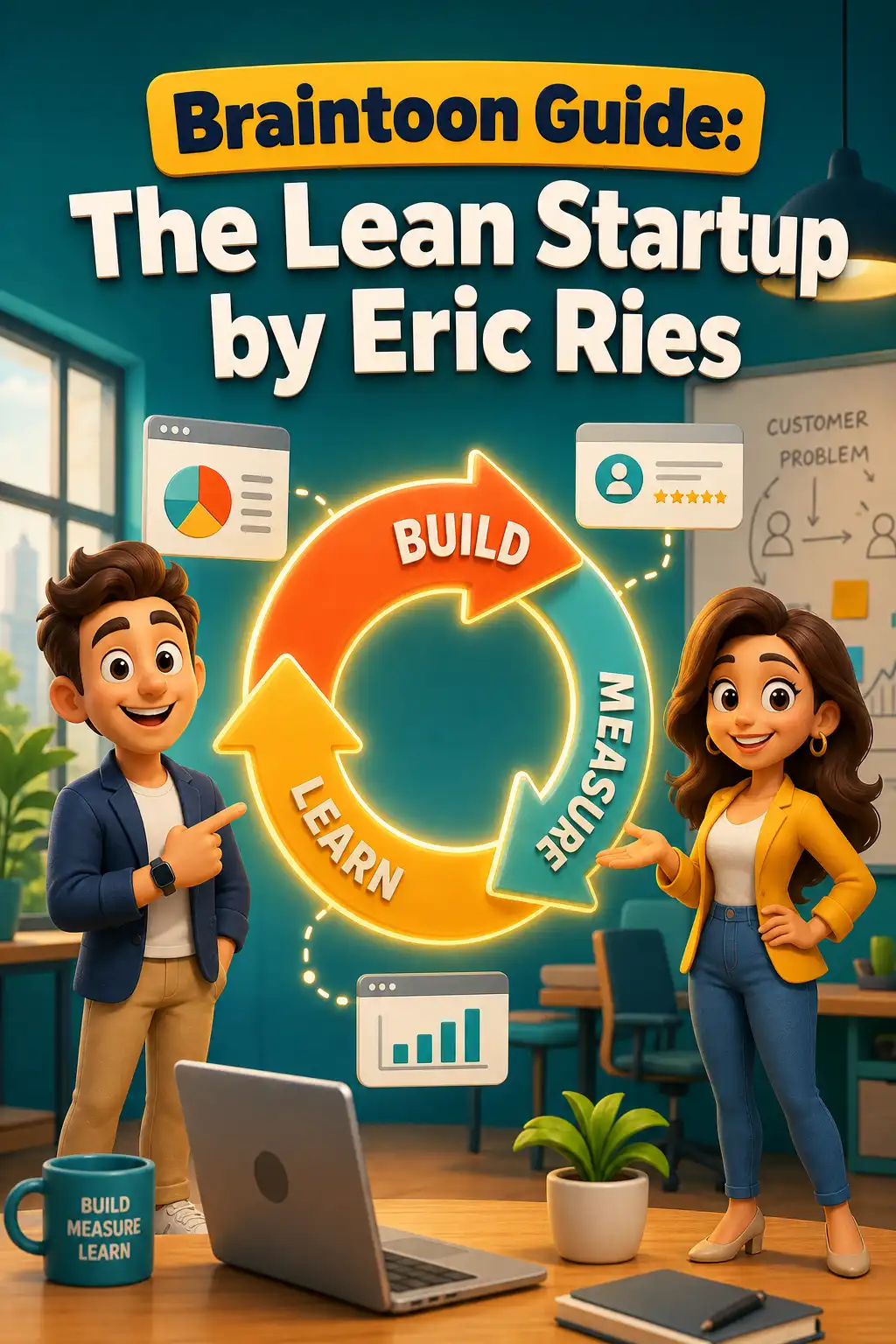
Eric Ries's method for testing a business idea with real customers before your time and money run out.
12 min animated summary
Inside our summary
- Test your leaps of faith
- The minimum viable product
- Pivot or persevere
Got an idea and a limited runway? The Lean Startup is built for exactly that moment.
Ries looks at why startups really fail, and his answer centers on building things people don't actually want. His fix is to treat early work as a series of experiments. You identify your riskiest assumptions, his “leaps of faith,” then test them with a minimum viable product instead of a polished launch.
The useful shift is how you measure progress. In Ries's view, learning counts as real progress, even when it tells you something you didn't want to hear. That leads to the book's hardest call: whether to pivot or persevere.
It suits first-time founders, but also anyone launching a new product inside an existing company. It also argues that entrepreneurship is a form of management, so it isn't only for people in garages.
3. The E-Myth Revisited by Michael E. Gerber
Best for:
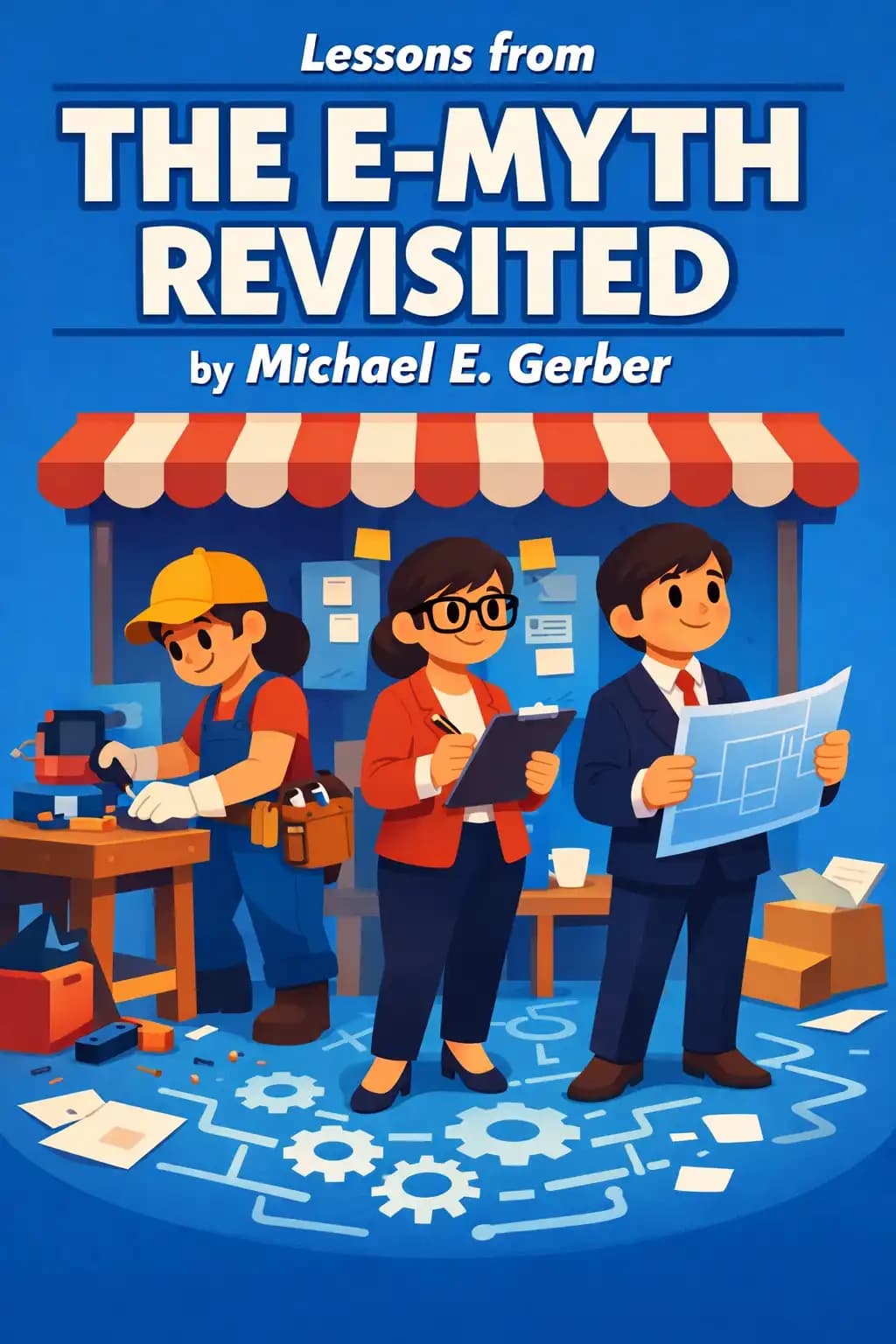
Michael Gerber on why small businesses stall, and how systems can free owners from doing everything themselves.
12 min animated summary
Inside our summary
- The entrepreneurial seizure
- Build your franchise prototype
- Organize around roles, not people
Did you start a business because you were good at the work, only to find the business now owns you? Start here.
Gerber's diagnosis is what he calls the “entrepreneurial seizure.” People go out on their own assuming that skill at the work itself is enough to run a company. He describes three competing people inside every owner and explains why the balance between them matters.
His remedy is to build the business as if you were going to franchise it. That means designing a prototype that runs on systems, and organizing around roles rather than around particular people.
Our summary covers a lot of ground, from the stages a business grows through to management, marketing and people systems. We recommend it for small business owners who want a company that works without them doing every job.
4. High Output Management by Andrew S. Grove
Best for:
Andrew Grove's practical playbook for managers who want their whole team, not just themselves, to get more done.
15 min animated summary
Inside our summary
- Your output is your team's output
- Meetings are where management happens
- Match your style to task-relevant maturity
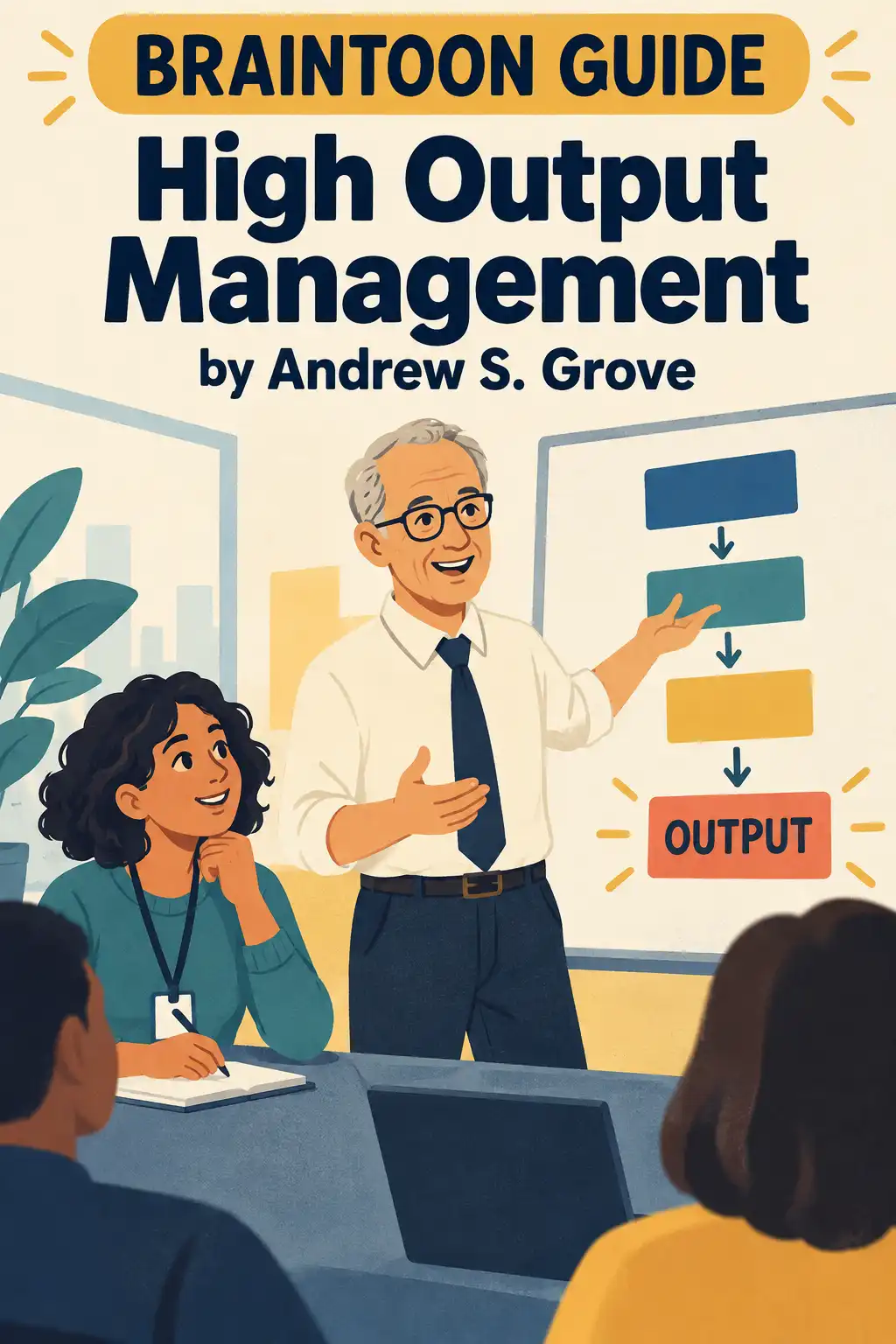
For new managers, this may be the most useful book on the list. Andrew Grove, Intel's former CEO and chairman, treats management as a job with real output. That output is your team's results, not your own to-do list.
This one idea reframes everything. Grove points managers toward activities that multiply what others accomplish, such as training and performance reviews aimed at improving future work.
He's especially helpful on meetings, which he treats as the place where management happens. He also argues that your management style should match each person's task-relevant maturity, which means how ready they are for the particular task in front of them.
The tone is practical and engineering-minded, with ideas like building everything around the limiting step. If you've just moved from doing the work to leading the people who do it, this is our pick.

5. Shoe Dog by Phil Knight
Best for:
Phil Knight's firsthand story of turning a side business importing Japanese shoes into Nike.
13 min animated summary
Inside our summary
- Selling shoes with no cash in the bank
- The break with Onitsuka
- Winning in court, nearly dying at the bank
Shoe Dog is our starting pick because it's the friendliest way into the subject. It reads like a story, not a manual, and it shows how fragile a young business really is.
Knight began as a shy Oregon runner with a side venture importing Japanese shoes. What follows is years of selling with no cash in the bank, a painful break with his supplier Onitsuka, a court fight, a near-disaster with the bank, a customs bill and, eventually, going public.
You won't find frameworks or checklists here. Instead, you get a feel for the pressure behind business decisions: the money worries, the betrayal and the stubbornness it takes to keep going. The last part looks at what Knight makes of it all decades later.
We recommend it for aspiring founders who want to know what the early years can feel like, and for anyone who enjoys a good business memoir.

6. Zero to One by Peter Thiel
Best for:
Peter Thiel's case for building genuinely new things instead of copying what already exists.
13 min animated summary
Inside our summary
- Competition is for losers
- Build a lasting monopoly
- Look for hidden secrets
Zero to One is for founders who want to think hard about strategy before they build. Thiel argues that the businesses that last create something genuinely new. In his terms, they go from zero to one instead of copying what already exists.
His most provocative claim is that competition is for losers. Rather than fighting rivals in a crowded market, he urges founders to aim for a lasting monopoly.
He also pushes readers to question what everyone believes, look for hidden secrets others have missed, and plan the future deliberately rather than leaving it to chance.
It makes a useful contrast with The Lean Startup when you're choosing between them. Pick Ries if you need a method for testing an idea. Pick Thiel if you want to ask whether your idea is new and ambitious enough in the first place.
7. Influence by Robert Cialdini
Best for:
Robert Cialdini's research-based guide to the psychology behind why people say yes.
12 min animated summary
Inside our summary
- Why we run on autopilot
- The surprising pull of reciprocation
- Following the crowd, for better or worse
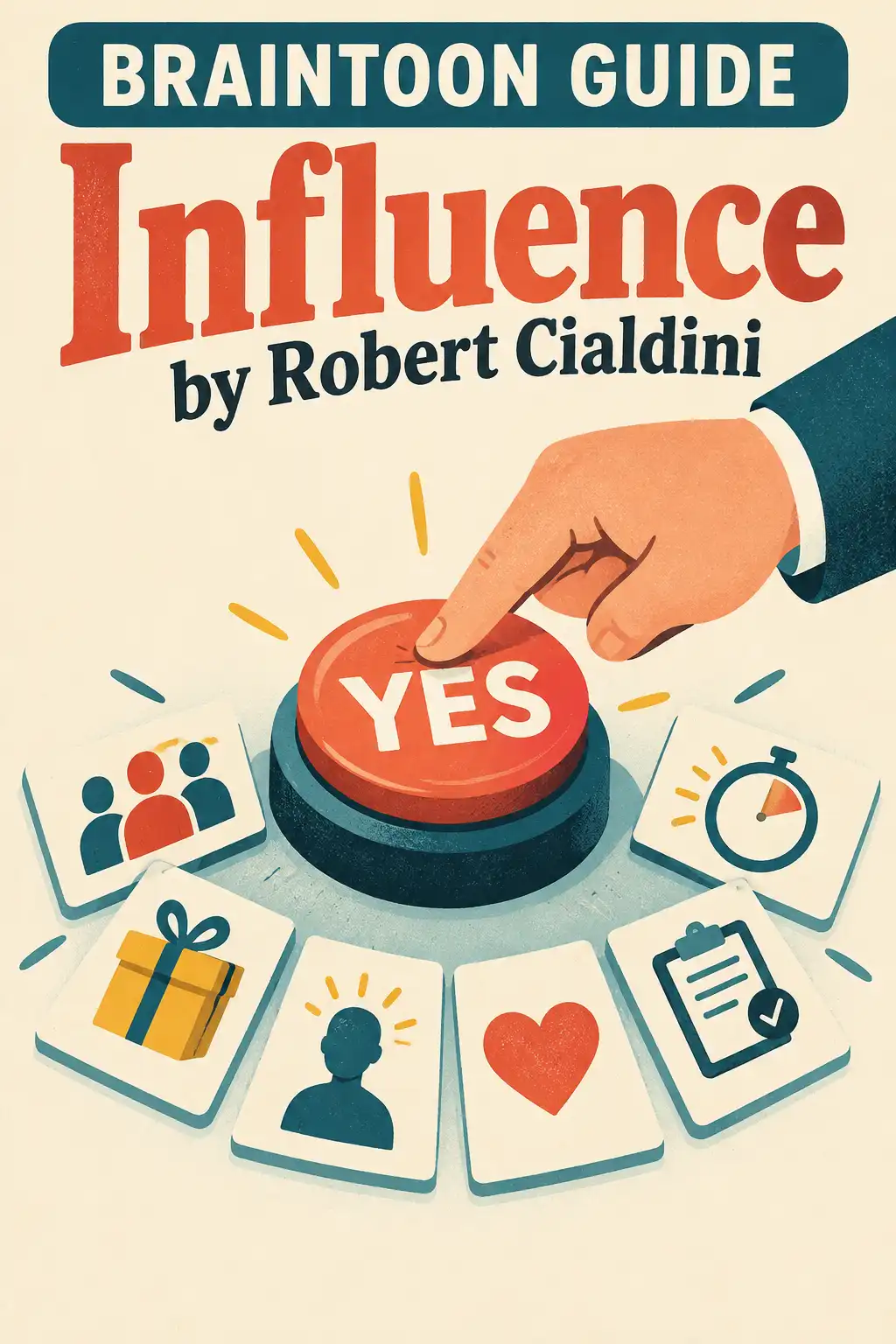
If your work involves persuading anyone of anything, Influence is a foundational read. Cialdini explains seven principles that drive people to say yes. He draws on scientific research and years spent undercover with salespeople and marketers.
The starting point is that we often run on autopilot, relying on automatic responses to decide quickly. That's efficient, but it also makes us predictable. Cialdini shows how these principles can trigger those responses: reciprocation, liking, shared identity, following the crowd, authority, commitment and fear of loss.
For marketers and salespeople, it's a clear map of what moves buyers. It also works in the other direction. Once you can name these tactics, you're much better at resisting them when someone uses them on you.
It's less a step-by-step method than a way of understanding people, which is why it's useful in so many corners of business.
8. Never Split the Difference by Chris Voss
Best for:
Chris Voss turns FBI hostage negotiation techniques into tools for tough business conversations.
11 min animated summary
Inside our summary
- Mirror their words to open doors
- Label emotions to defuse them
- Use calibrated questions to steer
Influence explains why people say yes. Never Split the Difference gives you things to actually do in the room. That makes it our pick for negotiating deals, pay and other high-stakes conversations.
Voss draws on FBI hostage negotiation, and his starting premise is that emotions run the show. His tools follow from that. You mirror the other person's words to open them up, label their emotions to defuse them, and use calibrated questions to steer.
Some of his advice runs against instinct. He encourages letting the other side say no, and he aims for “that's right” rather than a quick yes. In his view, yes means nothing without how.
The techniques are concrete enough to try in your next conversation, whether that's a contract discussion or asking for a raise.
9. Profit First by Mike Michalowicz
Best for:
Mike Michalowicz's simple cash system for owners whose business stays busy but never seems to leave them money.
14 min animated summary
Inside our summary
- Why the standard formula fails
- Five accounts instead of one
- How owners break the system
If your business is busy but your bank balance never seems to show it, Profit First goes straight at that problem.
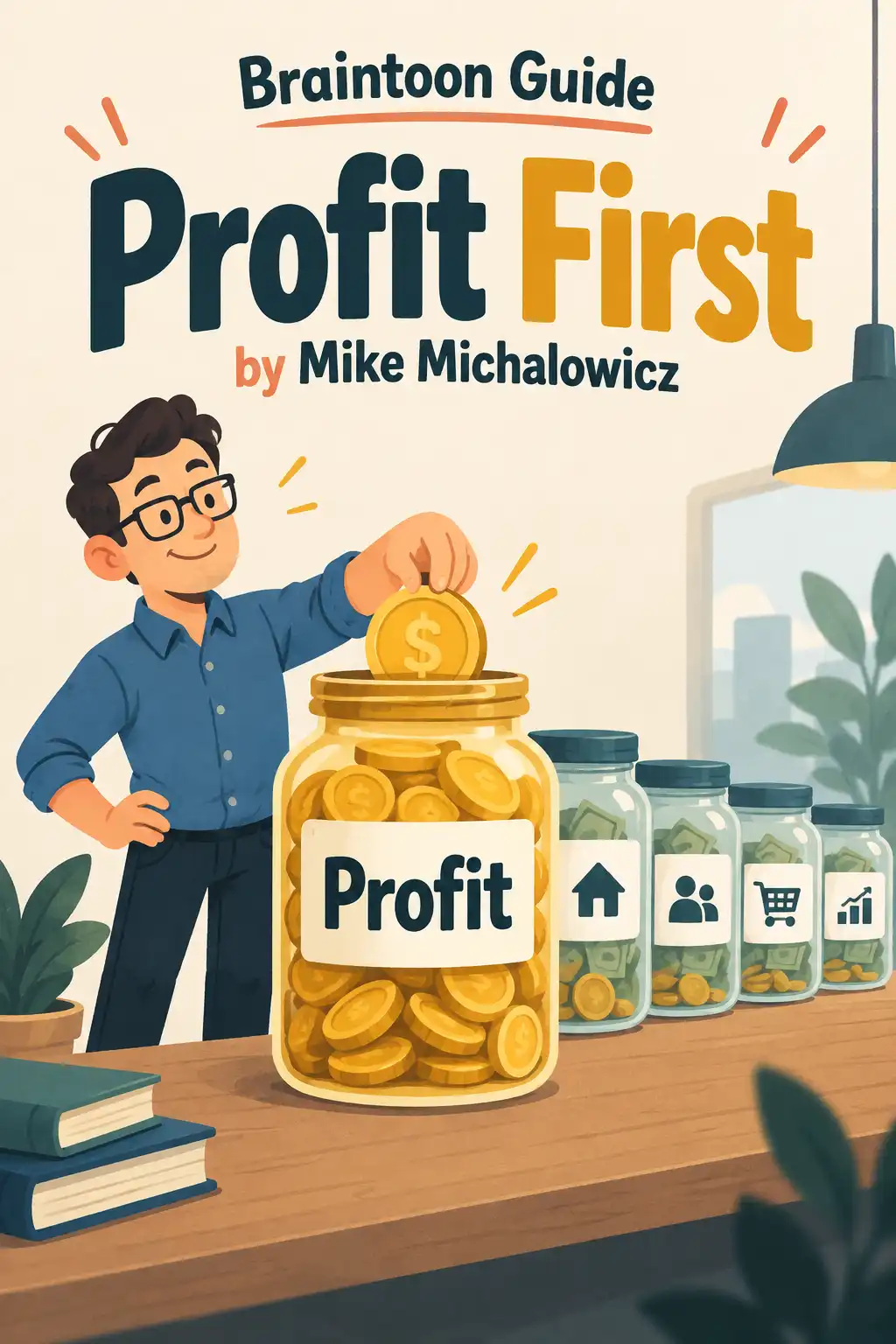
Michalowicz argues that businesses stay broke because they treat profit as a leftover, whatever remains after everything else is paid. He flips the order: take profit off the top first, then run the business on what's left.
What makes it practical is that it doesn't rely on willpower. Michalowicz suggests changing your environment instead, using five bank accounts rather than one. Our summary also covers facing your real numbers first, keeping a steady rhythm, and the common ways owners break the system.
It's the only pick here focused squarely on everyday money management, and it's hands-on rather than theoretical.
10. The 22 Immutable Laws of Marketing by Al Ries and Jack Trout
Best for:
Al Ries and Jack Trout's punchy rules for how a product wins a place in customers' minds.
10 min animated summary
Inside our summary
- Create a category to lead
- It's perception, not product
- Own a single word
Many marketing books are about tactics. This one is about the bigger choices that decide whether those tactics will work at all.
Ries and Trout argue that markets follow fixed principles, and that ignoring them can quietly doom even a brilliant product. A recurring theme is that it's perception, not product. Being better isn't enough on its own.
Their laws are bold and easy to remember. Create a category you can lead, own a single word, know your rung against rivals, and sometimes be the opposite of the leader. They even suggest admitting a negative.
It's quick to absorb and useful for anyone deciding how a product should stand out. If you need help with the actual words on your website, Building a StoryBrand is more step-by-step. This one is for positioning decisions.
11. No Rules Rules (by Netflix co-founder) by Reed Hastings and Erin Meyer
Best for:
Reed Hastings and Erin Meyer on how Netflix built a high-freedom culture with almost no formal policies.
13 min animated summary
Inside our summary
- Build the team before removing rules
- Replace policies with judgment
- Farm for dissent, then decide alone
No Rules Rules is for leaders who wonder whether their company's policies help or get in the way. Netflix co-founder Reed Hastings and Erin Meyer explain how the company steadily removed controls while expecting a lot from its people.
The order matters. Their first step is to build a team of exceptional people, and only then remove rules. From there, the book covers honest feedback, replacing policies with judgment, paying top of market while skipping bonuses, and leading with context rather than control.
One idea is useful for almost any decision-maker: farm for dissent, then decide alone.
This is one company's approach, so treat it as a source of good questions rather than a template. It's most helpful if your team is growing and you're deciding how much freedom to give people, and what would need to be in place first.
12. Building A StoryBrand by Donald Miller
Best for:
Donald Miller's framework for clarifying your message so customers quickly understand what you offer.
11 min animated summary
Inside our summary
- Make the customer the hero
- Name the problem on three levels
- Give them a simple plan
If people visit your website and still can't say what you do, Building a StoryBrand is the fix we'd reach for.
Miller's core idea is to make the customer the hero of your story. Your business is the guide that helps them succeed. His line “if you confuse, you lose” sums up the book's purpose.
The framework is concrete. You name the customer's problem on three levels, give them a simple plan, call them to action clearly, and paint a vivid picture of success. Our summary closes with putting the whole framework into action.
That structure makes it especially handy for small business owners rewriting a homepage or pitch. It's narrower than The 22 Immutable Laws of Marketing, but much more step-by-step.
13. SPIN Selling by Neil Rackham
Best for:
Neil Rackham's research-backed questioning method for winning large, complex sales.
12 min animated summary
Inside our summary
- Big sales are not small sales scaled up
- Why closing techniques backfire on big deals
- Implication questions make problems feel serious
SPIN Selling is the most specialized pick here. It earns its place for anyone working on big, complex deals, especially in B2B sales.
Rackham's research drew on more than 35,000 sales calls over twelve years. His headline finding is that big sales are not small sales scaled up. He argues that closing techniques can backfire when the deal is large.
Instead, he describes a disciplined sequence of questions that builds the customer's own sense of need. Implication questions make problems feel serious. Then you let the customer state the benefits rather than pitching them yourself. He also argues that most objections are self-inflicted.
If your deals are large and take time to win, this is the book. For smaller sales and persuasion in general, Influence is the broader choice.
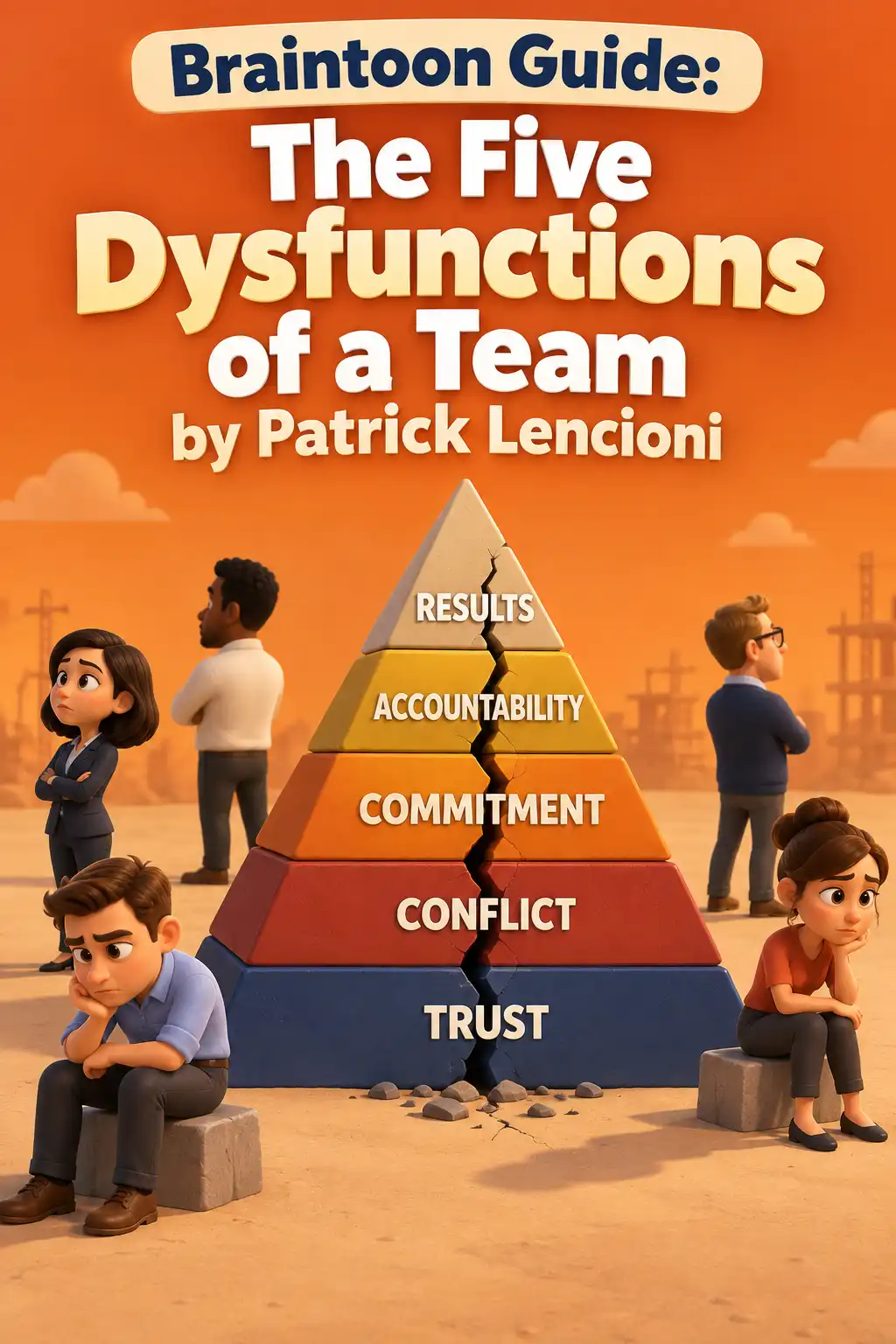
14. The Five Dysfunctions of a Team by Patrick Lencioni
Best for:
Patrick Lencioni names the five hidden reasons teams fall apart and shows how to rebuild trust and results.
12 min animated summary
Inside our summary
- Trust means daring to look weak
- A team that never argues is broken
- Never tolerate a talented team-killer
If your team is capable but somehow not working, The Five Dysfunctions of a Team helps you name what's going wrong.
Lencioni starts with trust, which he defines as daring to look weak in front of colleagues. From there, he builds a chain of problems. A team that never argues is broken, commitment suffers without real debate, and results slip when nobody holds anyone accountable.
His fixes are direct. Disagree, then commit anyway. Let peers hold each other accountable. Keep one scoreboard the whole team owns. He's also firm that you should never tolerate a talented team-killer.
It suits team leaders and leadership groups alike. The final lesson, about working the whole chain forever, is a reminder that healthy teamwork takes ongoing effort.
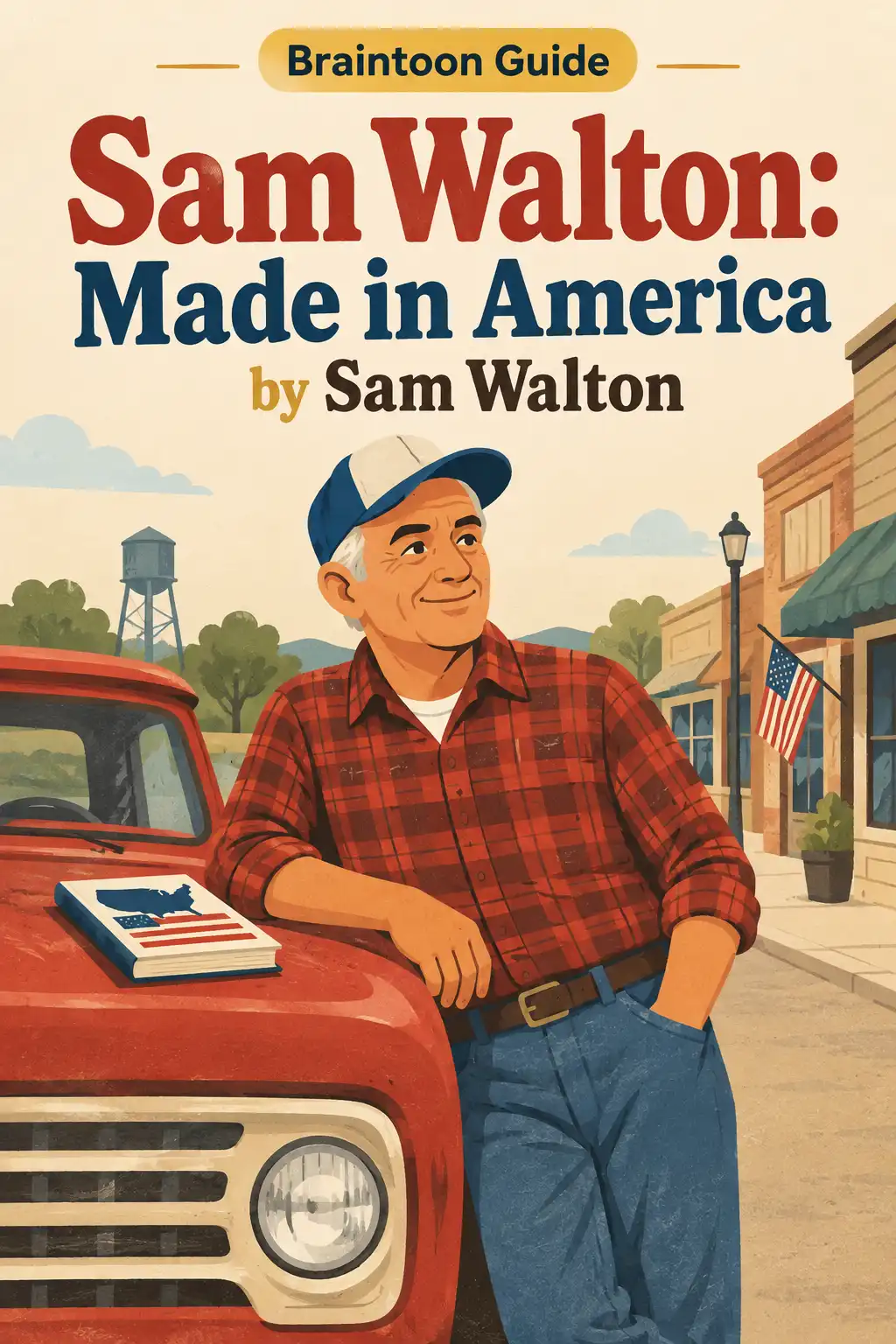
15. Sam Walton: Made in America by Sam Walton
Best for:
Walmart's founder explains how low prices, small towns and shared profits built the world's largest retailer.
13 min animated summary
Inside our summary
- Low prices can make more money
- Sharing profits pays for itself
- Competitors are a free classroom
Sam Walton's memoir suits anyone in retail or operations. It's also a good fit for memoir fans who want more practical takeaways than a pure story offers.
Walton explains how a small-town merchant built the world's largest retailer by passing savings to customers and treating employees as partners. Several of his lessons push against conventional thinking. He argues that low prices can make more money, that small towns nobody else wanted were worth serving, and that sharing profits pays for itself.
He also makes the case for thinking small as you grow, treating competitors as a free classroom, and staying frugal to stay close to customers.
If you're choosing between this and Shoe Dog, pick Shoe Dog for a story of survival against the odds. Choose Walton for operating habits behind a lean, customer-focused business.
A suggested reading order
You don't need to read these in order. If you're new to business books, Shoe Dog is an easy first step, and Good to Great gives you broad grounding. After that, follow whatever problem you're facing right now.