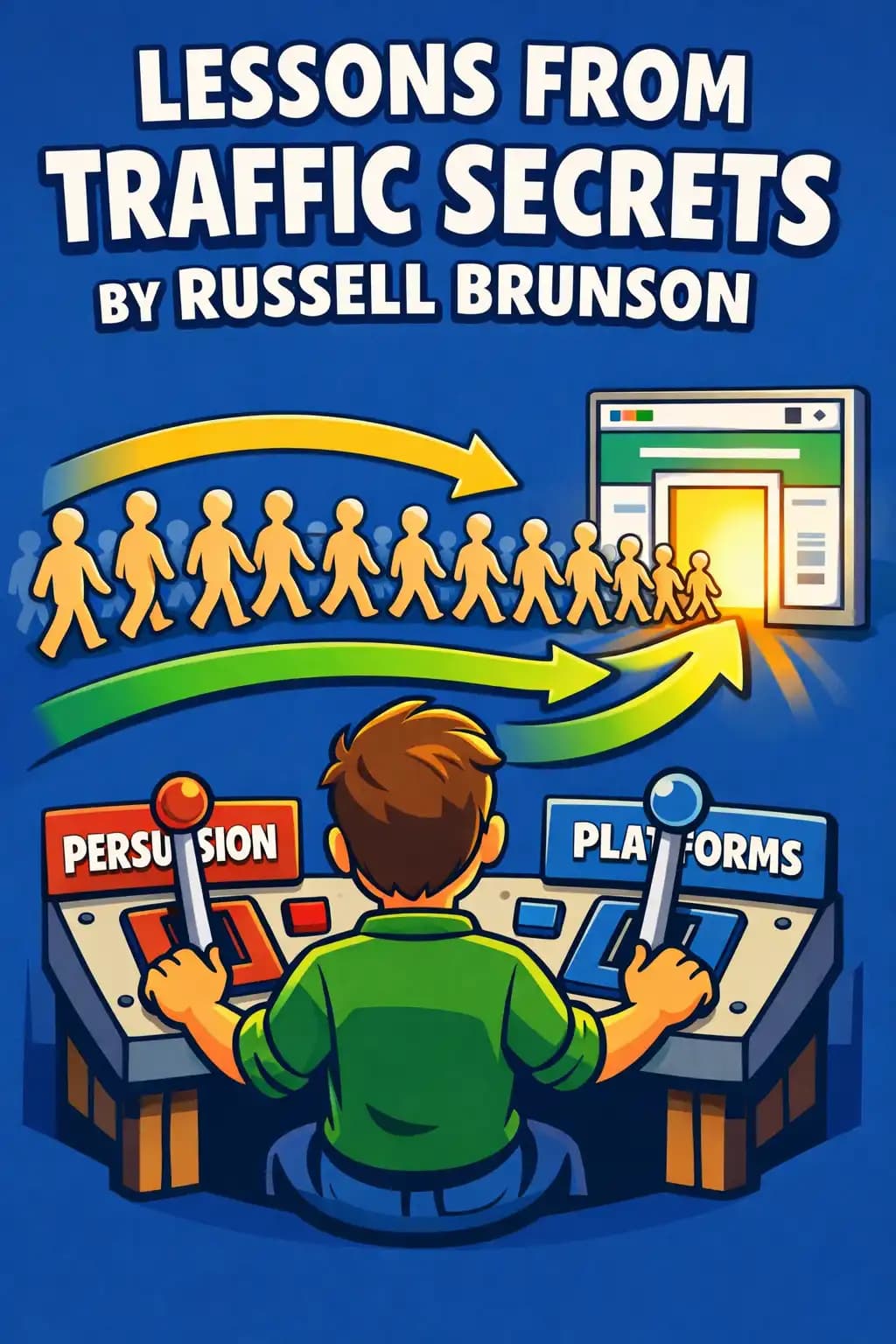

Traffic Secrets cover

Book summary: Traffic Secrets by Russell Brunson

10 min read8 key lessonsText + animated summary

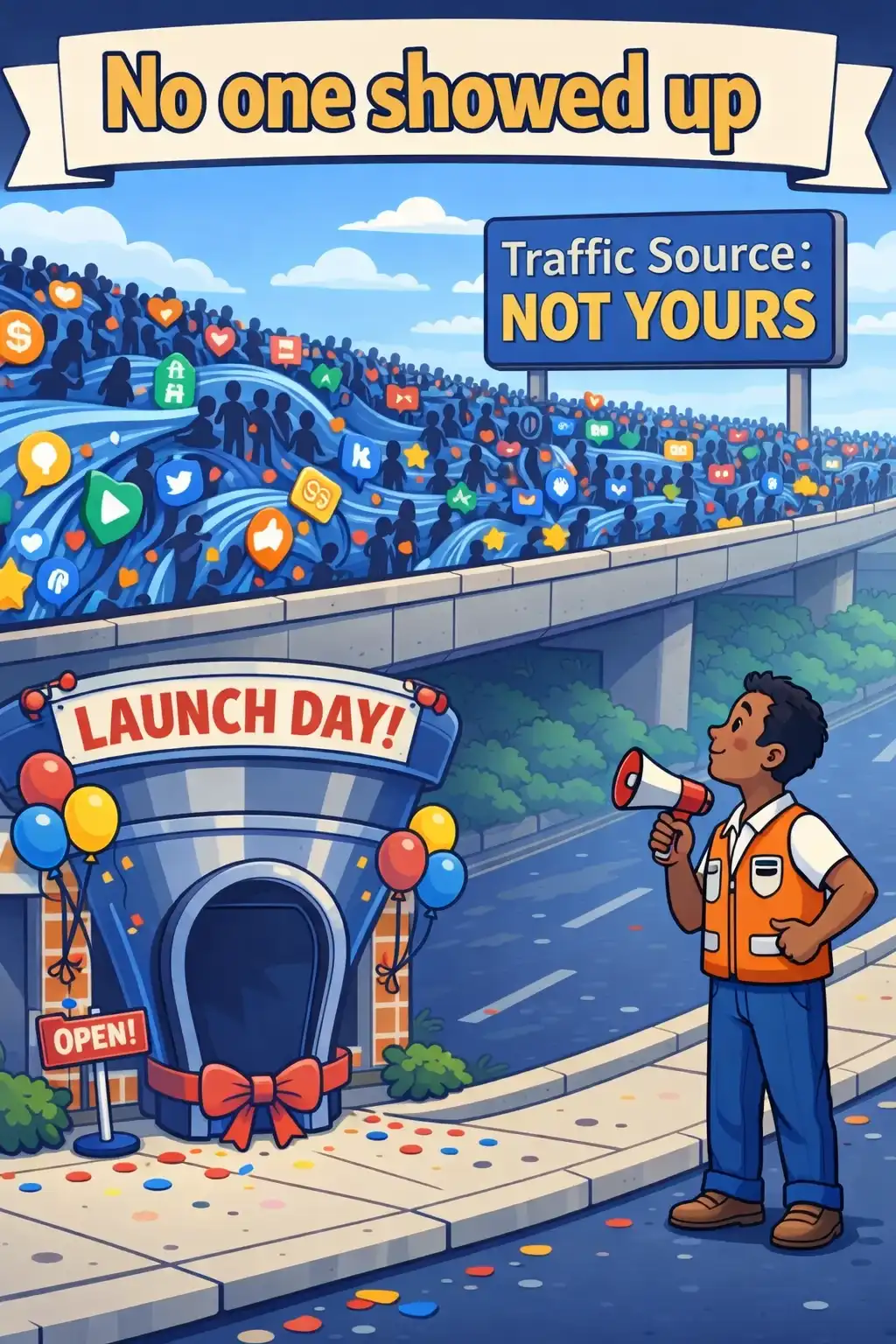
Have you ever built something you were proud of, only to realize no one showed up—because you didn’t control where the traffic comes from?

One-sentence summary

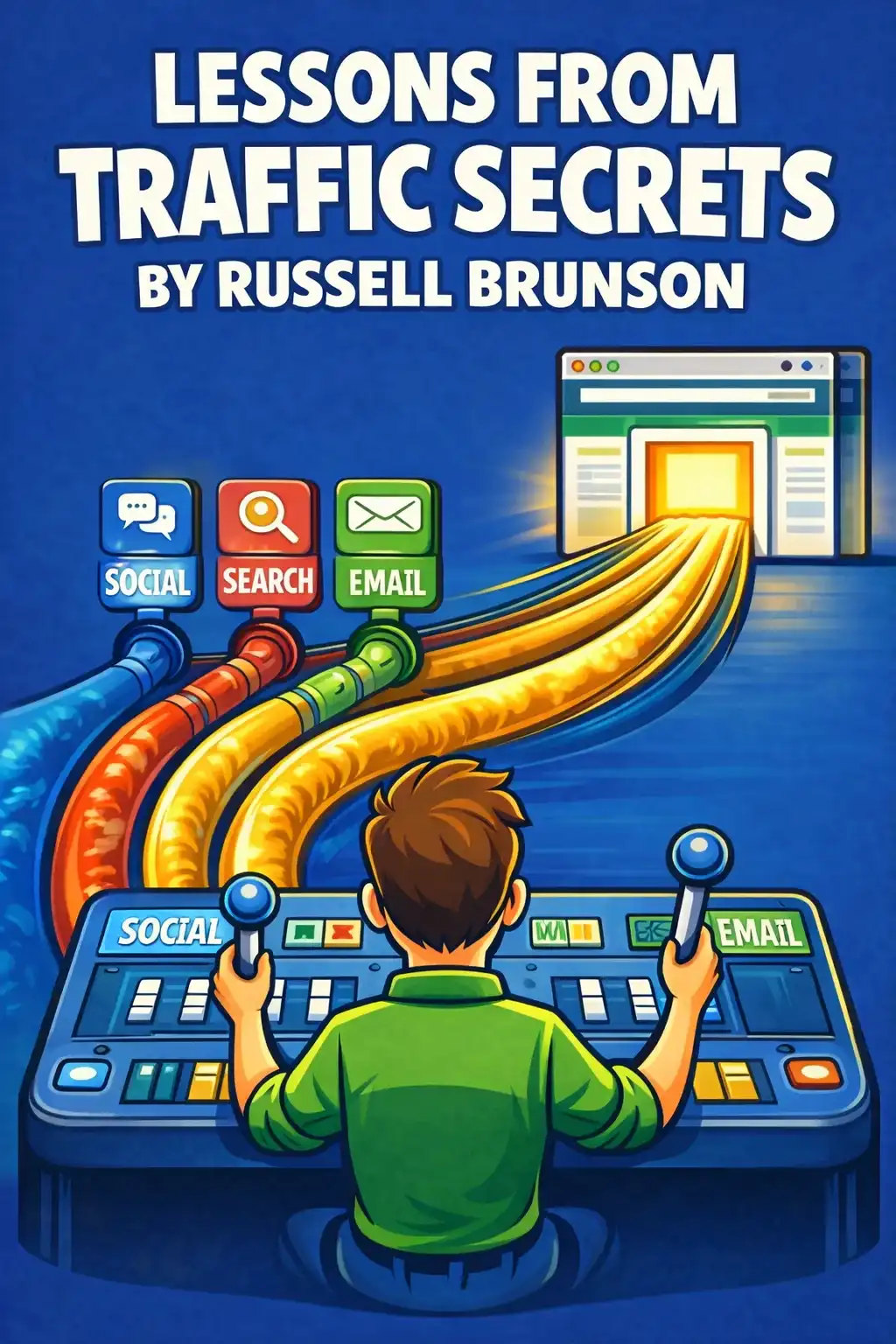
Traffic Secrets, by Russell Brunson, shows how to attract the right visitors consistently by combining timeless persuasion with practical, up-to-date platform strategies.

Reading about Traffic Secrets is one thing.

Watching it is faster, more fun, and you'll actually remember it.

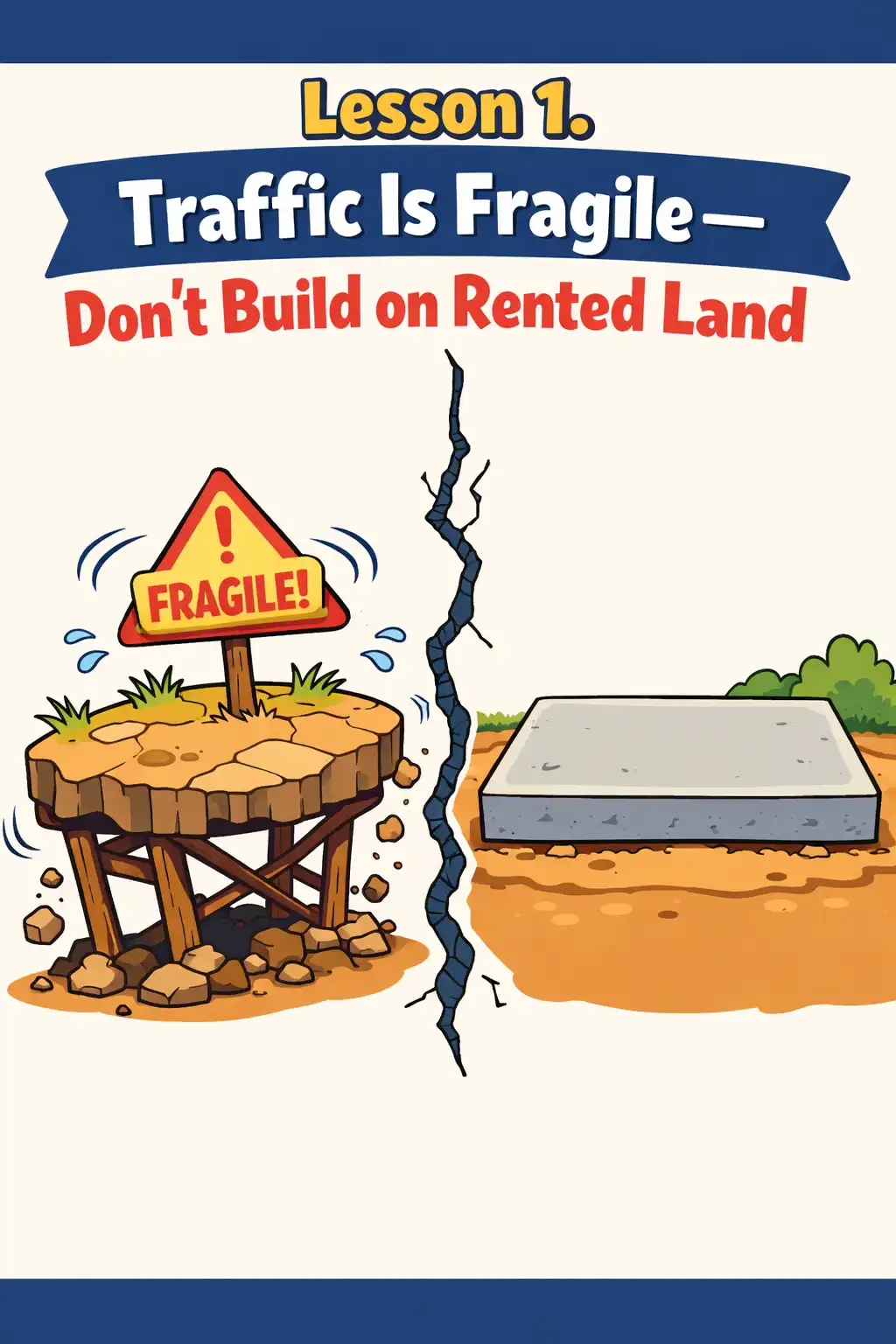
Lesson 1: Traffic Is Fragile—Don’t Build on Rented Land

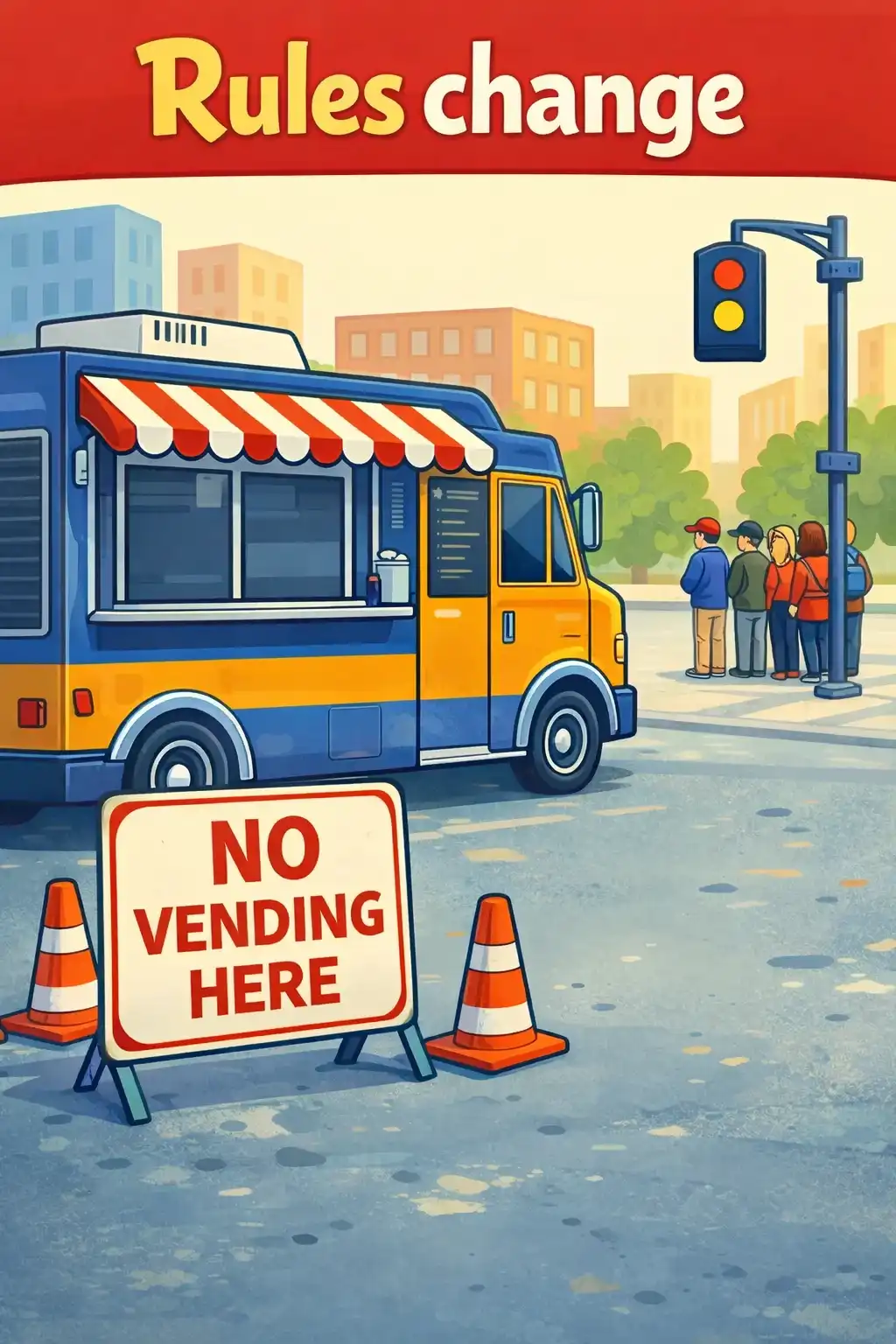
Picture a busy food truck that parks in the same spot every day—until the city changes the rules overnight and moves the crowd.

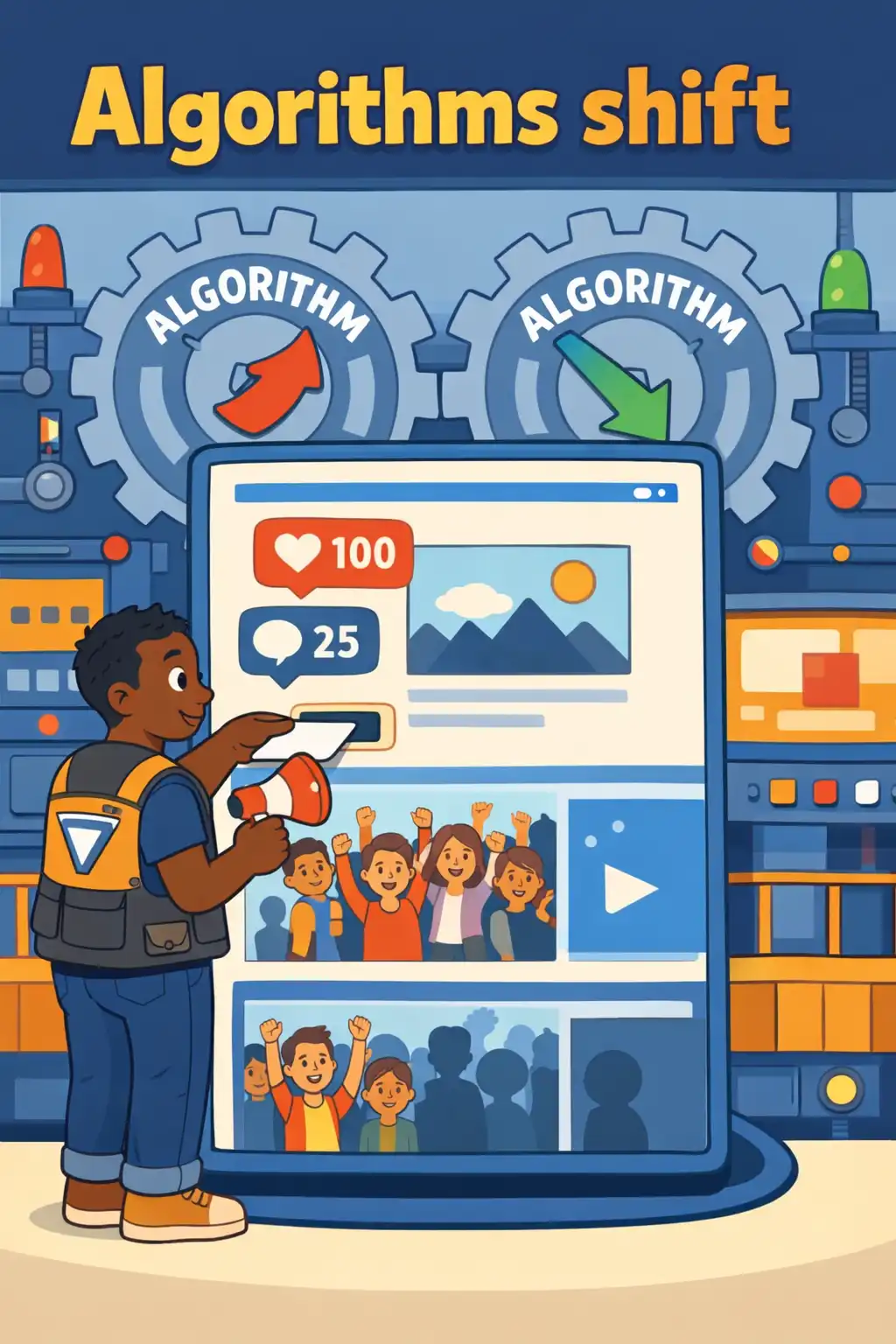
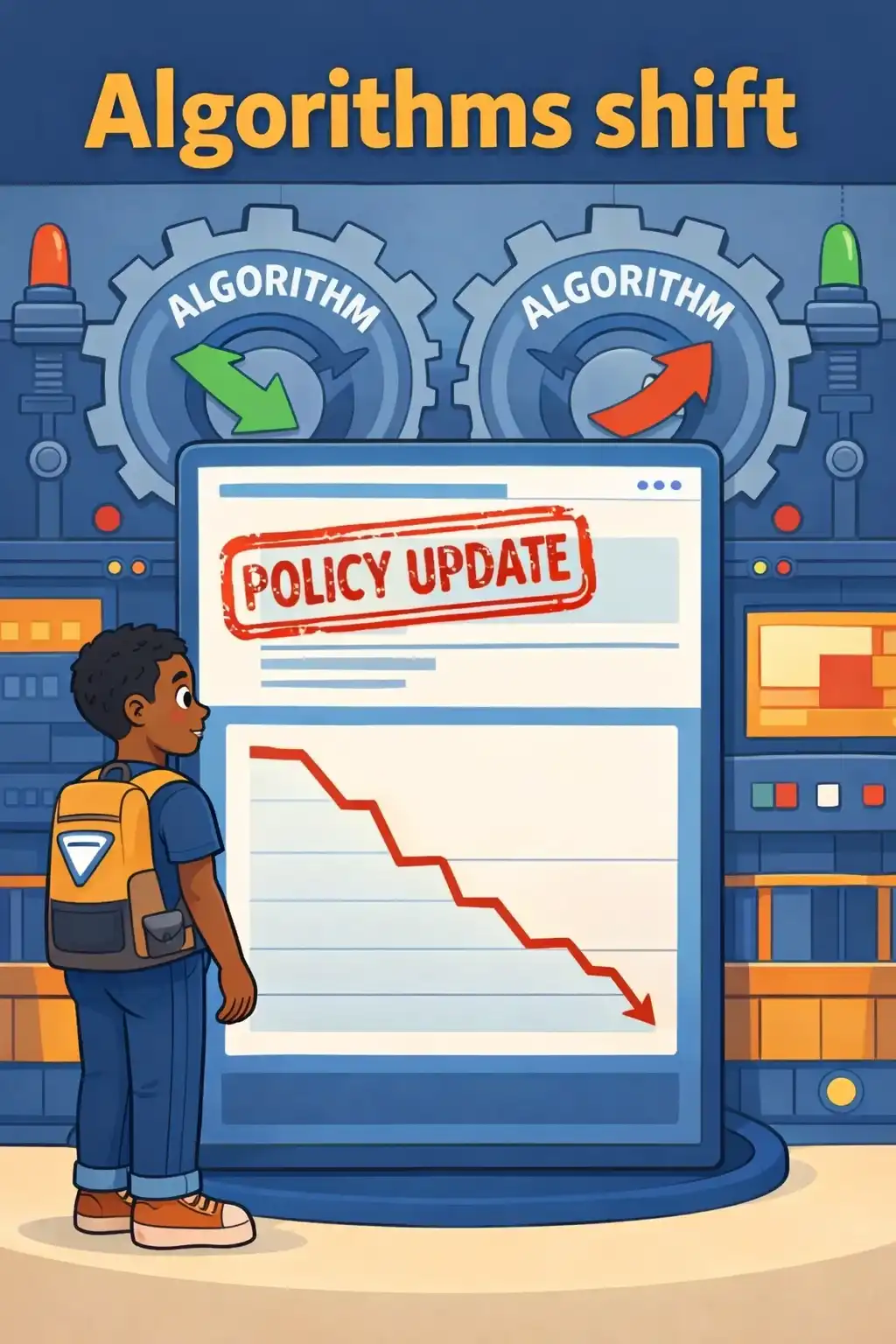
Online traffic can feel the same, because algorithms—the rules deciding who sees what—and platform policies can shift without warning.

He shares stories of businesses getting 'slapped' by big updates, like Google changes that erased most of their search traffic in a day.

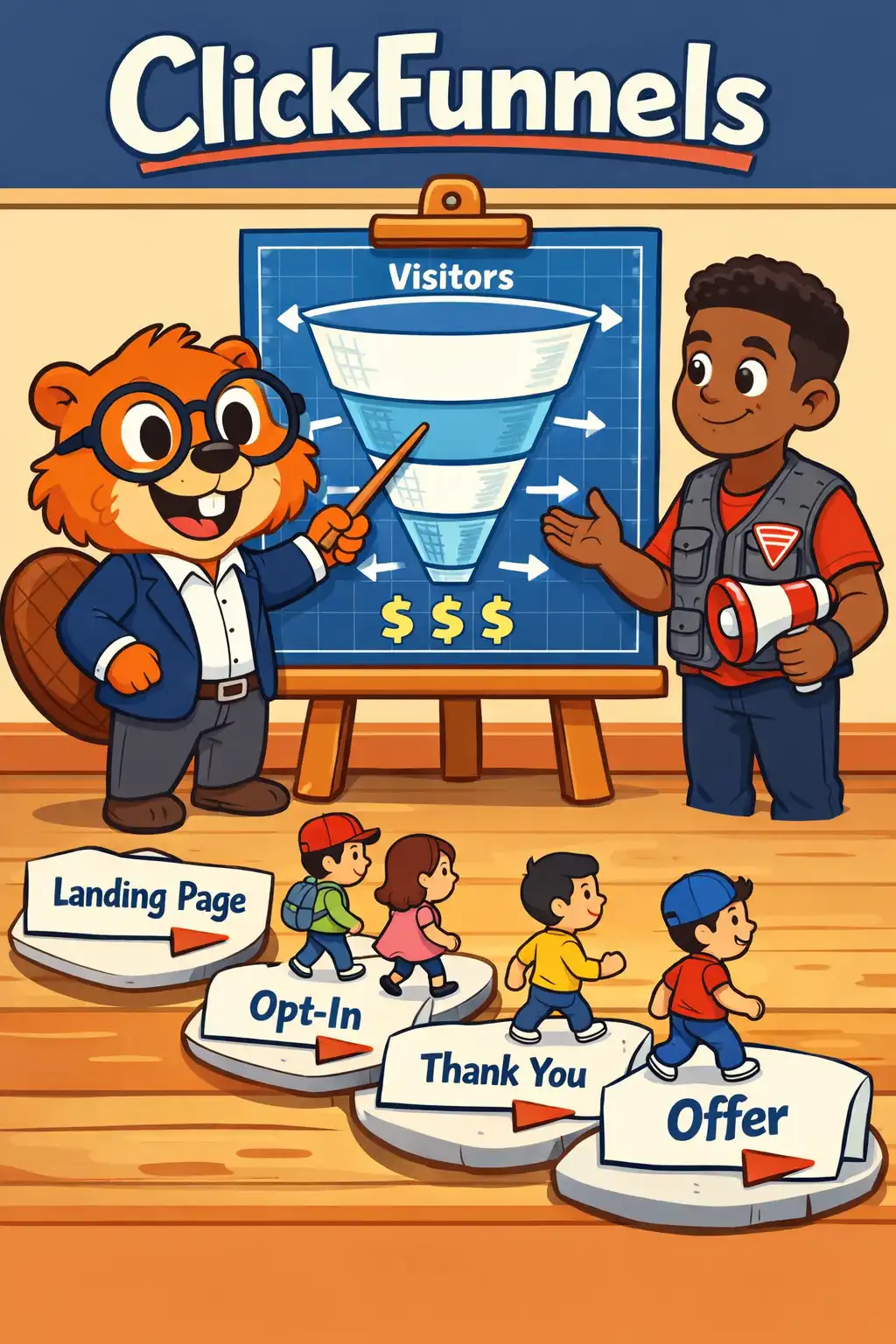
Brunson’s background matters: he built ClickFunnels, software that turns visitors into customers using funnels—simple step-by-step pages guiding people to buy or sign up.

He survived these shifts by leaning on direct-response principles—measurable, action-focused marketing taught by legends like Dan Kennedy, a copywriting icon.

So the book’s promise is simple: skip fragile hacks; build a repeatable system that still works when platforms reshuffle the deck.

Lesson 2: Define Your Dream Customer—Speak to One Person

Imagine buying a birthday gift without knowing the person’s age, hobbies, or budget—you’d guess and probably miss.

That confusion is what marketing feels like without a 'dream customer,' Brunson’s term for your specific, ideal buyer.

Write an avatar: 'busy new mom who wants quick workouts,' not 'everyone who likes fitness.' Specific beats vague every time.

Then 'enter the conversation in their mind'—address their fears, hopes, and daily frustrations using the words they already use.

If they’re thinking, 'I’m overwhelmed,' don’t open with features. Start with relief, then show how your solution makes life easier.

This is the foundation: traffic isn’t random people; it’s the right people recognizing that you understand them and can help.

Lesson 3: Build Your Dream 100—Go Where Attention Already Lives

When you move to a new town, you don’t shout in the street—you ask locals where everyone actually hangs out.

The Dream 100 is a ranked list of places and people who already command your customer’s attention.

Include influencers, podcasts, YouTube channels, Facebook groups, newsletters—even the search terms your market types every day.

Rank them by impact and fit. You’re not dabbling; you’re choosing targets and working them patiently and professionally.

'Infiltration' means earning your way in: comment thoughtfully, buy their products, share their content, add value, and become familiar.

One yes from a Dream 100 partner can beat months of lonely posting, because you borrow the trust they have already earned.

Lesson 4: Use Hook, Story, Offer—Stop the Scroll, Build Trust, Make the Ask

Picture someone scrolling fast, like flipping TV channels. You have one second to make them stop.

Brunson’s fix is 'Hook, Story, Offer'—a simple framework that prevents rambling and avoids sounding pushy.

The hook interrupts the pattern: 'I tried this for seven days and doubled my email list.' Curiosity spikes; attention locks in.

The story builds trust through an 'Attractive Character'—a relatable guide with flaws and lessons, not a perfect superhero.

The offer is a clear next step that matches the story’s promise—like a checklist, webinar, or starter product.

If sales stall, one piece is weak: the hook is bland, the story is thin, or the offer isn’t crystal clear.

Lesson 5: Earn, Buy, Then Own—Move From Rented to Reliable Traffic

Think of renting an apartment, then buying a house and building equity—each step gives more control and stability.

Traffic works the same way: earn it with content, buy it with ads, and own it with your lists.

Earned traffic comes from guest posts, partnerships, and organic social—slower but credible, like a warm introduction.

Paid traffic is fast and controllable, but it’s rent—so turn clicks into email subscribers and leads you can follow up.

Use breakeven funnels—low-priced offers that cover ad costs—so leads arrive without draining cash. Marketers call this 'self-liquidating.'

Owned traffic is your email list and direct contacts. When platforms change, you can still reach people tomorrow.

Lesson 6: Fill Funnels Anywhere—Match the Platform, Keep the Promise

At a party, jokes that crush in the kitchen can bomb in the living room—different rooms, different vibes.

Every platform rewards different behaviors. Step one: learn what keeps users there—watch time, saves, comments, or shares.

Step two: model your Dream 100 winners—not word for word, but their structure: hook length, pacing, visuals, and calls to action.

Then publish on a rhythm you can sustain. Consistency beats big bursts that disappear for weeks.

Choose one primary 'show'—YouTube, Instagram, podcasting—and become known there before expanding elsewhere.

When content works, route viewers into a funnel. Content invites; the funnel hosts, captures leads, and moves them to a decision.

Lesson 7: Follow Up Like a Pro—Most Sales Happen After the Click

Think of meeting someone great and never calling back, then wondering why the relationship never grew.

Most marketing fails after the first click because leads get treated like one-time events, not relationships.

Use a 'soap opera' email sequence—cliffhangers, character, and daily cadence—to build curiosity and connection.

After that, send broadcast emails: simple updates and stories that regularly point people back to your offers.

Segment audiences as engaged (interacting on platforms), landed (visited your pages), and owned (subscribers or customers), then match retargeting to familiarity.

The goal is gentle repetition. Most people need several helpful touches before they trust you enough to buy.

Lesson 8: Scale With Partners—Leverage Beats Hustle

Pushing a car alone is hard. Add a few friends, and the same effort moves it easily.

Scaling is leverage: use Funnel Hubs, partners, and affiliates to multiply distribution without starting from zero every time.

A Funnel Hub looks like a normal website for credibility, but its job is to guide visitors into focused funnels with proof and clear CTAs.

Partnerships include placements in someone else’s email, co-created content, or integration marketing where your product becomes part of their process.

An affiliate army promotes you for a commission. Make it easy—give swipe emails, creatives, tracking links, and a clear payout plan.

So keep publishing, keep refining Hook, Story, Offer—and remember, you may be one well-built funnel away.

You've read the summary. Now watch it.

The animated version covers the same ideas — faster, and in a format you'll actually remember.