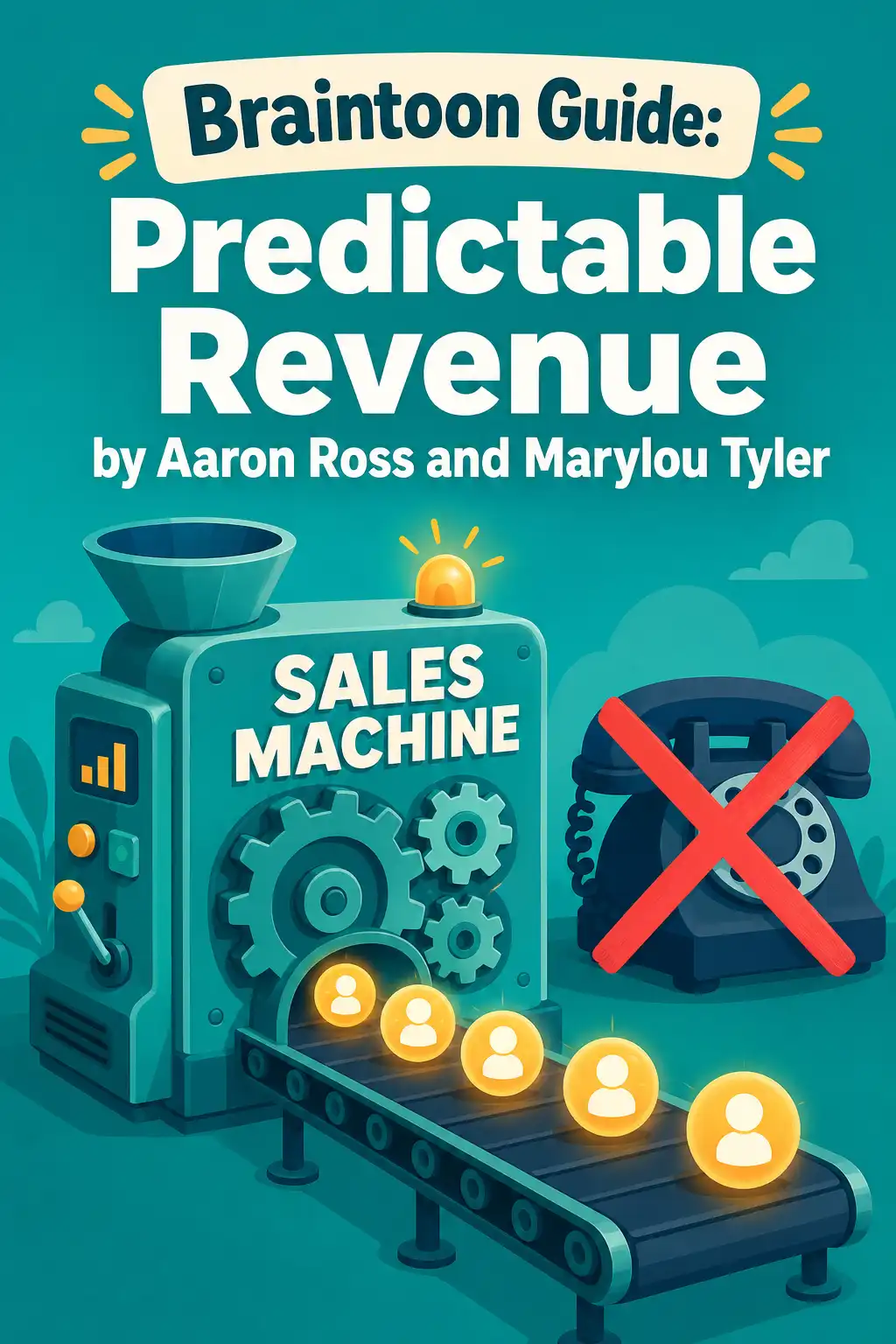






Predictable Revenue cover

Book summary: Predictable Revenue by Aaron Ross and Marylou Tyler

10 min read10 key lessonsText + animated summary

What if your sales pipeline could feel less like gambling, and more like turning a dependable faucet you can actually control?

One-sentence summary

Predictable Revenue by Aaron Ross and Marylou Tyler is about building a repeatable sales system that steadily creates new opportunities, without relying on panic, heroics, or nonstop cold calls.

Reading about Predictable Revenue is one thing.

Watching it is faster, more fun, and you'll actually remember it.

Lesson 1: Escape the rollercoaster

Picture a CEO staring at the calendar, whispering, “If we don’t close three deals by Friday, we’re in trouble.” Everyone feels it.

Marylou Tyler starts here because culture and purpose are great, but unpredictable sales still keeps people awake at night.

The promise of Predictable Revenue is simple: a steady flow of qualified opportunities every month, created by a process.

And notice the emotional benefit Tyler talks about: peace of mind, freedom, and doing work you actually enjoy.

Aaron Ross and Marylou Tyler built these ideas while growing Salesforce.com, the big cloud software company, during its rapid scaling years.

Their core stance is practical: stop depending on luck, founder hustle, and last-minute deals. Build something repeatable instead.

Lesson 2: Stop hiring blindly

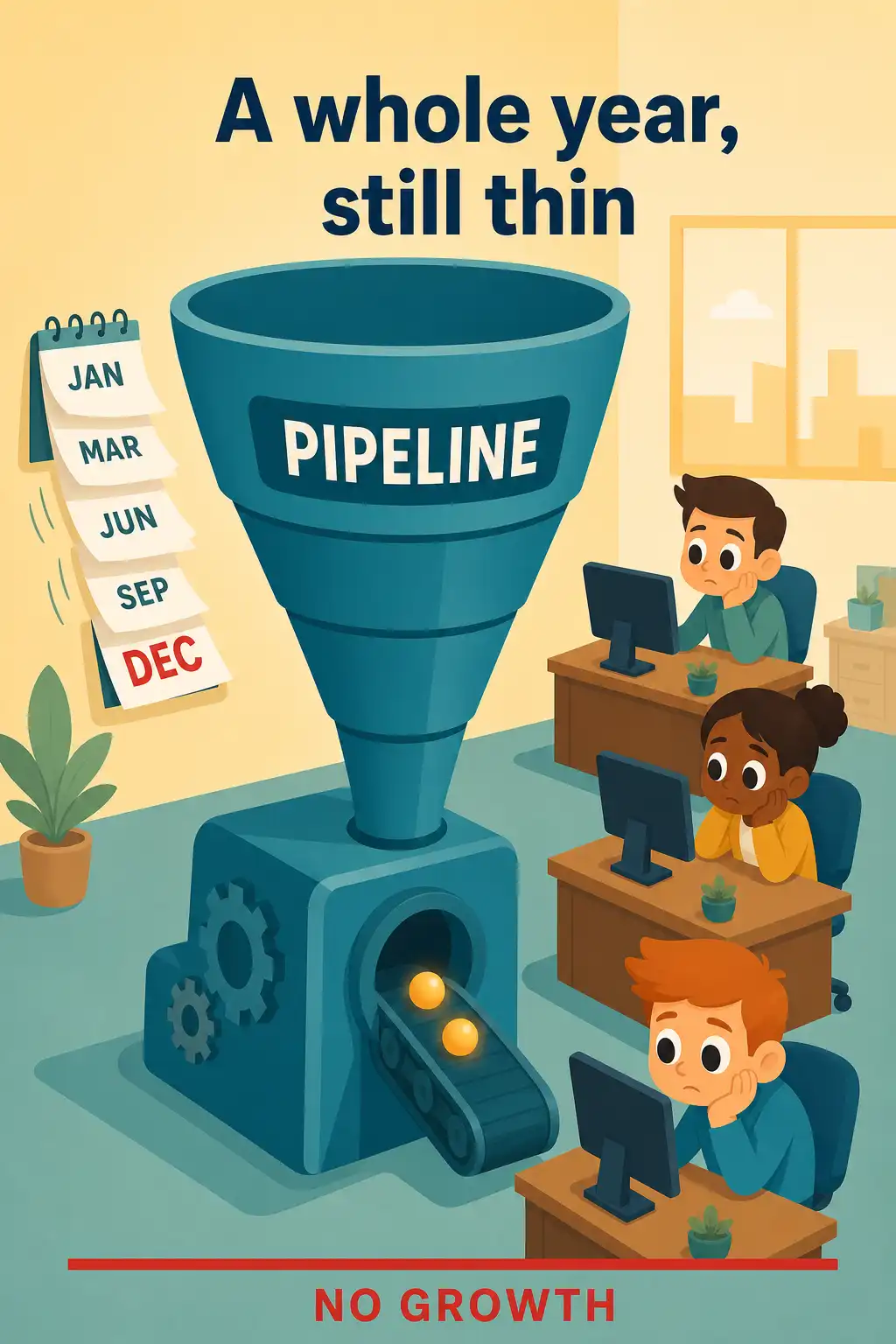
Imagine you’re on a sinking boat, so you hire more rowers, but nobody knows where the paddles are.

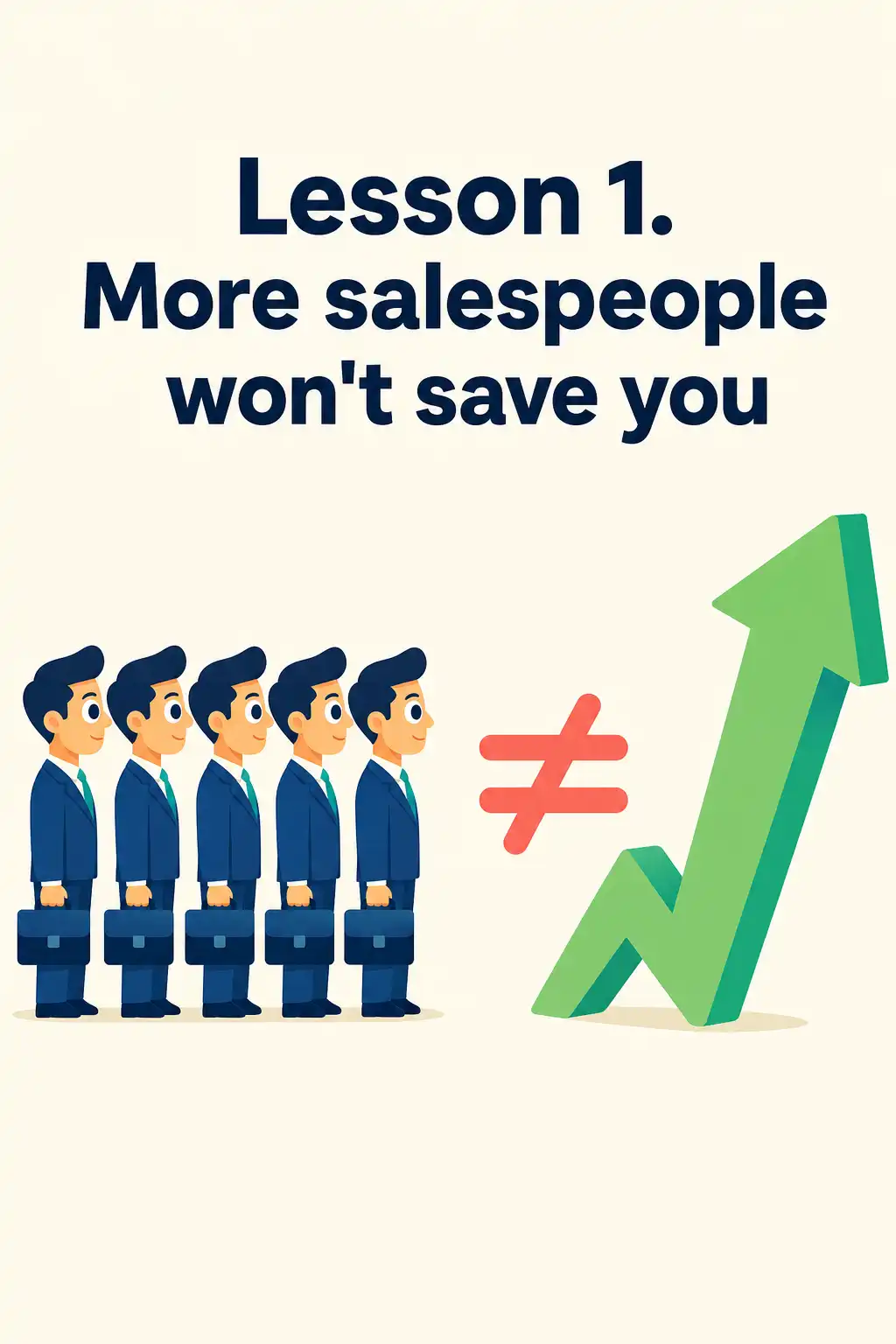
Tyler says that is what happens when companies hire more salespeople without predictable lead generation.

Boards often do a lazy math problem: revenue target divided by rep quota equals number of reps to hire.

But experienced Account Executives, the closers, usually hate prospecting and they are often not great at it.

So hiring adds stress, not certainty, because salespeople tend to fulfill demand, not reliably create it.

Tyler warns about the “hot coals” phase where changing systems hurts at first, and leaders panic and revert.

Lesson 3: Specialize to scale

Think of a restaurant where the chef also seats guests, takes payments, and washes dishes. Food gets slower, not better.

Predictable Revenue applies that logic to sales. Tyler pushes specialization early, even before it feels convenient.

Sales Development Representatives, or SDRs, do outbound prospecting all day. Their win is creating qualified opportunities.

Account Executives, or AEs, close deals. They re-qualify opportunities and move them through the buying process.

Market Response Reps handle inbound leads from the website, so your closers are not distracted by early triage.

Then customer success or account management “farms” accounts, because delight and retention are where growth compounds.

Lesson 4: Cold Calling 2.0

Picture a VP getting an unexpected phone call during dinner. That surprise call is what Tyler means by old cold calling.

Cold Calling 2.0 flips the first touch to email, because email is polite, searchable, and easy to respond to.

Tyler’s breakthrough was surprising: the bottleneck was often finding the right person, not persuading them.

So the email asks for help. It is short, plain text, and basically says, “Who is the right person to talk to?”

In a 2003 experiment, those short referral emails got around a 10 percent response rate, while long sales emails got none.

Then the SDR follows up by phone, not to pressure, but to clarify fit and schedule the right next step.

Lesson 5: Build the outbound engine

Imagine assembling a small engine on a workbench. If one bolt is missing, the whole thing rattles apart.

Tyler’s prerequisites are those bolts: a dedicated prospector, a real CRM, email-using prospects, and a proven offering.

Start with the Ideal Customer Profile, or ICP. Keep it short, with a few must-haves and a few red flags.

Then build targeted lists. Tyler is blunt that bad lists waste the only resource you cannot refill, your team’s time.

Run small, regular email sends that look personal. The goal is steady daily replies, not a giant blast.

Track a simple funnel in the CRM: emails, responses, calls, demos, opportunities, and closed deals, plus timing metrics.

Lesson 6: Master the daily rhythm

Picture an SDR trying to “just grind” all day, skipping lunch, bouncing between tasks, and ending exhausted and scattered.

Tyler suggests an ideal day rhythm. Mornings are for follow-ups, afternoons for calls and demos, evenings for email sends.

That evening email matters because replies arrive overnight, so the next morning begins with warm, fresh conversations.

She even prescribes breaks every 90 minutes and a firm stop time, because burned-out prospectors stop being consistent.

Tyler’s top mistakes are painfully common: expecting instant results, writing long emails, and touching too many accounts only once.

She also warns about measuring raw activity, like dials, instead of measuring meaningful outcomes like conversations and meetings.

Lesson 7: Sell to success

Imagine buying software, then realizing the salesperson vanished right after the signature. You feel tricked, even if the product is fine.

Tyler calls the better approach “Selling To Success.” Your job is helping the buyer reach their goals, not forcing a close.

Fear-based management and commission pressure can make reps chase deals that should be disqualified. That creates bad-fit customers.

Her antidote is the Success Plan, written before closing. It defines what success looks like and the milestones to get there.

When both sides agree on responsibilities, the close becomes a natural step, almost like signing a shared project plan.

Tyler also explains long sales cycles often come from wrong targets, unclear messaging, weak process, or engaging the wrong level.

Lesson 8: Feed the machine

Picture your pipeline like a garden. Some plants grow slowly but feed you for years, and others are fast but unpredictable.

Tyler’s Seeds, Nets, and Spears makes this clear. Seeds are referrals and thought leadership. Nets are broad campaigns. Spears are targeted outbound.

To avoid confusion, she insists on shared definitions. Prospects are just names. Leads show interest. Opportunities are qualified. Clients pay.

Then she introduces “layers of the onion.” Give buyers low-risk steps, like content, webinars, and trials, so they can self-educate.

Inbound works best when channels support each other. Tyler recommends picking two or three channels first, not twelve.

Marketo, a marketing automation company, is her model for lead management: a clear funnel, lead scoring, and nurture sequences.

Lesson 9: Lead like a builder

Imagine a manager tightening every screw personally. It feels productive, but the team never learns to build without them.

Tyler says executives must actually understand sales, not outsource it to a VP and hope. Ownership starts at the top.

She calls out common mistakes: assuming partners will sell for you, staying product-out instead of customer-in, and measuring the wrong stuff.

Her fix is weekly attention to a few metrics: new leads, lead-to-opportunity conversion, pipeline value, close rates, and booked revenue.

Management should focus on results, not activities, and remove obstacles like territory conflicts, unclear rules, and messy handoffs.

To align teams, Tyler uses V2MOM, which stands for Vision, Values, Methods, Obstacles, and Metrics. It turns strategy into everyday choices.

Lesson 10: Grow people, predict revenue

Picture a farm team in baseball. You do not buy every star. You train prospects, promote them, and keep the system stocked.

Tyler says predictable revenue is ultimately a people system. Happy, supported employees create happy customers who stay and refer.

Her hiring approach mixes veterans with hungry learners, then builds a clear career ladder from response roles to SDR to AE.

Timing matters. Early moves might happen in 6 to 8 months, but later promotions can take 1 to 3 years of real skill-building.

Training is the highest-return investment, especially role-play, because you can pause, rewind, and practice the exact hard moments.

Tyler discourages commission-only pay in most B2B settings, since long sales cycles and pressure can create desperate behavior.

You've read the summary. Now watch it.

The animated version covers the same ideas — faster, and in a format you'll actually remember.