
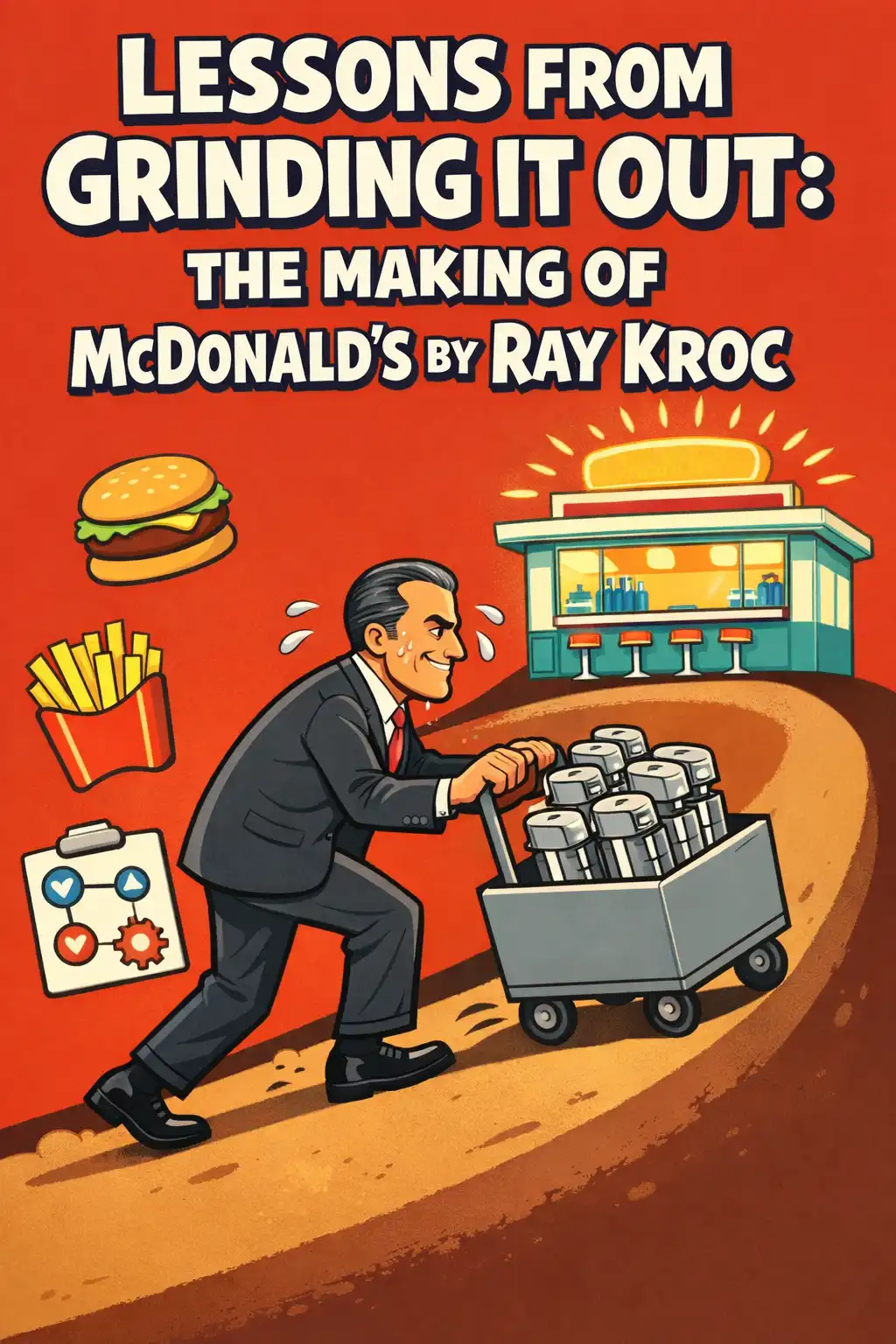






Grinding It Out: The Making of McDonald's cover

Book summary: Grinding It Out: The Making of McDonald's by Ray Kroc

10 min read10 key lessonsText + animated summary

What if the biggest turning point in your career arrived as a bizarre order: eight milkshake mixers, all for one tiny restaurant you’ve never heard of?

One-sentence summary

Grinding It Out by Ray Kroc is the story of a stubborn salesman who scaled one brilliant restaurant system into McDonald’s—and the hard lessons you can use.

Reading about Grinding It Out: The Making of McDonald's is one thing.

Watching it is faster, more fun, and you'll actually remember it.

Lesson 1: Start before you’re ready

Imagine turning fifty‑two, sore and short of breath, yet deciding your best years lie ahead—if you can spot one worthy opportunity and move fast.

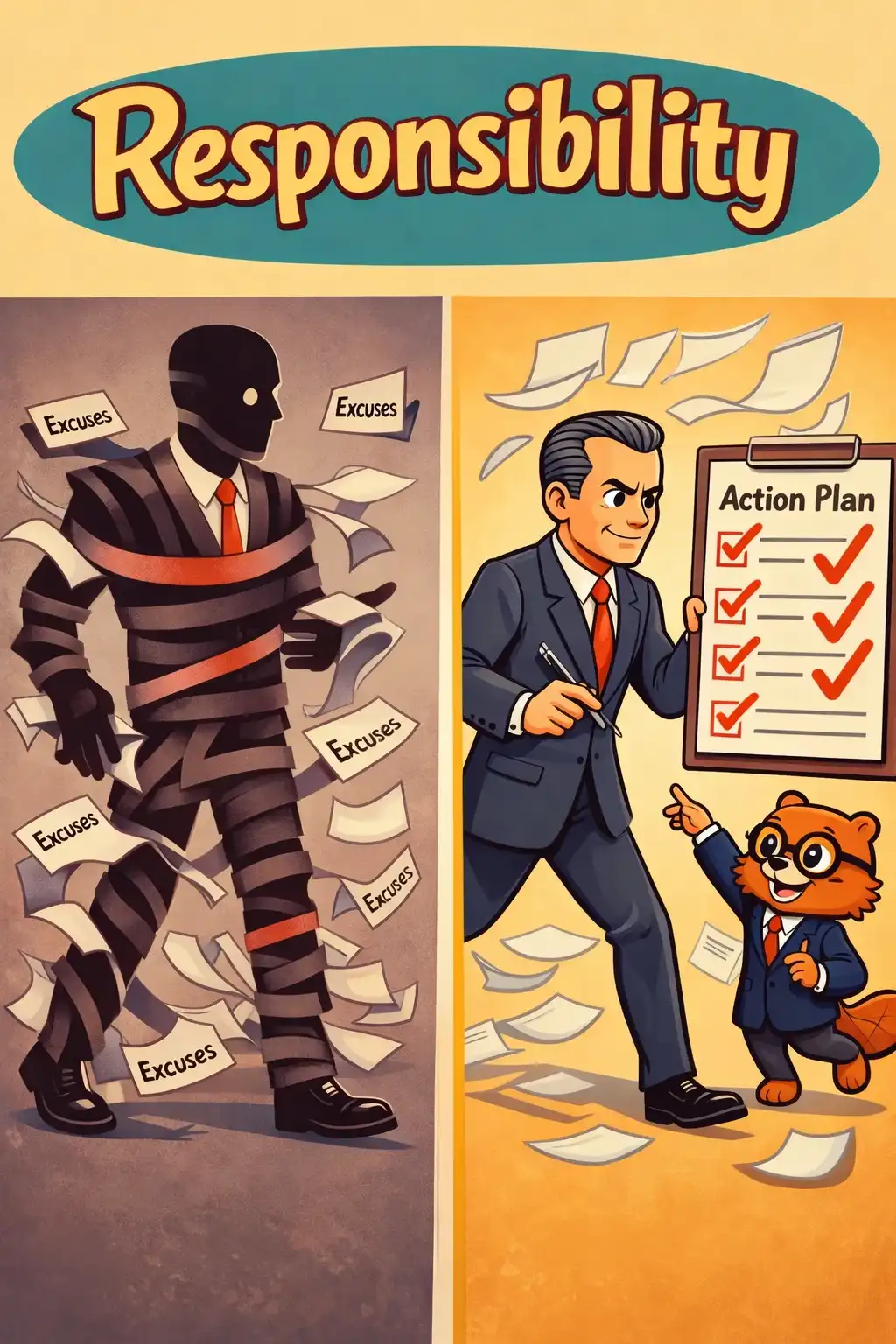
That was Ray Kroc’s starting point. His blunt belief: "You make your own happiness, and you also own your problems." No excuses, only responsibility and action.

Before McDonald’s, Kroc sold paper cups and played piano for pay, learning to perform under pressure, read people fast, and recover quickly when a crowd turned cold.

He later sold the Multimixer, a bulky five‑spindle milkshake machine. One day, multiple orders arrived from San Bernardino, California—far more mixers than a single shop should need.

Kroc flew out and met Mac and Dick McDonald, brothers running a spotless, octagonal drive‑in serving only burgers, fries, shakes, and coffee—fast, friendly, and shockingly consistent.

Watching their assembly line, Kroc pictured a nation of identical restaurants. He volunteered to build it anyway, underestimating the cost, complexity, and stamina the dream would demand.

Lesson 2: Learn by doing

Think about your first real job: school crawled, but work moved fast, forcing you to grow up, solve problems, and learn by touching reality every day.

Ray Kroc grew up near Chicago, loved baseball statistics, disliked textbooks, and earned the nickname "Danny Dreamer" because he sketched schemes and side hustles in his head.

He tried everything—from a lemonade stand to a Red Cross ambulance gig he joined by lying about his age during World War I—chasing experience more than credentials.

Piano shaped him too. Practice built discipline, and playing for different crowds taught him to adjust style, keep tempo under pressure, and stay confident when tips lagged.

Debate taught persuasion: facts matter, but stories and emotion move people. That skill later mattered when he asked investors and operators to bet on an unproven idea.

The practical lesson is simple: don’t wait to feel qualified. Stack small experiences, ship work, collect feedback, and you’ll notice you’re ready for the big swing.

Lesson 3: Keep it brutally simple

Imagine juggling two lives—sales by day, music by night—and discovering complicated plans collapse when you’re exhausted. Simplicity isn’t cute; it’s what survives when energy runs low.

In 1920s Chicago, Kroc sold paper cups, then sprinted to radio studios as half of the "Piano Twins" on WGES, hustling two careers to pay the bills.

He learned blunt sales habits: ask for the order when a buyer grows impatient, and protect relationships by easing off during slow seasons instead of pushing recklessly.

In Florida, he watched the real‑estate boom evaporate almost overnight. Hype vanishes; durable systems must work in ordinary times, not only during bubbles and breathless headlines.

A illegal nightclub called The Silent Night impressed him: a tiny, focused menu, executed beautifully, with polished service people gladly paid for. Simple done well beats flashy.

Kroc carried that forward: simplicity isn’t laziness; it’s disciplined design that enables speed, consistency, and quality when real‑world stress, turnover, and peak‑hour chaos hit.

Lesson 4: Sell to systems, not one‑offs

Picture grinding through a bad economy, chasing tiny one‑off sales. Then you notice one big customer with many locations could multiply income for years without restarting daily.

During the Depression, Kroc sold flimsy paper cups anywhere he could—beaches, racetracks, diners—yet he kept hunting repeatable accounts that would reorder automatically, month after month.

His breakthrough was Walgreens, the drugstore chain. He pushed covered paper cups for takeout sodas and malts—cleaner, safer, portable—and the experiment worked across stores.

Once one Walgreens manager said yes, every new store meant steady orders. Kroc shifted from random hustle toward a predictable system that scaled with the chain’s expansion.

He also guarded morale and standards, preaching thrift, sharp appearance, and punctuality to his sales team—because sloppy habits quietly drain trust and eventually poison customer relationships.

The lesson: build sales that stack. Each win should trigger the next win, so tomorrow starts ahead, not at zero, and your effort finally compounds.

Lesson 5: Risk boldly, then endure

Think about leaving a safe paycheck. Suddenly every worry gets louder—the rent, the debt, the doubt—because now it’s your name, your savings, and your reputation on everything.

Kroc did that in 1938 with the Multimixer business, traveling with samples, facing operators who preferred cheap backups, distrusted maintenance, and didn’t want the hassle of change.

When partners squeezed him, he mortgaged his home to buy them out. Under pressure, he trained himself to tackle stress one concrete problem at a time.

World War II rationing shut production down—copper was scarce—so he pivoted to selling malted‑milk mix, kept relationships alive, then returned when suppliers and customers reappeared.

He hired June Martino as bookkeeper. Her toughness, precision, and thrift later made her a crucial McDonald’s executive, trusted to tame chaos and keep the numbers honest.

Kroc’s point: risk is just the entrance fee. The real test is stamina—can you keep moving, improvising, and paying bills when luck turns hard against you?

Lesson 6: Obsess over process

Picture walking into a kitchen so clean and organized it feels like a laboratory. The magic isn’t the menu; it’s the method, measured and repeatable every shift.

That’s what Kroc saw in 1954: the McDonald brothers had rebuilt their San Bernardino drive‑in into a ruthless assembly line, tuned for speed, cleanliness, and predictable output.

Their menu stayed tight. Details were extreme: Idaho potatoes, rinsed to remove starch, then fried in dedicated oil on a schedule, so fries snapped instead of sagged.

Kroc signed a franchise contract with tight limits and tiny percentages. He later admitted legal naivety—trusting handshakes when he needed approvals in writing and leverage for growth.

At the first Illinois store in Des Plaines, local realities hit: heating, ventilation, and disappointing fries that tasted wrong in Midwest weather and with different potato supplies.

He fixed fries by curing potatoes and using a blanch‑then‑fry method. Boring, repeatable process improvements—not slogans—powered early growth and protected taste at scale.

Lesson 7: Build the money engine

Imagine a great product and a busy store, yet growth crawls because you can’t finance new locations. Without capital, momentum stalls, no matter how long the lines.

Kroc found his accelerator in Harry Sonneborn, a sharp finance operator from Tastee‑Freeze who even offered to work nearly free at first, just to prove his value.

Together with June Martino steadying the office, they split roles: Kroc drove operations and standards; Sonneborn engineered contracts, leases, and banking—turning chaos into systems lenders could trust.

Kroc made policy calls that protected brand: he refused to become a supplier to franchisees and banned pay phones and jukeboxes that encouraged loitering and distracted crews.

Sonneborn’s breakthrough was Franchise Realty: control the land with leases and bank mortgages so McDonald’s could develop sites, collect rent, and reduce dependence on one‑time franchise fees.

The lesson: a mission needs a money machine. If your financing model is weak, even a great idea stays stuck on one block instead of crossing cities.

Lesson 8: Standardize relentlessly

Think of a team that shines with five people but crumbles at fifty—unless someone turns good habits into clear rules others can follow the same way.

That person was Fred Turner, a hungry twenty‑three‑year‑old who started in Des Plaines, learned fast on the grill and counter, and joined Kroc’s staff in 1957.

Fred traveled to openings, handled snowstorms and health‑code surprises, and partnered with equipment and supply experts so stores didn’t waste energy reinventing obvious, solvable problems.

He redesigned the bun, packaging, and delivery timing, and he locked in patty specs: all‑beef, ten‑to‑a‑pound, about nineteen percent fat for even searing and predictable cooking.

Just as important, he created field checklists. Boring on paper, they became the backbone of quality control—protecting customers everywhere from drift, shortcuts, and well‑meaning improvisation.

Kroc’s view: scaling isn’t hype; it’s standards. Checklists make Quality, Service, Cleanliness, and Value tangible, so thousands of people can deliver the promise the same way.

Lesson 9: Test first, then commit

Picture a surprise bill big enough to sink the company. Optimism isn’t a plan unless you can raise money quickly and satisfy creditors before confidence evaporates.

That happened when builder Clem Bohr’s deals produced liens. Kroc and Sonneborn scrambled for hundreds of thousands—loaning from suppliers, friends, anyone credible—just to keep projects alive.

More financing later came from life‑insurance companies. Trading stock for capital hurt Kroc emotionally, but the deal gave McDonald’s the lift it needed to grow.

A deeper fight followed. Sonneborn leaned toward real estate as the core business; Kroc insisted the core was hamburgers and owner‑operators obsessed with service and community.

Kroc also pushed training. In a basement at Elk Grove Village—the proto Hamburger University—managers studied in the morning and practiced at lunch, turning theory into muscle memory.

He learned product humility. After tests, he approved the Filet‑O‑Fish, while his own pineapple "Hulaburger" flopped—proof that customers, not egos, decide what deserves the menu.

Lesson 10: Keep grinding, then give back

Imagine reaching the top and feeling lonely anyway. Leadership changes relationships, and hard decisions sometimes fracture partnerships you once believed were permanent.

Kroc’s final break with Harry Sonneborn followed fights over growth, including a building slowdown. Kroc chose relentless expansion through uncertainty, betting momentum would outlast short‑term fear.

Outside McDonald’s, Kroc stayed intense. After buying the San Diego Padres, he once grabbed the stadium microphone and scolded sloppy play—showing the same standards everywhere.

He admitted failures openly—from product flops to bad deals—arguing that each mistake taught him how to protect quality, fix processes, and keep improving the system.

Late in life, he turned to philanthropy: the Kroc Foundation funded medical research, and the first Ronald McDonald Houses helped families stay near hospitalized children.

Kroc ends where he began: persistence and responsibility. Keep showing up, keep refining the system, and don’t quit—because excellence accumulates one improved process at a time.

You've read the summary. Now watch it.

The animated version covers the same ideas — faster, and in a format you'll actually remember.