BrainToon
B2B sales has a lot of moving parts: finding prospects, running discovery, getting a room of decision-makers to agree and negotiating the final terms. Most people don't need a book on everything at once. They need help with the part that feels stuck.
If you want one book that underpins nearly everything else, our pick is SPIN Selling, Neil Rackham's research-based guide to asking better questions in big deals.
New to sales? Start with Gap Selling, which covers similar discovery ground in a more direct, conversational way.
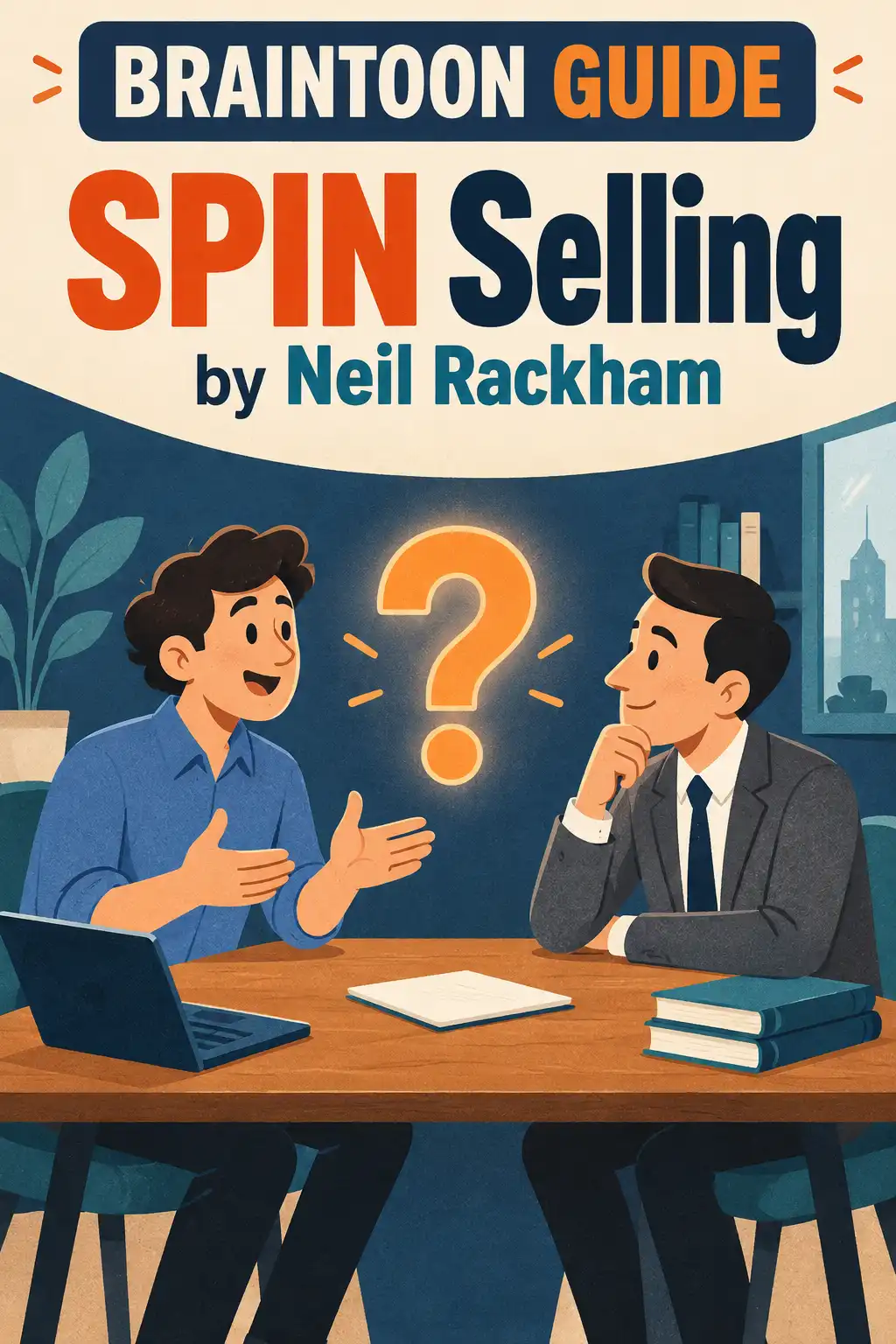
1. SPIN Selling by Neil Rackham
Best for:
A research-based guide to the questions that help buyers see why a big purchase is worth making.
12 min animated summary
Inside our summary
- Big sales are not small sales scaled up
- Implication questions make problems feel serious
- Most objections are self-inflicted
Rackham's core claim is that big sales are not small sales scaled up. Tactics that work on a quick purchase, especially pushy closing techniques, can backfire when a deal involves more money, more people and more time.
His alternative is a sequence of questions that helps the customer build their own case for buying. The standout idea is the implication question. Instead of jumping to your solution as soon as a problem appears, you explore what that problem is costing the customer until it feels serious enough to fix.
The book draws on twelve years of research into more than 35,000 sales calls, which gives it more weight than most sales advice.
We recommend it for anyone who runs discovery calls or sells into larger accounts. Rackham also argues that most objections are self-inflicted, which may change how you think about pushback.

2. The Challenger Sale by Matthew Dixon and Brent Adamson
Best for:
Why the strongest reps teach customers something new instead of relying on rapport alone.
14 min animated summary
Inside our summary
- Five kinds of salesperson and a surprising winner
- Customers want to learn, not just buy
- Assertive without becoming aggressive
Choose this one if your buyers arrive having already done their homework. Dixon and Adamson argue that the reps who win aren't simply the friendliest. They teach customers something new, tailor that insight and take control of the conversation.
The book starts by sorting salespeople into five types and showing which one comes out ahead, a result that challenges the idea that strong relationships alone win deals.
From there, it gets practical. The authors show how to make an insight lead somewhere specific, how to tailor your message for different stakeholders and how to be assertive without becoming aggressive.
It's also a strong fit for sales managers. One lesson focuses on the manager's role and the long road to changing how a team sells, so the book helps whether you're changing your own approach or leading a team through the shift.

3. Gap Selling by Keenan
Best for:
A direct, practical way to sell by mapping the gap between a buyer's problems and the future they want.
13 min animated summary
Inside our summary
- The gap is what you actually sell
- The deal is won in discovery
- Find the reason behind the change
This is our starting pick for newer reps. Keenan's central idea is easy to remember during a call: the sale lives in the gap between the buyer's current problems and the future they want. Your job is to help them see that gap clearly.
That puts discovery at the center. Keenan argues that deals are won there and that understanding the buyer's problems matters more than being liked. He also pushes sellers to find the real reason behind a change instead of settling for surface answers.
The tone is direct and easy to apply, which is why we suggest it before SPIN Selling if you're new. Both books focus on discovery. Gap Selling is the quicker, more conversational way in, while SPIN Selling offers the research-backed approach.
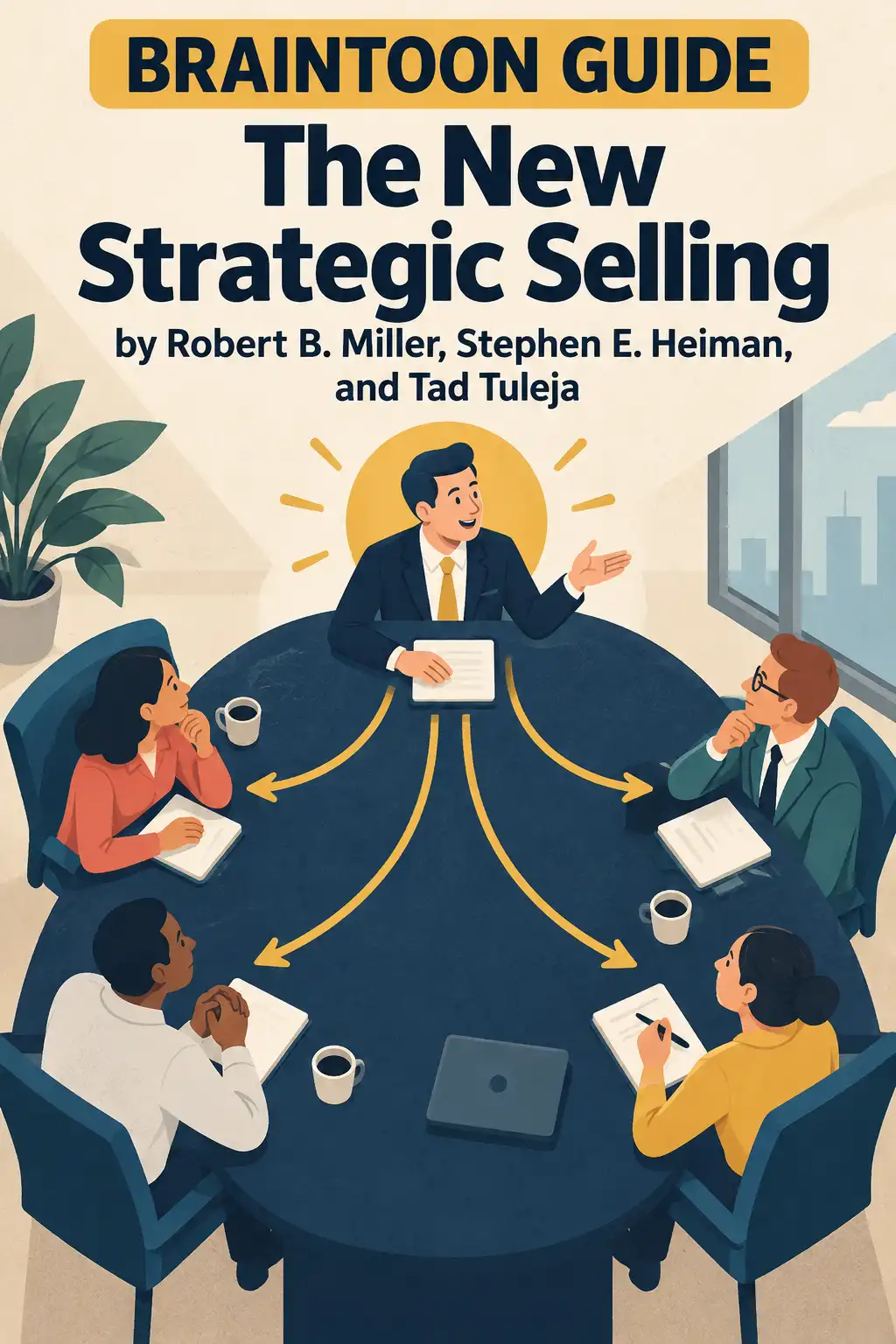
4. The New Strategic Selling by Robert B. Miller, Stephen E. Heiman, and Tad Tuleja
Best for:
A repeatable process for mapping everyone in a complex buying decision and spotting risks early.
13 min animated summary
Inside our summary
- Four roles in every buying decision
- Treating red flags as early warnings
- Companies get results, people win
This book suits deals where many people have a say and the sales cycle stretches over months. Rather than focusing on individual calls, Miller, Heiman and Tuleja offer a repeatable process for mapping everyone involved in a buying decision.
They describe four roles that appear in every buying decision and encourage sellers to treat red flags as early warnings rather than late surprises. They also look at how different buyers feel about change, which can help explain why one person champions a deal while another slows it down.
The authors make a useful distinction between what a company gets from a deal and what the individual people involved personally win. They argue that both matter.
We recommend it for account executives who want a clearer way to review deal risk, and for anyone choosing which customers to pursue and managing a funnel of long opportunities.

5. Fanatical Prospecting by Jeb Blount
Best for:
A no-excuses guide to keeping your pipeline full by starting new conversations every day.
13 min animated summary
Inside our summary
- Prospect today or slump in ninety days
- Guard your golden hours like a CEO
- Give a reason, ask directly, then shut up
If your pipeline keeps running dry, this is a good place to start. Jeb Blount's argument is blunt: prospecting separates the superstars from everyone else, and skipping it today can lead to a slump about ninety days later.
The book is a practical push to start new conversations across phone, email, social media and in-person channels. Blount accepts that interrupting people is part of the job, so he encourages using several channels rather than relying on one.
He also covers habits such as guarding your most productive hours, working from prioritized lists and tracking your numbers. His advice for the ask itself is simple: give a reason, ask directly, then stop talking.
It suits SDRs and any rep who is responsible for building their own pipeline. It's about getting meetings, not running them, so it complements the discovery books rather than replacing them.
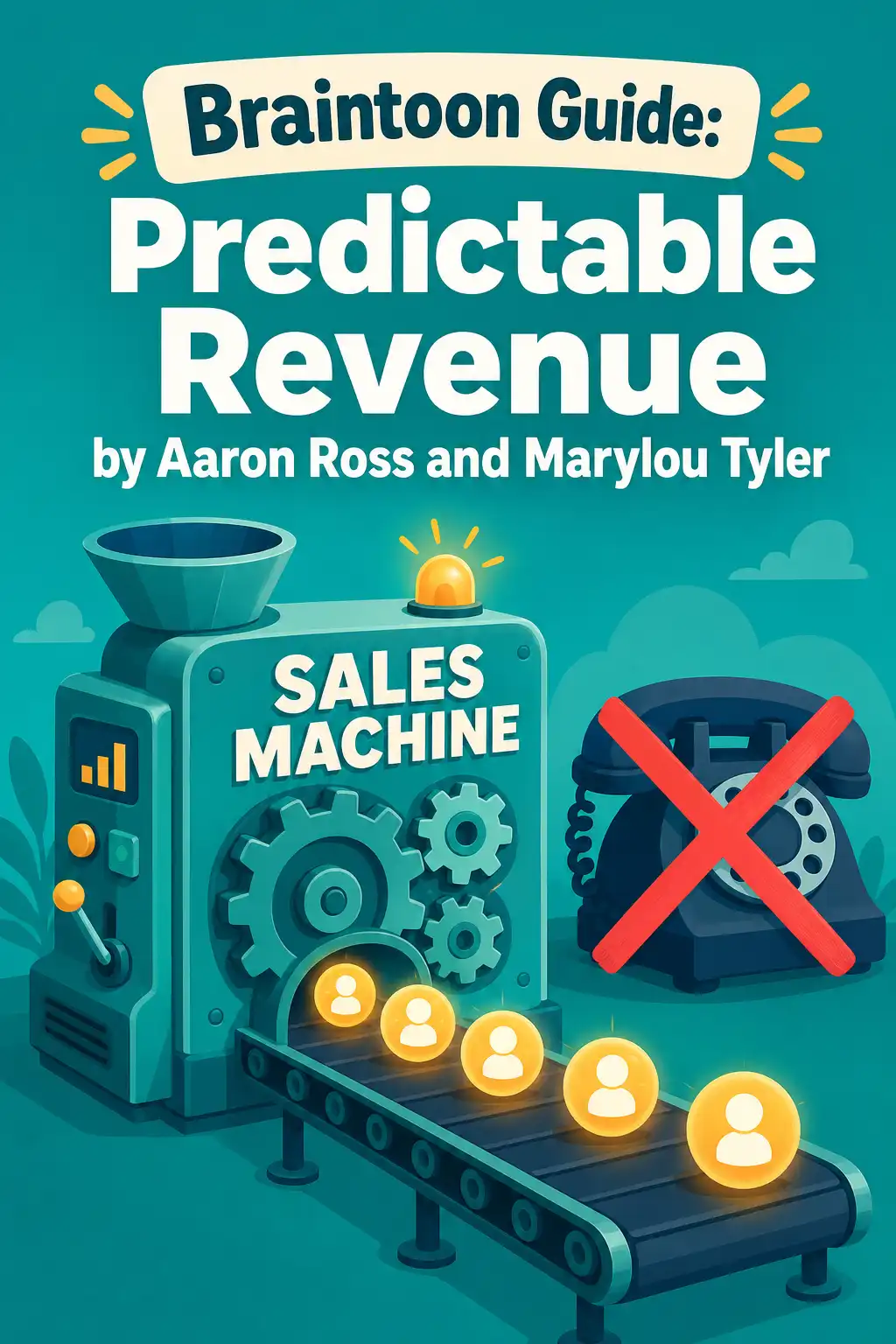
6. Predictable Revenue by Aaron Ross and Marylou Tyler
Best for:
A blueprint for building an outbound sales system that produces a steady stream of qualified leads.
11 min animated summary
Inside our summary
- Stop cold calling, start asking for referrals
- Specialize your sales roles
- Seeds, nets, spears, and real metrics
This one speaks more to founders and sales leaders than to individual reps. Ross and Tyler show how to build an outbound sales machine that produces a steady flow of qualified leads. They also argue that simply hiring more salespeople won't fix an unreliable pipeline.
Their approach starts with specializing sales roles and defining your ideal customer before you scale. They also sort lead sources into seeds, nets and spears, and emphasize tracking metrics that reflect real performance.
It makes a useful contrast with Fanatical Prospecting. Ross and Tyler steer teams away from cold calling toward approaches such as asking for referrals, while Blount strongly favors daily outreach across channels, including the phone. If you're deciding how your team should prospect, those two different views on outreach can help clarify your own approach.
7. Never Split the Difference by Chris Voss
Best for:
Negotiation tactics from a former FBI hostage negotiator that carry over to pricing and contract talks.
11 min animated summary
Inside our summary
- Label emotions to defuse them
- Let them say no
- Use calibrated questions to steer
This isn't a B2B sales book, but it can be useful at the end of a deal. Chris Voss draws on FBI hostage negotiation to show that emotions run the show in negotiations and to explain how to work with them rather than against them.
The techniques are concrete and easy to try. Voss covers mirroring someone's words, labeling emotions to defuse tension and using calibrated questions to steer the conversation. He also explains why he values a genuine "that's right" more than an empty yes.
He also argues that letting the other side say no can make a conversation easier, which is a useful reframe if you dread pushback.
We suggest it for reps who do well earlier in the sales process but struggle with pricing, contract talks or difficult conversations. Pair it with one of the core B2B process books higher on the list.