Learner
Everything so far assumes the deal is worth chasing. Is every deal worth chasing?
BrainToon
The authors say no. From work with account managers, they estimate around thirty-five percent of prospects in a typical territory are unlikely to produce good results, yet people chase them anyway. They contrast two philosophies: cram the product onto anyone who'll buy, or dig for a match. You can't do both.
Learner
But turning down revenue? Managers won't love that.
BrainToon
Their example is a moving company that took on a high-volume discount chain. Big client, lots of work. Then it turned out the account demanded rush jobs during peak season. Twice the work for half the profit. The match has to run both ways.
Learner
How do you tell in advance?
BrainToon
Build an ideal customer profile. Part of it is demographic: size, location, fit with your product. Part is what they call psychographic: the values and habits of the organization. You study your best and worst accounts, pull out about five key traits, and score prospects from minus five to plus five. But it's a baseline for judgment, not a verdict.
BrainToon
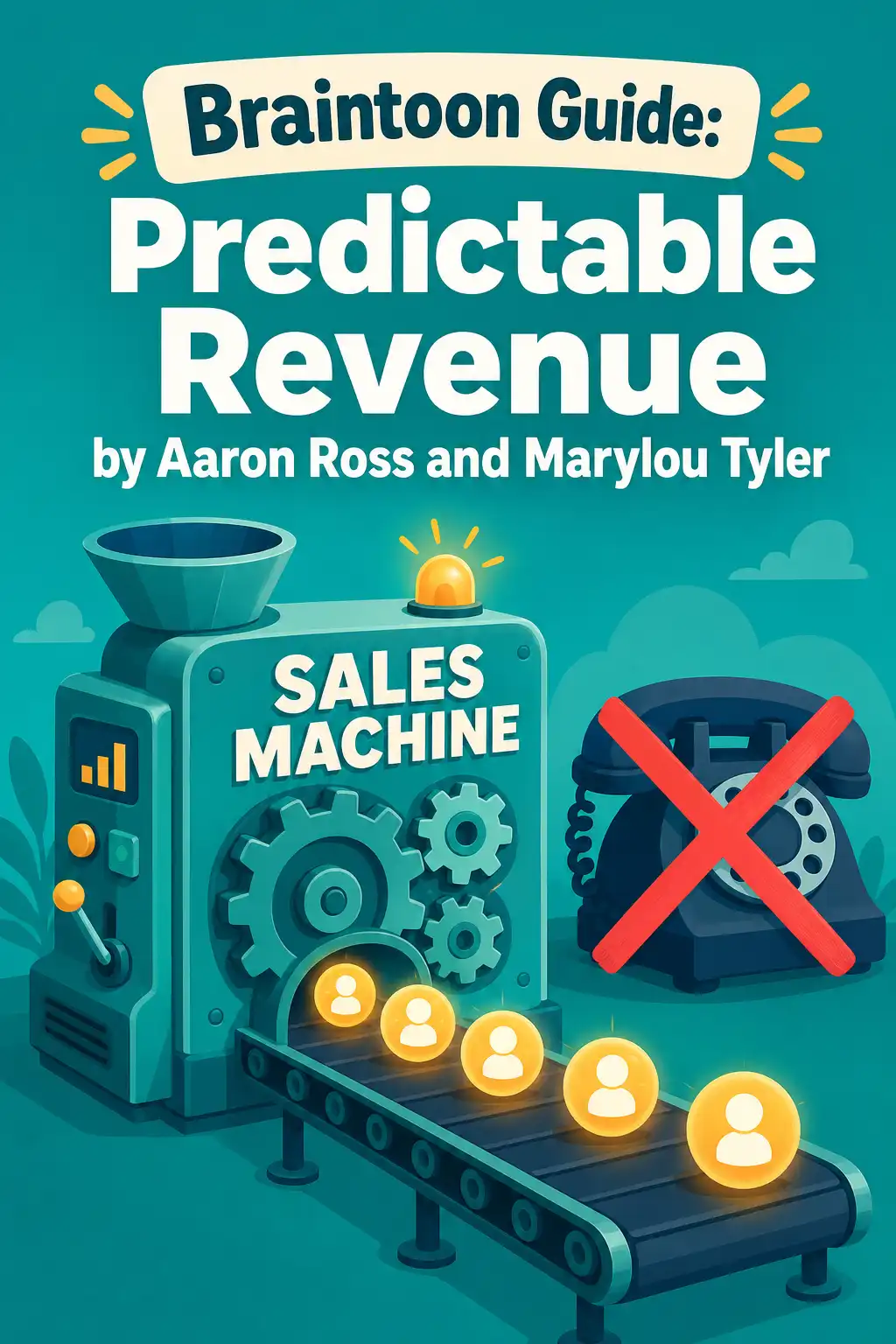
Aaron Ross and Marylou Tyler use a similar tool in their book Predictable Revenue. Their Ideal Customer Profile is a single page that describes your best customers, flags deal-breakers early, and names the job titles to contact.
Learner
Same instinct, then. Learn from your best accounts before you chase new ones.
Learner
And once you've picked the right accounts?
BrainToon
That's the sales funnel. The authors found most salespeople spend only five to fifteen percent of their week actually selling. They work from the bottom up, closing what's nearly done and leaving prospecting for last. Then the top runs dry, income crashes, and they panic-prospect too late. They call it the roller coaster effect.
BrainToon
Flip the order. Close your best few first, then prospect, then qualify new leads, then work the middle. The rule of thumb is simple: every time you close something, prospect or qualify something else.
 BrainToon