BrainToon
Most startup advice comes back to two questions: what should you build, and how do you keep the company alive while you figure it out? The books here cover both, from testing ideas to selling, managing and avoiding disaster.
If you're just getting started, we recommend The Lean Startup first. It gives you a practical way to test an idea with real customers before your time and money run out.
After that, choose by what you need: strategy, founder stories, sales, marketing or managing a growing team.

1. The Lean Startup by Eric Ries
Best for:
A practical method for testing startup ideas with real customers before you run out of time and money.
12 min animated summary
Inside our summary
- Test your leaps of faith
- The minimum viable product
- Pivot or persevere
If you have an idea and aren't sure anyone wants it, this is where we recommend you start. Eric Ries treats a startup less as a bet on a brilliant plan and more as a series of experiments. In his view, what you learn from real customers counts as progress.
The summary covers the tools he's known for. First you identify the riskiest assumptions behind your idea, which he calls leaps of faith. Then you build a minimum viable product to test them and measure the numbers that actually tell you something.
It suits first-time founders especially well because it gives you a way to make decisions when you have little to go on. Later lessons cover a decision every founder faces: whether to pivot or persevere. They also explain how a business finds its engine of growth.
Ries argues that entrepreneurship is a form of management. This book shows what that management looks like day to day.

2. Zero to One by Peter Thiel
Best for:
Peter Thiel's case for building something genuinely new instead of competing over what already exists.
13 min animated summary
Inside our summary
- Competition is for losers
- Build a lasting monopoly
- Look for hidden secrets
The Lean Startup helps you test an idea. Peter Thiel's book asks whether the idea is worth pursuing in the first place. He wants founders to build genuinely new things rather than copy what exists.
Expect strong opinions. Thiel argues that competition is for losers and that founders should aim to build a lasting monopoly, a business distinct enough that others can't easily follow. He also urges you to question what everyone believes and look for hidden secrets that most people overlook.
It suits readers thinking about strategy and what to build, rather than people looking for step-by-step tactics. The summary also covers the power law, planning the future deliberately, and how a company's foundations and team culture shape what comes later.
Treat it as a sharp argument to think through, not a rulebook. Thiel's emphasis on deliberate planning balances Ries's focus on experiments in a useful way.

3. Shoe Dog by Phil Knight
Best for:
Phil Knight's firsthand account of the years Nike spent close to going under.
13 min animated summary
Inside our summary
- Selling shoes with no cash in the bank
- The break with Onitsuka
- Winning in court, nearly dying at the bank
This is the book on our list that makes the early years feel real. Nike began as a shy Oregon runner's side venture importing Japanese shoes. In Phil Knight's own telling, it survived years of near-bankruptcy and betrayal before it became the company we know.
The summary follows him through selling shoes with no cash in the bank and the break with Onitsuka. It also covers a court win that came while the bank nearly finished him off. Later come loss, a customs bill and, eventually, going public.
We recommend it for founders running on thin margins who want to see that a messy, stressful start doesn't rule out a lasting company. It's a memoir rather than a manual, and its value is in seeing what persistence looks like from the inside.
The final lesson looks at what Knight makes of it all decades later, which gives the story a reflective close.

4. Behind The Cloud by Marc Benioff
Best for:
Marc Benioff's story of building Salesforce, with the marketing and growth lessons he drew from it.
11 min animated summary
Inside our summary
- Market like a revolutionary, not a vendor
- Let happy customers do your selling
- Remove the buyer's risk and hold your price
Marc Benioff's book works as both a founder story and a playbook. It follows Salesforce from a rented apartment to the first billion-dollar cloud company, drawing out lessons along the way.
It's strongest on marketing and selling software. Benioff's lessons include marketing like a revolutionary rather than a vendor and letting happy customers do your selling. He also advises removing the buyer's risk while holding your price.
That makes it a natural fit for SaaS founders, but much of it applies beyond software. Other lessons cover planning for the company you want to become and staying willing to change any strategy. Benioff also argues for shipping fast and keeping things simple.
It stands out for his argument that giving back should be part of a company from day one. It also covers aligning everyone and hiring for attitude. If you like lessons tied to a real company, this one is a good choice.
5. Predictable Revenue by Aaron Ross and Marylou Tyler
Best for:
A hands-on guide to building a steady outbound sales pipeline for business customers, without cold calling.
11 min animated summary
Inside our summary
- More salespeople won't save you
- Specialize your sales roles
- Define your ideal customer first
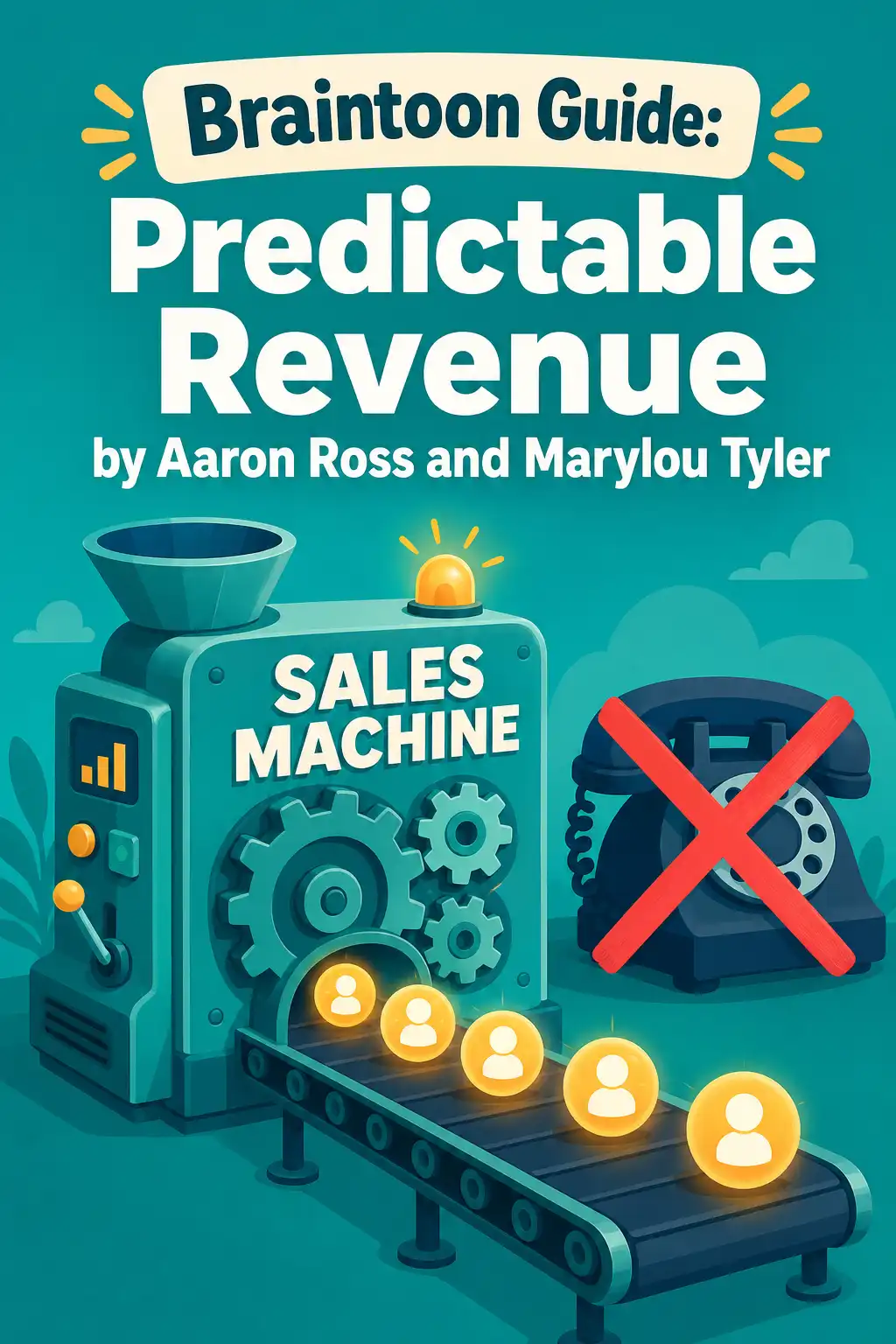
Once you have a product and need steady sales, this is the most hands-on book on our list. Aaron Ross and Marylou Tyler show how to build an outbound sales machine that brings in qualified leads without cold calling.
Their first lesson is useful for any founder tempted to hire their way out of a sales slump: more salespeople won't save you. Instead, they focus on defining your ideal customer first, asking for referrals instead of cold calling, and splitting sales into specialized roles.
That role split makes the book particularly useful for founders hiring their first salespeople. It affects both who you hire and what you ask them to do.
Its focus is narrower than the general startup books here. But if you sell to businesses, the summary also covers selling for customer success rather than just closing deals. It closes with tracking real metrics and developing your people so you can step back.

6. Bad Blood by John Carreyrou
Best for:
John Carreyrou's investigation into Theranos, the blood-testing startup built on technology that never worked as promised.
12 min animated summary
Inside our summary
- Secrecy that kept everyone guessing
- Why powerful people kept believing
- What speaking up cost the insiders
John Carreyrou's account of Theranos is the cautionary tale on our list. Elizabeth Holmes's blood-testing startup reached a multibillion-dollar valuation even though its technology never worked as promised.
It's a gripping story, but we include it for what it reveals about a startup culture gone wrong. The summary traces how secrecy kept people guessing and why powerful people kept believing. It also shows what happened when the fake results started reaching patients.
It's especially worth reading if you're thinking about startup ethics, or about where pressure to project confidence can lead. The lesson on what speaking up cost the insiders shows how hard it can be to raise the alarm.
The story ends with how it finally broke and what Carreyrou's investigation exposed.
7. High Output Management by Andrew S. Grove
Best for:
Andrew Grove's practical guide to management for founders whose companies are starting to grow.
15 min animated summary
Inside our summary
- Your output is your team's output
- Meetings are where management happens
- Match your style to task-relevant maturity
This book isn't about starting a company. It's for the point when you suddenly find yourself managing people, which is a different job from building the first version of a product.
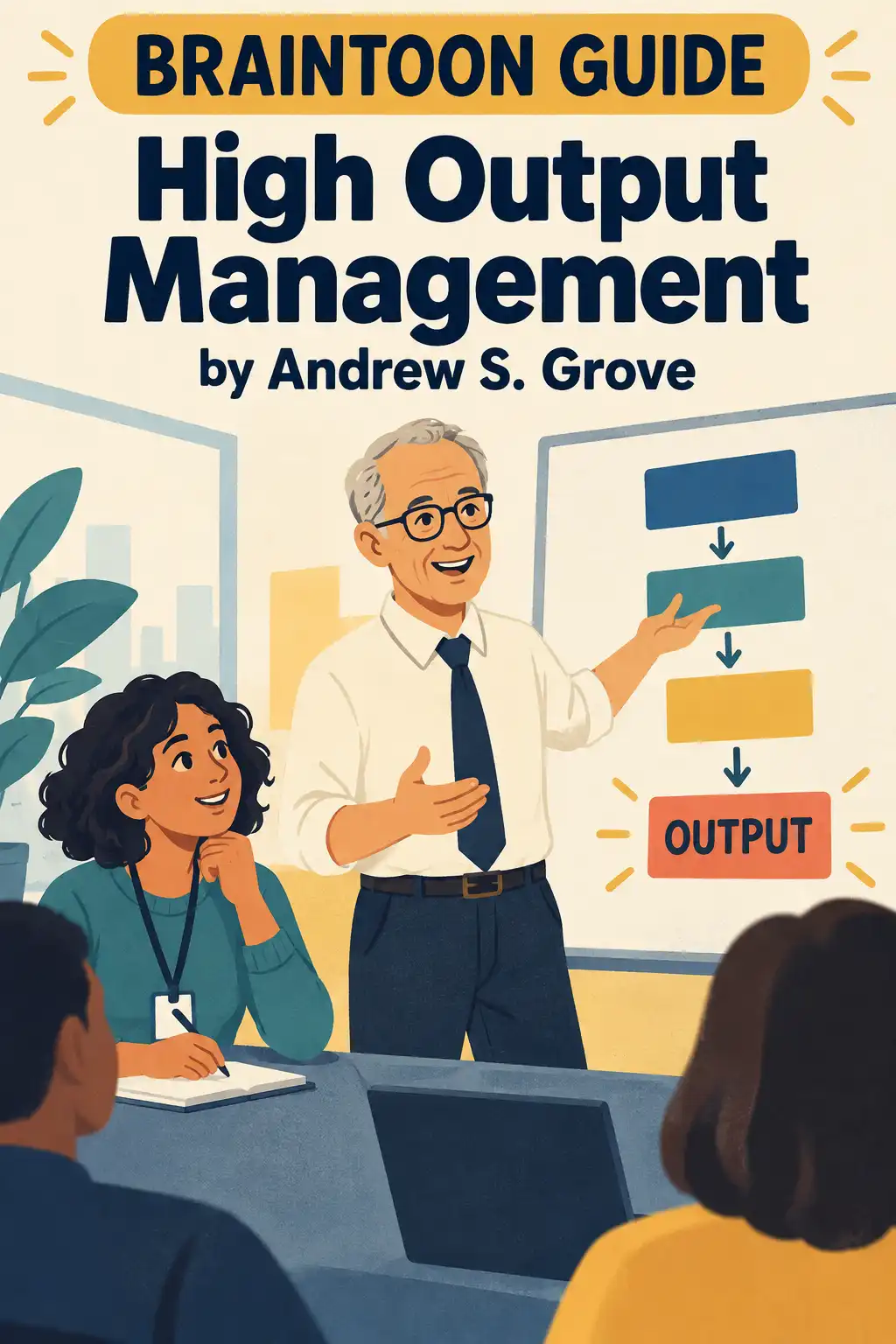
Andrew Grove, Intel's former CEO and chairman, argues that a manager's output is the output of their team. That means the job is choosing activities that multiply results, not simply doing more yourself.
From there, the summary gets practical. It covers organizing work around the limiting step and treating meetings as the place where management happens. You'll also learn about matching your management style to a person's experience with a task and using reviews to improve future performance.
We recommend it for founders whose teams are growing faster than their management skills. Grove's argument that training is the manager's job is especially relevant once you start hiring.
A suggested reading order
You don't need to read these in order. If you're starting from scratch, begin with The Lean Startup, then try Zero to One for a contrasting view of what's worth building.
The founder stories, Shoe Dog and Bad Blood, work well whenever you want perspective or a reality check. Save the more specialized books for when you need them: Predictable Revenue for building sales, Behind the Cloud for marketing software, and High Output Management for when you start managing people.
How we chose these books
We chose these books from the summaries currently available on BrainToon. We wanted a mix of practical methods, strategic thinking, honest founder stories and focused guides to sales, marketing and management. We left out some books from the catalog that focus more on personal wealth or technology history than on building a company. Some important startup topics, such as fundraising, aren't covered in depth here because we don't yet have a strong summary on them.