A detailed summary ofThe Lean Startupby Eric Ries
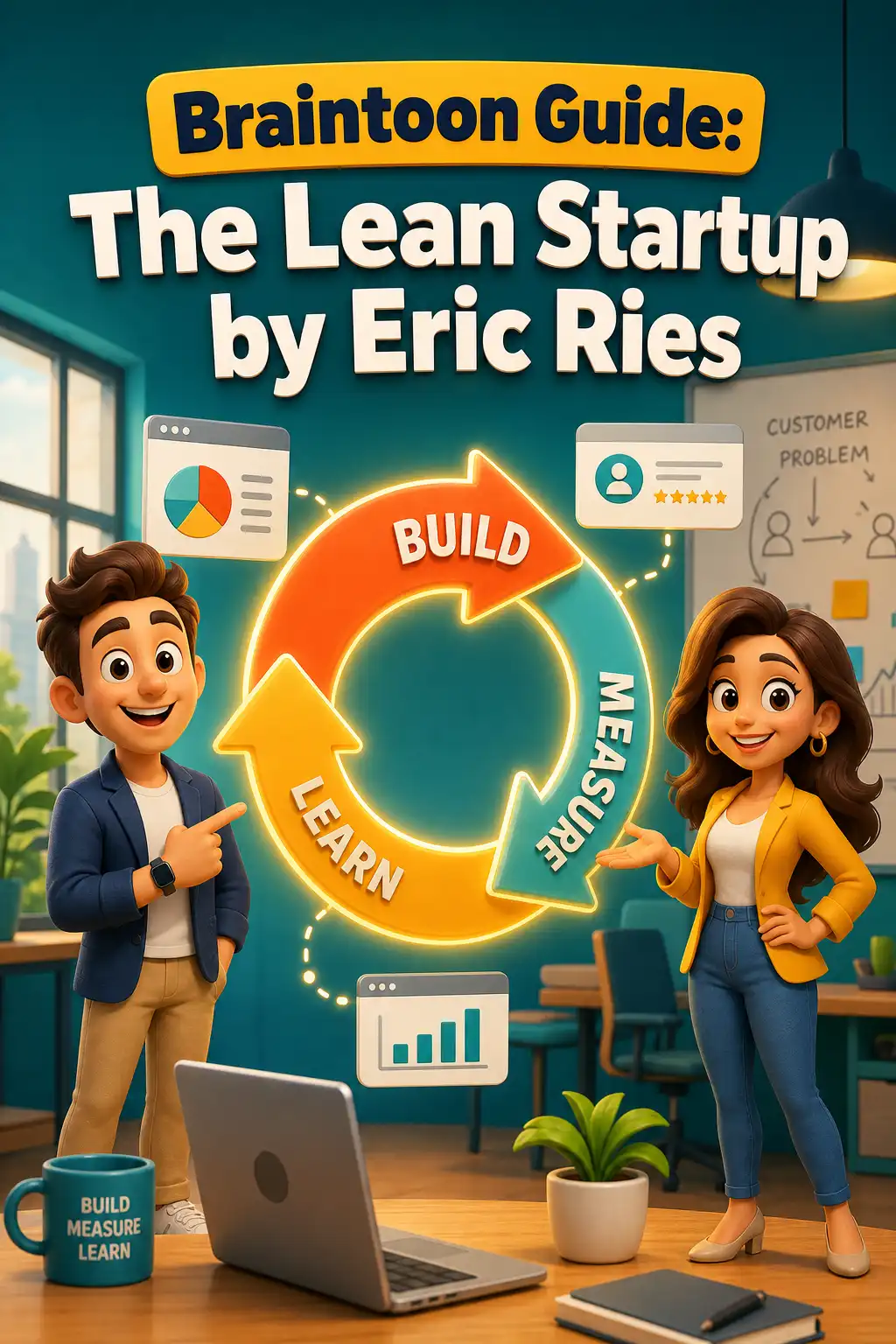
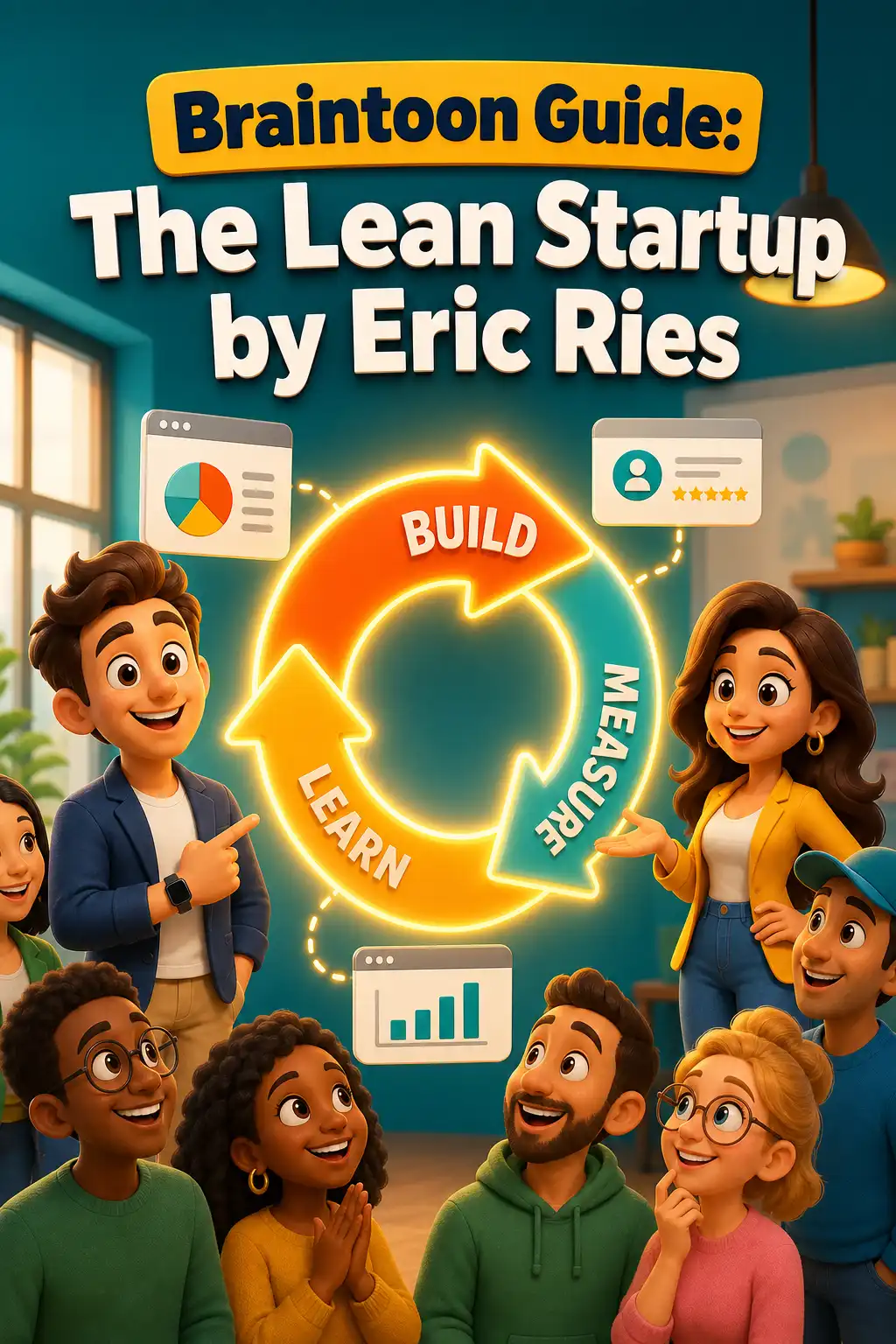
The Lean Startup by Eric Ries teaches you how to test your ideas quickly, learn from real customers, and build something people truly want before your time and money run out.







What if the biggest reason new ideas
0:00 / 1:00
60-second animated preview
Summary Visuals
Minimum Viable Products in the Wild
Vanity Metrics vs. Innovation Accounting
The Three Engines of Growth
The Lean Startup Summary
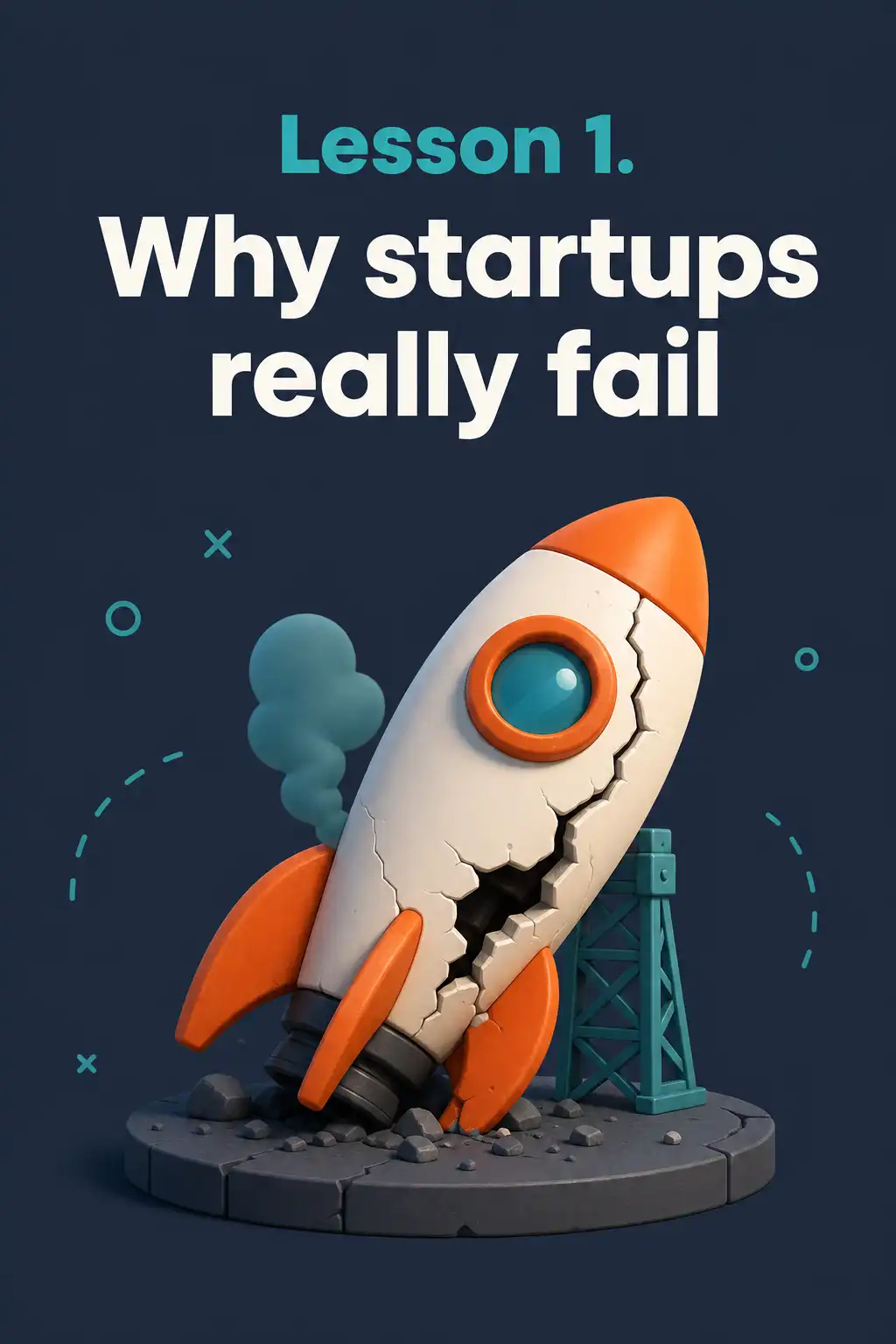
What if the biggest reason new ideas fail isn't a bad product or a lazy team, but months of hard work spent building something nobody actually wants?
1. Why startups really fail
Eric Ries knows startup failure firsthand. During the dot-com boom, he and a cofounder burned through their money building a product nobody wanted, even though they had a strong team and what felt like a promising idea.
Then in 2004, he co-founded IMVU, an avatar chat company. They shipped an early, buggy version fast, charged customers right away, and updated the product constantly. It grew to millions of users.
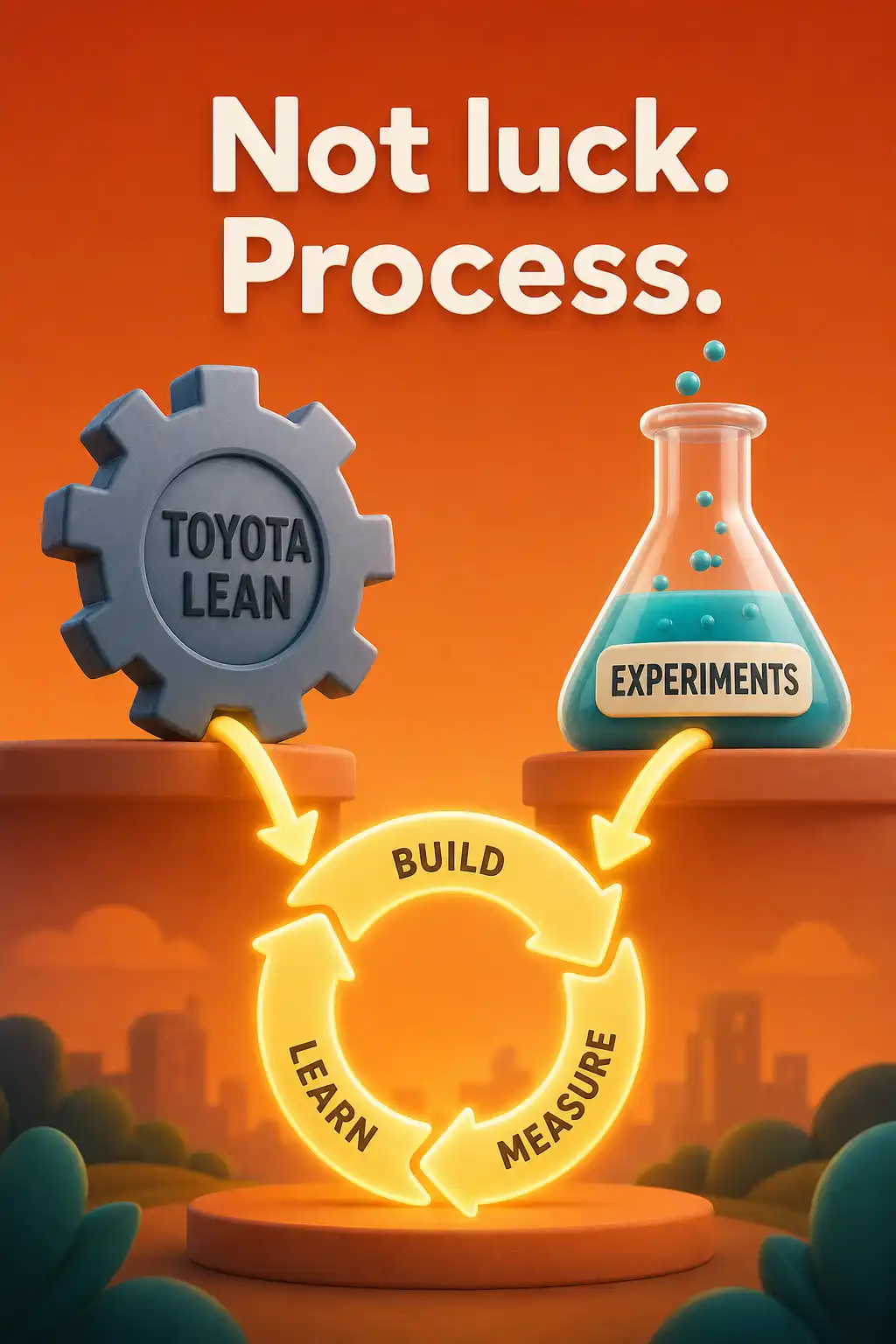
The difference wasn't luck or talent. It was process. Ries blended lean manufacturing ideas from Toyota with rapid experimentation, and the Lean Startup movement was born.
He argues startups fail for two reasons. Either they rigidly follow business plans that assume a stable, predictable world, or they swing to the opposite extreme, pure chaos with no process at all.
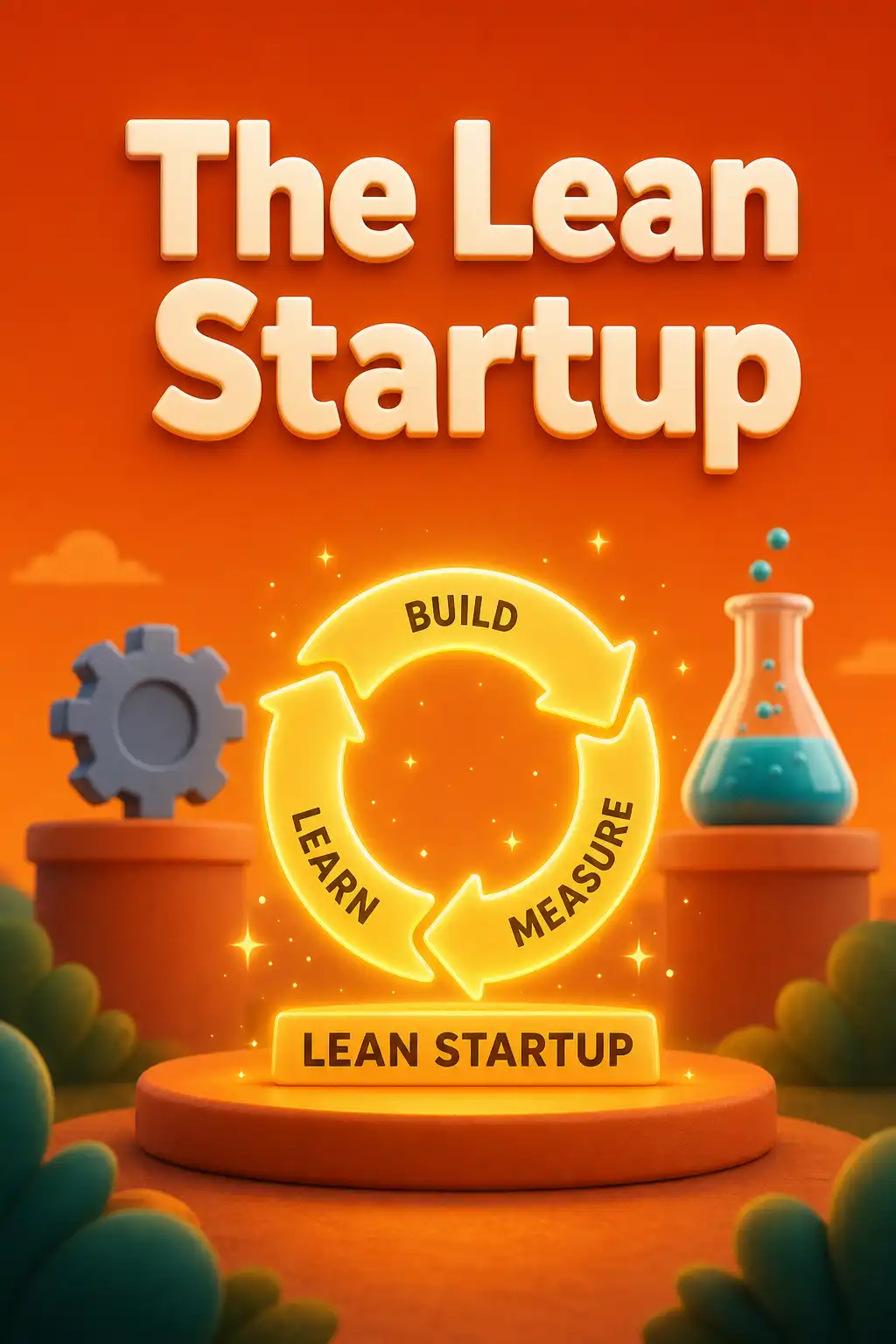
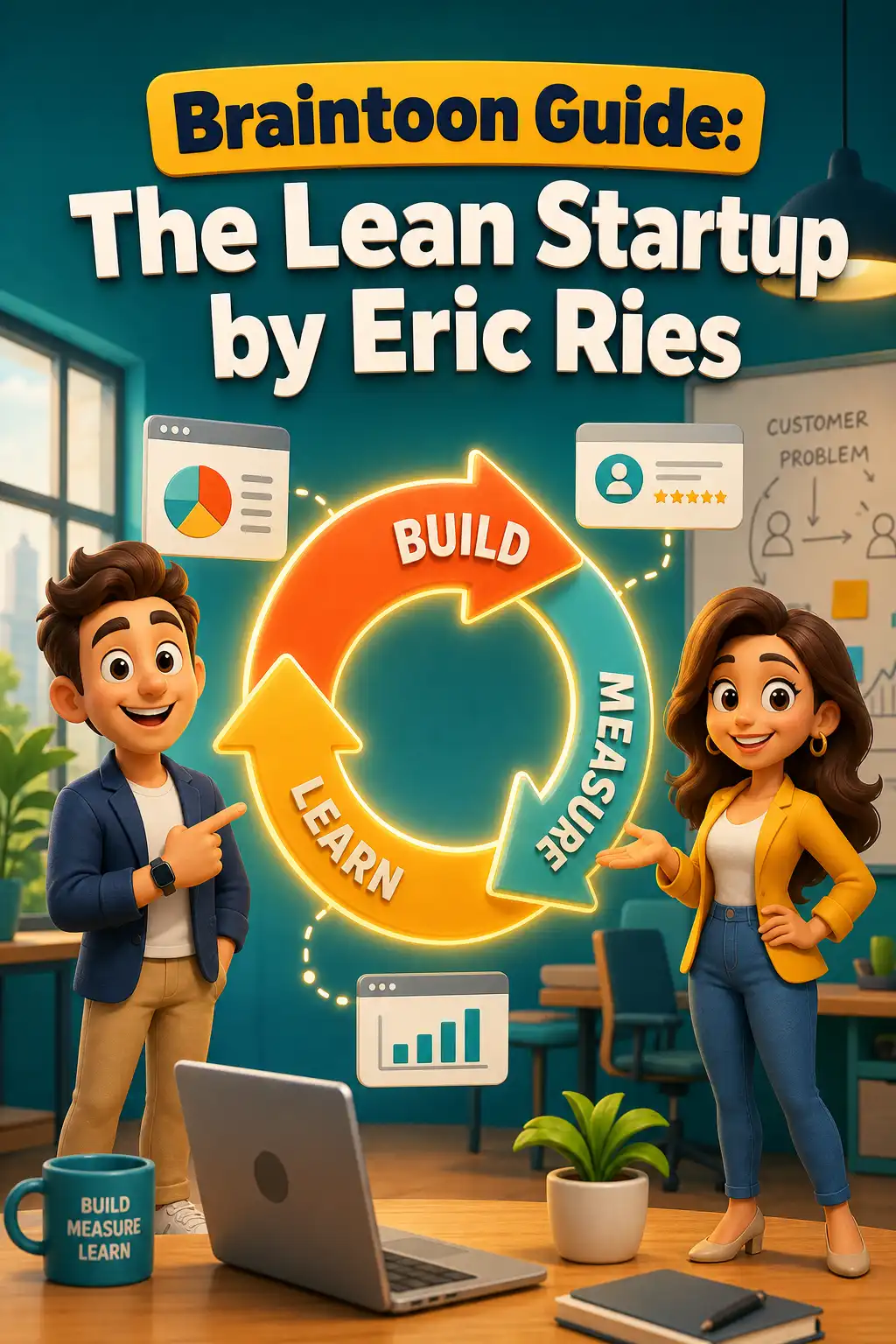
The Lean Startup offers a disciplined middle path, built on validated learning, a Build-Measure-Learn feedback loop, and honest ways to know whether you're truly making progress.
Meet Kevin, a web developer in Atlanta. He's spent six months of nights and weekends building ToolShare, an app that lets neighbors lend and borrow power tools.
Next step
Watch The Lean Startup instead
Explore this summary and the Braintoon library.
iOS + Android app20,000+ learnersFree daily summary
2. Entrepreneurship is management
Here's a surprising claim. Entrepreneurship is a form of management. Many founders hate that word, because they associate it with bureaucracy, so they adopt a just-do-it attitude instead.
But that attitude usually produces chaos. A startup is an institution built under extreme uncertainty, and Ries says it needs its own kind of disciplined management to survive.
He compares it to driving a car versus launching a rocket. Rockets need perfect pre-planned instructions where tiny errors are catastrophic. Driving means constant small adjustments the whole way there.
Too many business plans are rocket launches. They lock you into assumptions you made before you knew anything. It's better to keep your vision fixed and steer your strategy continuously.
And entrepreneurs exist everywhere. Inside Intuit, the huge software company behind TurboTax and QuickBooks, a five-person team built SnapTax, an app that files taxes from a photo of your W-2.
It hit 350,000 downloads in three weeks. Intuit's founder Scott Cook embraced this thinking, and TurboTax went from running one big test per tax season to over five hundred.
3. Learning is real progress
So how do you actually know you're making progress? Staying on schedule and on budget feels reassuring, but you can hit every milestone while building something nobody wants.
At IMVU, Ries's team spent six months building an add-on for existing instant messaging networks, convinced customers would never switch to a brand-new network. Almost nobody used it.
In-person testing revealed the truth. Users happily learned new software, and they wanted to meet strangers, not their existing friends. The team's mental model of their customers was years out of date.
The painful question was, how much of that work was even necessary? Features they had debated carefully were never even discovered by users. Ries's own interoperability code got thrown out entirely.
That's why Ries says learning is the true unit of progress in a startup. Any effort that doesn't teach you something about customers is waste.
He calls it validated learning. Progress demonstrated with real evidence from real customers, not theories, forecasts, or a good story told after the fact.
4. Test your leaps of faith
Every business plan rests on assumptions, and hidden among them are bold leaps of faith, like believing customers genuinely want your product. Test those risky assumptions first.
Ries splits them into two hypotheses. The value hypothesis asks whether people find your product genuinely valuable. The growth hypothesis asks how new customers will discover it.
Consider Zappos. Before building warehouses, founder Nick Swinmurn photographed shoes in local stores and posted them online. When someone ordered, he bought that pair at full price and shipped it himself.
That tiny experiment revealed real customer behavior and generated genuine data. It taught him more than any survey could, because people were answering with their wallets, not just their opinions.
Ries also borrows Toyota's genchi genbutsu, which means go and see for yourself. One Toyota engineer drove 53,000 miles across North America just to understand minivan buyers firsthand.
So Kevin finally leaves his laptop. He posts in his neighborhood Facebook group, offering to personally match anyone who needs a tool with a neighbor who owns one.
5. The minimum viable product
Groupon, once one of the fastest-growing companies in history, began as a failed activism site called The Point. Its first version was literally a WordPress blog with handmade coupon PDFs sent by email.
That scrappy setup was a minimum viable product, or MVP. The fastest way through a full Build-Measure-Learn loop with the least effort. It's about fast learning, not small size.
MVPs take many forms. Dropbox made a short video showing its product before the technology existed, and its waiting list jumped from five thousand to seventy-five thousand almost overnight.
Food on the Table started with a single customer, delivering meal plans by hand. Aardvark used humans pretending to be smart software, and Google later bought it for fifty million dollars.
And don't fear rough edges. Early adopters actually prefer unfinished products, because being first matters more to them than polish. Anything beyond what they need is wasted effort.
Kevin shelves his half-finished app. Instead, he launches a simple sign-up page and runs ToolShare through a spreadsheet and text messages, matching borrowers with lenders by hand.
6. Measure what actually matters
Now a warning about vanity metrics. Total sign-ups and cumulative revenue almost always climb up and to the right, even when your business is going nowhere.
At IMVU, constant improvements felt like progress. But cohort analysis, which tracks each new group of customers separately, showed the percentage who paid stayed stuck at around one percent.
Ries's fix is innovation accounting. Use an MVP to establish a real baseline, tune your product to improve those numbers, then decide whether to pivot or persevere.
The test-prep company Grockit learned this too. When it switched to cohort metrics and split-testing, one experiment revealed a celebrated industry best practice changed customer behavior not at all.
Good metrics have three qualities. Actionable, showing clear cause and effect. Accessible, simple enough for everyone to understand. And auditable, so people trust them even when the results hurt.
Kevin's sign-up chart looks impressive. But grouped by the week people joined, the data shows most people borrow once and never return. That's his honest, uncomfortable baseline.
7. Pivot or persevere
The most consequential decision a startup faces is whether to pivot or persevere. A pivot isn't a panicked swerve. It's a structured correction that tests a new fundamental hypothesis.
Take David Binetti's startup Votizen, a social network for voters. His first version cost about a thousand dollars, but retention and referrals stayed stubbornly low despite months of tuning.
So he pivoted, and then pivoted again. He zoomed in on one feature, switched from consumers to businesses, then built a self-serve platform. Finally, eleven percent of users were willing to pay.
Strikingly, each new version took less time to build, because knowledge was accumulating along the way. Ries even redefines runway as the number of pivots you have left, not months of cash.
Why do founders wait too long to pivot? Vanity metrics create false comfort, vague hypotheses make failure invisible, and pivoting can feel like admitting your vision never got a fair shot.
Kevin holds his own pivot-or-persevere meeting with his data. Neighbors love borrowing but rarely lend, and his numbers just aren't trending toward a sustainable business.
8. Find your engine of growth
Ries once met two very different startups with identical problems. Real customers, real funding, completely stalled growth. His diagnosis? Neither understood its engine of growth.
Sustainable growth follows one rule. New customers come from the actions of past customers, through word of mouth, visible product use, advertising funded by revenue, or repeat purchases.
Ries describes three engines. The sticky engine depends on retention, so watch your churn rate. If new customers barely outpace departures, growth flatlines no matter how much you spend on marketing.
The viral engine spreads through normal use. Hotmail added a sign-up link to every email and hit twelve million subscribers in eighteen months. The paid engine works when customer value exceeds acquisition cost.
But every engine eventually runs out of fuel, and vanity metrics hide that fact until growth collapses. So keep developing new sources while your current engine is still running.
Kevin chooses the sticky engine. Buildings pay monthly, so retention becomes his focus, while happy residents recommending ToolShare to friends in other buildings fuels steady word-of-mouth growth.
Next step
Watch the animated summary
Explore this summary and the Braintoon library.
iOS + Android app20,000+ learnersFree daily summary
More books like The Lean Startup

The E-Myth Revisited
by Michael E. Gerber
"The E-Myth Revisited" by Michael E. Gerber explains why most small businesses fail, and it offers a proven system to build one that actually works.

Your Next Five Moves
by Patrick Bet-David
Your Next Five Moves by Patrick Bet-David teaches you to think strategically in business, planning several moves ahead so you can build, scale, and win with intention instead of just reacting blindly to whatever comes at you.
Predictable Revenue
by Aaron Ross and Marylou Tyler
Predictable Revenue, by Aaron Ross and Marylou Tyler, shows how to build an outbound sales machine that generates a steady, reliable stream of qualified leads, without ever picking up the phone to make a cold call.

Zero to One
by Peter Thiel
Zero to One by Peter Thiel is about building genuinely new things instead of copying what already exists. It's a guide to creating businesses that actually last.

Launch
by Jeff Walker
Launch by Jeff Walker teaches a step-by-step formula for turning your product release into an event, building anticipation and trust so that customers are genuinely excited to buy before you even ask.
The 4-Hour Workweek
by Tim Ferriss
The 4-Hour Workweek by Tim Ferriss is about escaping the all-or-nothing career trap and designing a flexible life with real freedom right now, not decades from now.
Related book lists
22 summaries
Entrepreneurship
Navigate zero-to-one and company-building phases.
2 summaries
Innovation
Create new value through unique ideas, products, and breakthroughs.
13 summaries
Business Systems
Design processes and systems that scale beyond founder effort.
15 summaries
Strategy
Make smarter decisions with long-term, first-principles thinking.
9 summaries
Management
Run teams, processes, and execution effectively day to day.