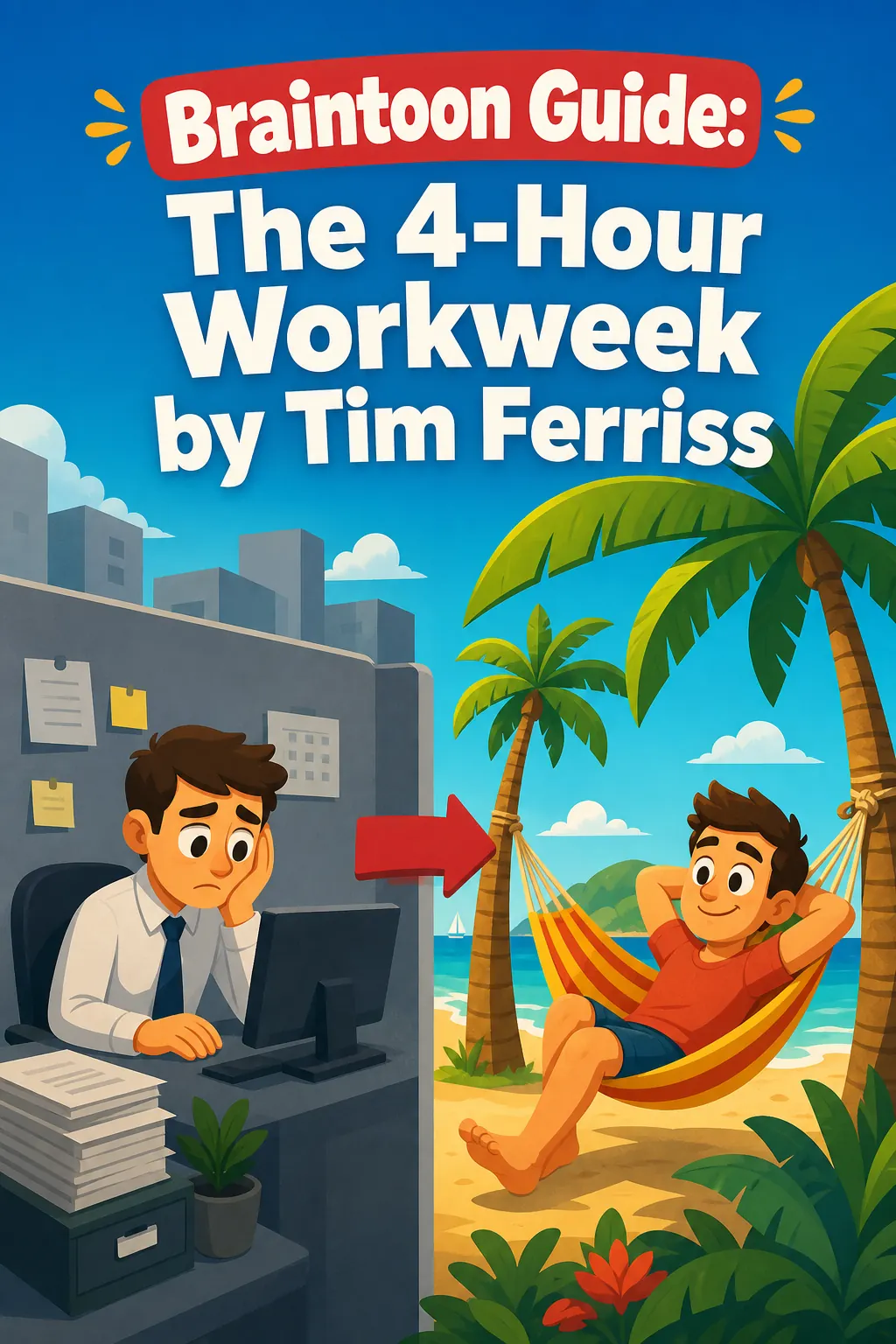

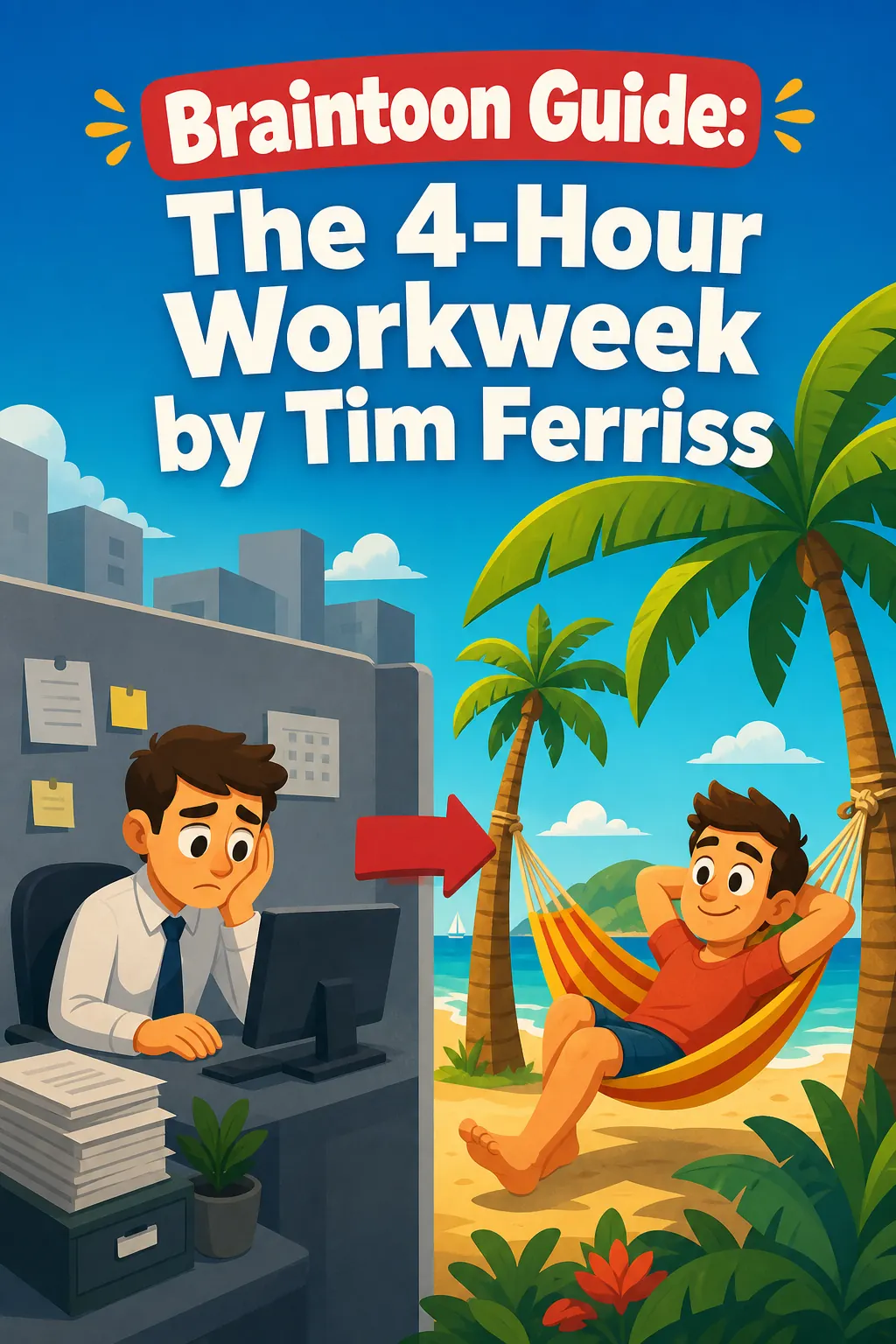











The 4-Hour Workweek cover

The 4-Hour Workweek Summary: 9 best lessons in 10 mins

10 min readTim Ferriss's book, summarized

Topics will appear here once mapped for this book.

One-sentence summary

The 4-Hour Workweek by Tim Ferriss is about escaping the all-or-nothing career trap and designing a flexible life with real freedom right now, not decades from now.

It's 9pm on a Tuesday, and Laura is sitting in a quiet office, staring at an inbox that just keeps growing. She's missing yet another dinner with friends she barely sees anymore.

(Continued below)

Reading about The 4-Hour Workweek is one thing.

Watching it is faster, more fun, and you'll actually remember it.

Open in app

Lesson 1: Join the new rich

Laura, a marketing manager at a software firm, drives home past midnight and realizes she's said no to three weddings this year alone.

She tells herself she'll travel and rest someday. After the next promotion. After the bonus. After she finally gets her life sorted out.

But that someday keeps drifting further away, and she's starting to wonder if it'll ever actually arrive at all.

This is exactly the trap Tim Ferriss describes in The 4-Hour Workweek, a book rejected by 26 publishers before it became a global bestseller.

Ferriss had built a profitable supplement company called BrainQUICKEN, but he found himself working twelve-hour days, seven days a week, completely miserable behind all the success.

In 2004, on the edge of burnout, he bought a one-way ticket to Europe and started experimenting with remote work and automation.

Lesson 2: Define what you actually want

On Saturday, Laura grabs coffee with her old mentor Mark, a senior executive with three houses, two divorces, and very tired eyes.

He admits he's spent thirty years chasing money, and he isn't sure any of it made him happier than when he started out.

Laura walks home shaken. She doesn't actually want Mark's life, yet she's been quietly racing toward exactly that finish line.

Ferriss says most people don't really want a million dollars. They want what money seems to promise, things like adventure, freedom, and choice.

He calls this the freedom multiplier. Forty thousand dollars a year with full control over your time can beat half a million in a cage.

So Laura tries an exercise. Instead of asking what she wants to earn, she asks what she actually wants to do, see, and become.

Lesson 3: Define your worst case

Laura starts dreaming about asking to work remotely. But every time she opens her laptop to draft the request, fear freezes her hands.

What if her boss says no? What if she gets labeled difficult? What if she's quietly pushed out in the next round of layoffs?

Ferriss recommends a simple but powerful exercise. Write down your absolute worst-case scenario in vivid, specific detail. Not vague dread, but actual specifics.

Then ask yourself, on a scale of one to ten, how bad would this really be six months later?

Laura tries it. Worst case, she gets fired, lives off savings for four months, and lands a similar job somewhere else.

Honestly? A three out of ten. Recoverable. Meanwhile, staying stuck in this exact life forever feels like a permanent eight.

Lesson 4: Aim unreasonably high

Laura's first instinct is to ask for one work-from-home day a week. Safe, modest, hard to refuse.

But Ferriss says something counterintuitive. Unrealistic goals are often easier than realistic ones, because almost nobody competes for the bigger dream.

He once challenged Princeton students to contact famous strangers for a free trip. Nobody even tried, all assuming someone smarter would beat them to it.

Modest goals fade the moment things get hard. Bold goals generate the energy you need to push through real obstacles.

Ferriss also reframes happiness as excitement. Instead of asking what would make her happy, Laura asks what would actually excite her.

She uses his dreamlining tool, listing what she wants to have, be, and do within six and twelve months.

Lesson 5: Cut the unimportant ruthlessly

Energized by her dreamlines, Laura returns to work Monday and immediately drowns in seventeen meetings, status updates, and three urgent fires that turn out not to be urgent at all.

Ferriss separates effective from efficient. Effective means doing tasks that actually move the needle. Efficient just means doing any task well, even a pointless one.

Without the right focus, efficiency is just polished waste. And Laura has been a master of polished waste for years.

He introduces Pareto's Law, the idea that roughly eighty percent of your results come from just twenty percent of your efforts and customers.

Ferriss applied it to his own business and discovered most of his revenue came from a tiny handful of clients.

He fired the difficult ones, doubled his income, and slashed his hours. Laura audits her own work the same way.

Lesson 6: Protect your attention

Even with sharper priorities, Laura's day still gets sliced apart. Slack pings, drop-ins, and the bottomless inbox keep dragging her back into reactive mode.

Ferriss treats interruptions as a real enemy. He suggests checking email only twice a day, with an auto-responder explaining when you'll reply.

Laura tries it, half terrified. By Wednesday, the world hasn't ended. People simply solve more of their own problems.

He also recommends batching, which means grouping similar tasks together so you only pay the mental setup cost once instead of twenty times.

Laura batches expense reports, errands, and admin into one Friday afternoon block. Suddenly her weekdays feel almost spacious.

Ferriss adds a low-information diet. He rarely watches news, relying instead on trusted friends to flag anything truly important.

Lesson 7: Outsource and automate

With her time partly reclaimed, Laura finally starts a small side project, a curated newsletter for indie book lovers. But the admin tasks pile up fast.

Ferriss tells the story of writer AJ Jacobs, who hired a virtual assistant in India to handle research, errands, even apology cards to his wife.

The point isn't laziness. It's leverage. Anyone can tap global talent for a few dollars an hour to reclaim hours of their life.

Ferriss warns of one crucial rule. Eliminate before you automate. Outsourcing a broken process just makes the brokenness faster and more expensive.

So Laura first cuts every unnecessary step from her newsletter workflow, then hires a virtual assistant to handle research, scheduling, and basic formatting.

She writes short, single-task emails, asks the assistant to restate the task back to her, and sets tight 24-hour deadlines, just like Ferriss recommends.

Lesson 8: Build a muse

Laura loves her newsletter, but it doesn't pay enough to fund her dreamlines. She wants real automated income that doesn't trade hours for dollars.

Ferriss calls this a muse, a small business engineered to run with minimal involvement, basically a cash flow engine that funds your lifestyle.

The recipe is straightforward. Pick a narrow niche you already belong to, since you'll understand those customers better than any outsider can.

Laura picks book club organizers, a group she's been part of for years. She brainstorms a how-to course on running great clubs.

Ferriss says price it between fifty and two hundred dollars, make it explainable in one sentence, and ideally make it an information product because of the huge profit margins.

Before manufacturing anything, he insists on micro-testing. Build a simple landing page, run small Google ads, and see if real strangers actually click buy.

Lesson 9: Escape the office

With muse income flowing in, Laura still has her day job. She doesn't necessarily want to quit, but she does want out of the building.

Ferriss tells the story of Dave, who quietly worked from China for thirty days and asked forgiveness afterward, not permission beforehand.

He suggests a careful five-step plan. First, get your employer to invest in training you, making you expensive and inconvenient to lose.

Then take a few sick days and use them to deliver visibly better work from home, with clear numbers to prove it.

Laura does exactly this. Her remote output beats her office output by every metric her boss actually cares about.

She proposes a small, casual two-day remote trial. Low pressure, easy yes. Then she gradually expands until remote becomes the new normal.

You've read the summary. Now watch it.

The animated version covers the same ideas — faster, and in a format you'll actually remember.