A detailed summary ofBad Bloodby John Carreyrou
Summary by BrainToonLast updated
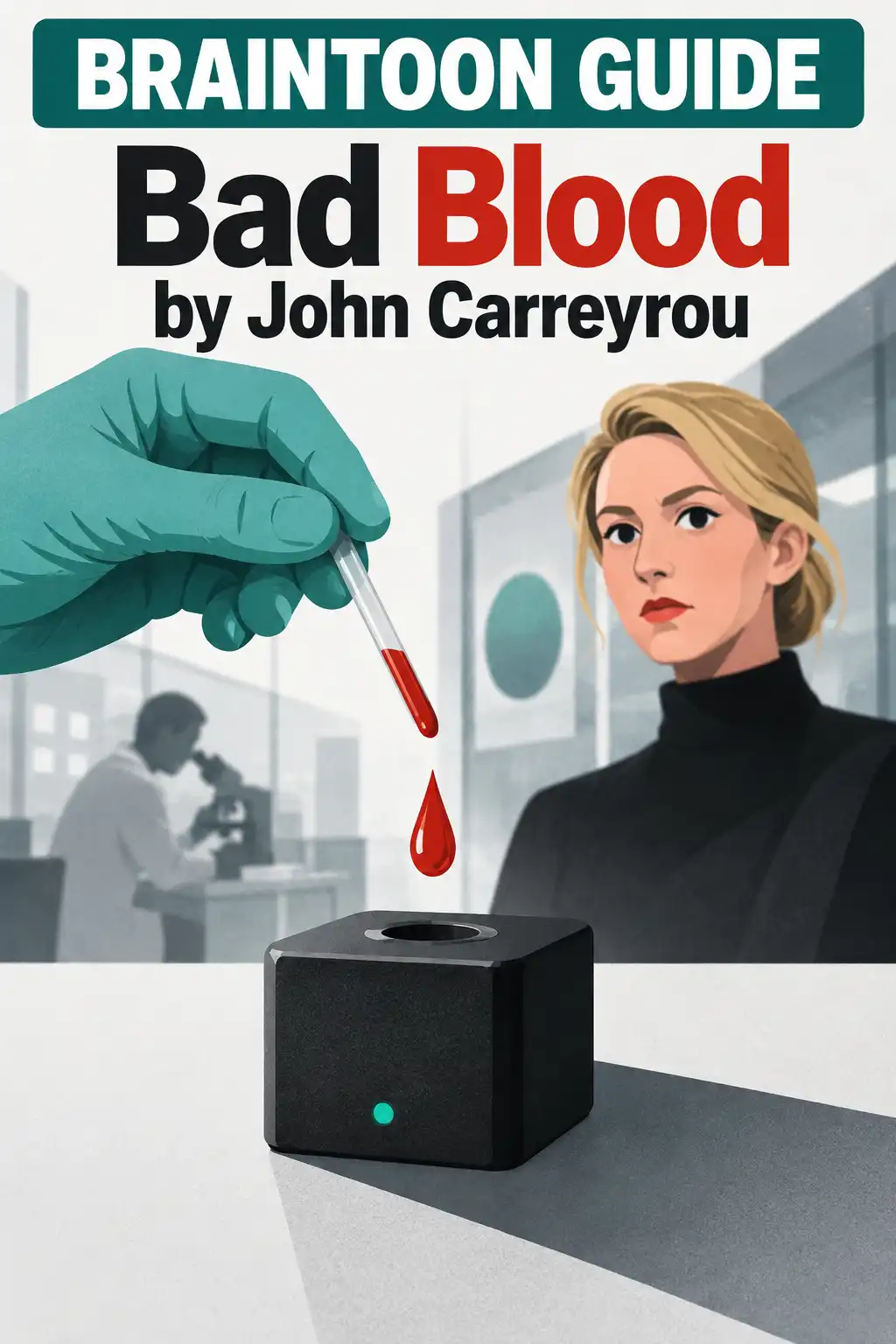
Bad Blood by John Carreyrou tells the story of Elizabeth Holmes and Theranos, the blood-testing startup that reached a multibillion-dollar valuation despite technology that never worked as promised, and the investigation that ultimately brought it down.
Watch the first minute
Here's what I keep
0:00 / 1:00
60-second animated preview
Key ideas, illustrated
The Promise vs. the Machine
Borrowed Credibility, Blocked Checking
How the Truth Got Out
Bad Blood Summary
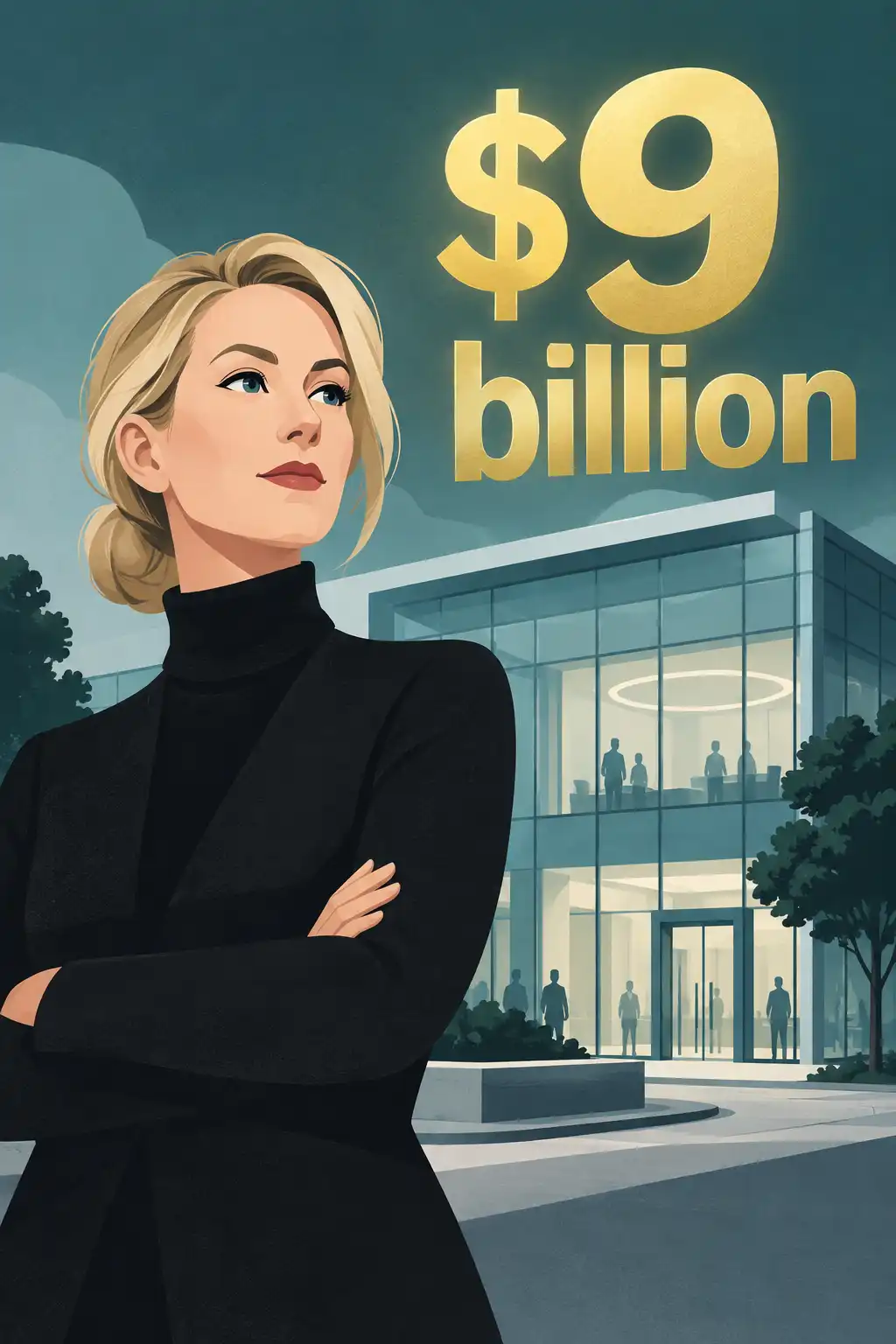
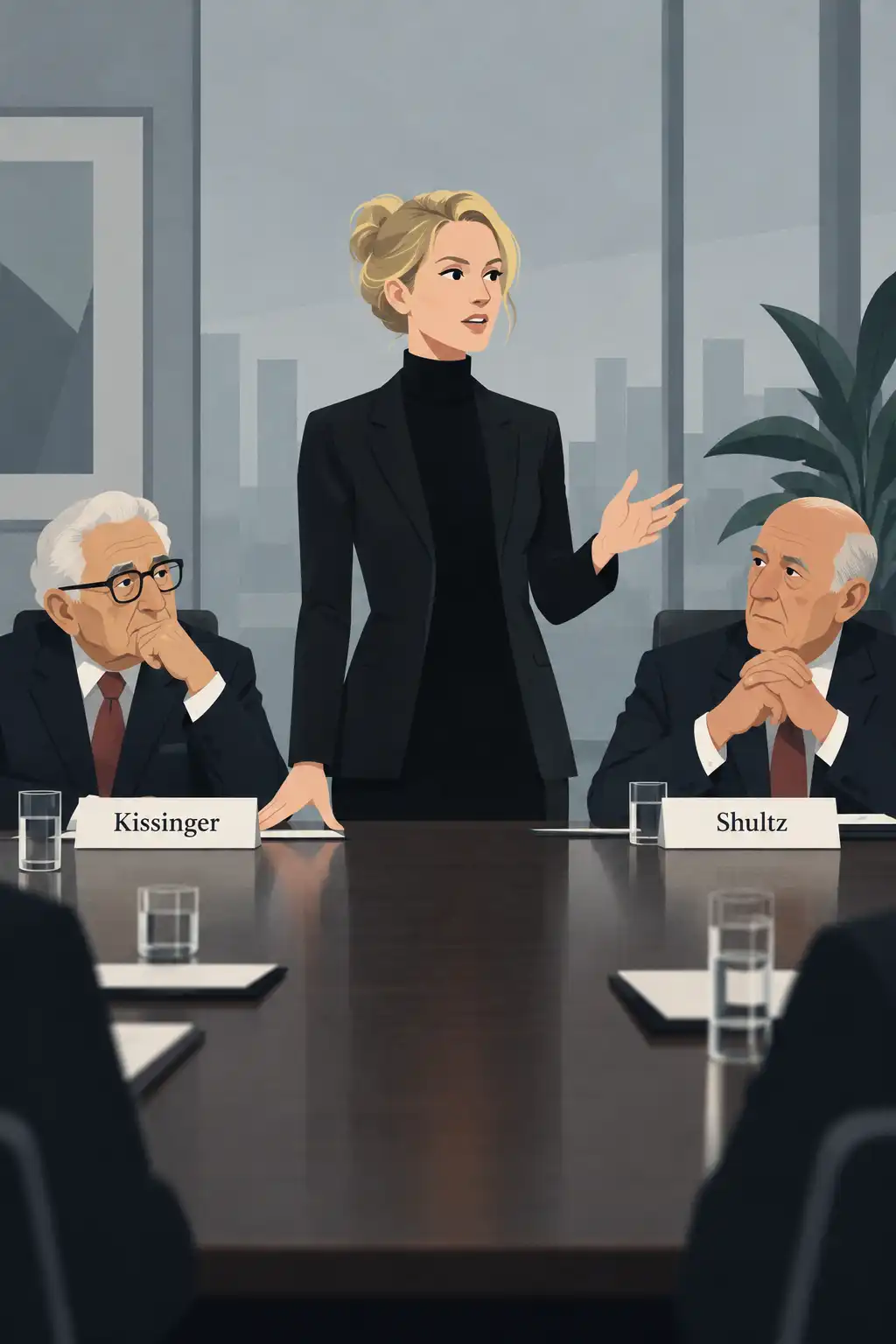
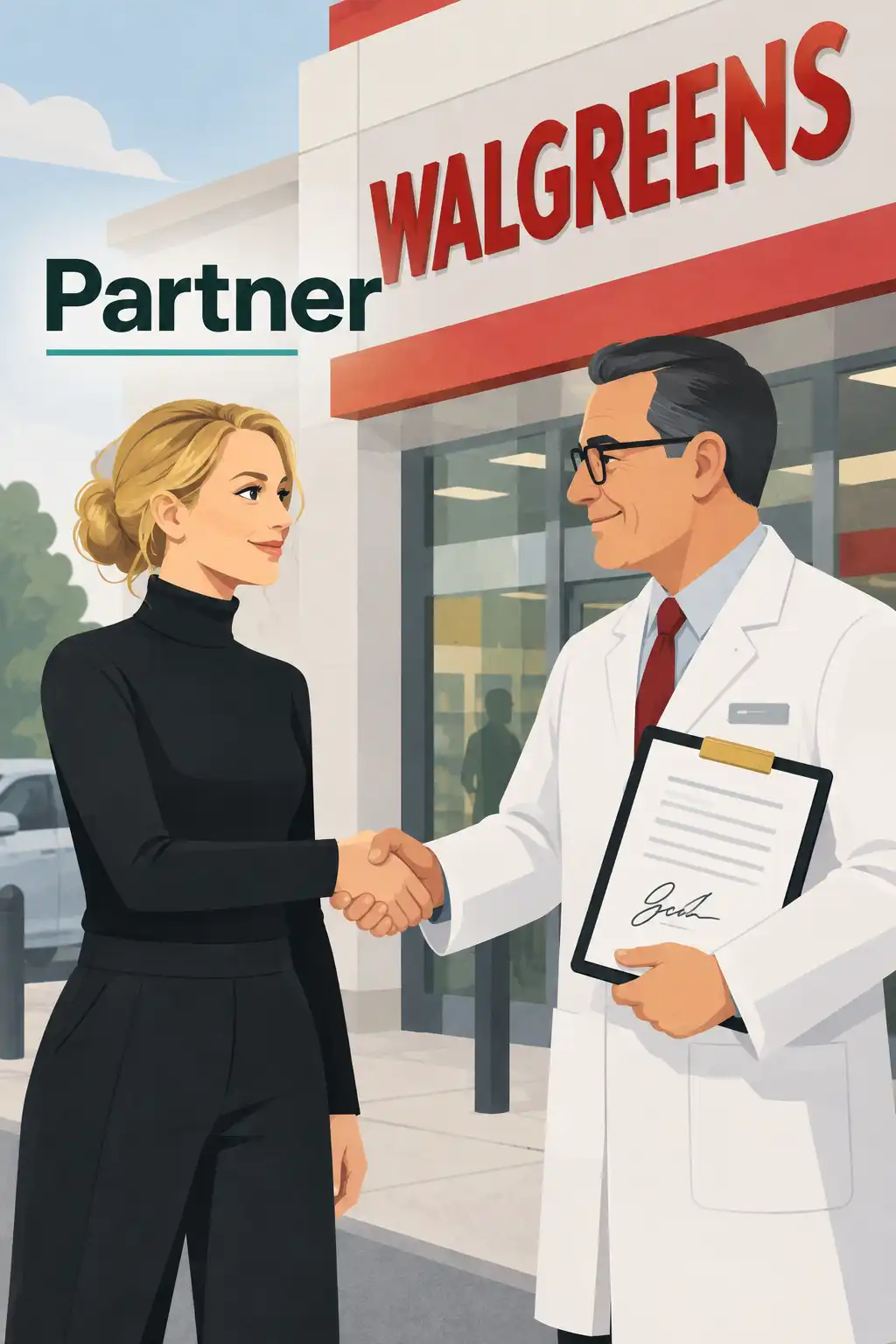
Here's what I keep coming back to. Elizabeth Holmes built Theranos into a company worth nine billion dollars. Henry Kissinger and George Shultz sat on its board. Walgreens signed on as a partner. But the technology at the center of it all didn't work as promised. How did she convince so many people? That's the story in Bad Blood by John Carreyrou.
And Carreyrou's answer isn't one big trick. It's a pattern that repeats for over a decade: a promise made in public, a machine that can't deliver it in private, and a culture built to stop anyone from saying so out loud.
1. A promise the science couldn't keep
Start with the promise, then. What was Theranos actually claiming?
That a small device could run hundreds of blood tests using just a few drops from a finger prick, and send results wirelessly in real time. But as Carreyrou tells it, Holmes insisted on using tiny blood samples before her engineers knew how to make that work. There simply wasn't enough blood for many of the tests. Diluting samples created new problems with accuracy. And the early cartridges leaked, cross-contaminated samples, and cost over two hundred dollars each.
So the engineering was being driven by the pitch, not the other way around.
That connects to another book, The Lean Startup by Eric Ries. His central idea is that startups should test their assumptions early and let the evidence guide what they build. Theranos did almost the opposite. Holmes committed to a vision before knowing whether the science could support it.
So instead of changing the promise when the experiments failed, they kept trying to make the experiments fit the promise.
Exactly. And when that system failed, a separate team built something more practical: a miniaturized robot based on a cheap glue-dispensing arm. Holmes named it the Edison. It was more reliable, but it could only perform a limited range of tests. Theranos was promising an entire laboratory in a little box, but its actual machine could do only a fraction of that.
And the book opens with a demo, right? The one in Switzerland?
Yes, 2006. Holmes reportedly wowed the pharmaceutical giant Novartis with a live demonstration. But Theranos's chief financial officer, Henry Mosley, later learned that one of the devices had malfunctioned. To hide the problem, the team in California had sent over a fake result. When Mosley confronted Holmes about misleading investors, she fired him on the spot.
So the company's own finance chief found out they were faking results, confronted her, and got fired?
Exactly. And that's what makes this episode so revealing. The people at the top knew the technology couldn't consistently do what they were promising. Yet Theranos managed to keep that gap hidden for years.
Watch it come to life
Watch Bad Blood instead
Explore this summary and the Braintoon library.
2. Secrecy that kept everyone guessing
How does it stay hidden with hundreds of employees walking around?
By making sure nobody could see the whole picture. Holmes kept the engineering and chemistry teams siloed, so an engineer like Ed Ku couldn't always tell whether a failure came from the hardware or the chemistry. IT staff monitored employee emails. Departing employees sometimes had damaging files compiled on them. And when Sunny Balwani came in as her second in command, he checked badge records and fired people in front of colleagues.
I'd always assumed startups are secretive because of competitors. Is this different?
It used the same justification, protecting trade secrets, but Carreyrou shows how that secrecy also prevented people from checking whether the technology worked. Take Kevin Hunter, the lab consultant Walgreens hired in 2010 to evaluate the deal. He asked to see the lab. Refused. He asked for a simple side-by-side test, Theranos against a standard lab. Refused. Eventually Holmes and Balwani had him removed from meetings entirely.
So the tell isn't that a company has secrets. It's who gets blocked from checking.
Right. There's a difference between protecting your technology from competitors and preventing the people who depend on it from finding out whether it works. At Theranos, even the experts hired to verify the claims couldn't get a straight answer.
3. Why powerful people kept believing
I can understand fooling someone with a staged demo. What I don't understand is Walgreens, Safeway, Rupert Murdoch. These are people who can afford due diligence.
Carreyrou's explanation is borrowed credibility. Theranos had a board full of famous names: George Shultz, Henry Kissinger, General Mattis. Investors assumed somebody else must have checked the technology. Walgreens was afraid CVS would get the deal first, so it brushed aside its own consultant's warnings. Safeway spent hundreds of millions remodeling stores for testing centers that never opened. And Rupert Murdoch invested a hundred twenty-five million dollars after meeting Holmes and hearing glowing references.
The fear of missing out replaced the checking.
In the book Influence, Robert Cialdini describes social proof: the less sure people are, the more they look to what others are doing to decide what's correct. One way to read the Theranos board is that it served as exactly that kind of crowd.
So the famous names stood in for verification, and nobody checked whether they had verified anything.
And even when investors did ask for evidence, they couldn't necessarily trust what they received. One hedge fund that invested ninety-six million dollars was shown accuracy data from conventional lab machines, not Theranos's own devices. It also received revenue projections that were five to twelve times higher than the company's internal forecasts.
Is there a point where Carreyrou blames the culture rather than the people?
He draws an important distinction. Silicon Valley celebrates the idea of fake it till you make it. Holmes embraced that culture, dressing like Steve Jobs, hiring Apple's ad agency, and selling a vision of revolutionary technology. But Theranos wasn't building another software app. It was testing people's blood. If an app doesn't work, users get frustrated. If a blood test doesn't work, a patient might receive the wrong diagnosis.
4. When the fake started reaching patients
At some point this stops being investor theater and becomes real people's blood.
September 2013. Theranos launched its testing service in Walgreens stores, even though its new machine, the miniLab, still wasn't ready. So Holmes and Balwani used the older Edison machines for the handful of tests they could perform. For everything else, they secretly relied on commercial Siemens analyzers, modifying them to work with diluted blood from finger pricks. Customers believed they were getting revolutionary Theranos technology, but much of the testing was happening on ordinary lab equipment.
Why is diluting a problem? I'd have thought labs do that all the time.
They do, but only when the tests are designed and validated for it. These Siemens machines were built to work with larger blood samples, usually drawn from a vein. Theranos was diluting tiny finger-prick samples to make them usable, potentially magnifying errors and making results unreliable. One chemist, Anjali Laghari, had years of data showing the Edison's error rates were unacceptable. She warned management, was ignored, and resigned. At the next all-hands meeting, Holmes declared that she was building a religion, and anyone who wasn't fully devoted should leave.
That word choice is doing a lot of work.
It is. And patients were already paying the price. Blood samples overheated during shipping. Some patients received potassium readings so dangerously high they would have suggested a medical emergency. Carreyrou had his own blood tested at Theranos and a conventional lab and found serious discrepancies. One doctor received a cortisol result from Theranos that suggested a life-threatening problem, while another lab found it completely normal. Theranos eventually had to void nearly a million test results.
Nearly a million results. So how could anyone trust the tests they'd already been given?
5. What speaking up cost the insiders
This is where I'd want to say, just blow the whistle. And I suspect the book shows why that's naive.
It does, through Tyler Shultz. He was George Shultz's grandson, fresh out of Stanford, working on a team that checked whether the Edison machines produced accurate results. He watched failed tests get thrown out and repeated until the numbers looked better. On one syphilis test, the machines detected only about sixty-five to eighty percent of positive cases, but the official report claimed ninety-five percent. He also discovered Theranos was using commercial lab machines for federally required proficiency testing, essentially hiding how poorly its own devices performed.
And he went to his grandfather, who was on the board.
He did, and he emailed Holmes a detailed list of concerns. But the response came from Balwani, attacking him and demanding an apology. Even his grandfather sided with the company. Later, after Tyler spoke to Carreyrou, two lawyers confronted him at his grandfather's house with legal papers. He was followed by private investigators, and his family faced the threat of financial ruin from legal costs. Another employee, Erika Cheung, received a threatening legal letter in a parking lot. Theranos was making it very expensive to tell the truth.
So how did they manage to push back against a company with that much money and legal firepower?
They found ways to get the evidence outside the company. Tyler preserved emails and documents that supported his concerns. Both sought independent legal advice rather than relying on Theranos's lawyers. And Erika filed a detailed complaint with federal regulators about the laboratory's practices. Her warnings helped expose problems that regulators could investigate independently. They weren't just making accusations. They were giving outsiders something concrete to verify.
6. How the story finally broke
Carreyrou is a character in his own book by the end. How much pressure did the paper get?
A lot. Theranos's lawyer, David Boies, showed up at the Wall Street Journal with tape recorders and later sent a twenty-three-page legal threat. Holmes personally appealed to Rupert Murdoch, who owned the Journal's parent company, to stop the investigation. He refused to interfere. Carreyrou's first exposé appeared in October 2015, revealing that Theranos relied heavily on conventional laboratory equipment rather than its supposedly revolutionary machines. Regulators were also uncovering serious problems. Subsequent investigations exposed unreliable testing, quality-control failures, and misleading claims about what the technology could do.
And Holmes's response?
She publicly denied the allegations. Balwani even led employees in a profane chant against Carreyrou. But the evidence kept mounting. Regulators shut down the labs, Walgreens ended its partnership and sued, and in March 2018, the SEC charged Theranos, Holmes, and Balwani with fraud. Holmes settled the civil charges and gave up control of the company. That's where the book's main account ends.
Does Carreyrou buy the idea that Balwani was the real driver and she was swept along?
No. Holmes had deliberately structured the company so she held nearly all the voting power. She was also the one selling the vision to investors, partners, and powerful board members. Carreyrou stops short of diagnosing her as a sociopath, but portrays someone whose ambition became more important than the truth, even when patients were at risk. Holmes declined to cooperate with the book, so her perspective comes largely through documents and other people's accounts.
Closing
If I take one practical thing from this, it's a question to ask in any pitch: what would I need to see to verify this, and am I being allowed to see it?
That's the central lesson. And there's another warning sign: watch what happens to the people who ask hard questions. At Theranos, scientists and engineers repeatedly raised concerns, only to be ignored, pushed out, or threatened. Meanwhile, the powerful outsiders who praised the company often hadn't seen the evidence themselves.
Credibility by association isn't evidence.
No. A board full of famous names tells you who was charmed. Only the data tells you whether the machine works.
Watch it come to life
Watch the animated summary
Explore this summary and the Braintoon library.