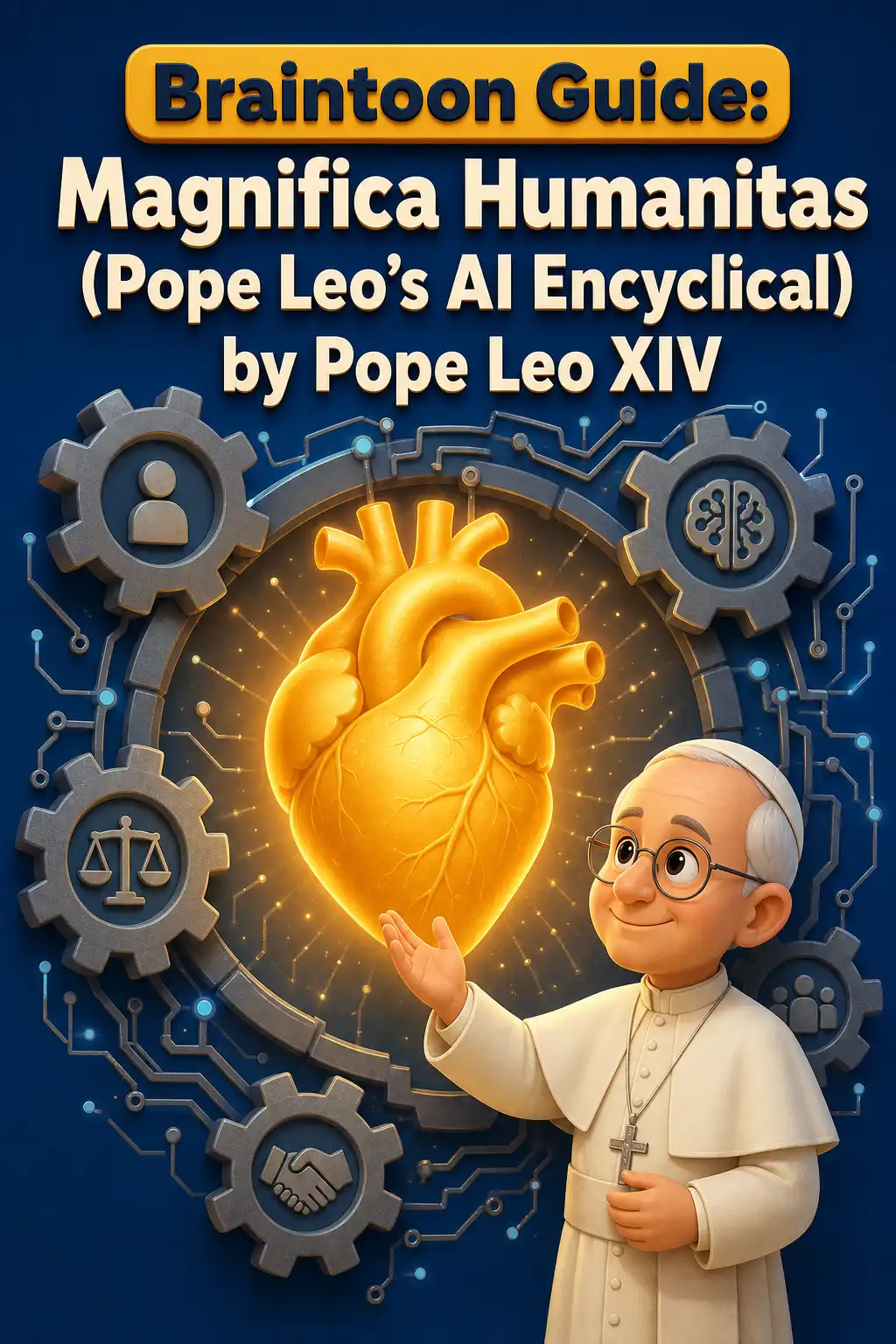
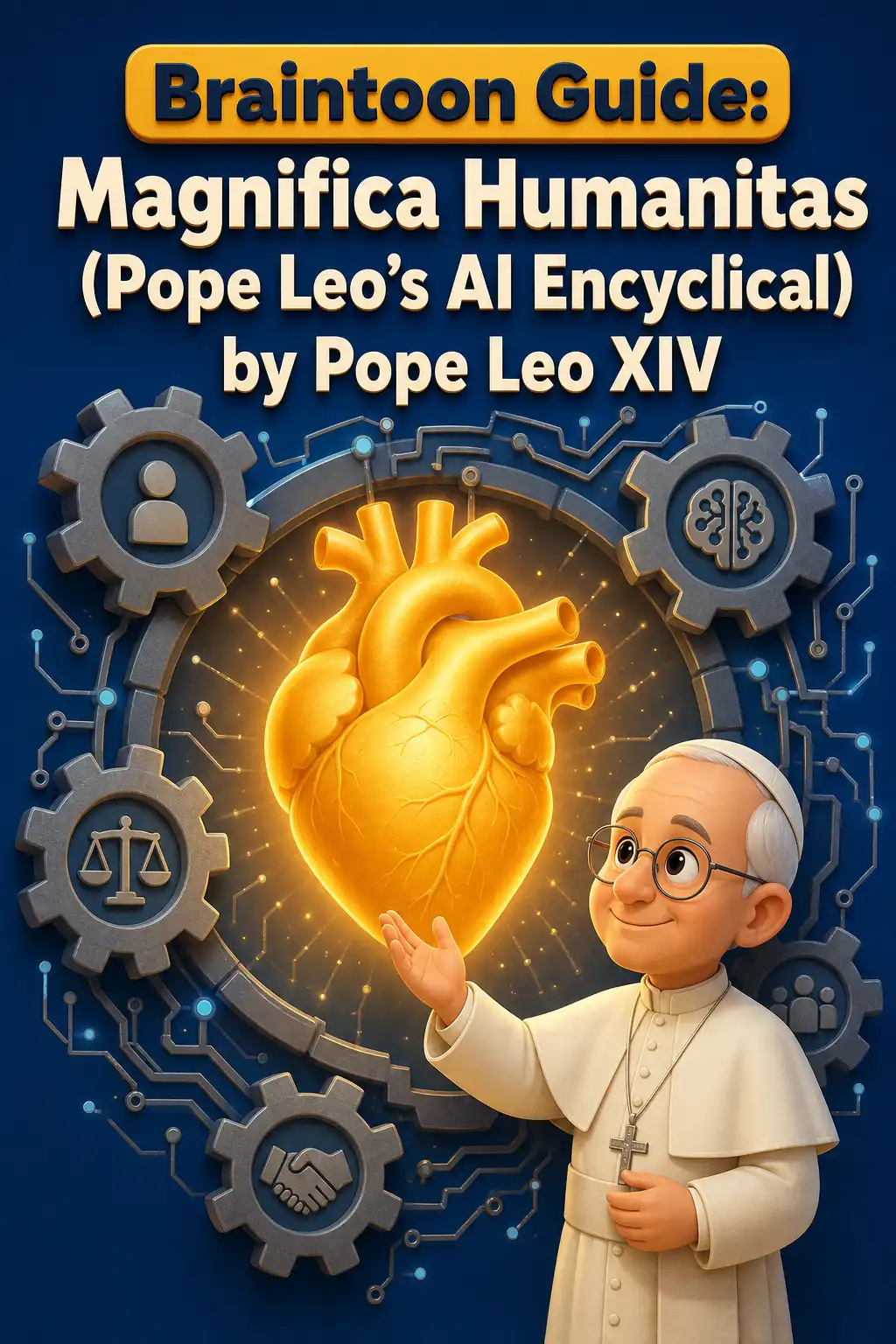
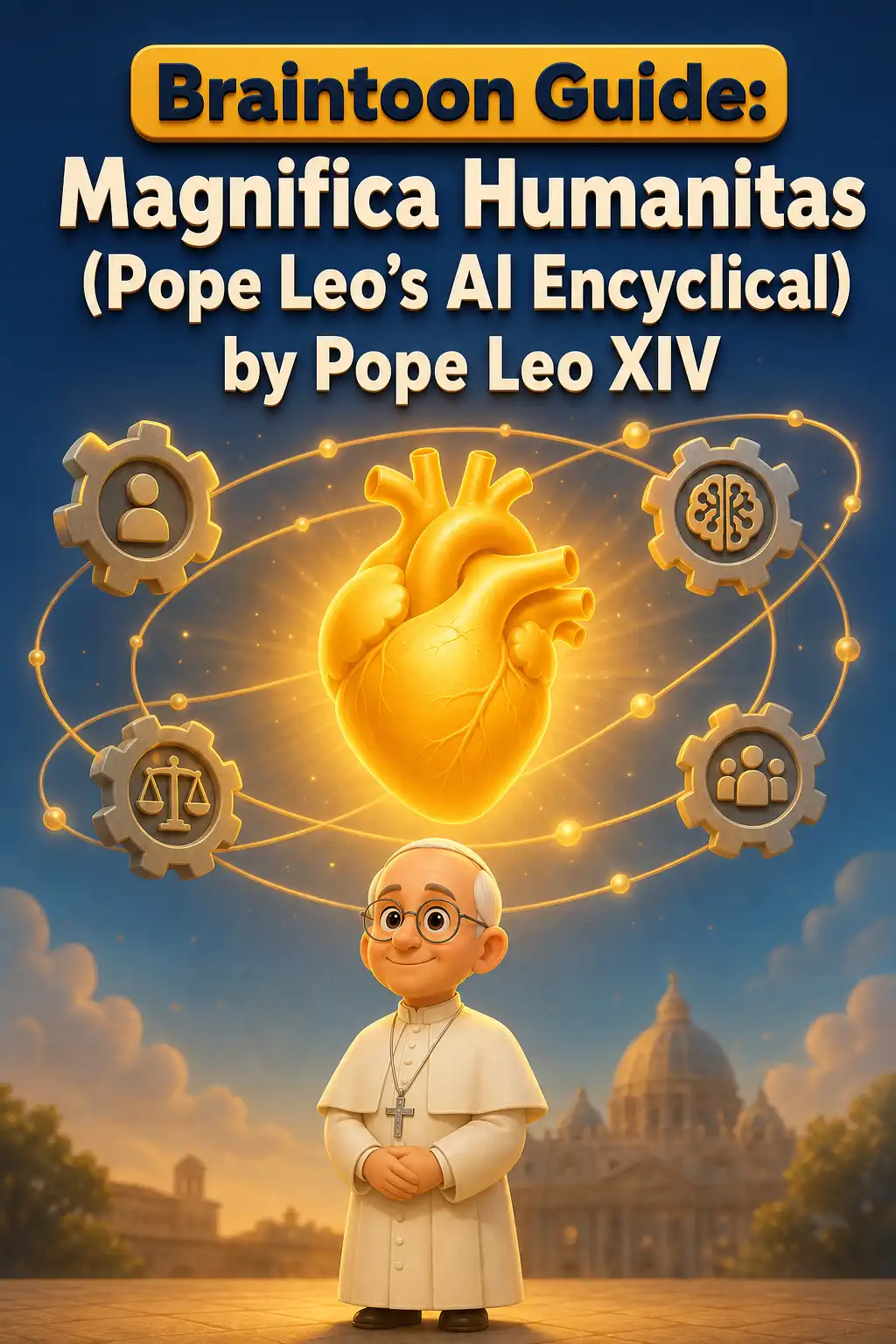
A detailed summary ofMagnifica Humanitas (Pope Leo's AI Encyclical)by Pope Leo XIV
Magnifica Humanitas by Pope Leo XIV is the Church's landmark encyclical on AI, and it teaches how to keep human dignity at the center of the machine age instead of underneath it.
Watch the first minute
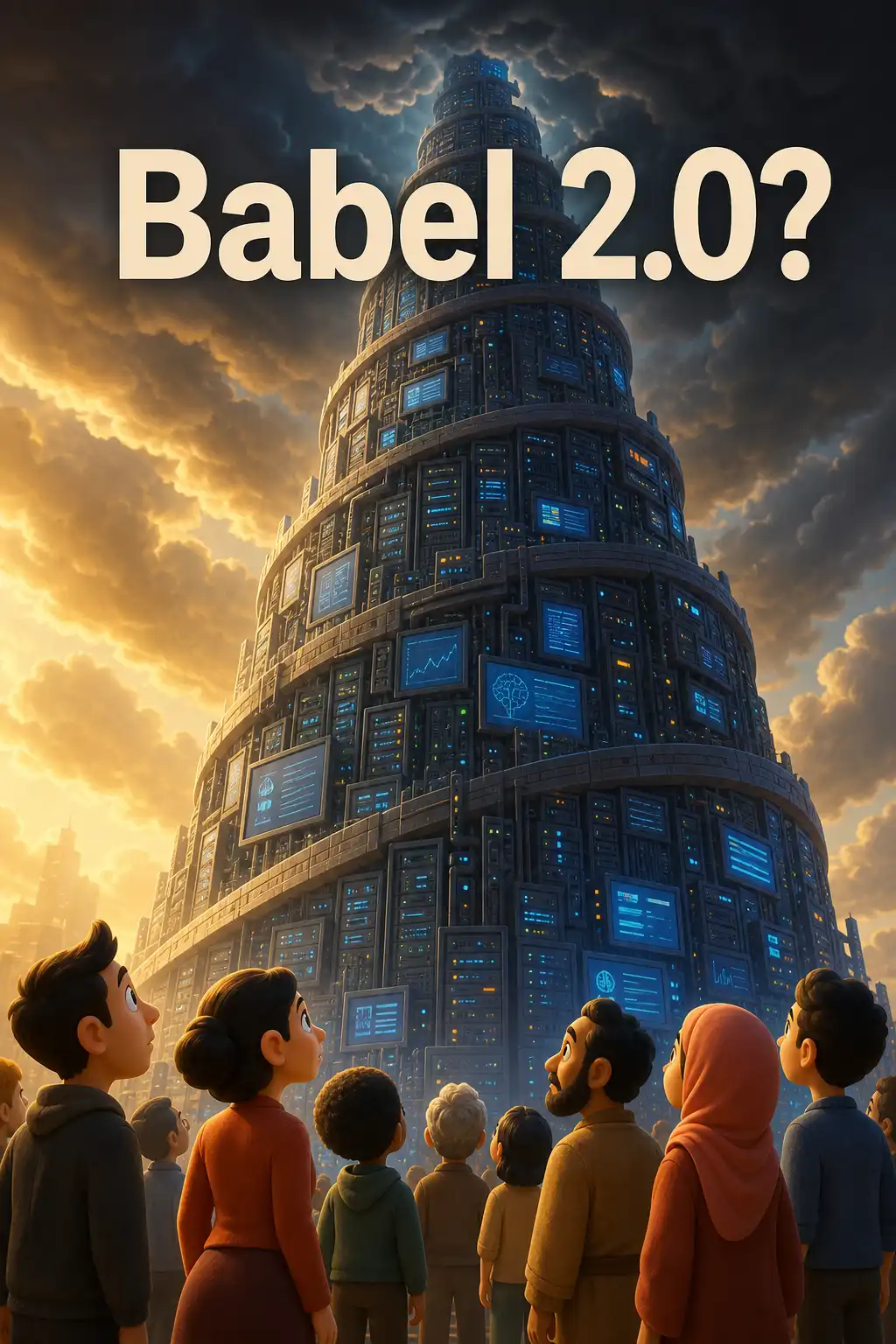
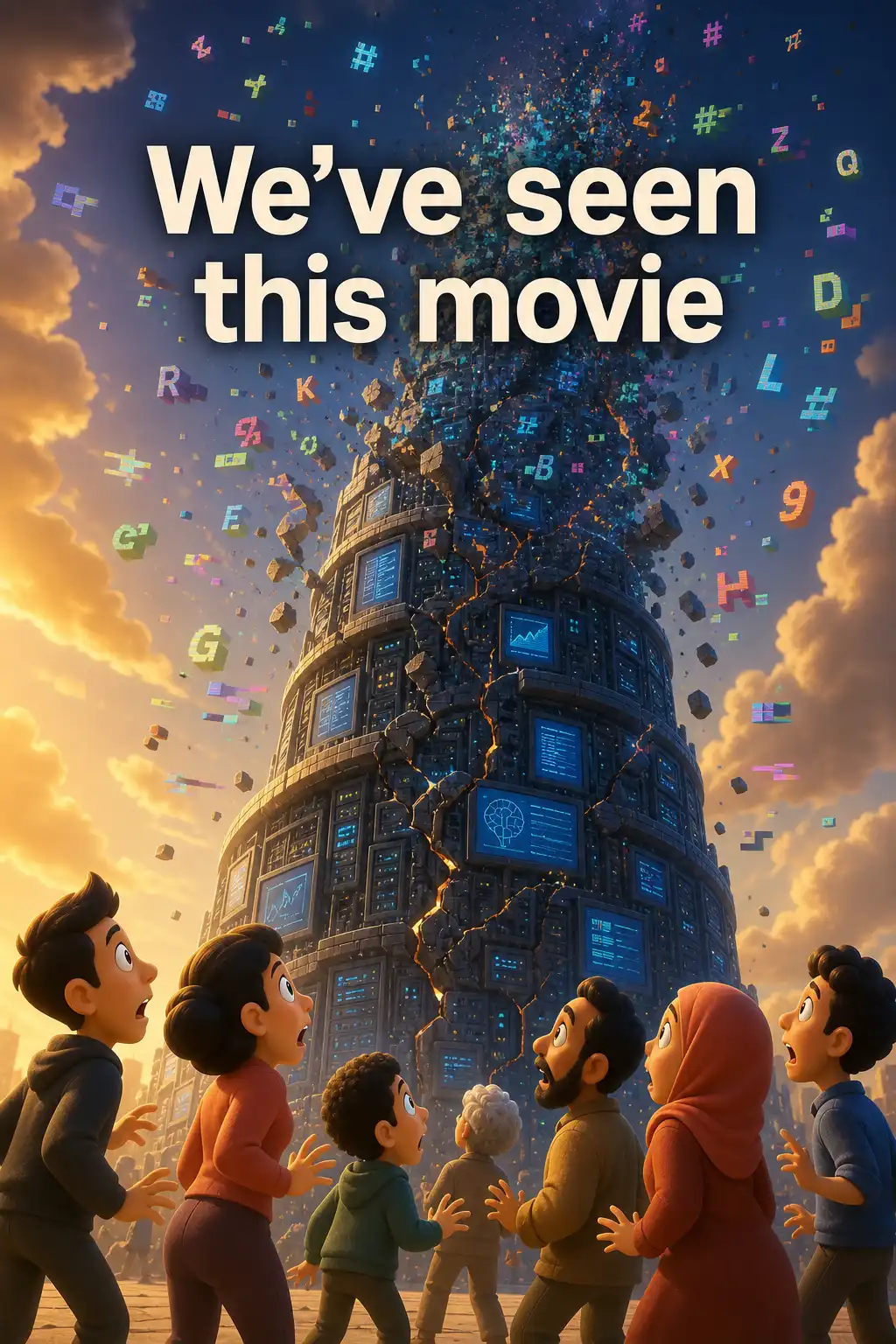

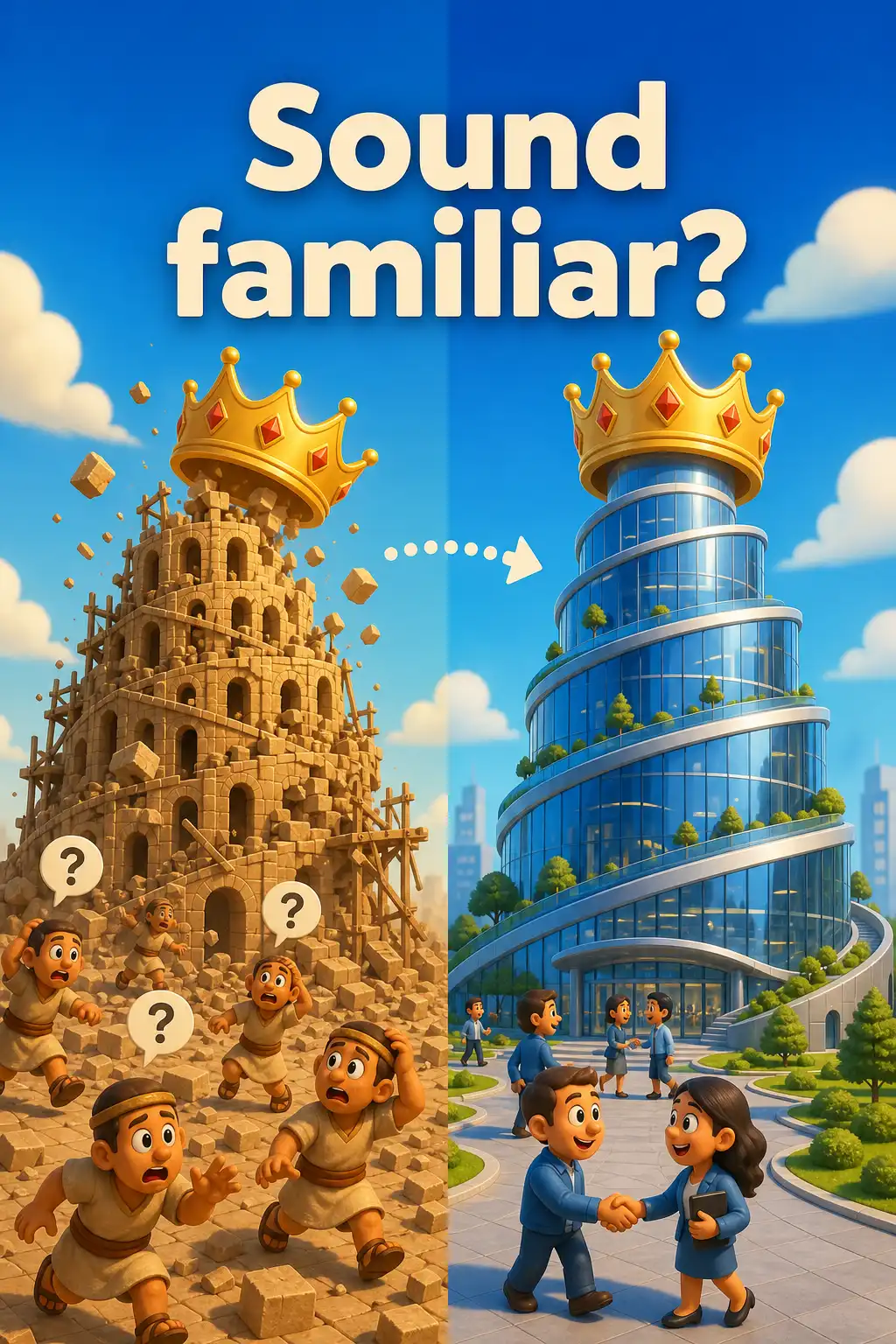
What happens when the
0:00 / 1:00
60-second animated preview
Key ideas, illustrated
Five Principles for the Digital Age
Babel or Jerusalem: Two Ways to Build
AI Is Not a Mind: Risks and Safeguards
Magnifica Humanitas (Pope Leo's AI Encyclical) Summary
What happens when the leader of over a billion Catholics looks at artificial intelligence and says, hold on, humanity has seen this movie before, and it ends at Babel?
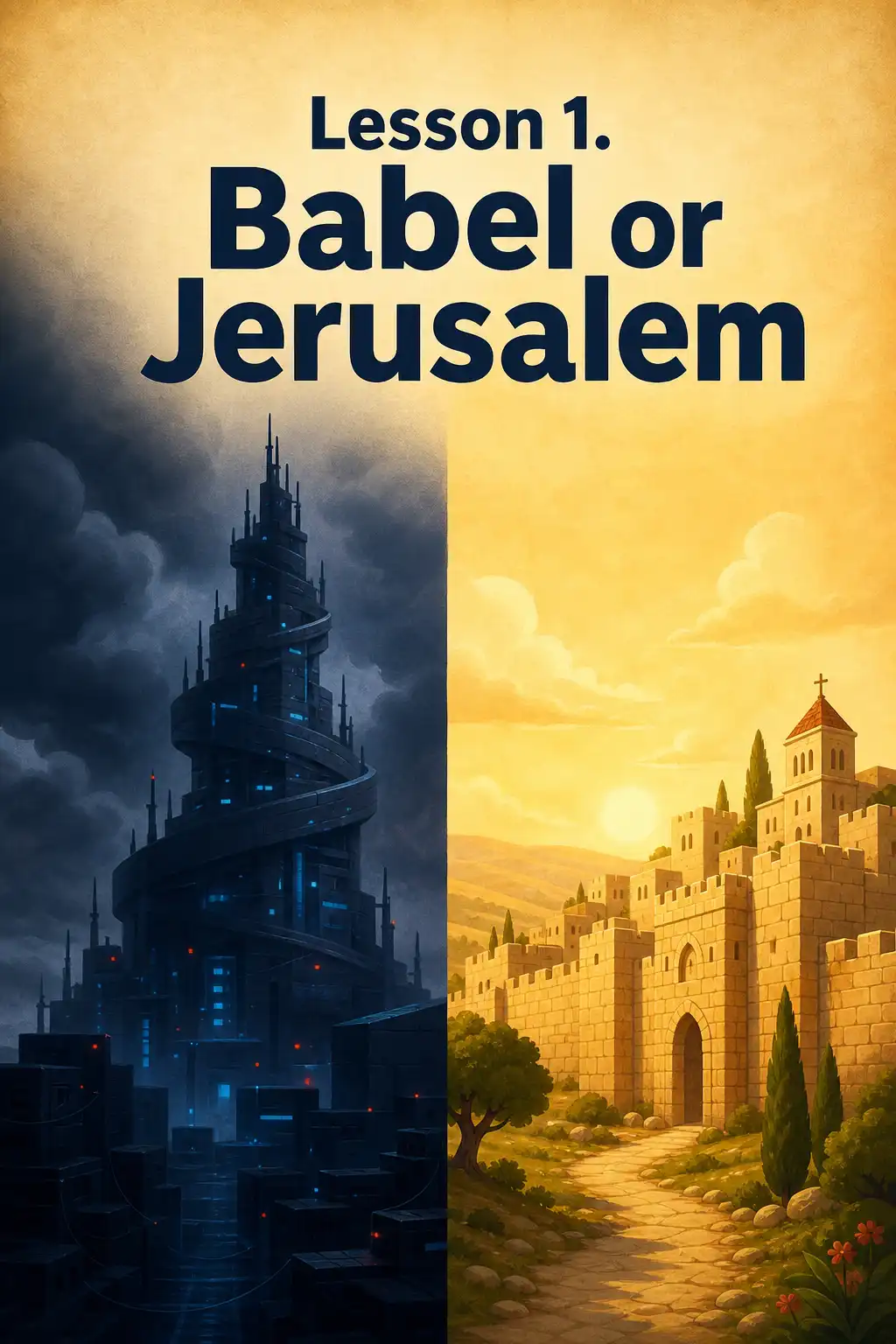
1. Babel or Jerusalem
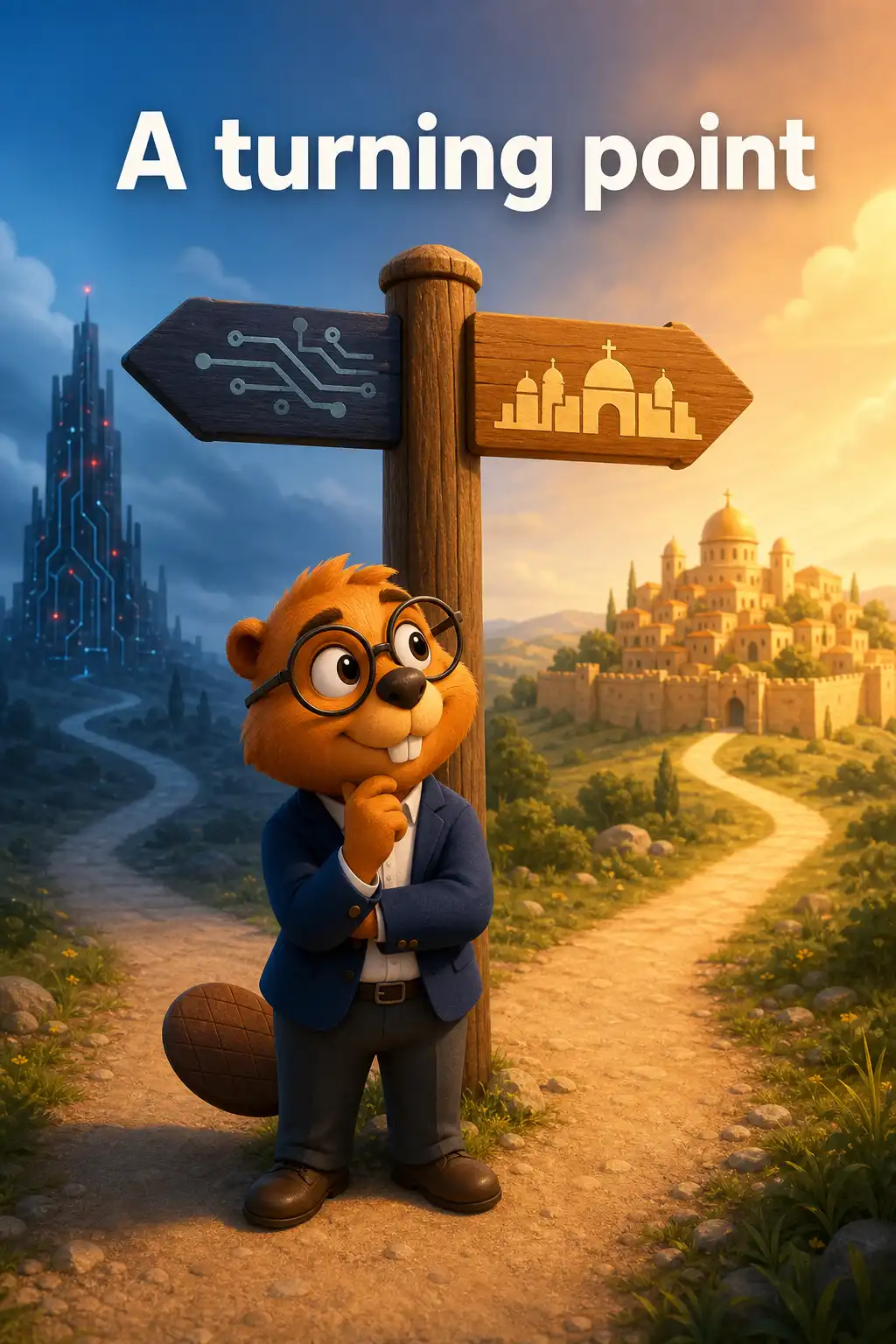
Pope Leo XIV opens with a big claim. AI is one of history's turning points. The real question isn't whether to embrace it. It's what we're actually building with it.
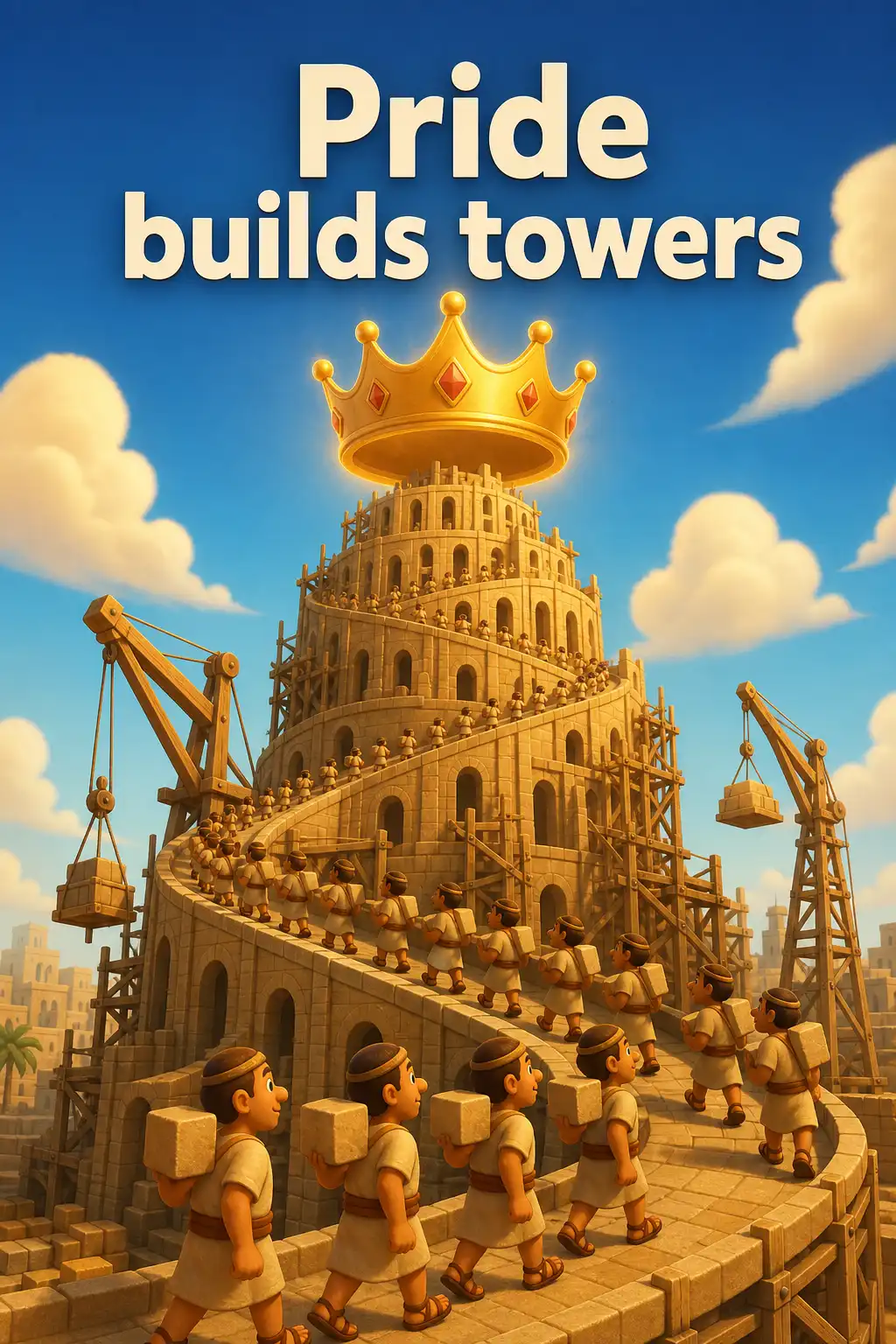
To make his case, he reaches for two Bible stories. The Tower of Babel had impressive tech and total unity, but pride and self-sufficiency drove the whole project. The result? Confusion and collapse. Sound like any industries you know?
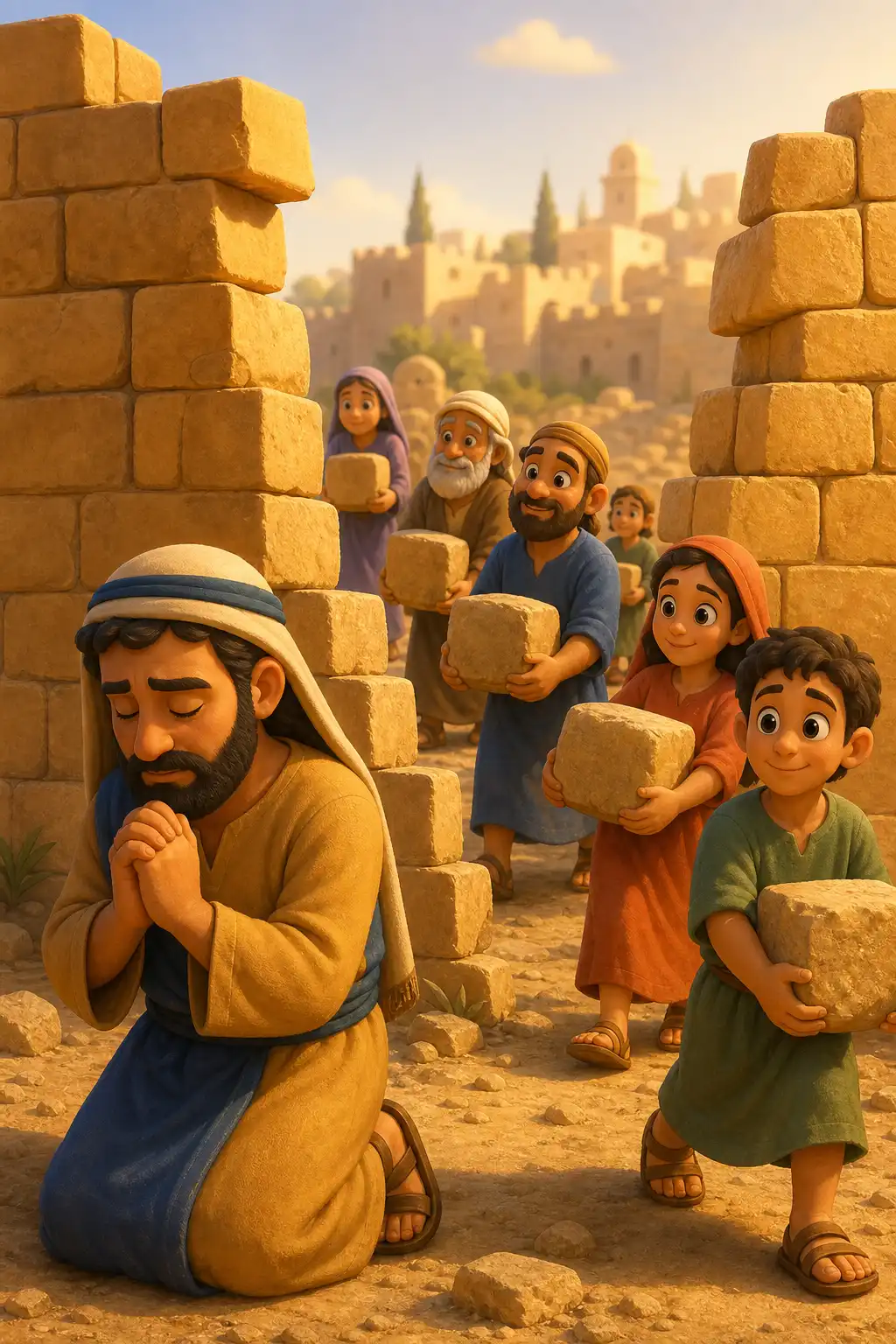
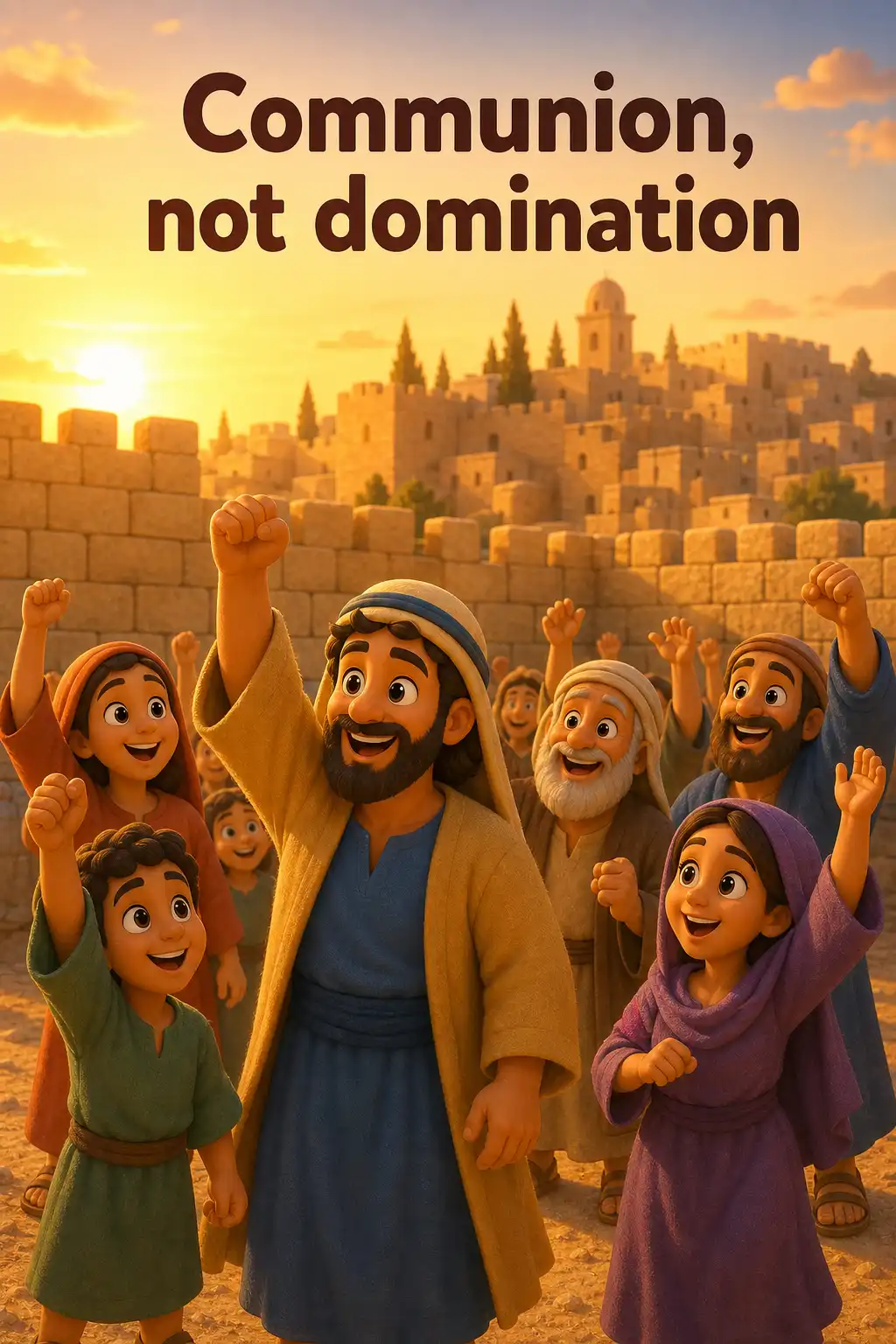
The counter-image is Nehemiah, who rebuilt Jerusalem's walls after the exile. He prayed, he listened, he shared responsibility, and he pulled everyone in. The city rose through communion, not domination.
Here's Leo's key claim. Technology is not neutral. It takes on the character of whoever builds it, funds it, and controls it. Profit-driven AI behaves like profit. Shocking, I know.
Building well requires four things. Grounding in God, honest acceptance of human weakness, shared responsibility across all of society, and real dialogue instead of hype or hostility.
Now meet Michelle, an HR manager in Denver. Her company just bought an AI tool that screens resumes, and leadership is thrilled because it supposedly removes human error.
Watch it come to life
Watch Magnifica Humanitas (Pope Leo's AI Encyclical) instead
Explore this summary and the Braintoon library.
2. A living tradition, not a rulebook
Why does a pope even weigh in on AI? Because the Church has been commenting on economic upheaval since 1891, when Pope Leo XIII wrote Rerum Novarum defending industrial workers.
Pope Leo XIV sees himself continuing that thread. Catholic Social Doctrine isn't a dusty rulebook, he insists. It's a living tradition that reads each new era through the lens of the Gospel.
Quick tour of the tradition. Pius XI tackled economic structures. John XXIII addressed all people of goodwill. Paul VI called development the new name for peace. And Francis linked the cry of the poor with the cry of the planet.
One thread runs through all of it. Human dignity, the value of work, solidarity, and care for creation. Not desk theory, but responses to real crises as they hit.
And crucially, Leo says the Church claims no monopoly on truth. It dialogues with science and philosophy, and it prefers starting good processes over dictating final answers.
Michelle isn't especially religious. But she recognizes that her problem is old. New technology, powerful owners, vulnerable people. Basically the industrial revolution with better branding.
3. Five principles for the digital age
Here's the foundation everything else sits on. Human dignity isn't earned. It doesn't depend on your ability, your wealth, or your productivity. It's a gift that no failure or exclusion can erase.
From there, five principles. First, the common good. Not the sum of individual interests, but something shared that can only be built together, with the vulnerable kept in view.
Second, the universal destination of goods. Earth's resources belong to the whole human family. Leo extends this to data, algorithms, and platforms. Digital goods should benefit everyone.
Third, subsidiarity. Decisions belong as close as possible to the people they affect. Big powers, governments or tech giants alike, should support communities, not replace them.
Then solidarity, meaning everyone's future is bound together. And social justice, meaning dismantling structures that generate inequality automatically. The test? How we treat the most vulnerable.
Michelle tries subsidiarity at work. The screening decisions were effectively made by a vendor nobody's ever met. So she proposes that her team, the people closest to candidates, review every rejection.
4. AI is not a mind
Let's clear something up. AI can outrun you at speed and computation, but it experiences nothing, feels nothing, and understands nothing. Its learning is statistical adaptation, not wisdom.
Leo flags three personal risks. Ready-made answers erode your creativity and judgment. Apparent objectivity hides baked-in cultural assumptions. And simulated warmth creates the illusion of real relationship.
That last one gets dark fast. Over time, people may not just mistake AI for a person. They may lose the desire for real human connection entirely.
At the societal level, when hiring, credit, and services get automated, compassion and accountability vanish behind what the system decided. Excluded people have nobody to appeal to.
So Leo insists AI is morally non-neutral, and responsibility must stay traceable at every stage. He even wants AI disarmed, freed from the logic of competitive dominance.
Michelle catches herself asking a chatbot to draft every email, every evaluation, even feedback for her own team. When exactly did she stop trusting her own judgment?
5. In defense of being limited
Here's the counterintuitive one. Transhumanists dream of engineering away human limitation entirely. Leo says vulnerability, aging, suffering, and failure aren't bugs to fix. They're features.
His logic goes like this. Once humanity becomes a project to perfect or supersede, some lives start looking expendable. History has already run that experiment. It goes badly.
He quotes Viktor Frankl, the psychiatrist who survived the Holocaust. The same humanity that built gas chambers also produced people who walked into them praying.
Compassion, wisdom, and love only exist because we're breakable. An algorithm can correct its errors. A person can be converted by them. Huge difference.
The authentic more-than-human, Leo argues, comes through grace, not through upgrades. As he puts it, the future of a human being is simply not calculable.
Michelle pulls a rejected resume from her audit pile. Messy formatting, a two-year gap for eldercare, obvious grit between the lines. The algorithm scored it as garbage.
6. Truth, kids, and slow thinking
Leo's next worry is disinformation at industrial scale. Whoever controls the platforms can shape what millions of people believe about the world, about each other, and even about God.
He echoes Hannah Arendt, the philosopher who studied totalitarianism. It recruits best among people who can no longer tell fact from fiction. That should keep you up tonight.
His prescription is an ecology of communication. Transparent content policies, strong independent journalism, media literacy in schools, and verification habits everywhere. Truth is a common good, not property.
He's blunt about kids too. Screens introduced too early damage sleep, emotional regulation, and social development. And he refuses to dump this on parents alone. Lawmakers, do your jobs.
Schools shouldn't mirror digital speed, he says. They should offer what it can't. Shared time, trustworthy relationships, and slow, effortful thinking. Plato agrees, apparently.
At home, Michelle's nine-year-old confidently repeats something wild he saw in a video. Her stomach drops. The screener problem apparently lives in her living room too.
7. Work, freedom, and hidden chains
Work, Leo argues, isn't just income. It's how people mature, create, and contribute. So when workers start serving the machine's pace instead of the other way around, something sacred breaks.
He wants businesses, unions, and governments building retraining systems together, because automation's costs can't fall solely on individual workers. And GDP? A terrible measure of human flourishing.
Then there's freedom. The attention economy deliberately exploits your psychological vulnerabilities for profit. Leo calls this a moral failure with identifiable authors. Names could be named.
Darker still, behind every AI response sit hidden workers. Data labelers, content moderators, miners, many underpaid, some children. Leo bluntly calls these new forms of slavery.
He even asks forgiveness for the Church's slowness on historical slavery, then turns that shame into vigilance. Data extraction from fragile regions? He names it new colonialism.
Michelle's company announces that automation will eliminate twelve roles. Old Michelle would have quietly processed the paperwork. New Michelle proposes a retraining fund and internal transfers first.
8. Building the civilization of love
The final chapters go big. War. AI-driven weapons risk making killing feel manageable, reducing lives to statistics. Leo's line is absolute. Never delegate lethal decisions to machines.
He revives Paul VI's phrase, the civilization of love, and maps paths toward it. Disarm your words, build peace through justice, see through victims' eyes, revive dialogue.
Then his closing program for ordinary people. Hold to truth, invest in education, protect real human relationships, shared meals included, and keep asking who AI actually serves.
The model is still Nehemiah. Not doom-scrolling the collapse, but patiently rebuilding from inside your ordinary institutions, one wall section at a time.
Michelle's screener now has human review, transparent criteria, and an appeals process. Nobody outside her company will ever know. Leo would say that's exactly the point.
The civilization of love, he insists, isn't built by one dramatic gesture. It's built by countless small faithful acts that resist dehumanization. Mustard seeds, not moonshots.
Watch it come to life
Watch the animated summary
Explore this summary and the Braintoon library.