A detailed summary ofThe Five Dysfunctions of a Teamby Patrick Lencioni
The Five Dysfunctions of a Team by Patrick Lencioni reveals the five hidden reasons teams fall apart, and shows you how to build trust, healthy conflict, and real results.






Have you ever been
0:00 / 1:00
60-second animated preview
Summary Visuals
The Team Repair Playbook
Broken Team vs. Cohesive Team
The Five Dysfunctions of a Team Summary
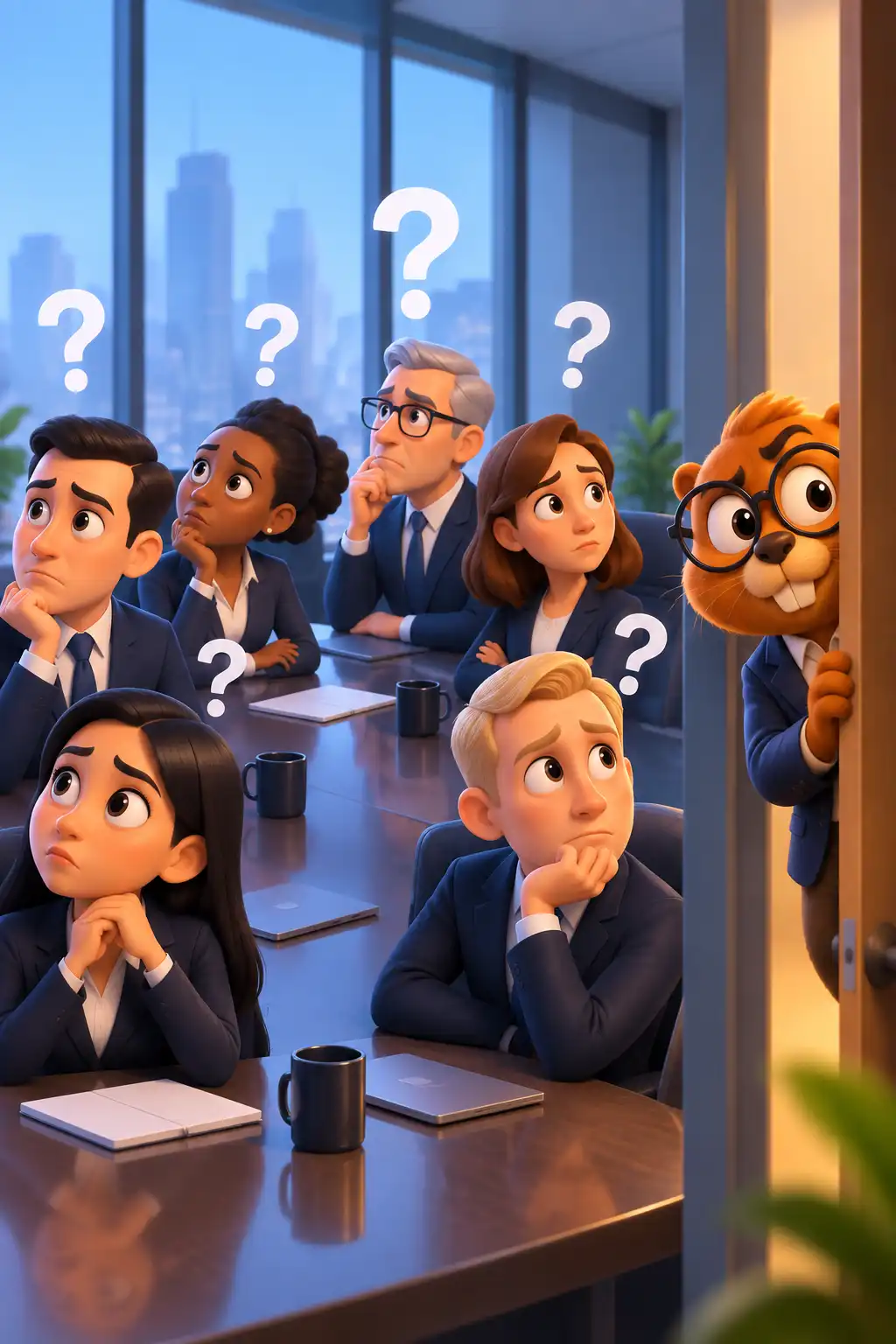
Have you ever been on a team full of smart, talented people that somehow still lost to a scrappier competitor? Ever wonder what is actually going wrong in that room?
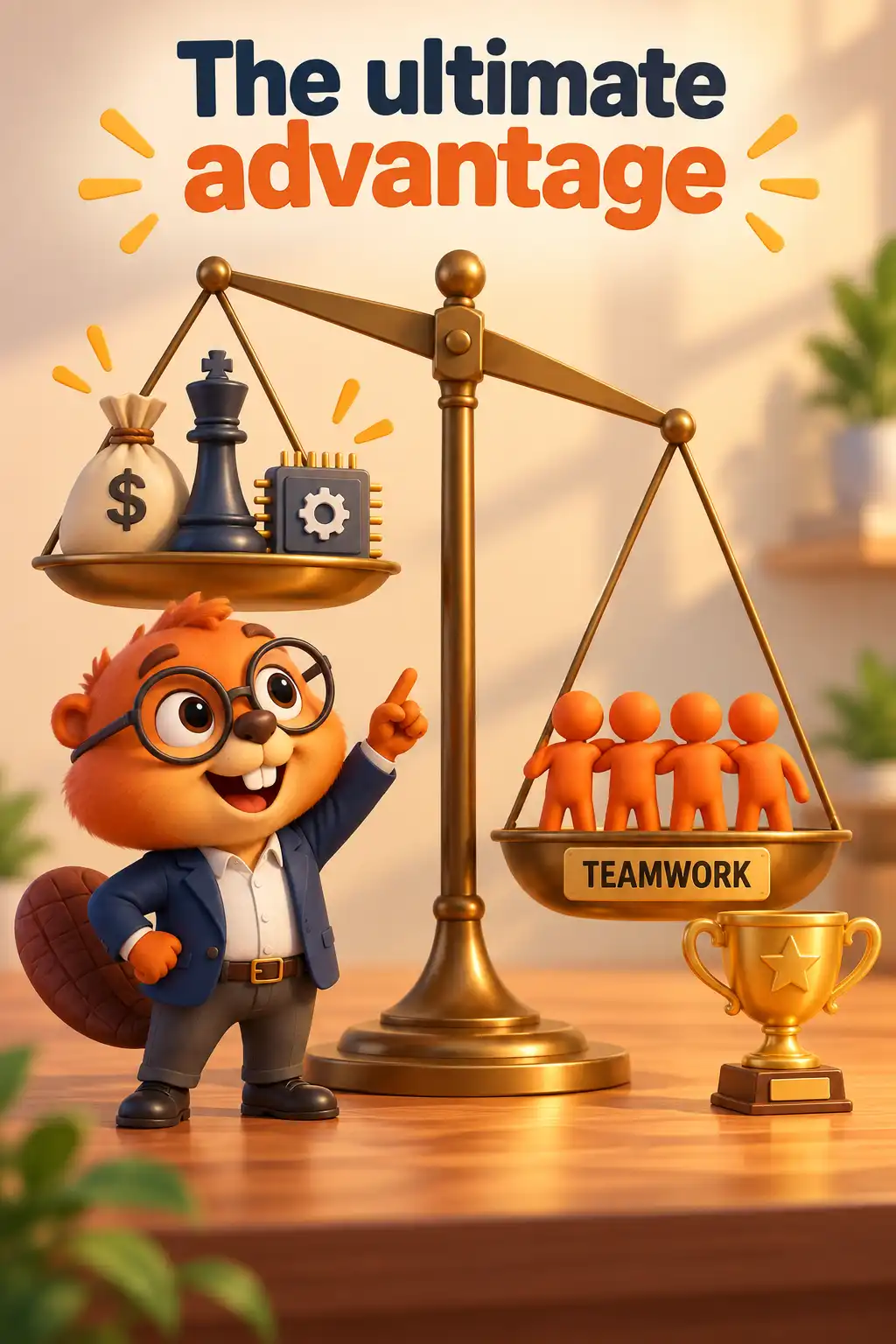
1. Teamwork is your real competitive advantage
Patrick Lencioni opens with a bold claim. Teamwork, not finance, strategy, or technology, is the ultimate competitive advantage. Get everyone in your organization truly aligned, and you will beat almost any competitor out there.
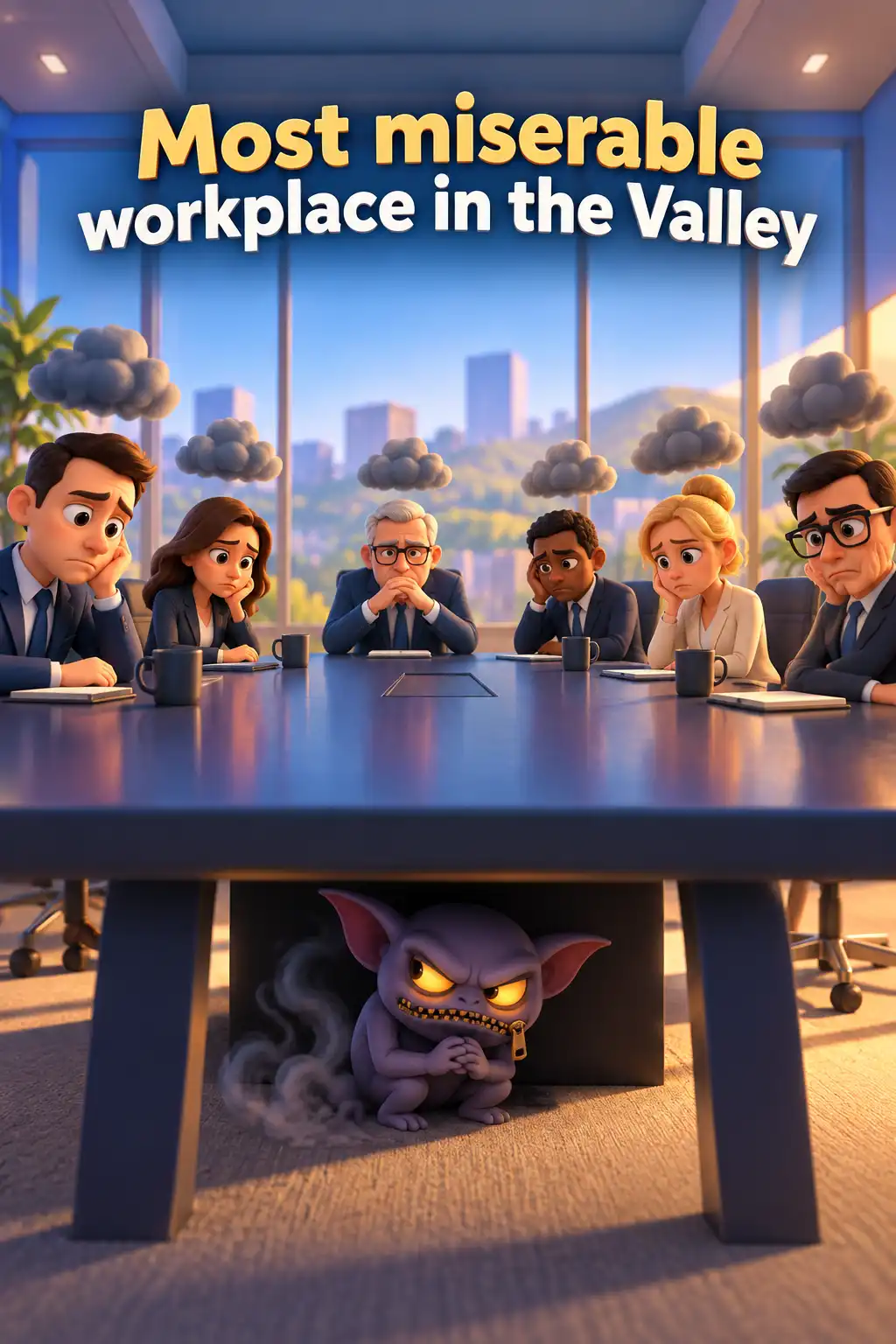
He teaches this through a story. DecisionTech, a fictional Silicon Valley startup, had elite executives, top investors, and great technology. Two years in, it had somehow become the Valley's most miserable, political workplace.
The board hires Kathryn Petersen, a fifty-seven-year-old former car manufacturing executive with zero tech experience. Why her? Because she has one rare superpower. She knows how to build teams.
Then comes Lencioni's uncomfortable truth. Teams are made of imperfect humans, so dysfunction is basically inevitable. The fix is not complex theory. It is simple behaviors practiced consistently, which is exactly why it is so rare.
Now meet Kevin, a newly promoted project manager at a construction firm in Charlotte. On paper his crew leads are excellent. In reality? Missed deadlines and silent, awkward meetings.
Kevin's meetings end in polite nods, and then everyone complains in the parking lot afterward. Two of his supervisors have not spoken directly in months. We will follow Kevin through every lesson in this video.
Next step
Watch The Five Dysfunctions of a Team instead
Explore this summary and the Braintoon library.
iOS + Android app20,000+ learnersFree daily summary
2. Trust means daring to look weak
Dysfunction one, the foundation of the whole model, is the absence of trust. Lencioni does not mean trusting colleagues to deliver good work. He means being comfortable being vulnerable with one another, admitting mistakes and needs for help without fear.
At DecisionTech, nobody argued in meetings. Kathryn saw that silence as a symptom, not a sign of harmony. When people do not trust each other, they hide their real opinions and protect themselves instead.
Her fix started stupidly simple. A personal histories exercise where everyone shared their hometown, childhood challenges, and first job. Forty-five minutes revealed more than years of working together had.
Suddenly Carlos was one of nine kids, and grumpy engineer Martin grew up in India. Then came a vulnerability round. Kathryn went first, admitting she is a terrible public spokesperson.
Kevin tries this over lunch with his crew leads. His toughest foreman, it turns out, worked night shifts through school to support his mom. Suddenly people are humans, not just job titles.
Then Kevin goes first on vulnerability himself. He admits he is drowning in the new scheduling software and needs help. Awkward silence. Then his site supervisor quietly admits he is behind too.
3. A team that never argues is broken
Dysfunction two grows straight out of distrust. It is fear of conflict. And here is the counterintuitive part. A team that never argues is not healthy. It is terrified, or checked out.
Lencioni says tension never actually disappears. It just goes underground, resurfacing as gossip, sarcasm, and backstabbing. DecisionTech had zero open debate and world-class hallway politics.
The goal is passionate debate about ideas, never personal attacks. Kathryn even defined politics perfectly. It is choosing your words based on how people will react, not on what you actually think.
Practical tools help here. Appoint a miner of conflict who digs up buried disagreements in meetings. And give each other explicit permission to keep going when debate gets uncomfortable.
Kevin realizes his team's real meetings happen in text threads afterward. So he starts asking directly. Tony, you went quiet when we discussed the subcontractor. What is your actual take?
Tony finally says the subcontractor's work is sloppy and everyone knows it. The purchasing lead fires back. It gets heated. Kevin resists the urge to smooth things over.
4. Disagree, then commit anyway
Dysfunction three is lack of commitment. When people never get to voice disagreement, they cannot truly buy into decisions. They nod in the meeting, then quietly ignore everything afterward.
Lencioni's fix is not consensus. Waiting for everyone to fully agree paralyzes teams. What people actually need is to feel genuinely heard before the call gets made.
At DecisionTech, someone coins the phrase disagree and commit, and it sticks. After one real debate, the team sets a clear goal, eighteen new customers by year-end, in record time.
Other tools help too. End every meeting by clarifying exactly what was decided and who communicates it. Set deadlines for decisions. And remember, a bold imperfect call beats endless indecision every time.
Kevin tests this on a schedule dispute. Two leads disagree about sequencing the electrical work. He lets them argue it out fully, then makes the call himself.
The lead who lost the argument shrugs and says, I still disagree, but I will make it work. Kevin nearly falls over. That, right there, is commitment without consensus.
5. Let peers hold each other accountable
Dysfunction four is avoidance of accountability. And not the boss holding people accountable. Peers holding each other accountable. Most of us will happily confront our direct reports and never, ever confront an equal.
At the second off-site, Carlos admits a key competitor analysis has not even started. Nobody says a word. Kathryn pounces. That silence right there is the dysfunction in action.
Her reframe is the takeaway. Calling out a colleague is not aggression. It is proof you care whether the team succeeds. Polite silence is actually a form of neglect.
Lencioni's strongest motivator is not policy or process. It is simply not wanting to let respected teammates down. So publish goals and standards publicly, and review progress regularly, together.
Kevin puts every commitment on a whiteboard in the trailer, with names and dates included. Suddenly missing a deadline is not a private conversation. It is visible to the whole team.
Then comes the magic moment. A crew lead misses a materials order, and before Kevin says anything, another lead asks about it directly. Peer accountability, happening without the boss.
6. Keep one scoreboard the whole team owns
Dysfunction five sits at the tip of Lencioni's pyramid. It is inattention to results. This is when individual egos, careers, and departmental turf quietly matter more than whether the team actually wins.
Kathryn's husband coaches high school basketball, and her analogy is perfect. One talented, self-focused player can sink an entire team, no matter how gifted he is.
She pushes the point further. A coach who only talks to each player individually at halftime is not coaching a team. Yet that is how most executives run their departments, as private silos.
The fix is a shared scoreboard everyone owns. At DecisionTech, that meant revenue, new customers, satisfaction, and quality, reviewed monthly, with every executive responsible for all of it.
Kevin notices his leads only track their own trades. Framing is on schedule, so who cares if electrical is drowning? He builds one dashboard for the whole project, with one deadline.
He also ties the crew bonus to the overall project finishing on time, not to individual milestones. Suddenly his framing lead is lending workers to the electricians. Voluntarily.
7. Never tolerate a talented team-killer
Now for the hardest lesson. DecisionTech's marketing head, Mikey, was genuinely brilliant and completely toxic. Eye rolls, sarcasm, zero vulnerability. Talent packaged in a way that shut everyone else out.
Kathryn gave her chances, then acted. Change completely or leave. Mikey left. The team wobbled, wondering whether losing their best marketer was really worth it.
Kathryn answered with a confession. Early in her career, she tolerated a brilliant, destructive employee named Fred. Three analysts quit, the department collapsed, and Kathryn ended up losing her own job.
Her point is sharp. The real mistake was not Fred's behavior. It was her tolerance of it. Whatever a leader tolerates becomes the culture, no matter what the posters on the wall say.
Kevin's version is his star estimator. Accurate, fast, and belittles everyone in meetings. People have stopped raising concerns around him. The trust Kevin built is quietly eroding.
So Kevin has the conversation he has been avoiding. The behavior ends, or the job does. It is excruciating. The estimator sulks for a week, then, surprisingly, actually adjusts.
8. Work the whole chain, forever
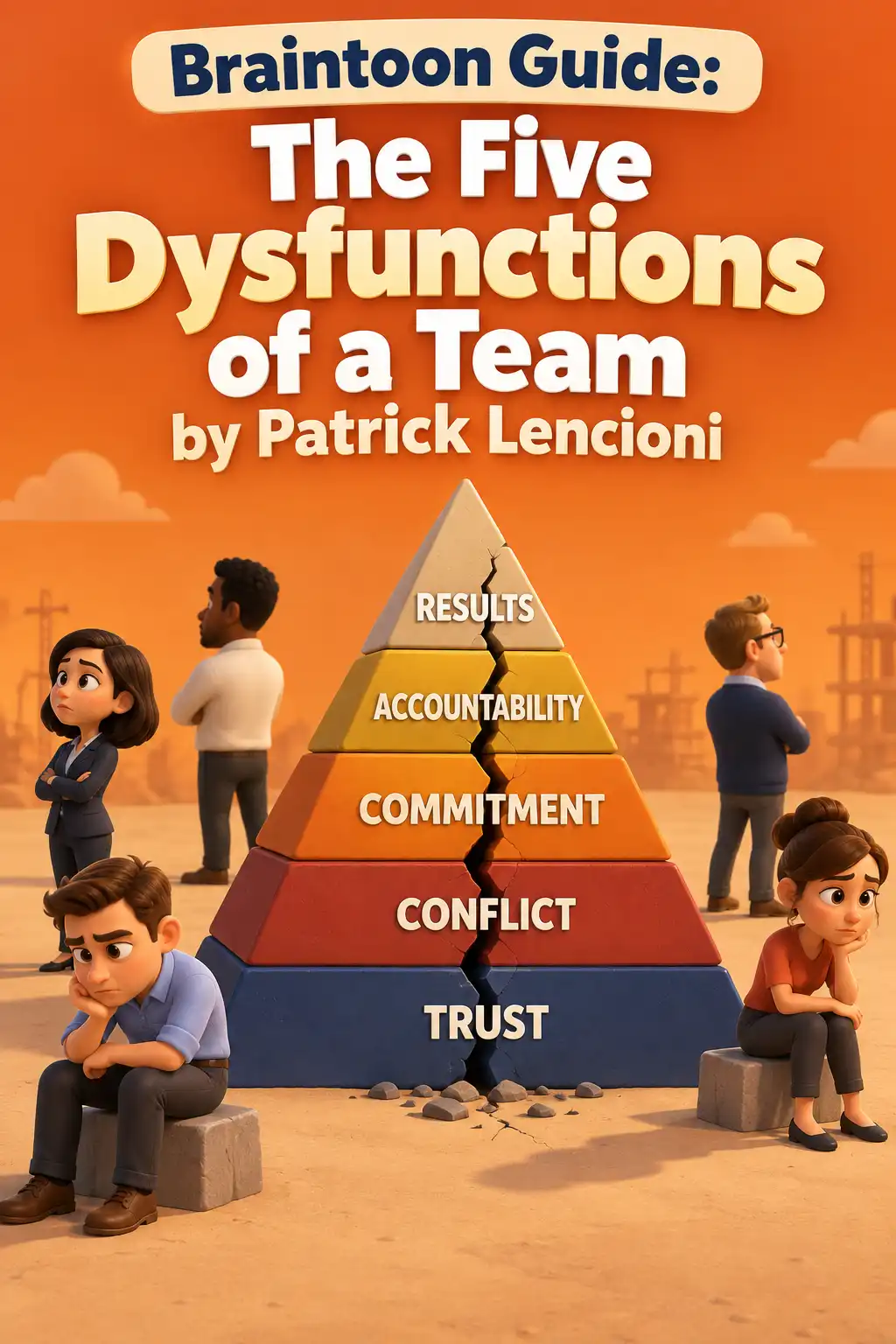
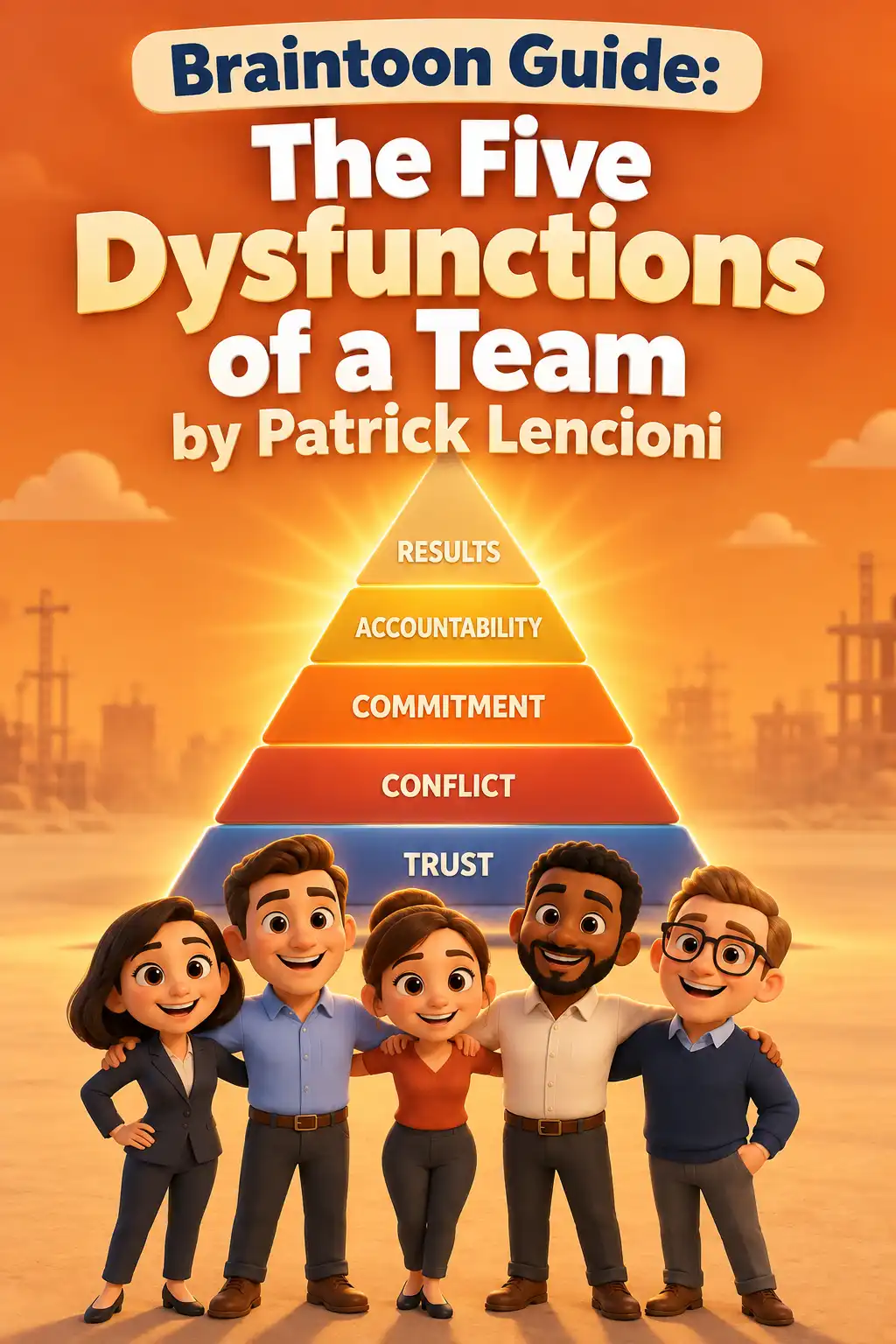
Here is the model in full. No trust breeds fear of conflict, which kills commitment, which makes accountability impossible, which buries results. Five links, one chain. Any weak link breaks it.
One more idea worth stealing is the concept of the first team. DecisionTech's executives felt loyal to their own departments, not to each other. Kathryn insisted the leadership team must come first.
Did it work? DecisionTech hit revenue targets in three of four quarters, and even turned down a rich acquisition offer, choosing to keep fighting for what they had built together.
But Kathryn never let them relax. She had seen stronger teams slide backward. Lencioni's closing warning is direct. This is not a retreat you complete. It is a discipline you maintain forever.
Six months later, Kevin's project delivers on time, a first for him. His meetings are louder now, and far more useful. Arguments happen in the room, not in the parking lot.
The telltale signs Kathryn watched for start showing up in Kevin's trailer too. People linger together during breaks, and there is actual laughter. Small signals, real cohesion.
Next step
Watch the animated summary
Explore this summary and the Braintoon library.
iOS + Android app20,000+ learnersFree daily summary