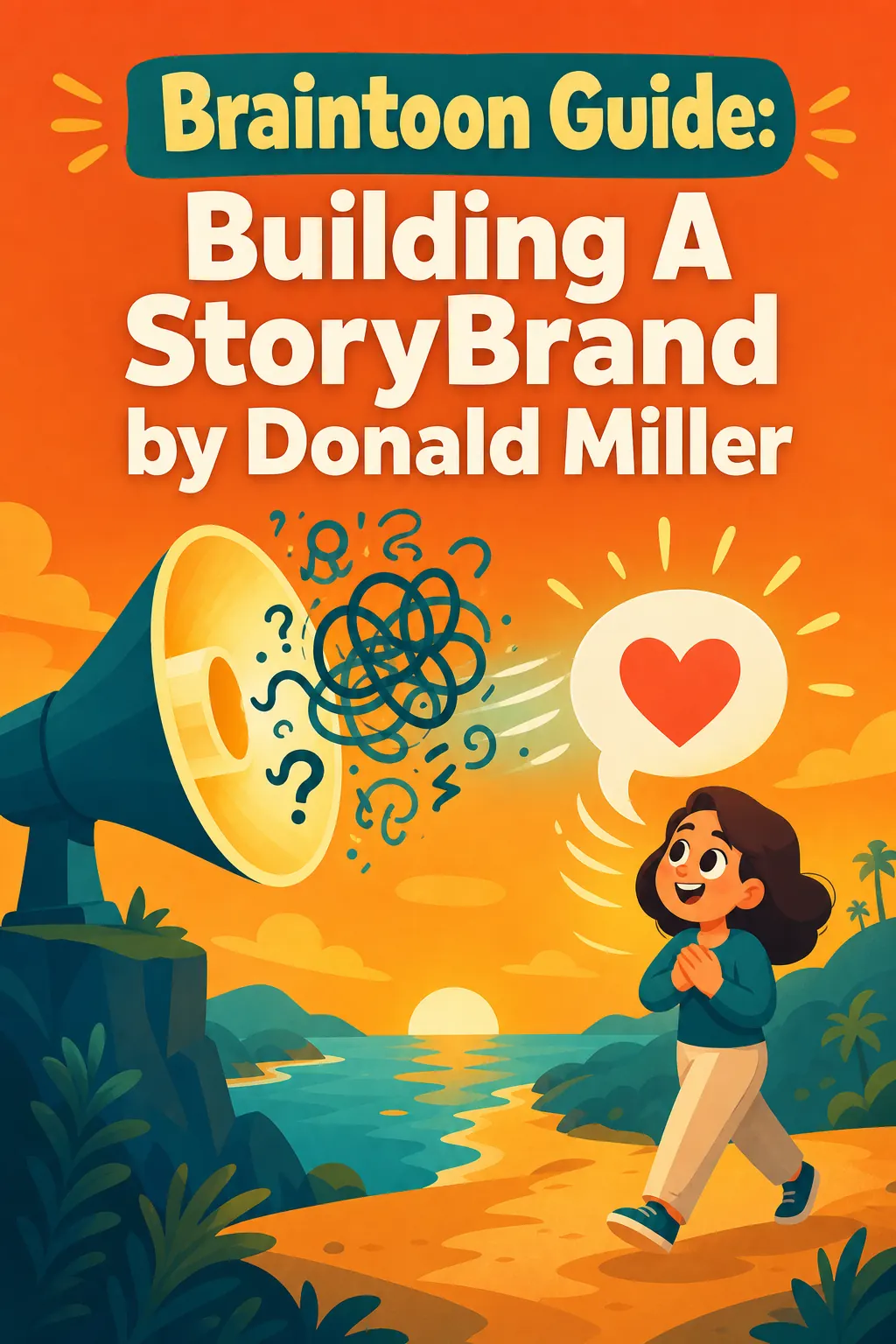





Building a StoryBrand cover

Book summary: Building a StoryBrand by Donald Miller

10 min read8 key lessonsText + animated summary

Ever land on a website and think, 'Wait… what do they even do here, exactly?'

One-sentence summary

Building a StoryBrand, by Donald Miller, shows how simple story structure helps customers quickly understand you, trust you, and know exactly what to do next.

Reading about Building a StoryBrand is one thing.

Watching it is faster, more fun, and you'll actually remember it.

Lesson 1: Clarity Beats Clever

Picture this: you click an ad, land on a homepage, and your brain hunts for meaning, like it’s searching for a light switch.

Donald Miller says most marketing fails right here because it makes people work too hard just to understand the offer.

He calls this 'burning mental calories.' When people get tired, they don’t buy. They bounce and look for something simpler.

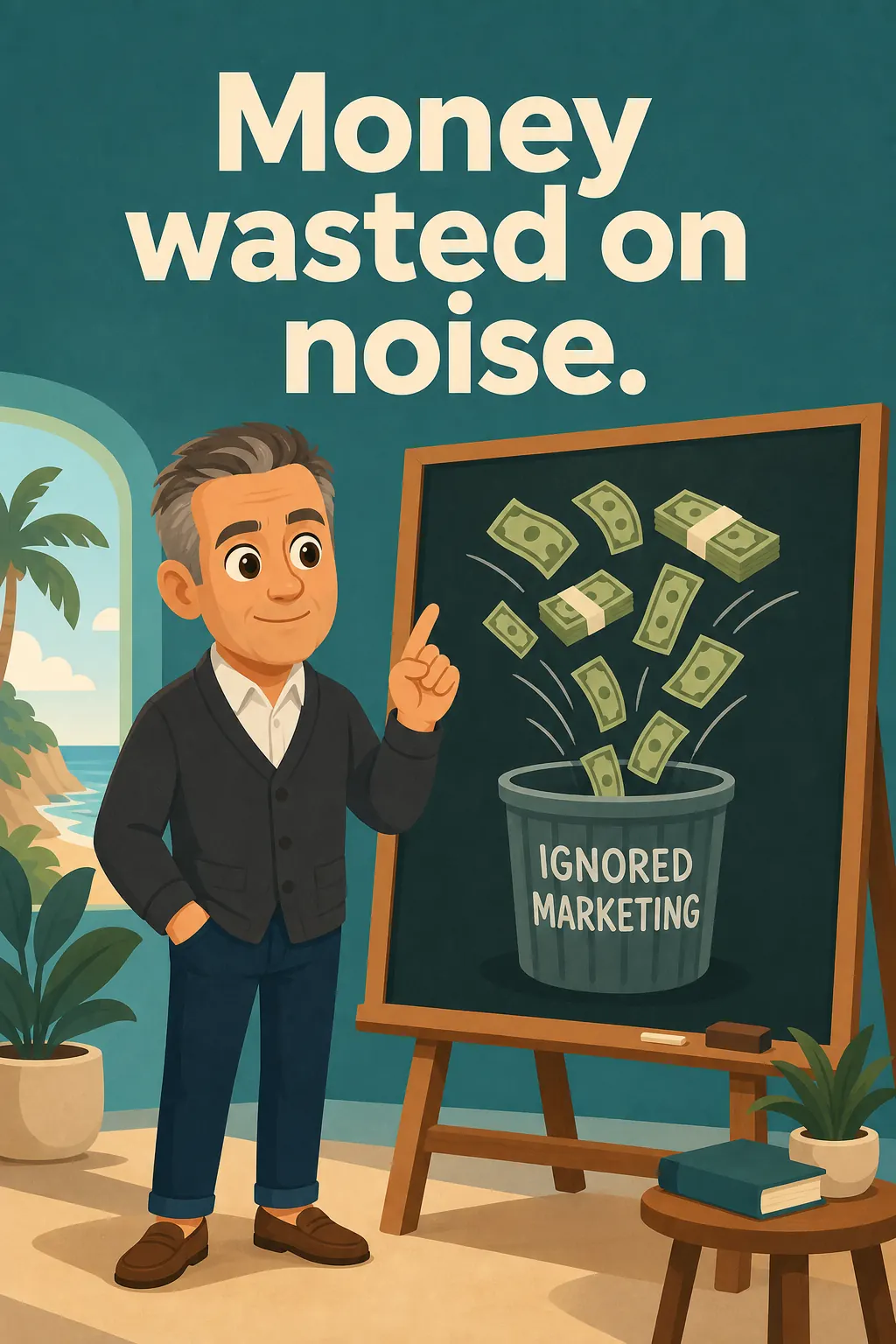
That wastes money. You paid to get attention, then lost it to confusion in five seconds.

Miller’s fix isn’t louder marketing. It’s clearer marketing, so the customer quickly understands what you sell and why it helps.

He suggests a quick check called the 'grunt test.' A visitor should be able to grunt what you do, fast.

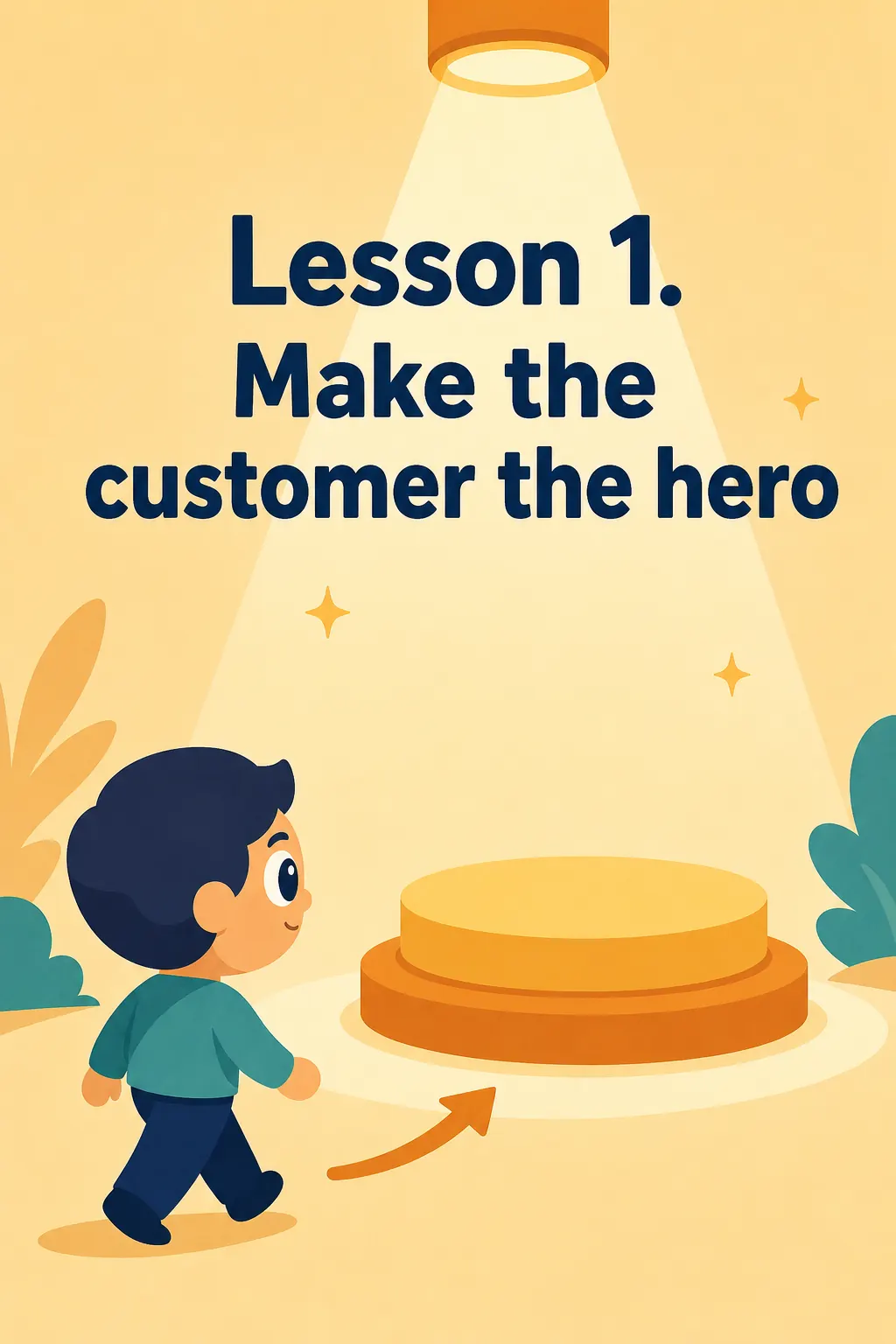
Lesson 2: Make the Customer the Hero

Imagine a dinner party where someone talks for ten minutes about themselves—their awards, their journey, their greatness.

Donald Miller says many brands do the same thing on their website, and customers quietly tune out.

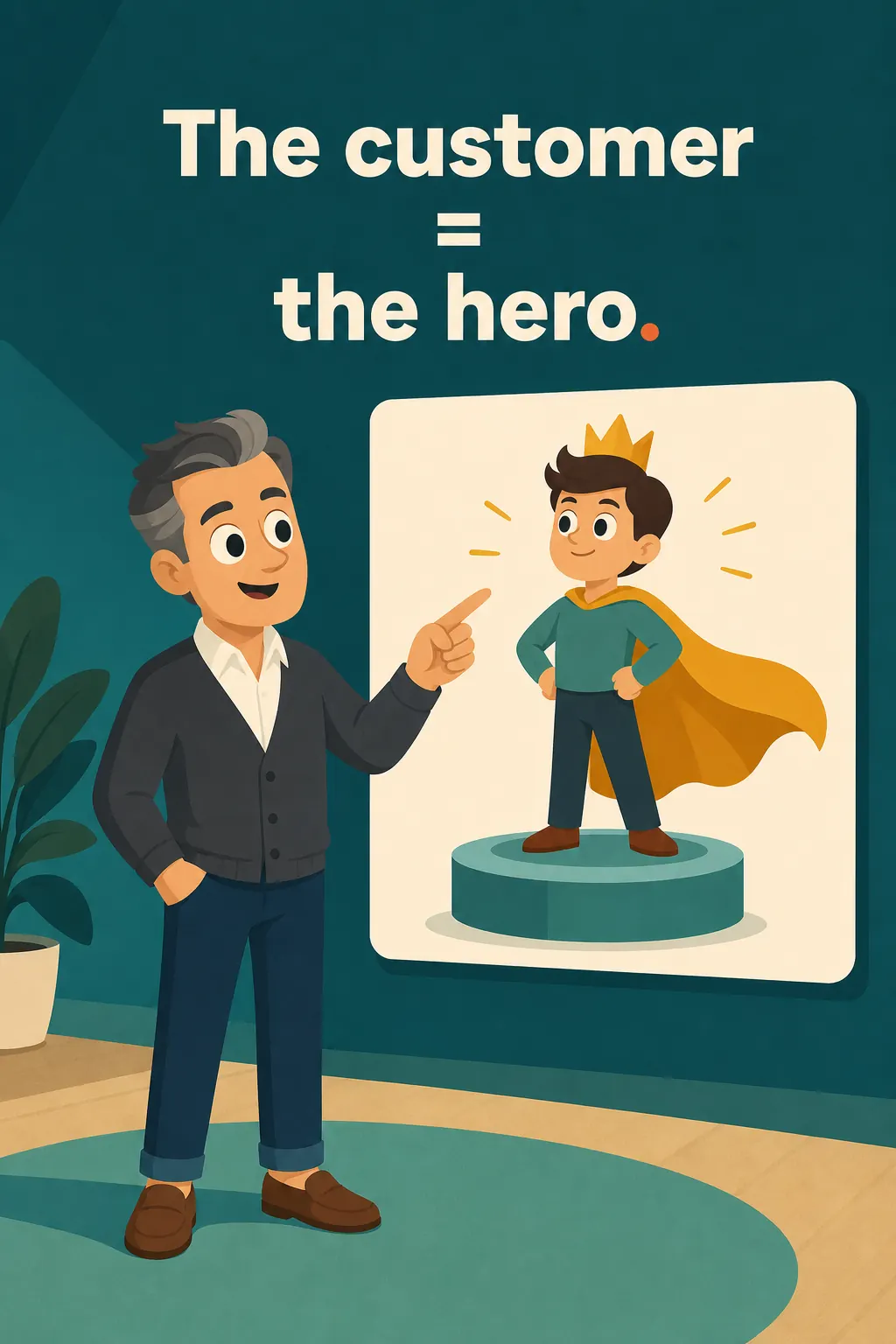
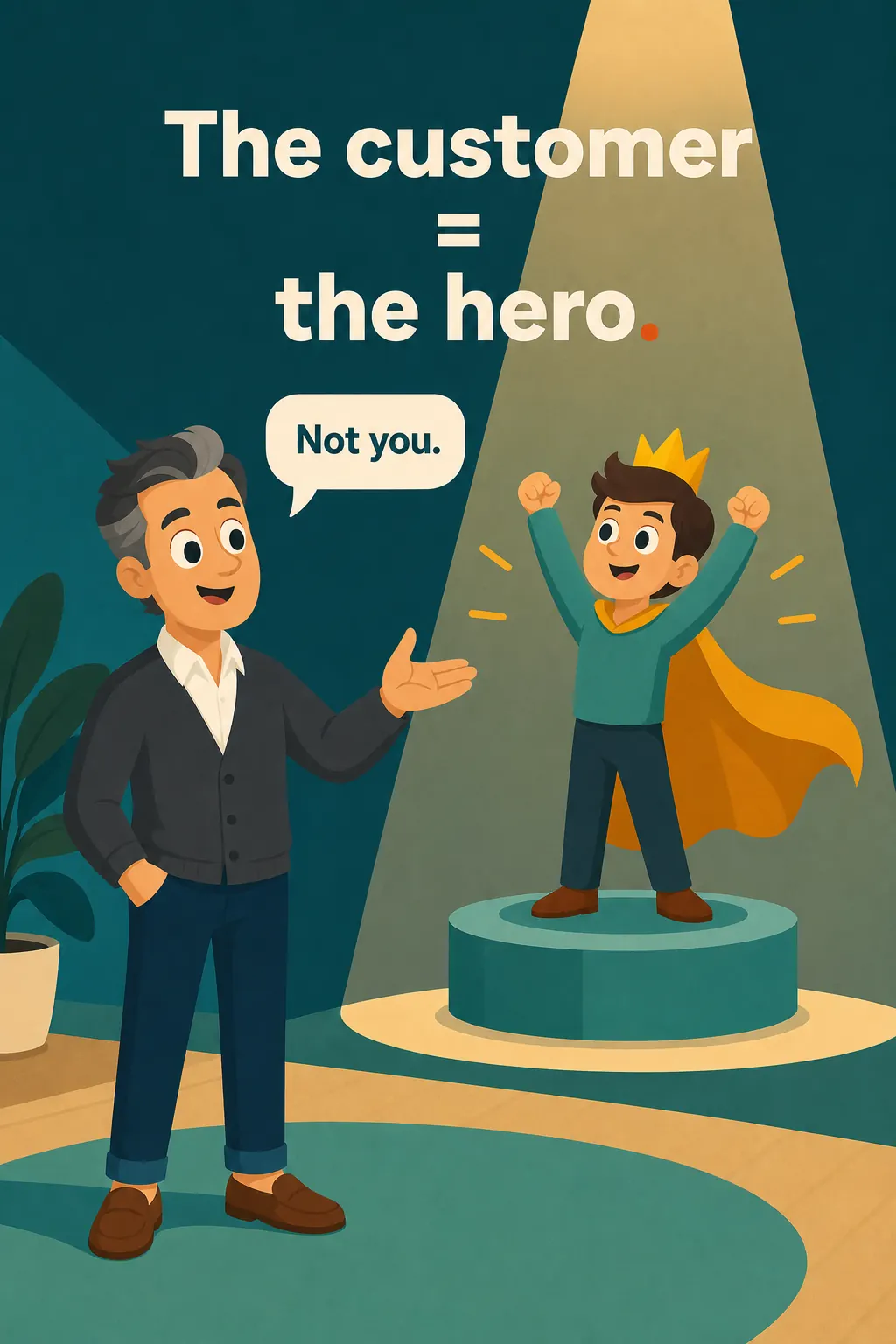
In StoryBrand, the customer is the hero. Your company is the guide who helps.

That matters because heroes want transformation, not trivia. They want to solve a problem and feel real relief.

So don’t lead with your origin story. Lead with their struggle and their desired outcome.

When the message is customer-first, the brand suddenly feels like it 'gets' them. Feeling understood builds trust.

Lesson 3: The SB7 Story Map

Think about your favorite movie. The hero wants something, hits obstacles, gets help, then takes action and changes.

Donald Miller says that structure isn’t just for Hollywood. It’s how humans naturally process information.

He packages it as the SB7 Framework—a simple, seven-part story map for your marketing message.

It starts with a character—your customer—who wants something simple and specific, not ten different things.

Then there’s a problem. A guide shows up, offers a plan, and calls the hero to action.

The story also includes stakes: what failure looks like if they do nothing, and what success looks like if they act.

Lesson 4: Name the Real Problem

Picture a customer with a half-full cart, frozen in place, because something feels off but they can’t name it.

Donald Miller says your job is to name the problem clearly, because clarity creates emotional relief.

He talks about three levels of problems. This is where brands can feel surprisingly human.

First, the external problem—the obvious thing, like messy finances, slow software, or a leaky roof.

Then the internal problem—the frustration, embarrassment, or worry, like 'I’m falling behind,' or 'I hate dealing with this.'

Finally, the philosophical problem—the bigger why, like 'People shouldn’t have to waste their life on confusing bureaucracy.'

Lesson 5: Be the Guide

Imagine you’re lost in a new city. Two people offer directions: one shrugs; the other says, 'I’ve got you.'

Donald Miller says your brand should feel like that second person—calm, confident, and helpful.

A guide does two things at once: shows empathy and shows authority. You usually need both.

Empathy sounds like, 'Yeah, this is frustrating. You’re not crazy, and you’re not alone in this.'

Authority sounds like proof—testimonials, numbers, awards, recognizable clients—anything that says, 'We’ve helped people like you.'

Then the guide offers a plan. Plans reduce fear because they turn a foggy decision into clear steps.

Lesson 6: Ask for Action

Think about standing at a crosswalk with no signal, no signs, and cars everywhere. You hesitate because nobody told you when to go.

Donald Miller says customers do the same thing on websites when there’s no clear call to action.

He pushes for bold, obvious calls to action, like 'Buy Now,' 'Schedule a Call,' or 'Start Your Free Trial.'

He also likes transitional calls to action, like a free guide or webinar, for people who aren’t ready yet.

The idea is to always give the customer a next step—either a big commitment or a small one.

Miller also insists stories need stakes. Show what failure looks like if they do nothing—without being gross about it.

Lesson 7: Build a Simple Timeline

Picture a theme park. You don’t teleport to the roller coaster; you follow a path with signs, lines, and checkpoints.

Donald Miller uses a similar timeline to show how a customer moves from unaware to loyal buyer.

First, make them aware of a problem. Then introduce the brand as the guide with a plan.

Next, invite action with a clear offer. After the purchase, keep reinforcing success so they stay engaged.

Miller warns that when these moments get scrambled—like pushing 'Buy Now' before people understand the problem—customers hesitate.

He suggests mapping every touchpoint: ads for awareness, content for understanding, offers for decisions, and follow-up for retention.

Lesson 8: Make It Practical

Imagine someone walks into your store. The signs are tiny, the aisles are cluttered, and no one greets them. They leave.

Donald Miller says your website is that store, and it has to do the greeting and guiding instantly.

Put the headline and offer above the fold—what you see without scrolling. Say what you do, what problem you solve, and why life is better.

Make the call to action obvious—often top right and centered—so nobody has to guess the next step.

Use visuals of people enjoying the result. Customers buy the happy ending as much as the product.

Use fewer words, because people scan. Clarity beats clever paragraphs every single time.

You've read the summary. Now watch it.

The animated version covers the same ideas — faster, and in a format you'll actually remember.