A detailed summary ofNo More Mr. Nice Guyby Robert A. Glover, PhD
No More Mr. Nice Guy by Robert A. Glover, PhD, teaches men how to stop chasing approval, embrace their own needs, and finally build the relationships and lives they actually want.











Have you ever been the guy who
0:00 / 1:00
60-second animated preview
Big ideas, at a glance
Explore the visual guides. Select any image to take a closer look.
The Covert Contract Cycle
Nice Guy vs. Integrated Male
6 Practices of Personal Power
No More Mr. Nice Guy Summary
Have you ever been the guy who does everything right, gives everyone what they want, and still ends up frustrated, resentful, and quietly wondering why being nice never actually seems to work?
1. Nice guys finish frustrated
Robert Glover didn't set out to write a book. He originally went to therapy, wondering why being endlessly nice wasn't making his wife any happier or more loving toward him.
No matter how hard he kept the peace and hid his own needs, nothing improved. Only honesty, boundaries, and finally putting himself first actually changed things.
Then his male clients started describing the exact same frustrations. So he formed a support group, wrote lessons from his own recovery, and slowly turned them into this book.
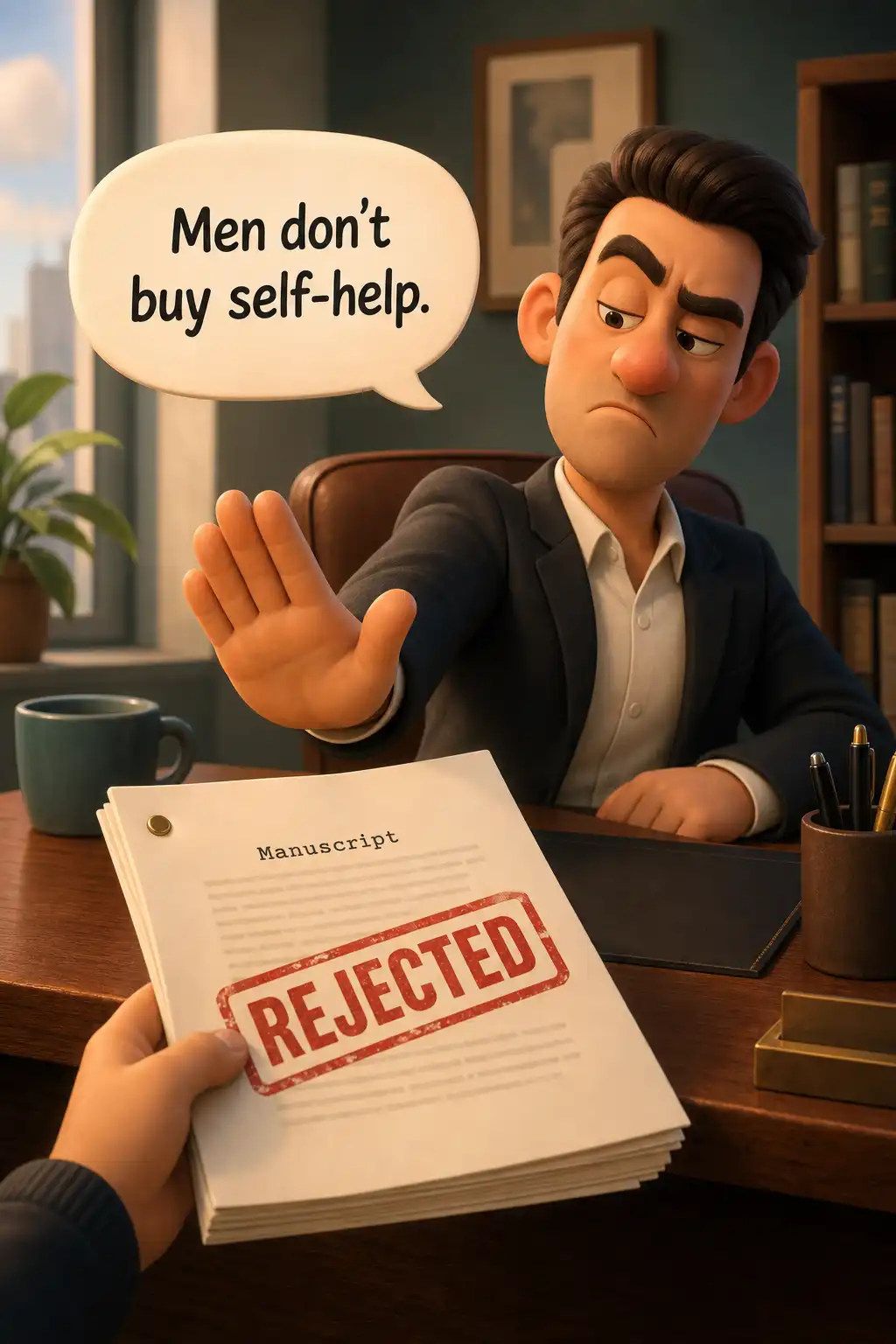
Publishers rejected it, insisting men don't buy self-help. They were wrong. The book is now translated into more than a dozen languages, and it sells more copies every single year.
Glover calls himself a recovering Nice Guy. His central message is that recovery isn't about becoming a better or different person. It's about finally becoming fully yourself.
Meet Kevin, a thirty-four-year-old accountant living in Portland. He's the guy who never says no, apologizes first in every argument, and quietly cleans up everyone else's messes.
Watch it come to life
Watch No More Mr. Nice Guy instead
Explore this summary and the Braintoon library.
2. Nice Guys aren't actually nice
Glover opens with Jason, a chiropractor who calls himself the nicest man you could ever meet. He cleans, cares for the baby, does everything right, and still feels completely unappreciated.
Other men share the same pattern. Todd respects women endlessly and gets friend-zoned. Gary apologizes first even when he's not at fault. Bill can't say no to anyone.
They all believe the same thing. If I'm good enough, and I hide my flaws well enough, I'll be loved, get my needs met, and have a smooth, problem-free life.
Here's the twist. Glover argues that Nice Guys often aren't nice at all. They give to get, hide their true feelings, quietly manipulate, and then explode when the unspoken deal doesn't pay off. He calls this pattern the Nice Guy Syndrome.
The answer isn't to become a selfish jerk. Glover describes the integrated male, a man who accepts every part of himself, sets clear boundaries, and expresses his feelings honestly.
Kevin sees himself immediately. Last weekend he spent all Saturday fixing his brother-in-law's deck, sulked the entire time, then snapped at his wife Beth over nothing that evening.
3. Where the Nice Guy comes from
So why would a grown man believe he has to earn love by performing? Glover traces it back to childhood, especially the first five years, when kids are completely dependent on their caregivers.
Young children think they cause everything around them. So when their needs go unmet, a child concludes that something must be wrong with him personally. Glover calls this belief toxic shame.
To cope, some boys decide to become good, transforming themselves into whatever others seem to want. One client, Alan, learned that his value depended entirely on being nothing like his abusive, alcoholic father.
Glover zooms out too. After World War Two, absent fathers, rising divorce, and female-dominated schools trained an entire generation of boys to seek approval, especially from women.
Kevin recognizes his own map. His dad worked constantly and criticized freely, so Kevin learned early that being helpful and invisible was simply the safest way to exist.
And he's still running that childhood strategy at thirty-four, carefully monitoring Beth's moods, hiding his mistakes at work, and keeping everyone around him comfortable except himself.
4. Trade approval-seeking for self-approval
Glover's client Todd called himself a chameleon, shifting his personality to match whoever he was with. Despite all that effort to be liked, he still felt alone most of the time.
Because Nice Guys can't quite believe they're valuable as they are, they attach their worth to externals. One client, Cal, took his daughter to the park hoping strangers' admiration would prove his value as a dad.
With women, this gets intense. Nice Guys track their partner's every mood, treating her happiness as proof of their own worth. When the validation doesn't come, hidden resentment quietly builds.
The fix is building self-approval. Cal let his car get dirty for an entire month. Nobody cared. Small acts of self-care slowly start challenging the belief that you're not worth it.
The most powerful step is revealing yourself to safe people. When group member Reid confessed a relapse into drinking, he got support, not judgment. Being seen and still accepted is what dissolves shame.
So Kevin tries his own experiment. He stops rewriting his emails five times to sound agreeable, and he tells a trusted friend how lonely and resentful he's actually been feeling.
5. Covert contracts and getting truly selfish
Glover describes Lars, an anxious executive with insomnia and migraines who secretly fantasized about walking away from his entire life. Asked what he did just for himself, Lars had no answer.
Nice Guys act low maintenance, pretending to be needless and wantless. But underneath, they're deeply needy, pursuing their needs through indirect, manipulative routes instead of just asking directly.
The engine driving all this is the covert contract. I'll give you this, and you'll silently owe me that. Both people pretend the deal doesn't exist. And when it goes unpaid, resentment explodes.
Glover's solution sounds shocking at first. Become truly selfish. Not cruel, just honestly prioritizing your own needs. When Lars started hitting the gym daily, his wife soon felt inspired to take better care of herself too.
Another client, Shane, stopped showering his girlfriend with gifts and redirected all that energy inward, toward himself. She felt less smothered, became more affectionate, and their relationship genuinely improved.
Kevin spots his own covert contract. He handles all the household finances and chores, silently expecting Beth to reward him with affection. She never signed that contract.
6. Reclaiming personal power
During an argument, Glover's wife once called him a wimp, and he quietly admitted she was right. Nice Guys develop learned helplessness as children and then carry it straight into adulthood.
Their core belief, that being good enough makes life smooth, is doomed, because life is inherently chaotic. Personal power isn't the absence of fear. It's confidence you can handle whatever comes.
Glover offers six practices. Surrendering what you can't control, dwelling in reality, expressing your feelings, facing your fears, developing integrity, and setting clear boundaries with the people around you.
Boundaries matter most. His client Jake finally stood firm against his wife's disrespect. She walked out, then came back days later, saying it was the first time she'd ever truly respected him.
Another client, Nolan, was paralyzed over his divorce until he adopted one simple mantra. I can handle it. That single shift finally let him take action.
Kevin tests a boundary at work. When his manager drops yet another weekend project on him, he calmly says his plate is full and offers a realistic timeline instead.
7. Masculinity, friendship, and real intimacy
It's okay to be a guy. Glover argues that postwar boys grew up cut off from their fathers, trained to seek female approval, and disconnected from their own masculinity.
The most important fix is real male friendship. Client Alan joined a men's group, organized a softball team, and took road trips with the guys. His wife actually found him more attractive, not less.
Why? Alan stopped making her the entire center of his emotional world. That matters, because Nice Guys avoid true intimacy through enmeshment, orbiting their partner and hoping for scraps of affection.
The pattern concentrates in the bedroom. One client, Aaron, kept settling for bad sex. Advised to declare a six-month moratorium, he simply stopped pursuing his wife entirely.
No longer feeling chased, she began moving toward him on her own. Glover's point is this. Self-respect and integrity are the greatest aphrodisiacs, not niceness and permission-seeking.
So Kevin restarts poker night with two old college friends, and he stops hovering around Beth's moods before saying what he actually wants, whether at dinner or in bed.
8. Facing fear and getting the life you want
Here's a painful irony. Glover's Nice Guy clients are intelligent and capable, and yet stuck in what he calls talented mediocrity, held back by fear, perfectionism, and insisting on doing everything alone.
They fear failure and success equally, always worrying they'll be exposed as frauds. Add deprivation thinking, the belief there's never enough to go around, and men end up talking themselves out of everything better.
Client Charlie adopted one simple rule. If something frightened him, he did it anyway. Within eighteen months he earned his pilot's license and landed a job that actually matched his education.
Another client, Phil, simply started asking for help. His men's group replaced his windows, then helped him write the business plan for his own landscaping company.
Kevin finally asks for the promotion he's silently deserved for three years. He gets it. Then he launches the small tax-consulting side practice he'd always called impossible.
A year in, Kevin isn't a different person. He's just more fully himself. Honest, boundaried, connected, and far less resentful. His marriage and career both reflect it.
Watch it come to life
Watch the animated summary
Explore this summary and the Braintoon library.