BrainToon
Most of us can talk just fine. The trouble comes in the moments that matter, like the tense meeting, the awkward first hello or the argument that keeps coming back.
For the widest range of situations, our pick is Crucial Conversations, which teaches how to stay honest and respectful when emotions run high. For a gentler start, Dale Carnegie's How to Win Friends and Influence People offers simple habits you can try today.
The other picks each focus on a specific situation, from negotiating to managing a team to talking with a partner.
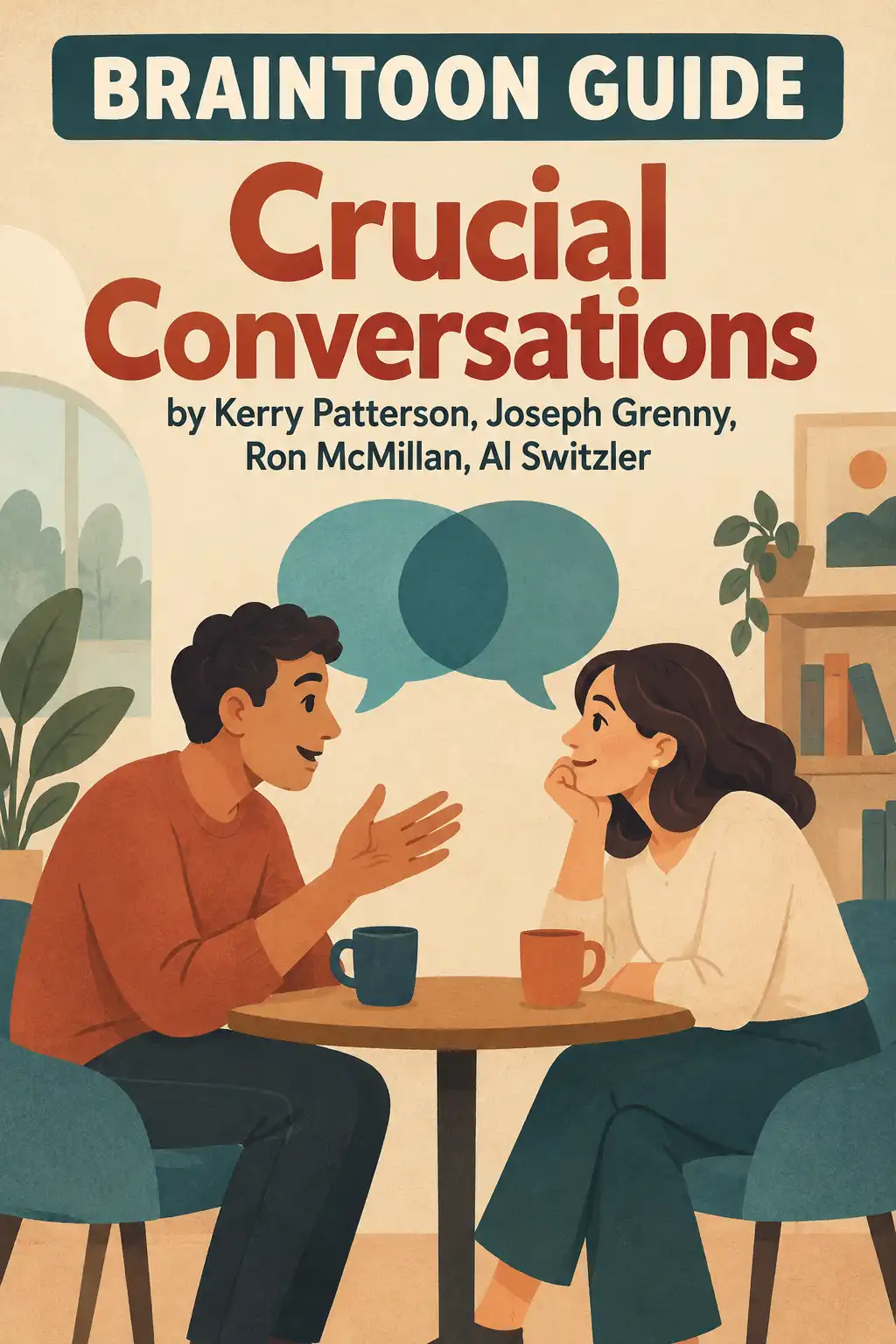
1. Crucial Conversations by Kerry Patterson, Joseph Grenny, Ron McMillan, Al Switzler
Best for:
How to stay honest and calm when a conversation matters and emotions are running high.
14 min animated summary
Inside our summary
- Rejecting the choice between honesty and peace
- Watching for safety and restoring it
- Separating facts from the stories we tell
If you've been dreading a particular conversation, start here. Crucial Conversations covers talks with high stakes, differing opinions and strong feelings, whether they're with a boss, a partner or a family member.
The authors argue that staying in honest, respectful dialogue under that pressure is a skill you can learn. They also reject the idea that you have to choose between telling the truth and keeping the peace.
Their advice is practical. You begin by asking what you really want from the conversation. Then you notice when the other person stops feeling safe and work to restore that safety. One of the book's most useful ideas is separating the facts from the stories we tell ourselves about them, because those stories are often where a calm talk turns into a fight.
It applies equally well at work and at home, which makes it the broadest fit on this list.

2. How To Win Friends and Influence People by Dale Carnegie
Best for:
A warm, plain-spoken classic about listening, appreciation and getting along with people.
12 min animated summary
Inside our summary
- Give honest, sincere appreciation
- You can't win an argument
- See it from their side
If you're not sure where to begin, we recommend starting with Carnegie. His advice is simple enough to try in your next conversation, and it gives you a foundation for the more structured books here.
Carnegie argues that people skills shape almost everything, and that much of it comes down to how you treat others. He tells readers not to criticize, condemn or complain. He also encourages them to give honest appreciation and to take a genuine interest in other people.
He's just as helpful on disagreements. You can't win an argument, Carnegie says, so he recommends admitting mistakes, starting on a friendly note, letting the other person do much of the talking and trying to see things from their side.
None of this is complicated, and that's the point. These are everyday habits you can practice with a colleague, a neighbor or someone you've just met.
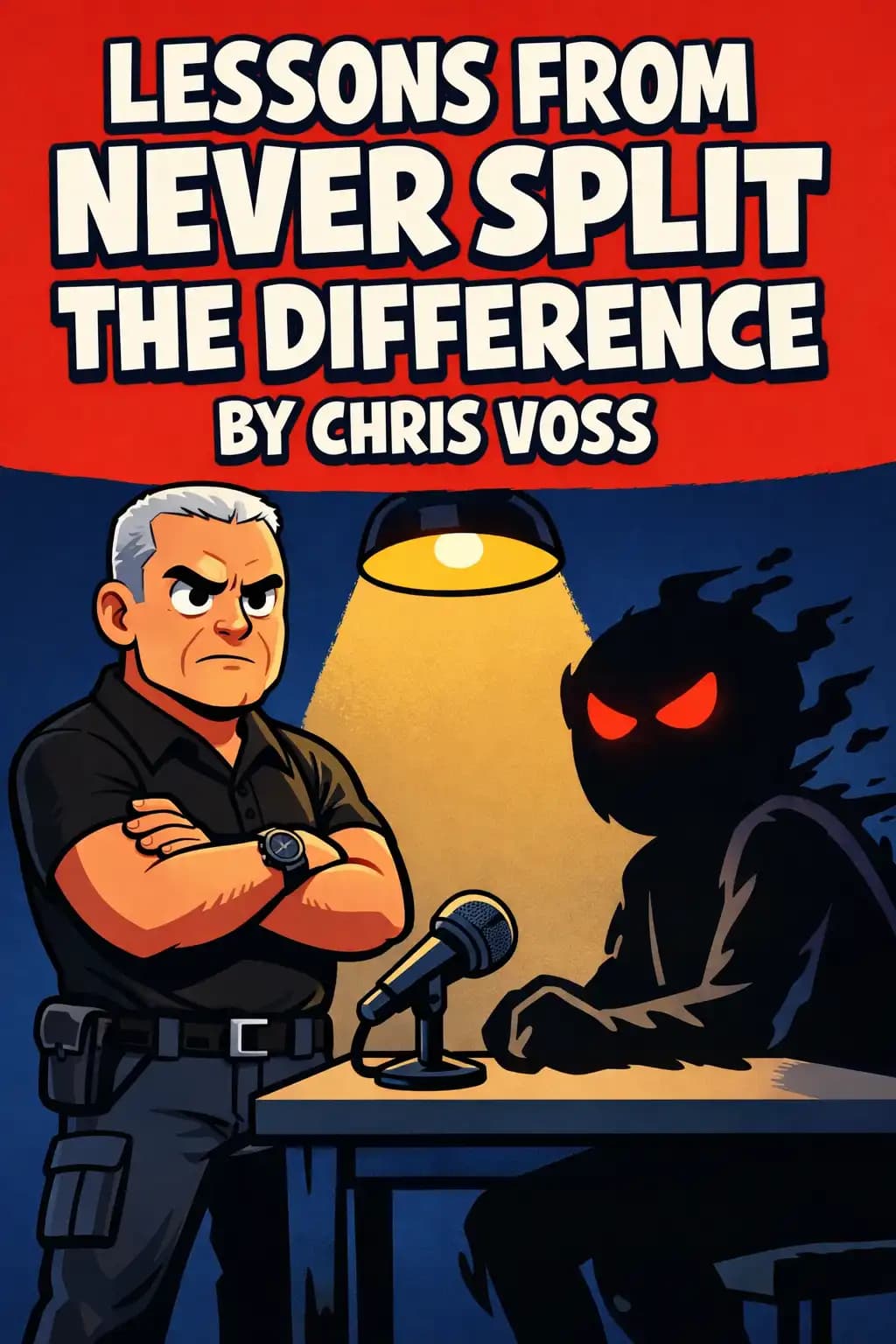
3. Never Split the Difference by Chris Voss
Best for:
FBI hostage negotiation tactics adapted for deals, disputes and everyday tense talks.
11 min animated summary
Inside our summary
- Mirror their words to open doors
- Label emotions to defuse them
- Use calibrated questions to steer
Chris Voss brings lessons from FBI hostage negotiation to ordinary life, from the boardroom to the kitchen table. Choose this book if you want concrete tools for reaching a good outcome when the other side pushes back.
Voss starts from the idea that emotions run the show, so many of his techniques deal with feelings first. Mirroring someone's words helps open the conversation. Labeling their emotions helps defuse them. Calibrated questions let you steer the discussion without making demands.
Some of his advice goes against instinct. He suggests letting people say no and aiming for "that's right" instead of a quick yes, which he says means little without a clear how.
Crucial Conversations focuses on mutual understanding, while this book leans toward getting the result you need. Choose the one that fits your situation now.
4. How to Talk to Anyone by Leil Lowndes
Best for:
Small, learnable habits for first impressions, small talk and putting people at ease.
13 min animated summary
Inside our summary
- You've made an impression before you speak
- Small talk works when you match the mood
- Praise that lands instead of flatters
If walking into a room full of strangers makes you nervous, this is the most hands-on pick for social situations. Leil Lowndes argues that success depends less on brains or looks than on small communication habits that make other people comfortable.
The book is built around tips you can try one at a time. Lowndes points out that you've made an impression before you say a word, and that small talk works best when you match the other person's mood. She also covers keeping the spotlight on the people you meet, sounding like an insider in an unfamiliar crowd and giving praise that lands instead of sounding like flattery.
It shares Carnegie's focus on warmth and attention to others. The difference is format. Carnegie offers broad principles, while Lowndes gives quick, specific moves that suit networking events and parties.

5. Radical Candor by Kim Scott
Best for:
A manager's guide to giving honest feedback while showing you genuinely care.
10 min animated summary
Inside our summary
- The kindness trap
- Care personally, challenge directly
- Asking for feedback first
Many managers soften criticism so much that the message never gets through. Kim Scott calls this the kindness trap. Her book is for leaders who want to be honest without being harsh.
Her approach rests on two ideas: care personally and challenge directly. Scott maps these into four quadrants, which can help you see when your feedback has become too soft or too cold.
The book goes beyond feedback. Scott recommends asking for feedback before you give it, and she also covers career conversations, getting work done as a team and running better meetings.
This is the clearest choice if you lead people at work. If you mainly want help with conversations outside the office, Crucial Conversations or Carnegie will suit you better.
6. Influence by Robert Cialdini
Best for:
The psychology of why people say yes, and how to notice when it's being used on you.
12 min animated summary
Inside our summary
- Why we run on autopilot
- The surprising pull of reciprocation
- Why symbols of authority are hard to resist
Influence is less about holding a conversation and more about why people agree to things. Robert Cialdini draws on research and years spent undercover with salespeople and marketers to explain the automatic responses behind a yes.
He organizes these responses into seven principles. Our summary looks at reciprocation, liking and the deeper bond of unity, following the crowd, the pull of authority, small commitments and the fear of loss.
That knowledge can help in two ways. It can help you make a more convincing case, and it can help you notice when someone is using these triggers on you.
Choose this book if you're curious about how persuasion works. If you need help with what to say in a tough conversation, one of the conversation-focused books will serve you better.
7. The Seven Principles for Making Marriage Work by John Gottman
Best for:
Research-based guidance on how couples talk, argue and stay connected.
12 min animated summary
Inside our summary
- The Four Horsemen of Relationship Doom
- Turn Toward Each Other in Small Moments
- Unlock Gridlock by Understanding Hidden Dreams
If the conversations you most want to improve happen with a partner, this is the book we'd reach for. John Gottman draws on decades of research into what keeps couples together and what drives them apart.
He identifies damaging relationship habits, which he calls the Four Horsemen, and shows what stronger couples do instead. Much of the book is about everyday moments, such as knowing your partner's world, keeping fondness and admiration alive and turning toward each other in small ways.
It's also realistic about conflict. Gottman separates problems that can be solved from those stuck in gridlock. For the stuck ones, he suggests understanding the hidden dreams behind the disagreement instead of trying to win it.
It's written specifically for couples, so it won't help much at work. For relationships at home, though, it's the most targeted choice here.
A suggested reading order
You don't need to read these in order. Choose the book that fits the conversation you're facing now, and come back for another when a new challenge comes up.