









Think and Grow Rich cover

Book summary: Think and Grow Rich by Napoleon Hill

10 min read9 key lessonsText + animated summary

Topics will appear here once mapped for this book.

It's 2 a.m. Daniel is staring at his laptop. His bank balance reads forty-three dollars, rent is due Friday, and he has absolutely no idea what to do next.

One-sentence summary

Think and Grow Rich by Napoleon Hill is a practical guide to turning focused thought, clear desire, and careful planning into real, lasting wealth.

Reading about Think and Grow Rich is one thing.

Watching it is faster, more fun, and you'll actually remember it.

Open in app

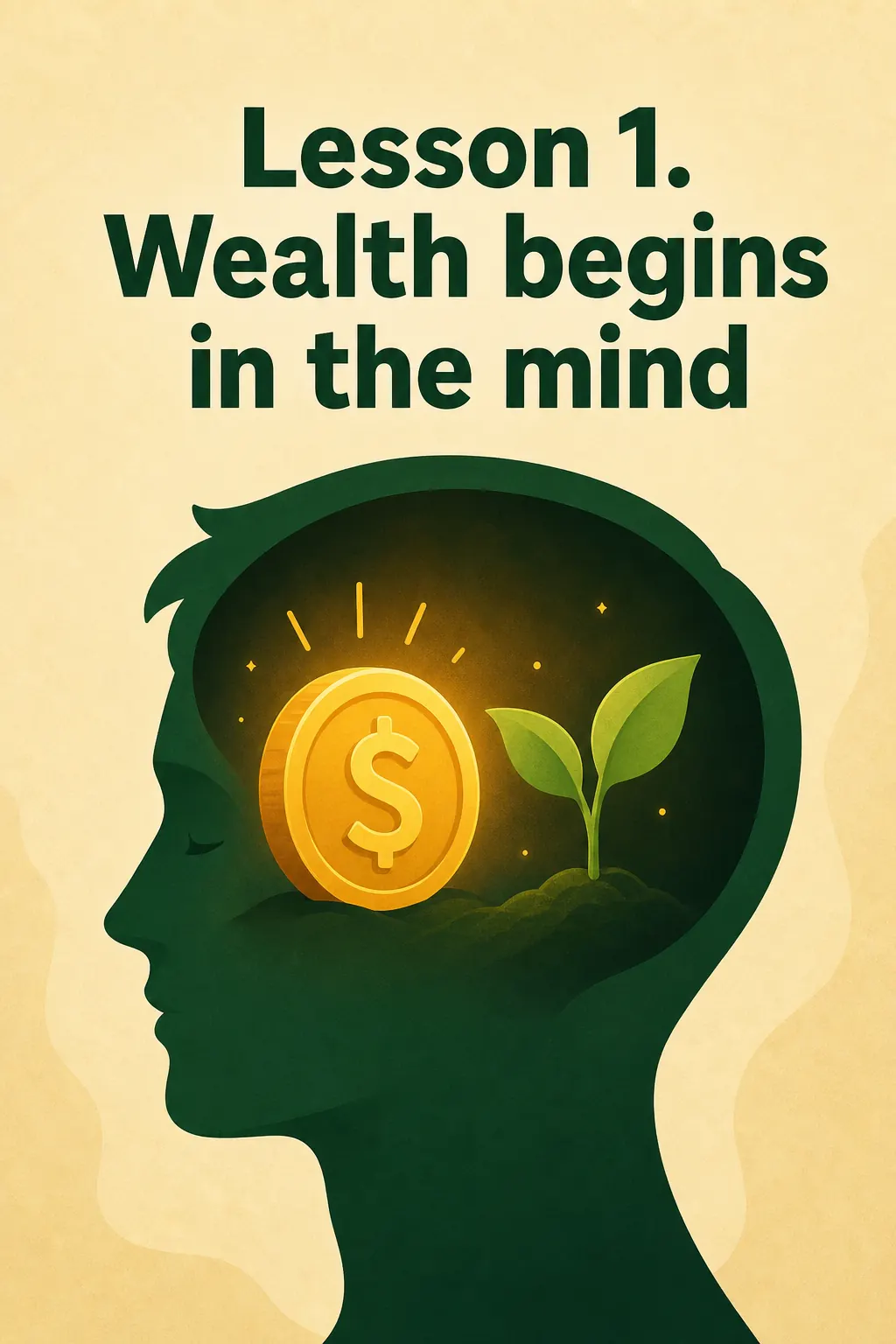
Lesson 1: Wealth begins in the mind

So back to Daniel, broke at his kitchen table. He's a graphic designer, talented, but stuck taking tiny gigs that barely cover groceries.

He keeps blaming the economy, his clients, or bad luck. But really, he's never actually decided what he wants.

And this is exactly where Napoleon Hill begins. Hill spent over twenty years studying wealthy people, a project sparked by steel tycoon Andrew Carnegie.

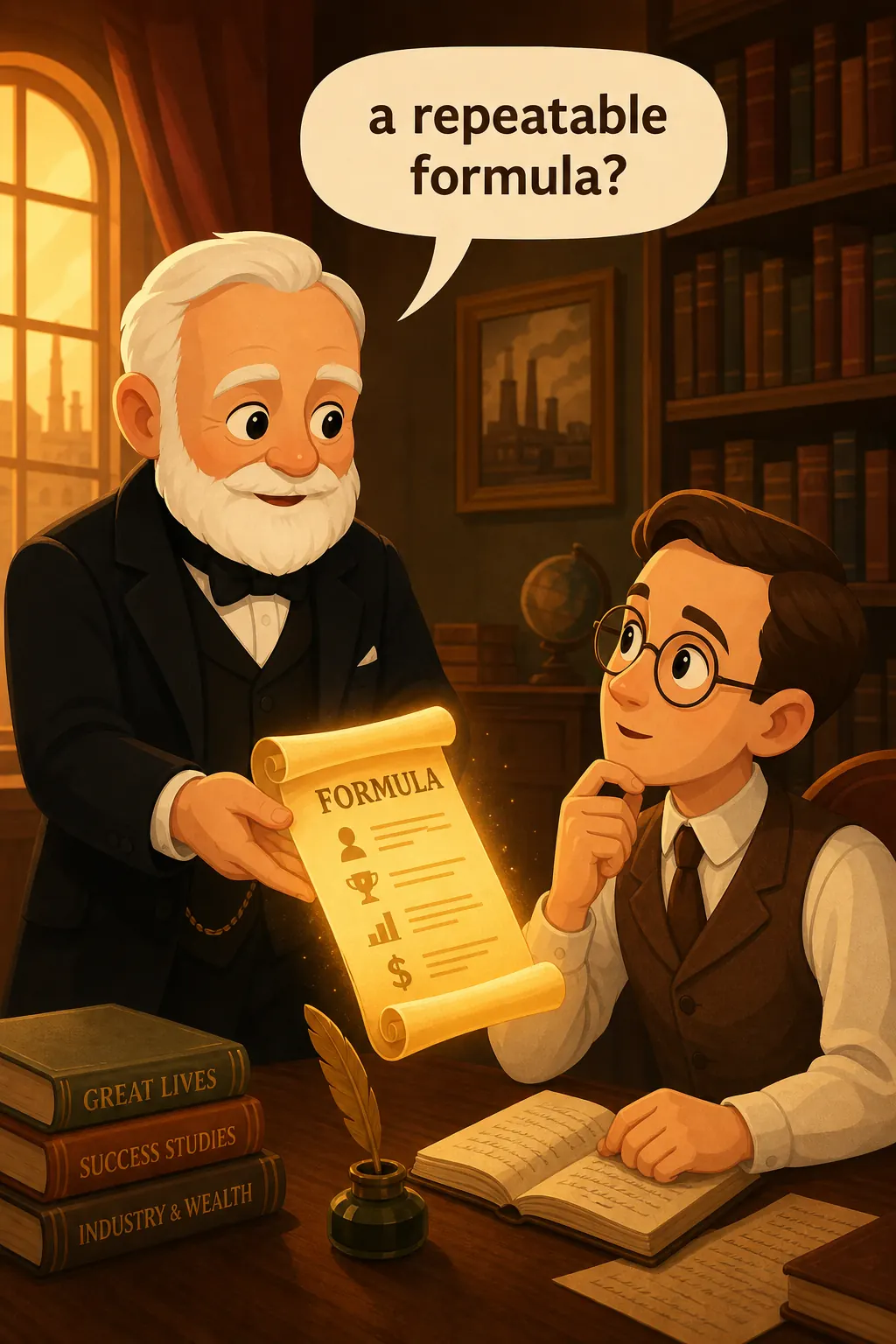
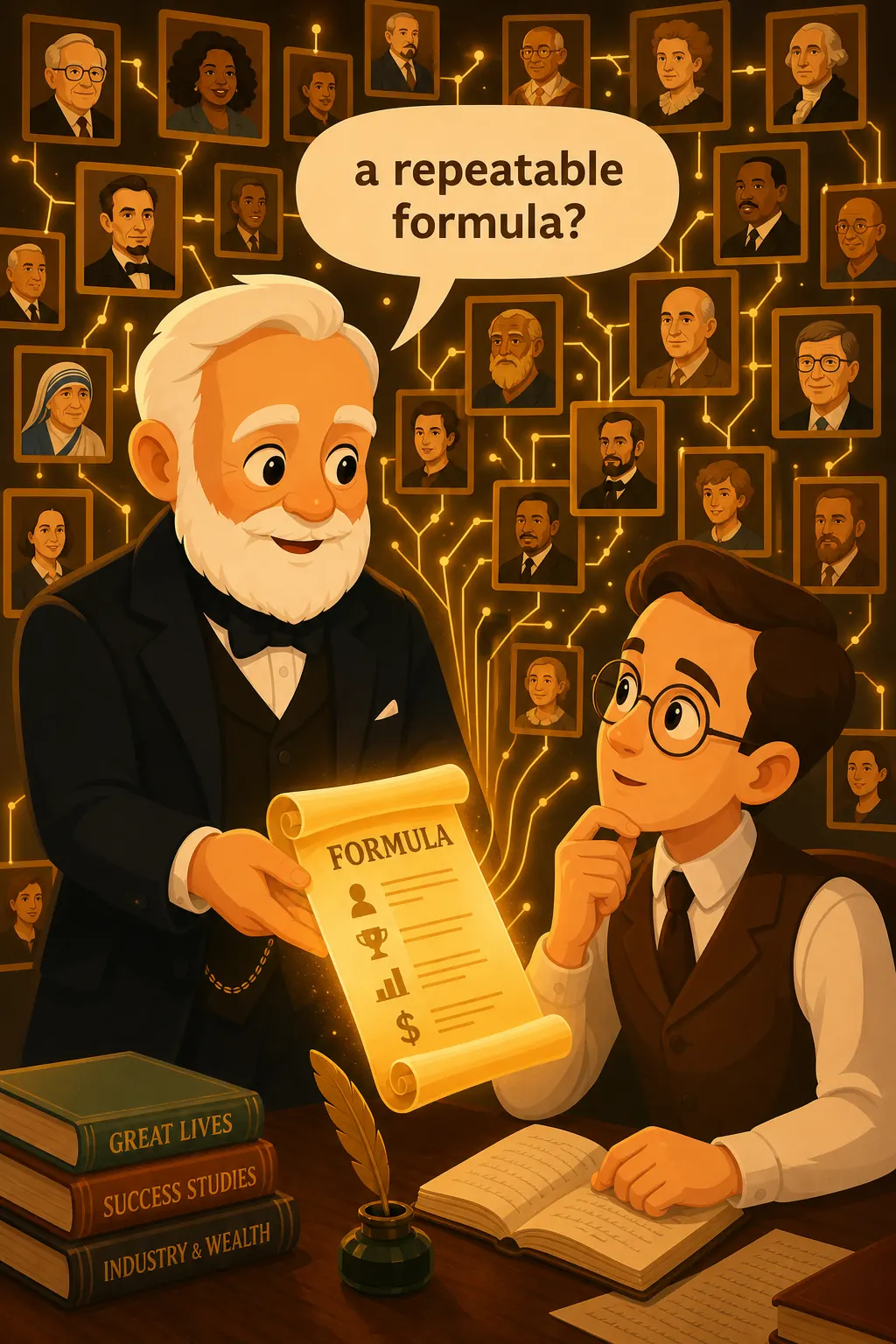
Carnegie believed there was a repeatable formula behind every fortune, and he challenged young Hill to study hundreds of successful people and write it all down.

The result became Think and Grow Rich, published in 1937, built around one big claim. All wealth, Hill says, starts as a single, clear idea in someone's mind.

Hill points to Thomas Edison, Henry Ford, and even ordinary tailors and clergymen who all used the same mental formula to transform their lives.

Lesson 2: Desire must become a burning obsession

A week later, that line in Daniel's notebook still feels vague. He wants more, sure, but so does everyone. Wanting alone hasn't paid a single bill.

Hill says ordinary wishing is useless. What actually works is what he calls a burning desire, a goal so specific and vivid that you can almost taste it.

His favorite example is Edwin Barnes, a young man who decided he would become Thomas Edison's business partner, despite having no money and no connections.

Barnes showed up at Edison's lab looking like a tramp, took a low job sweeping floors, and waited years until the perfect opportunity finally appeared.

Hill suggests six concrete steps. Decide the exact amount of money you want, what you'll give in return, a deadline, and a clear plan.

Then write it all down and read it aloud, twice a day, with feeling, as if you already have it in your hands.

Lesson 3: Faith fuels the subconscious

Two weeks in, Daniel's confidence wobbles. He pitches a small business, gets rejected, and that old voice in his head whispers that he's not really good enough.

Hill anticipates this exact moment. He says faith isn't some magical gift you're born with. It's a state of mind you build through deliberate, repeated thought.

Your subconscious mind doesn't argue. Whatever you feed it most often, positive or negative, it accepts and then quietly works to make real.

So if Daniel keeps telling himself he's a failure, his subconscious gets to work proving him right. Hill calls that programming your own defeat.

The fix is autosuggestion, repeating your goal with genuine emotion until belief takes root. Hill points to Charles Schwab, who once pitched J.P. Morgan.

Schwab's confident speech helped launch United States Steel, the world's first billion-dollar corporation, built largely on belief, vision, and the courage to express it.

Lesson 4: Specialized knowledge beats general smarts

Daniel's pitches improve, but he keeps losing jobs to designers who clearly understand business strategy, not just typography. He realizes general talent isn't enough.

Hill makes a sharp distinction here. General knowledge, the kind you collect in school, rarely builds wealth on its own. Specialized knowledge, focused on a goal, does.

He points to Henry Ford, who had little formal education but knew exactly which experts to call when he needed answers to almost any technical question.

True intelligence, Hill argues, is knowing where to find the knowledge you need and organizing it into a plan you can actually use.

Daniel maps out the gap. He needs to understand brand strategy, pricing, and how small businesses think about marketing budgets, not just how to make pretty visuals.

He buys two focused courses, joins an online community of branding professionals, and starts studying ninety minutes every morning before client work begins.

Lesson 5: Imagination shapes raw ideas into wealth

Flush with one solid client, Daniel starts wondering how to multiply this. Doing one project at a time still feels like trading hours for dollars.

Hill calls imagination the workshop of the mind. It's where vague desires get shaped into something you can actually sell, build, or scale.

His classic example is Coca-Cola. A country doctor sold a worn old kettle and a syrup recipe for a few hundred dollars to a pharmacist named Asa Candler.

What turned that recipe into a global empire wasn't the formula itself. It was Candler's imagination, picturing distribution, advertising, and bottling at massive scale.

Hill also tells the story of preacher Frank Gunsaulus, who imagined a new kind of college, preached about it boldly, and within days received a million-dollar gift to build it.

Daniel sits down with his notebook and asks a different question. Not how do I get more clients, but what could I package once and repeat over and over?

Lesson 6: Plans turn ideas into action

The packaged service excites Daniel, but his first solo attempt to launch it flops. Two weeks of work, zero new clients, and a lot of doubt.

Hill says this is normal. When a plan fails, you don't quit. You build a new plan, ideally with help from other capable minds around you.

He calls this group a Master Mind, a small alliance of trusted people whose combined skills and perspectives can sharpen and improve your strategy.

Andrew Carnegie credited his entire fortune to roughly fifty advisors. No one builds real wealth completely alone, Hill insists, no matter how talented they are.

Daniel reaches out to three people. A copywriter, a small business consultant, and a developer. They agree to meet weekly over video calls.

Within one session, they spot his mistakes. His pricing scares first-time buyers, his website buries the offer, and his outreach is targeting the wrong owners.

Lesson 7: Decide quickly, change slowly

A bigger client appears, a regional restaurant chain. They want custom work outside Daniel's productized model. He freezes and starts asking everyone he knows what to do.

Hill studied 25,000 people who failed and found a clear pattern. They decided slowly, then changed those decisions instantly at the first whisper of doubt.

Successful people did the opposite. They made decisions quickly, based on their own thinking, and then stuck with them through criticism and short-term setbacks.

Hill warns against telling everyone your plans. Most people, even loving ones, project their own fears onto you, quietly draining your conviction without meaning to.

Share details only with your Master Mind group. Around everyone else, listen more than you speak, and protect your decisions from a constant stream of outside opinions.

So Daniel stops polling friends. He takes the question only to his small group, hears them out carefully, and then decides within twenty-four hours.

Lesson 8: Persistence quietly outlasts every setback

Six months in, the chain project hits trouble. Their marketing director leaves, the contract pauses, and three smaller leads ghost Daniel in the same week.

Old Daniel would have spiraled. Hill calls this the moment most people quietly quit, often just before the breakthrough they couldn't yet see coming.

He says persistence is to character what carbon is to steel. It's the ingredient that turns desire into actual financial results.

Hill points to writer Fannie Hurst, who collected thirty-six rejection slips from one publisher before her breakthrough, and singer Kate Smith, who performed unpaid for years.

Both refused to treat defeat as final. Hill notes that weak persistence almost always traces back to weak desire, not weak ability or talent.

He recommends four anchors. A clear purpose, a specific plan, a mind closed to negativity, and a supportive alliance keeping you steady.

Lesson 9: Conquer the six basic fears

Hitting his goal feels great for about a week. Then a strange anxiety creeps in. What if it disappears? What will people think if I fail publicly?

Hill names this directly. He says the mind must be cleared of three quiet enemies, indecision, doubt, and fear, before any of these principles truly work.

He identifies six basic fears. Poverty, criticism, ill health, loss of love, old age, and death. Most people carry several of them without ever realizing it.

Fear of poverty kills ambition. Fear of criticism keeps you small, dressing, speaking, and dreaming the way other people quietly expect you to.

Hill's antidote is honest self-analysis. Ask yourself which fears actually run your decisions, then deliberately replace them with constructive, positive thoughts and habits.

Daniel writes his fears out plainly. He sees that fear of criticism made him undercharge for years, and fear of poverty made him cling to bad clients.

You've read the summary. Now watch it.

The animated version covers the same ideas — faster, and in a format you'll actually remember.

Next summary