











Rich Dad Poor Dad cover

Rich Dad Poor Dad Summary: 9 best lessons in 10 mins

10 min readRobert Kiyosaki's book, summarized

Topics will appear here once mapped for this book.

One-sentence summary

**Rich Dad Poor Dad by Robert Kiyosaki** is a book about how the wealthy think differently about money, and how anyone, no matter where they start, can learn to play by their rules.

Picture this. Daniel is standing in his apartment kitchen at midnight, staring down at a stack of bills, wondering how a steady paycheck still leaves him this broke.

(Continued below)

Reading about Rich Dad Poor Dad is one thing.

Watching it is faster, more fun, and you'll actually remember it.

Open in app

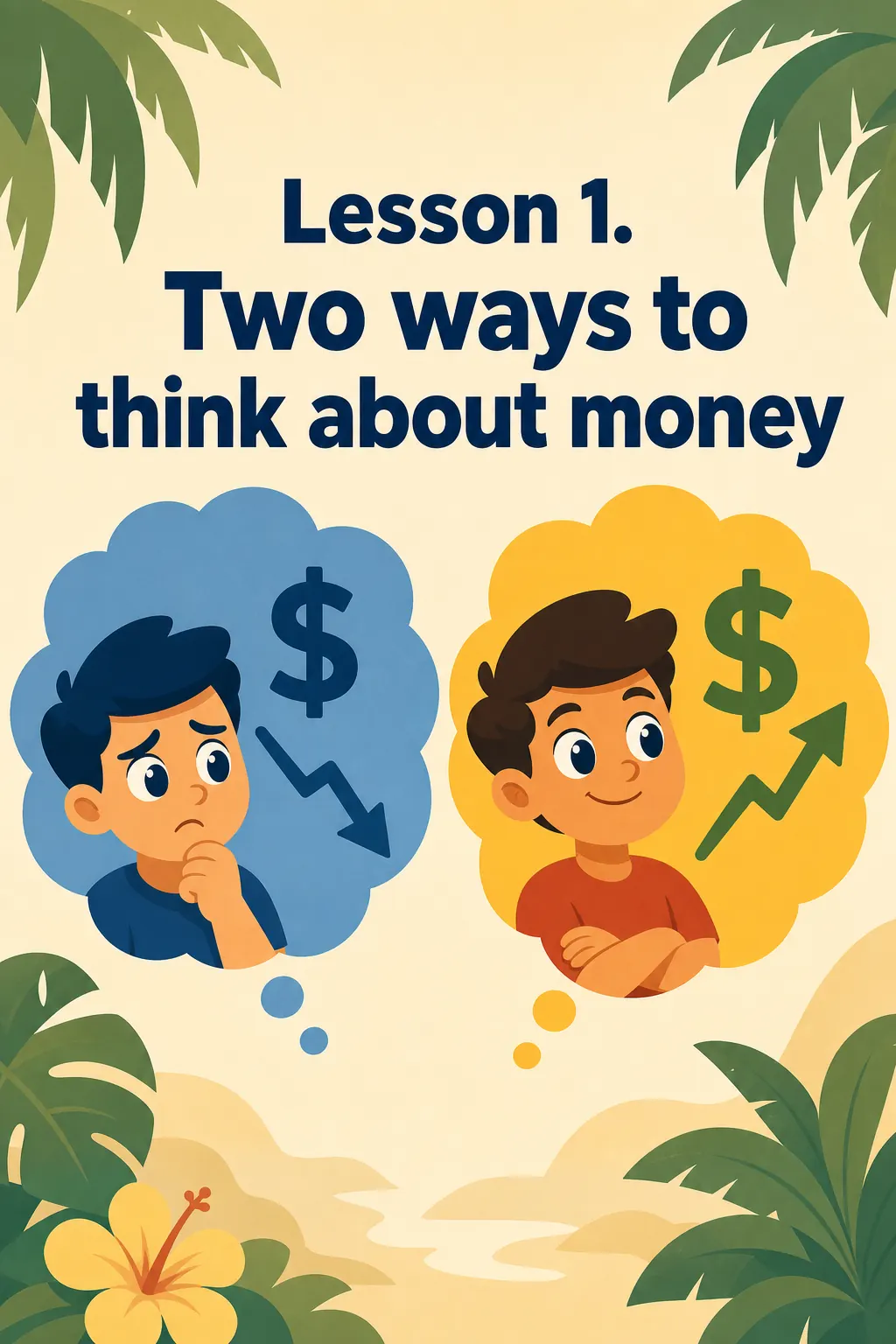
Lesson 1: Two ways to think about money

Daniel, a 28-year-old graphic designer, sets the bills down and remembers the advice his parents drilled into him growing up. Study hard, get a good job, and everything will work out.

But things haven't worked out, not really. He earns decent money, yet every single month his bank account empties before the next paycheck even lands.

This is exactly the puzzle Robert Kiyosaki set out to solve. He grew up in Hawaii with two very different father figures who shaped how he thought about money.

His real dad was a highly educated teacher who struggled with money his entire life. Kiyosaki calls him his poor dad.

His best friend's father, on the other hand, never finished eighth grade, yet built a fortune in Hawaii. Kiyosaki calls him his rich dad.

Both men worked hard. Both earned good incomes. But one died in debt, while the other left behind real, lasting wealth for his family.

Lesson 2: The rich don't work for money

The next morning, Daniel grumbles his way through another team meeting. His boss praises his work, then promptly drops three new projects on his lap.

He thinks, I need a raise. But Kiyosaki would say Daniel is missing the real point here about how money actually works in the real world.

As a boy, Kiyosaki and his friend Mike worked at rich dad's store for just ten cents an hour, dusting cans of food in the Hawaiian heat.

When Kiyosaki angrily demanded better pay, rich dad explained something surprising. Most people, he said, are quietly trapped by two emotions, fear and greed.

Fear of not having enough pushes them to work harder. Greed for what money can buy keeps them spending more. And so the cycle never ends.

Rich dad called this the **rat race**. A bigger paycheck just means bigger bills, fancier cars, and more pressure to keep on earning.

Lesson 3: Know assets from liabilities

That weekend, Daniel sits down with his bank statements and a notebook. He wants to see, line by line, where every single dollar is actually going.

Rent, car payment, student loan, credit card, streaming services. Almost everything he owns is quietly pulling money out of his pocket each and every month.

Kiyosaki says financial literacy starts with one beautifully simple rule. An asset puts money in your pocket. A liability takes money out.

That's it. No fancy accounting jargon. Just track which direction the cash actually flows, every month, in real life, with real numbers on the page.

Most middle class people, Kiyosaki warns, buy liabilities while genuinely believing they're assets. The classic example is a personal home tied to a big mortgage.

Between the loan, the taxes, insurance, and maintenance, a house can drain money for decades. Meanwhile, the rich are busy buying things that generate income.

Lesson 4: Mind your own business

Monday rolls around, and Daniel keeps designing logos for clients. But now he's also thinking, what business am I actually building outside of this day job?

Kiyosaki shares a story about Ray Kroc, the man who built McDonald's into a global giant, speaking once to a group of MBA students.

He asked them what business he was really in. They said hamburgers. Kroc corrected them. **His real business, he insisted, was real estate, the valuable land sitting underneath every single franchise location.**

Kiyosaki's point is that your profession and your business are not the same thing. Your profession is what pays the bills today, right now, this week.

But your business is your asset column. It's the collection of things you own that generate income whether you show up to work tomorrow or not.

Daniel decides to keep his design job for the steady paycheck. But he'll use his evenings to start building something that can eventually earn on its own.

Lesson 5: The power of corporations

Tax season hits, and Daniel watches a huge chunk of his income vanish before he ever sees it. He feels strangely powerless watching it disappear.

Kiyosaki explains that employees earn money, get taxed first, and then have to live on whatever is left. It's a brutal order of operations when you think about it.

But corporations work differently. They earn money, pay business expenses first, and then only get taxed on whatever is left over at the very end.

That single difference is one reason wealthy people structure their investments through legal entities. It legally protects more of what they actually earn from taxes.

Kiyosaki calls this part of financial IQ. He breaks it into four key areas. Accounting, investing, understanding markets, and knowing the law.

Daniel isn't ready to launch a corporation tomorrow. But he books a consultation with an accountant just to learn what might be possible as he grows.

Lesson 6: Invent money with intelligence

A few months later, Daniel hears about a neighbor selling a small rental condo cheap because of a sudden job relocation across the country.

Old Daniel would have ignored it completely. New Daniel pulls out a calculator and runs the numbers on rent, mortgage, taxes, and maintenance.

Kiyosaki says financial intelligence is really the ability to see options where other people see nothing, or worse, see only fear and risk.

During the early 1990s Phoenix real estate downturn, while others panicked and sold, Kiyosaki bought up distressed properties cheap and later resold them for far more, generating ongoing passive income.

He stresses that winners aren't people who never lose. They're people who are willing to lose, learn the lesson buried in the loss, and try again smarter.

Daniel's first deal isn't perfect. The numbers are tight, and he loses sleep over the down payment. But he learns more in a few months than years.

Lesson 7: Work to learn, not earn

Daniel notices something uncomfortable about himself. He's a great designer, but he's terrible at explaining his work or negotiating prices with new clients.

Kiyosaki tells the story of a talented journalist in Singapore with big dreams of writing bestsellers, but absolutely no sales or marketing skills to back it up.

When Kiyosaki suggested she take a sales course, she was actually offended. She thought sales was beneath her, given her advanced literature degree.

But Kiyosaki points out the difference between being a great writer and being a bestselling author. One skill alone, no matter how strong, rarely creates real wealth.

His advice is to work for what a job teaches you, not just what it pays. Pick roles strategically, ones that build the skills you're missing.

Selling, communication, leadership, and marketing are the skills he says most ambitious people are missing. And these skills compound over time, just like money does.

Lesson 8: Beat the five obstacles

A year in, Daniel hits a wall. A stock he bought drops 30 percent, and his cousin laughs at him, saying real estate is basically a scam.

Kiyosaki names five obstacles that stop even financially literate people in their tracks. Fear, cynicism, laziness, bad habits, and arrogance about what you don't know.

Fear of losing money is completely normal. Every rich person has lost money at some point. The difference is they don't let one loss define them forever.

Cynics, Kiyosaki says, criticize while winners analyze. Daniel's cousin has never invested a single dollar, so his warnings come from imagination, not actual experience.

Laziness often hides behind busyness. The cure, Kiyosaki suggests, is healthy self-interest. Ask yourself, what's in it for me and my family long-term?

Bad habits include paying everyone else first and yourself last. Rich dad flipped that around entirely, paying his asset column before any bills and creditors.

Lesson 9: Take action and start small

Two years after that midnight at the kitchen table, Daniel reviews his progress. Two rental units, a small brokerage account, growing skills, and real momentum.

Kiyosaki's final advice is wonderfully practical. Find a reason bigger than reality, something you deeply want and something you absolutely refuse to accept.

Choose daily. Every dollar you spend is a small vote for the future you want. And invest in your education before investing in anything else.

Pay yourself first, even when it's uncomfortable. Pay good advisors well. Make lots of offers. Learn one formula, master it, then move on to learn another.

Let assets buy your luxuries, not loans. Find heroes whose thinking you can borrow. And give generously, because teaching others, he says, deepens your own understanding.

Daniel isn't rich yet. Far from it. But he's no longer trapped in the cycle his paycheck once dictated, and his money is finally starting to work for him.

You've read the summary. Now watch it.

The animated version covers the same ideas — faster, and in a format you'll actually remember.