

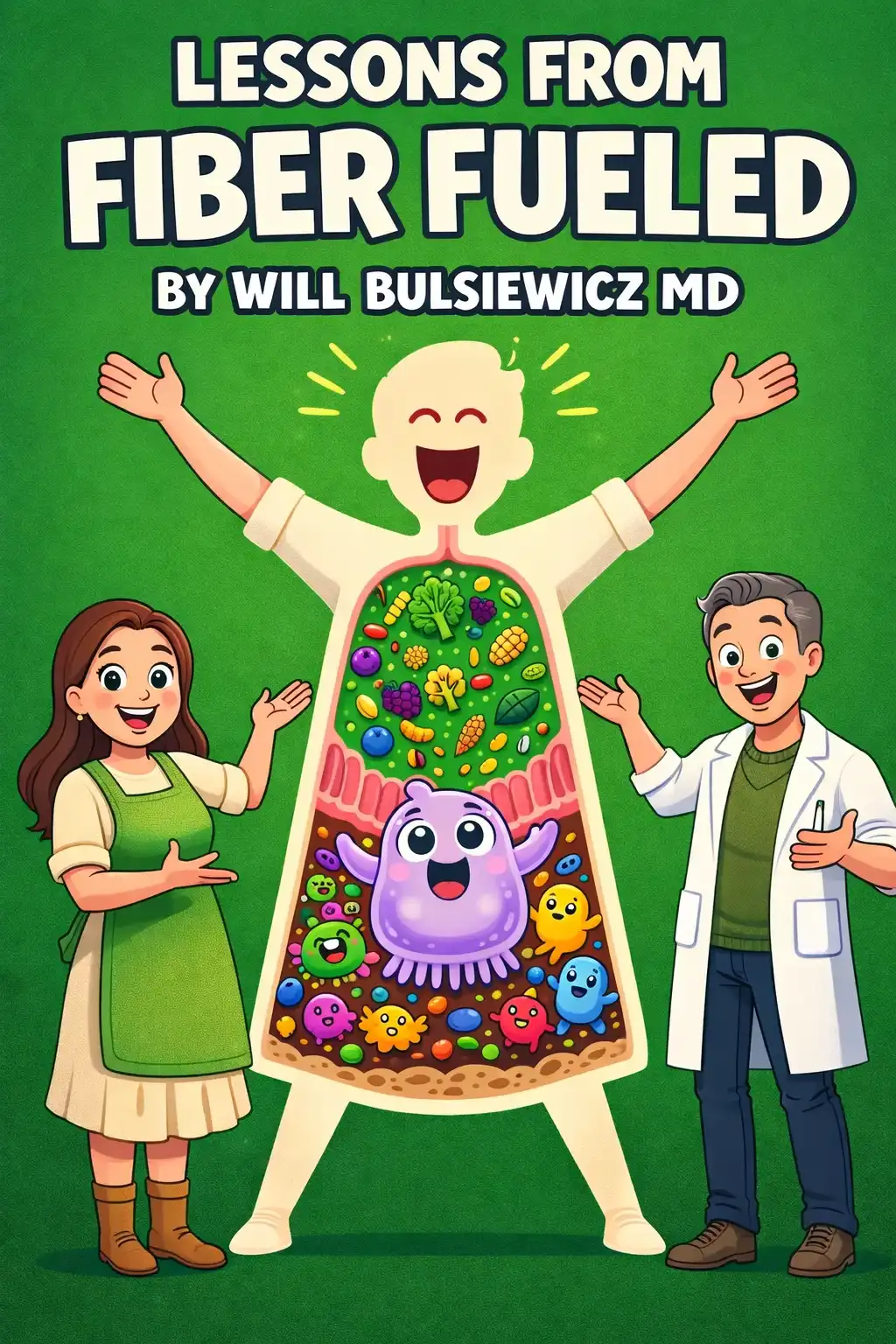






Fiber Fueled cover

Book summary: Fiber Fueled by Will Bulsiewicz MD

10 min read10 key lessonsText + animated summary

What if the most powerful medicine on the planet was already sitting in the produce aisle, and almost nobody was eating enough of it?

One-sentence summary

"Fiber Fueled," by gastroenterologist Will Bulsiewicz, reveals how feeding your gut microbiome with diverse plant fiber can completely transform your health.

Reading about Fiber Fueled is one thing.

Watching it is faster, more fun, and you'll actually remember it.

Lesson 1: The doctor who changed his own diet

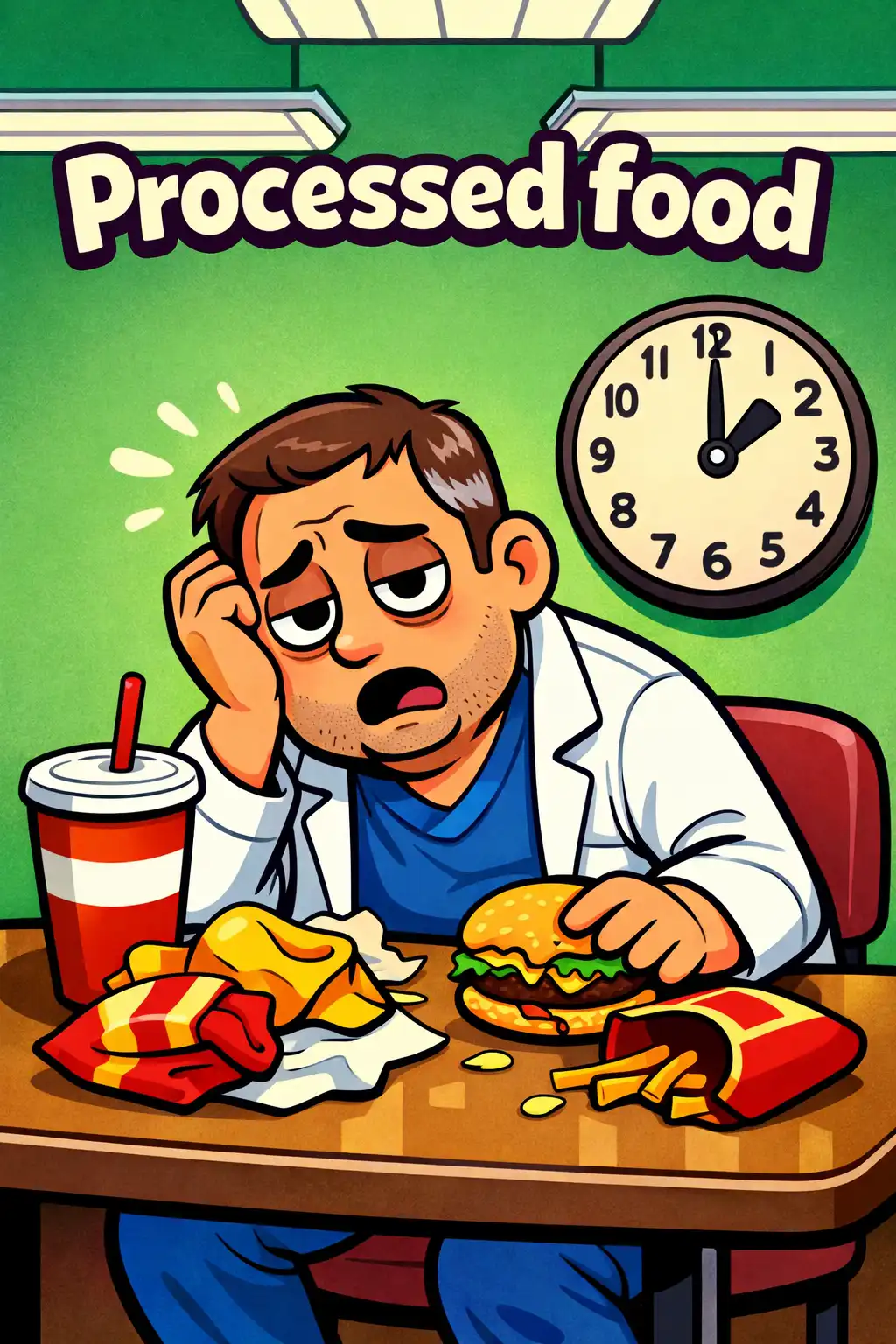
Picture a gastroenterologist nearly fifty pounds overweight, surviving on processed food through years of medical school and residency. Just like his patients.

That was Dr. Will Bulsiewicz. His future wife ate a plant-based diet, and he simply could not ignore how healthy she looked and felt compared to him.

So he quietly started eating more plants. The results stunned him. He dropped from 240 pounds to 190, without counting a single calorie.

When he dug into the research, he found over six hundred studies backing up what his body had already told him. Plants heal the gut.

He brought this approach to his clinic and watched hundreds of patients reverse diabetes, lose weight, and get off medications. This book explains how.

Lesson 2: You're only ten percent human

Imagine discovering that thirty-nine trillion tiny organisms are living inside your colon right now. They actually outnumber your own human cells.

That collection is called your gut microbiome. It is a vast community of bacteria, fungi, viruses, and other microorganisms. And most of them are working for you, not against you.

Like the Amazon rainforest, this ecosystem thrives on biodiversity. The more varied the species living in your gut, the stronger and more resilient it becomes.

Bulsiewicz explains that your microbiome controls five key areas: your immunity, your metabolism, your hormones, your brain function, and even which of your genes get switched on.

When that diversity collapses, harmful bacteria take over. The gut wall weakens, and inflammation spreads throughout the body. This damaged state is called "dysbiosis."

Here is the exciting part. Every food choice you make feeds certain microbes and starves others. Those populations can shift in as little as twenty-four hours.

Lesson 3: Modern life is wrecking your gut

Think about everything you touched today. Antibacterial soap, chlorinated water, processed snacks. Each one quietly chips away at your microbial diversity.

The twentieth century's war on bacteria conquered deadly infections, which was a triumph. But it accidentally devastated the helpful microbes our guts desperately need.

The industrial food system made things even worse. Over ten thousand additives are approved for American food, and many were never rigorously tested on humans.

Artificial sweeteners, emulsifiers, and preservatives have all been shown to damage gut bacteria. One additive called "trehalose" may have even fueled dangerous C. difficile infections.

Meanwhile, the Standard American Diet loads up on sugar, processed grains, and animal protein, while leaving almost no room for whole plant foods.

The world's longest-lived communities, known as "Blue Zones," eat at least ninety percent plant-based diets. They show us what our guts were actually built to thrive on.

Lesson 4: Fiber is the real superfuel

You might think of fiber as boring, something your grandparents sprinkled on cereal. But Bulsiewicz calls it the single most powerful nutrient in all of nature.

Ninety-seven percent of Americans do not eat enough fiber. That is almost everyone. And this widespread deficiency is quietly driving a long list of chronic diseases.

Fiber travels through your digestive system completely unchanged until it reaches your colon. There, your gut bacteria break it down using thousands of specialized enzymes.

This process creates compounds called short-chain fatty acids, especially one called "butyrate." These molecules repair your gut lining, calm inflammation, and power your colon cells.

Short-chain fatty acids also regulate your immune system, lower cholesterol, stabilize blood sugar, and even cross into the brain to improve memory and focus.

The Hadza people of Tanzania eat over a hundred grams of fiber daily and have extraordinary gut diversity. Most Americans barely manage fifteen grams.

Lesson 5: Diversity on your plate is everything

Imagine going to the gym but only ever training your right arm. You would be wildly unbalanced. That is what happens when you eat the same few plants every single day.

The American Gut Project, which is the largest microbiome study ever conducted, found that eating thirty different plant types per week was the strongest predictor of gut health.

That mattered more than whether someone was vegan, vegetarian, or omnivore. It is the variety that counts, not the label you put on your diet.

Every plant has a unique blend of fiber that feeds different microbial communities. A single apple can carry up to a hundred million beneficial bacteria all on its own.

Combining plants creates powerful synergies, too. Pairing turmeric with black pepper, for example, boosts absorption of the healing compound curcumin by two thousand percent.

Bulsiewicz calls this his "Golden Rule." No calorie counting. No rigid food lists. Just aim for a wide, colorful variety of whole plant foods every week.

Lesson 6: Start low and go slow

Here is the frustrating paradox. The people who need fiber the most are often the very same people who feel terrible when they try to eat it.

If beans give you gas or broccoli makes you bloat, that is not a reason to give up. Bulsiewicz says it is actually a sign your gut needs training.

He compares it to someone with a bad knee who stops walking entirely. There is short-term relief, sure. But long-term, the muscles weaken and the problem only gets worse.

Food sensitivities reflect specific weaknesses in your microbial community. And eliminating those foods only shrinks your gut's ability to handle them even further.

Many people who think they react to gluten are actually sensitive to "fructans." Those are short-chain carbohydrates found in wheat, garlic, and onions.

The solution is gradual exposure. Start with small amounts of gentle plant foods and slowly increase over time. Train your gut like an athlete preparing for a race.

Lesson 7: Fermented foods are ancient medicine

Think about sauerkraut, kimchi, miso, and tempeh. Every culture on Earth developed some form of fermented food. Yet most of us have replaced them with convenience products.

Fermentation works by letting beneficial microbes transform food. They lower the pH, crowd out harmful bacteria, and actually increase the food's nutritional value in the process.

Fermented foods generate vitamins, healthy acids, and special fibers that feed your gut bacteria. They can even reduce compounds like lectins and FODMAPs that cause digestive trouble.

Kimchi has been shown to lower cholesterol and support weight loss. Miso may protect against certain cancers. Sourdough bread has a lower blood sugar impact than regular bread.

Bulsiewicz says a small serving of fermented food each day goes a long way. You can even make sauerkraut at home with just cabbage, salt, and a jar.

Lesson 8: Remember your F GOALS

Imagine standing in a grocery store feeling overwhelmed by all the choices. Bulsiewicz gives you a simple acronym to cut through the noise: "F GOALS." It covers your essential plant categories.

"F" is for fruit and fermented foods. Whole fruit is packed with fiber and protective plant chemicals. Do not fear the natural sugar, but avoid juicing, which strips away the fiber.

"G" stands for greens and whole grains. Leafy greens like kale score perfect on nutrient density scales, and whole grains provide essential fuel for your gut bacteria.

"O" is for omega-3 super seeds like flax, chia, and hemp. "A" is for aromatics, especially garlic and onions. These fight harmful bacteria, especially when chopped and rested before cooking.

"L" stands for legumes, which are loaded with prebiotic fiber. And "S" is for sulforaphane, found in cruciferous vegetables. Broccoli sprouts contain a hundred times more than mature broccoli.

Lesson 9: Build a lifestyle, not a diet

Think about every diet you have tried and eventually abandoned. Bulsiewicz says "Fiber Fueled" is not a diet at all. It is a permanent shift in how you relate to food.

The long-term target is ninety percent whole plant foods, with ten percent flexibility. That mirrors how Blue Zone populations eat, and it removes the pressure of perfection.

Because fiber and resistant starch naturally trigger fullness hormones, you can eat without obsessing over portions and still lose weight. The fiber does the calorie counting for you.

Timing matters, too. Bulsiewicz recommends at least thirteen hours of overnight gut rest. He suggests making lunch your biggest meal, and eating dinner on the earlier side.

Sleep, exercise, time in nature, human connection, and stress management all shape your microbiome. Even five minutes of daily mindfulness helps keep your gut environment calm and balanced.

Lesson 10: Four weeks to transform your gut

Picture yourself twenty-eight days from now with a stronger gut, fewer cravings, and more energy. That is the promise of the "Fiber Fueled" four-week plan.

Research shows that four weeks is roughly the time your microbiome needs to adapt to more fiber, build new enzymes, and ramp up short-chain fatty acid production.

Week one starts gently with gut-friendly recipes, while sweeping out processed foods. Each following week gradually introduces more complex ingredients to train and strengthen your gut.

There is a fun tracking system called "Plant Points." You earn one point per unique plant in each meal. The goal is to keep diversifying and watch your score climb.

At the end, you identify your favorite meals and build a personal rotation for life. The four weeks are not the destination. They are the launchpad.

Bulsiewicz reminds us that every single meal is a chance to feed the trillions of allies living inside you. Start small, keep going, and let fiber do the rest.

You've read the summary. Now watch it.

The animated version covers the same ideas — faster, and in a format you'll actually remember.