









How to Read a Book cover

How to Read a Book Summary: 10 best lessons in 10 mins

10 min readMortimer J. Adler's book, summarized

Topics will appear here once mapped for this book.

One-sentence summary

**How to Read a Book by Mortimer J. Adler** teaches you how to read actively, so that even the most difficult books leave you sharper, smarter, and genuinely better prepared.

Picture this. Priya is standing at her kitchen counter at 11 p.m., highlighter in hand, staring down a dense policy book her city council meeting needs her to actually understand by Thursday.

(Continued below)

Reading about How to Read a Book is one thing.

Watching it is faster, more fun, and you'll actually remember it.

Open in app

Lesson 1: Reading is an active sport

Priya is a paralegal in Columbus who recently joined her neighborhood area commission, and she has been rereading the same page about zoning law for a solid twenty minutes.

Her eyes are moving, but nothing is sticking. She keeps hoping the words will somehow soak in if she just stays patient enough.

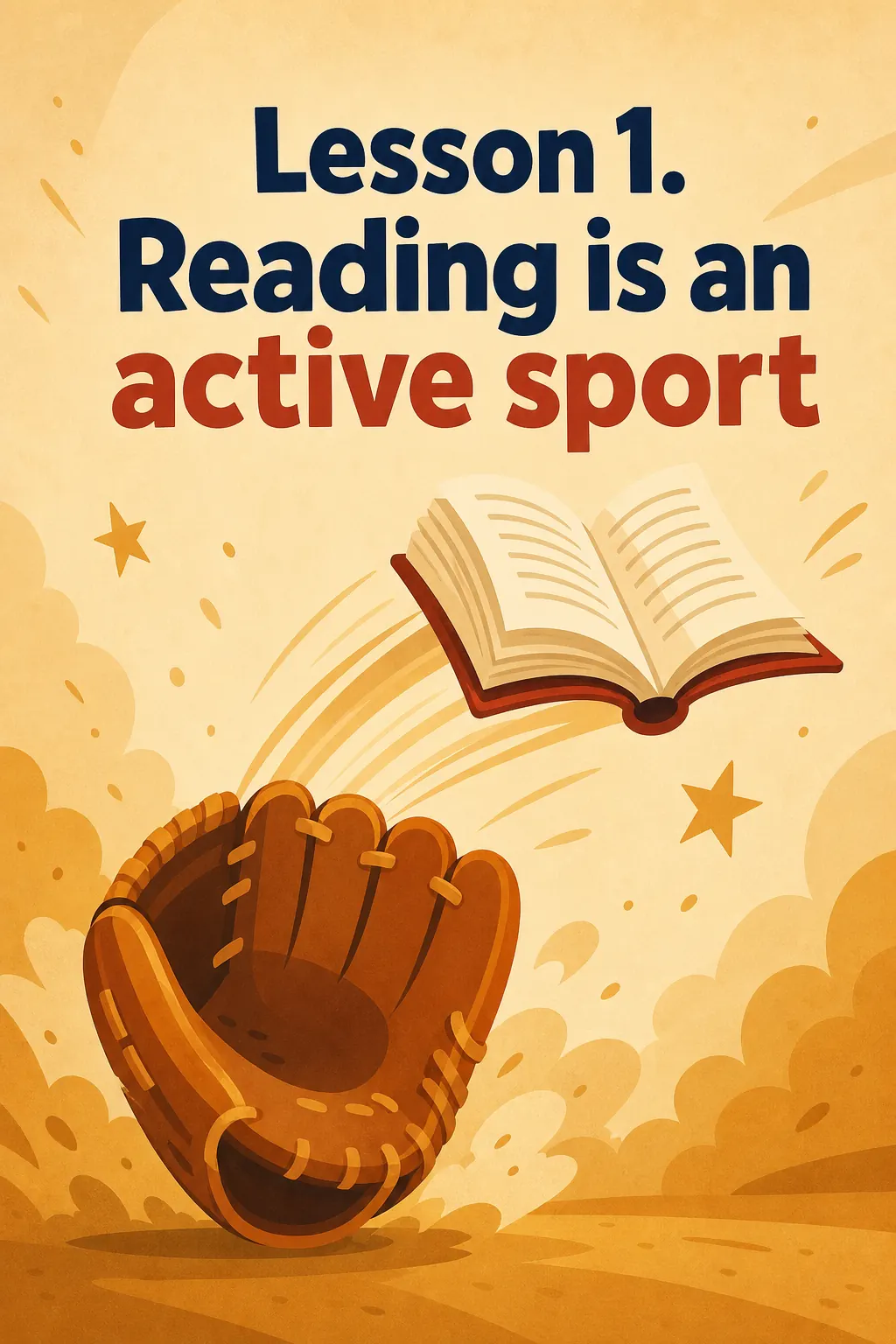
Adler would say that's exactly the problem. Reading, he argues, is never passive. It's more like being the catcher in a game of baseball.

The author is the pitcher, throwing ideas your way. You, the reader, have to actively reach out and catch them. Drifting eyes catch nothing.

Adler also separates two very different goals. Reading for information just adds facts you already understand. Reading for understanding stretches you from knowing less to knowing more.

Priya realizes she has been waiting around to be taught. Instead, she needs to work the book, wrestling with it until the meaning actually emerges.


Lesson 2: The four levels of reading

Pen ready, Priya wonders where to even begin. Luckily, Adler hands her a map. He describes four levels of reading, each one building on the last.

Level one is elementary, which is really just decoding the words on the page. Most adults finished this in grade school, though many never advanced much beyond it.

Level two is inspectional. That's a fast, systematic skim to grasp a book's overall shape and decide whether it deserves any deeper attention.

Level three is analytical. This is slow and thorough, chewing on a difficult book until you truly understand what it's saying.

Level four is syntopical, where you compare many books on a single subject and build your own analysis across all of them.

Priya glances at her policy book. She has been forcing herself into analytical reading without first inspecting it. No wonder she feels so lost.

Lesson 3: Inspect before you commit

Next morning, coffee in hand, Priya tries Adler's inspectional approach. She reads the title page, the preface, and even the publisher's blurb on the back.

Then she studies the table of contents like a road map, scans the index for key terms, and flips through a few pivotal-looking chapters.

Adler insists you always read the final pages too, because that's usually where authors gather up their main conclusions.

Within forty minutes, Priya knows the book's scope, its core argument, and which two chapters actually matter for Thursday's meeting.

Adler adds a second tip too. On a really tough book, read straight through once without stopping at the confusing parts.

Getting half the meaning on a first pass beats stalling on page three and never finishing the book at all.

Lesson 4: Ask four questions

That evening, Priya wants to dig deeper, but she doesn't know how to push past surface understanding into real engagement.

Adler gives her four questions every active reader must ask. First, what is this book about as a whole?

Second, what is being said in detail, and how? Third, is it true? And fourth, what of it, so what?

He also urges readers to write in their books. Underline things. Scribble margin notes. Argue back. Make reading a real conversation with the author.

Priya feels a little guilty about marking up a library book, but she's borrowed her own copy from a friend, so she dives in.

She underlines key claims, jots questions in the margins, and writes a one-sentence summary at the top of each chapter.

Lesson 5: Know what kind of book

Halfway through, Priya hits a stretch that feels strangely off. The book seems to switch from explaining ideas to telling her what to do.

Adler explains exactly why this matters. Before you start, classify the book. Is it fiction or expository? Is it theoretical or practical?

Theoretical books deal in what is. Practical books, like ethics or how-to guides, deal in what should or ought to be.

Within theory, Adler distinguishes history, science, and philosophy. Each one argues differently, and each must be read with different expectations and tools.

Priya realizes her zoning book actually mixes both modes. Part of it analyzes housing patterns. Part of it prescribes what cities should do.

Once she sees the shift, the writing suddenly makes sense. She reads the descriptive parts neutrally and the prescriptive parts critically.

Lesson 6: Find the skeleton and terms

Priya wants to explain the book at Thursday's meeting, but she keeps fumbling when council members ask her, so, what's the main point?

Adler tells her to state the book's unity in a single sentence. If it takes her a paragraph, she hasn't really grasped it yet.

Then she should map the major parts and how they fit together, like rooms in a house, all connected but each doing its own distinct work.

Next, find the important words and pin down exactly how the author is using them. Adler calls this coming to terms.

A word is just letters on a page. A term is a word used with a specific, shared meaning between writer and reader.

Priya notices the author uses density in a technical way, not the everyday sense. She jots that exact definition on a sticky note.

Lesson 7: Disagree without being a jerk

At the council meeting, an older member dismisses the book's argument outright, calling it nonsense without engaging with any specifics.

Priya bites her tongue. Adler's third stage of analytical reading flashes through her mind. Critical judgment has rules too.

First rule, understand before you judge. You can't agree or disagree with something you haven't actually grasped.

Second rule, don't be combative. Truth matters more than winning. Reading like it's a battle just makes you miss everything important.

Third rule, treat disagreements as solvable. Most of them come from misunderstanding or missing knowledge, both of which can be fixed.

Adler offers four valid grounds for disagreement. The author is uninformed, misinformed, illogical, or their analysis is simply incomplete.

Lesson 8: Read fiction differently

Friday night, exhausted, Priya picks up a novel her sister recommended. She catches herself underlining and hunting for key terms.

Adler would laugh. Imaginative literature plays by completely different rules. Don't resist the emotional effect. Don't hunt for logical arguments.

Don't judge a story by factual truth either. A novel only needs to be plausible inside the world its author has built.

Instead, identify the type of story, follow the plot's unity, get to know the characters, and just let the world wash over you.

Adler suggests reading a novel quickly, ideally in one sitting, so the shape of the story stays alive in your mind.

Priya puts the pen down. She curls up on the couch and just reads, letting the characters and tension carry her forward.

Lesson 9: Compare many books on one topic

Months later, Priya is leading a housing affordability committee. One book isn't enough anymore. She has fifteen of them stacked on her desk.

**Adler calls this syntopical reading, the highest level**, where you compare many books on a shared subject to build your own analysis.

Step one, inspect all the books quickly. Don't read each one analytically yet. Just find which ones genuinely speak to your question.

Step two, build neutral terminology, since different authors often use different words for the same idea, or the same word for very different ideas.

Step three, frame clear questions that most authors can be interpreted as answering, even if they never explicitly asked them.

Step four, map the disagreements. And step five, order the questions and issues so the whole conversation sheds maximum light on the subject.

Lesson 10: Read books that stretch you

A year in, Priya's bookshelf has grown. She notices something Adler warned about. The mind, unlike the body, has no growth ceiling.

But it can quietly atrophy. Passive entertainment fakes mental activity without actually nourishing it. Only books that stretch you actually build the muscle.

Adler describes a pyramid. Most books reward only skimming. A few thousand deserve one careful, analytical read.

At the very top sits a tiny number of truly great books that grow alongside you, revealing new layers every time you return.

Priya picks one such book off her shelf, opens to chapter one, and starts again, this time with a pen in hand.

Reading well, she now understands, isn't a task you ever finish. It's a way of staying genuinely awake for the rest of your life.

You've read the summary. Now watch it.

The animated version covers the same ideas — faster, and in a format you'll actually remember.