A detailed summary ofThe Snowball (Warren Buffett's Biography)by Alice Schroeder
The Snowball by Alice Schroeder is the definitive biography of Warren Buffett, tracing how a numbers-obsessed kid from Omaha compounded small beginnings into extraordinary wealth and hard-won wisdom.
Watch the first minute
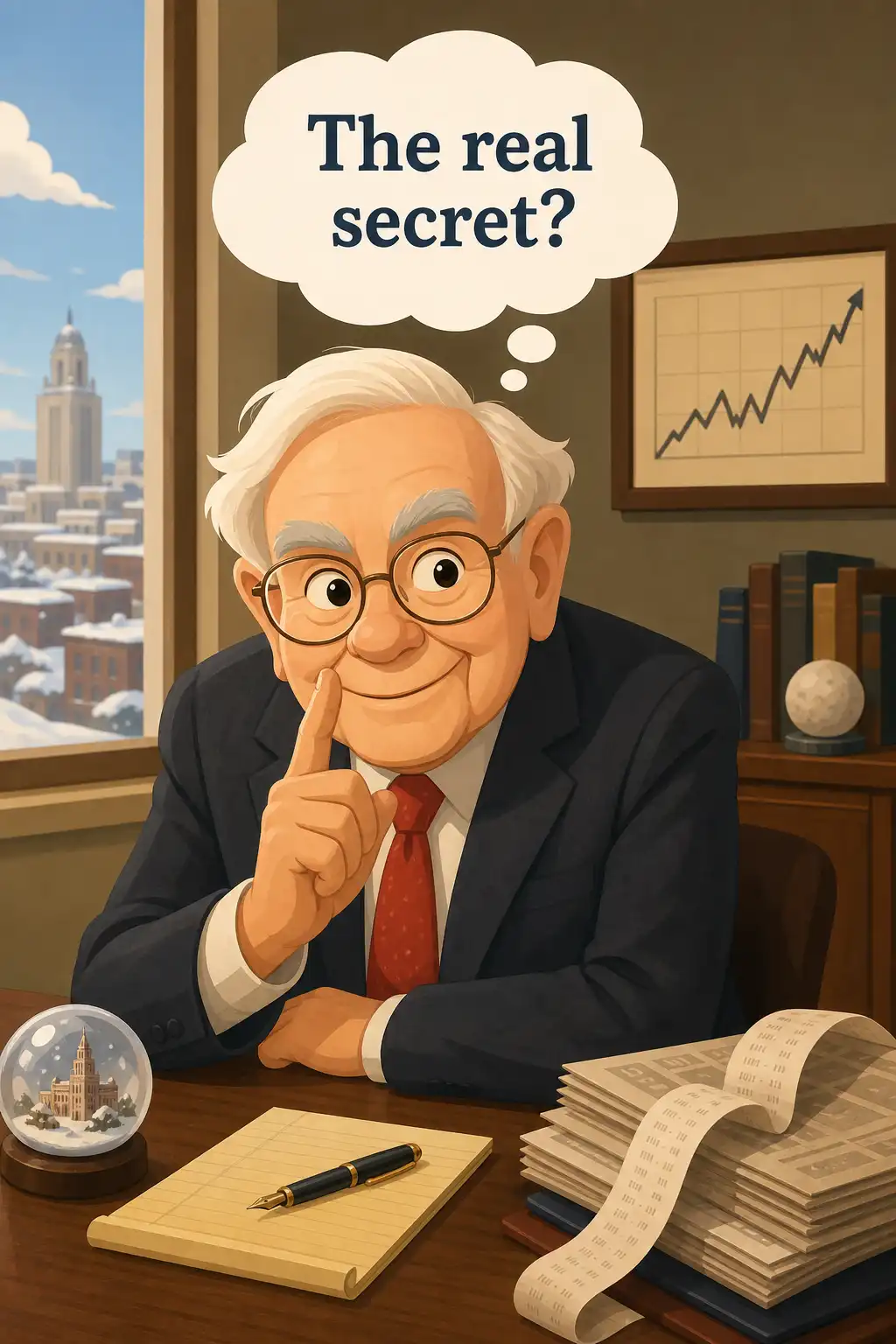







What if the world's most famous investor
0:00 / 1:00
60-second animated preview
Key ideas, illustrated
Rolling the Snowball: Buffett's Life Timeline
Cigar Butts vs. Wonderful Businesses
The Snowball Formula
The Snowball (Warren Buffett's Biography) Summary
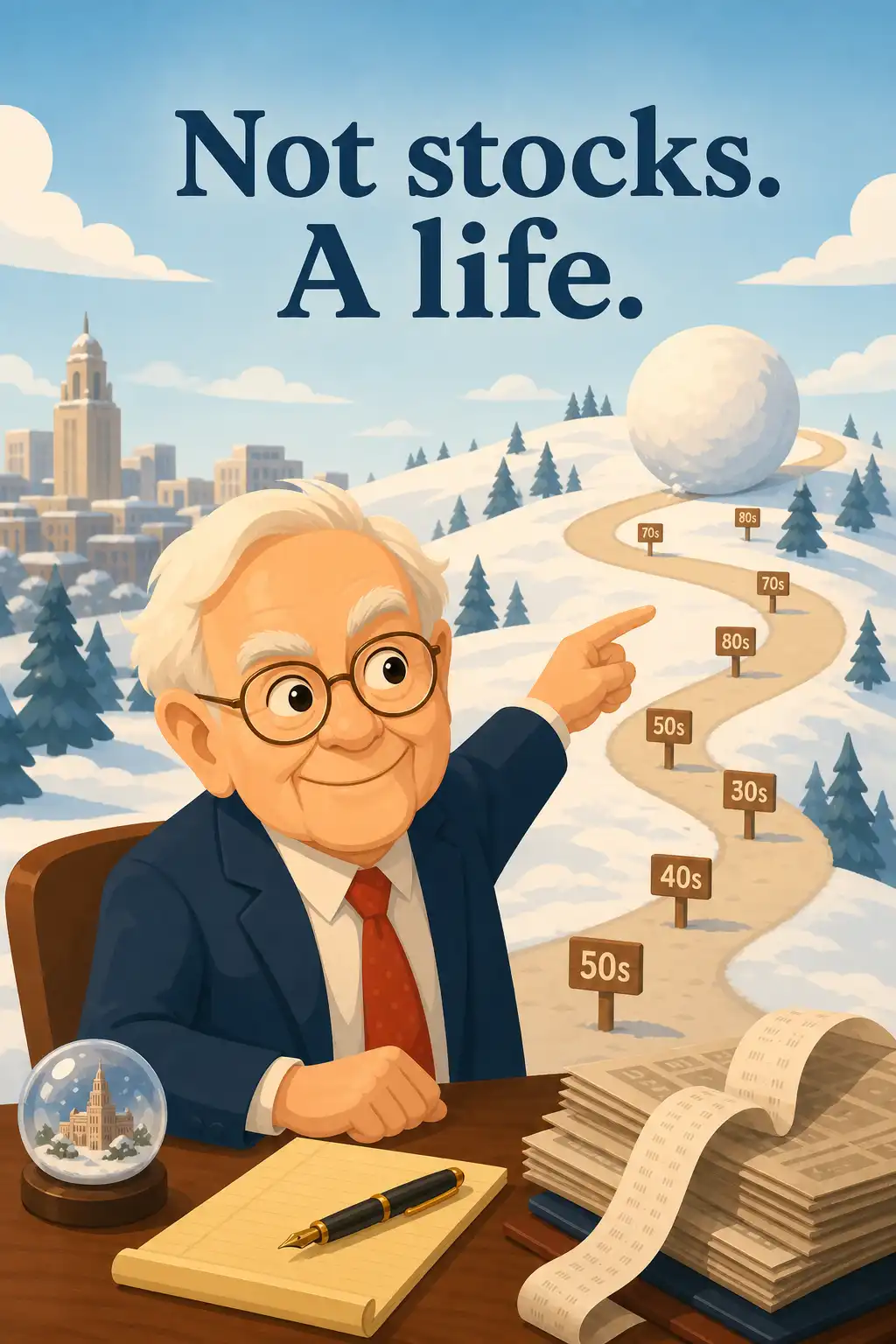
What if the world's most famous investor told you the real secret to his fortune wasn't picking stocks, but the way he chose to live his entire life?
1. Small beginnings compound into something vast
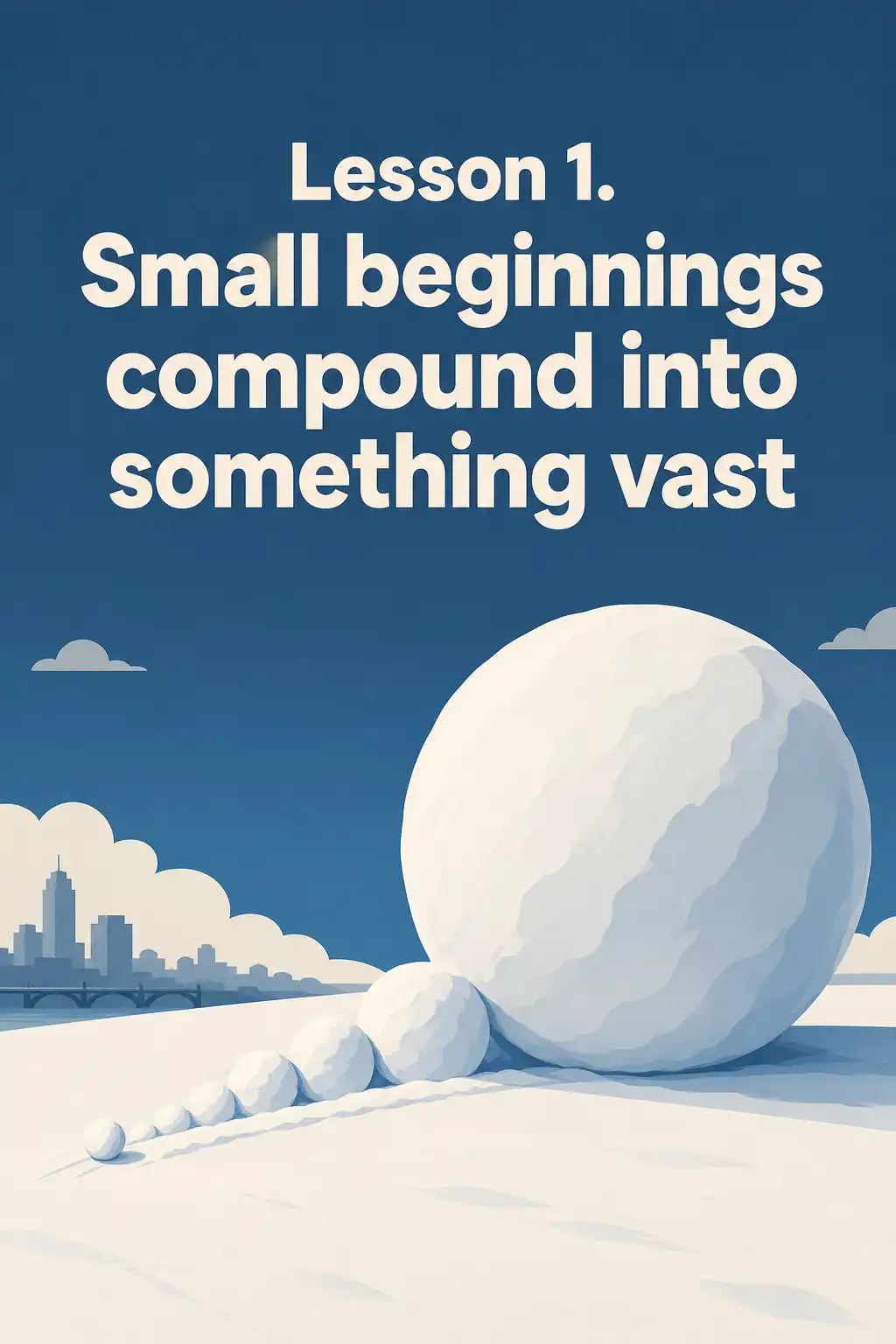
Picture a nine-year-old boy out in the snow with his little sister Bertie. He catches single snowflakes, packs them into a ball, and rolls it slowly across the lawn.
As it rolls, it gathers more snow and grows heavier. When it reaches the edge of the yard, young Warren Buffett just keeps pushing it out into the neighborhood.
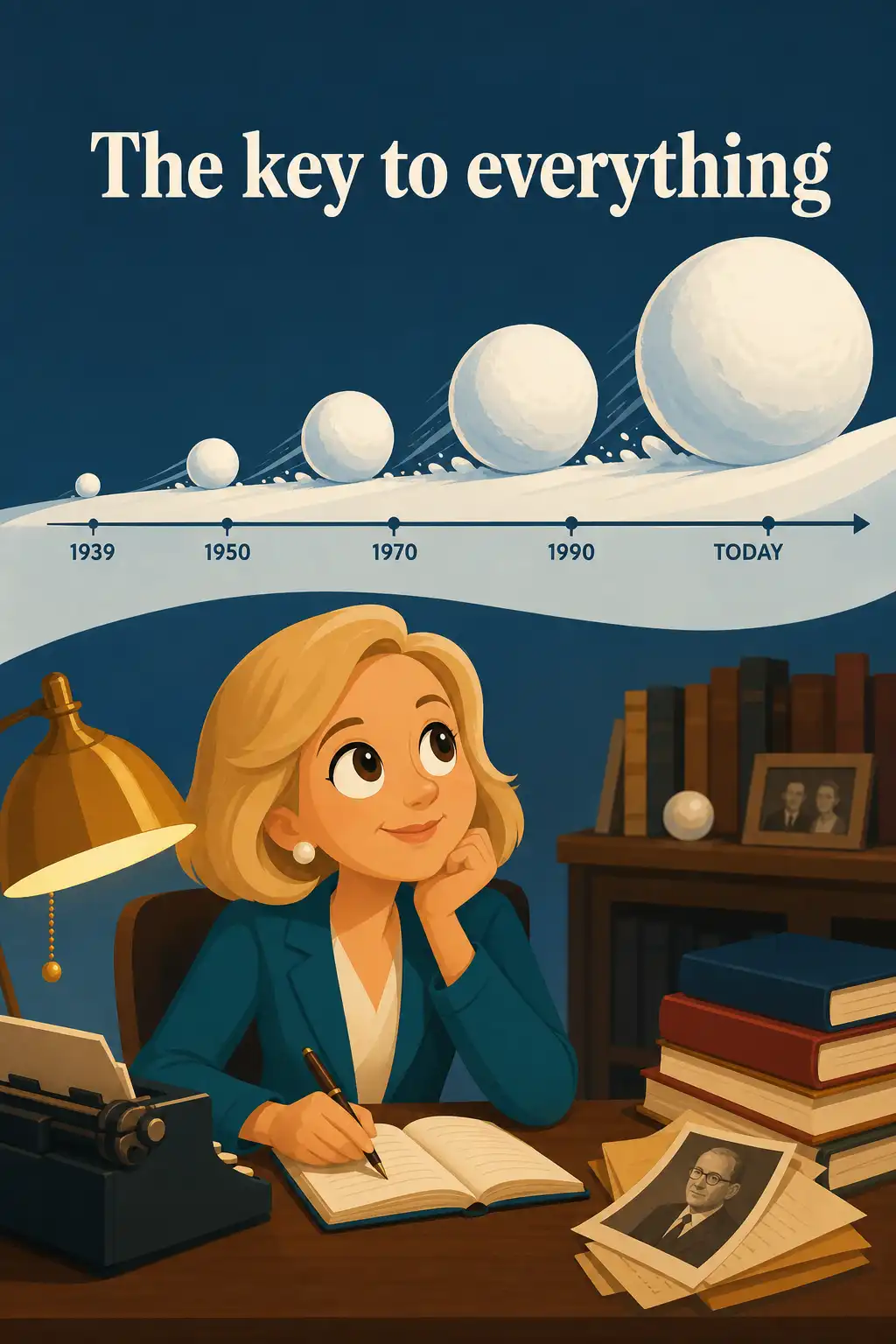
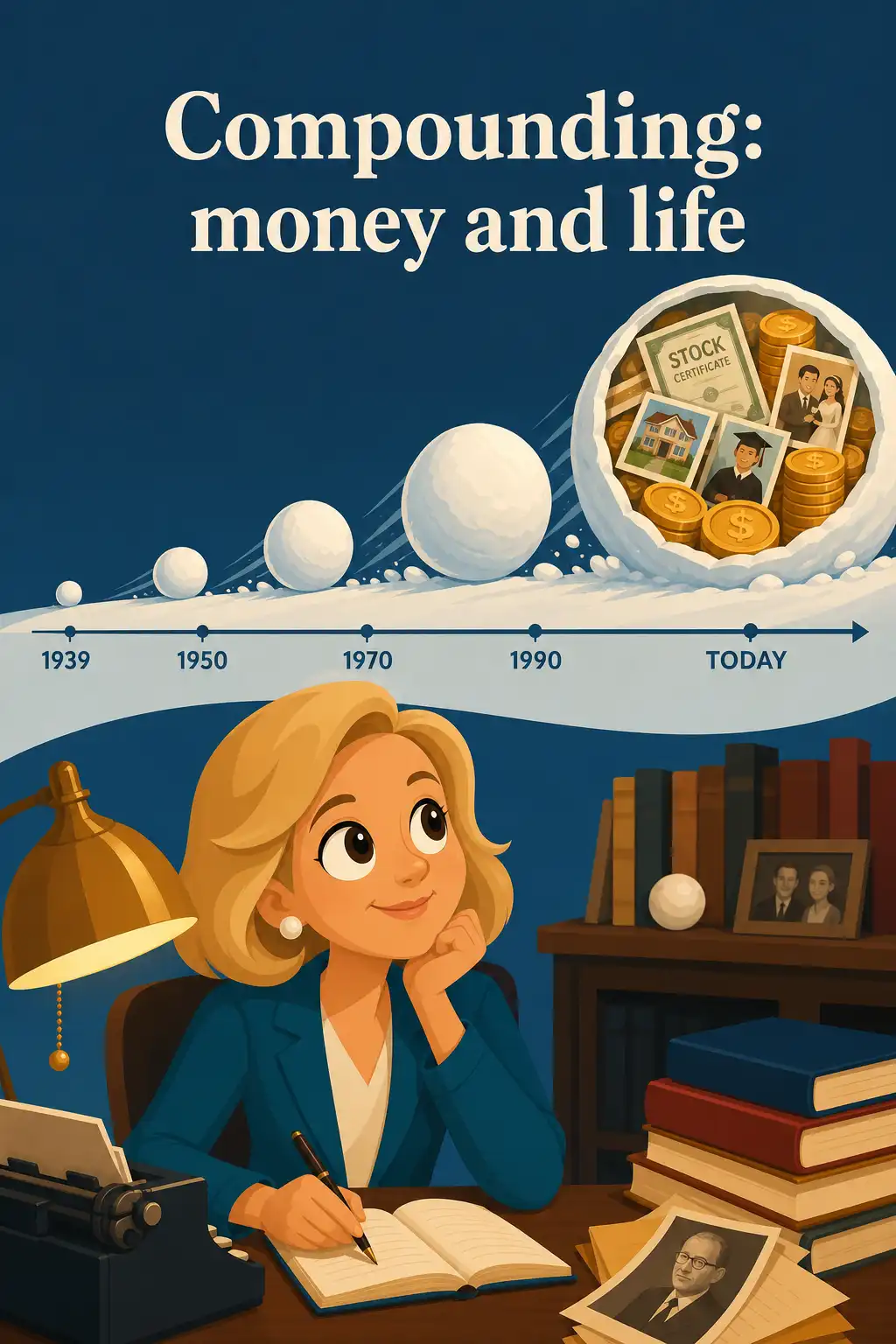
Alice Schroeder opens her book with that image because it's the key to everything. Small starts, kept rolling long enough, become enormous. That's compounding, in money and in life.
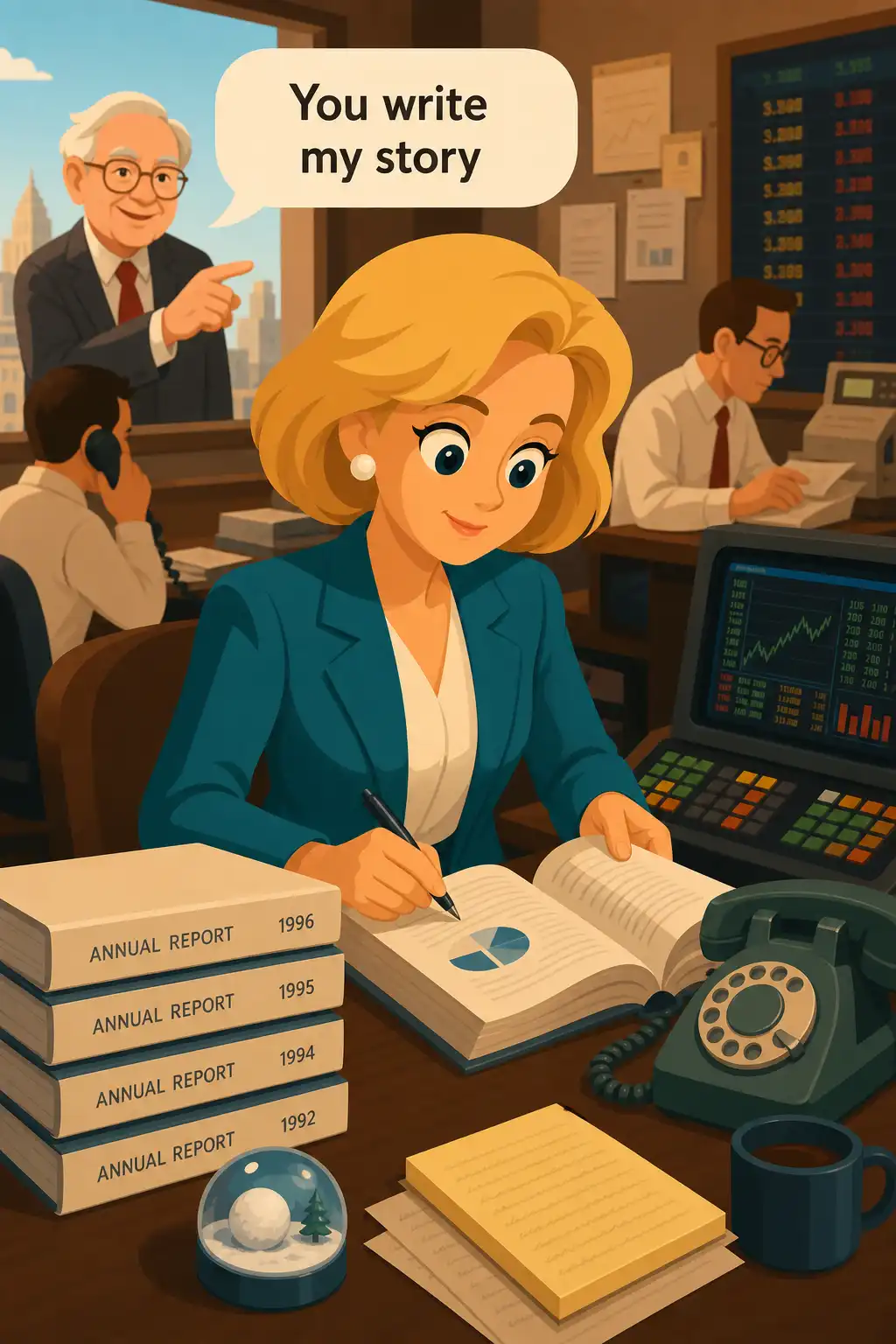
Schroeder was a financial analyst covering Berkshire Hathaway stock when Buffett chose her to write his life story instead of writing it himself.
She met him in 2003 in his modest Omaha office. A seventy-two-year-old billionaire sitting behind his late father's plain wooden desk, surrounded by fifty years of mementos.
He gave her one remarkable instruction. Whenever his version of events differed from someone else's, she should use the less flattering one.
Watch it come to life
Watch The Snowball (Warren Buffett's Biography) instead
Explore this summary and the Braintoon library.
2. Obsession starts early and needs an outlet
Warren grew up in Depression-era Omaha. His father Howard was a stockbroker whose bank collapsed in 1931, and yet he built a brand new firm even as the markets kept crumbling.
Home was harder. His mother Leila suffered violent rages directed at her children, leaving lasting emotional damage. Warren learned to stay away, finding warmth with neighbors and his aunt.
So the lonely boy poured himself into numbers. He timed marble races with a stopwatch, calculated hymn composers' lifespans in church, and collected bottle caps and license plate numbers.
By age six he was selling chewing gum door to door, then Coca-Cola bottles, magazines, and stadium popcorn, and he recorded every single cent in a little maroon passbook.
At ten, a library book called One Thousand Ways to Make a Thousand Dollars introduced him to the magic of compounding. He told a friend he'd be a millionaire by thirty-five.
At eleven he bought his first stock, three shares of Cities Service Preferred. It dropped, recovered slightly, and he sold for a tiny profit. Then it soared to two hundred two dollars a share.
3. Painful mistakes teach the deepest rules
Here's something surprising. The teenage Warren Buffett was briefly a delinquent. After his father won a seat in Congress, the family moved to Washington, and Warren was absolutely miserable.
He shoplifted golf clubs from Sears, forged fake letterheads, and let his grades collapse. What finally broke through? His father quietly threatened to take away his paper routes.
Those routes mattered because they were his empire. He delivered the Washington Post to senators and Supreme Court justices, sold magazine subscriptions on the side, and chased down every overdue payment.
By fourteen he'd saved a thousand dollars and filed his first tax return. In high school, he and a friend even ran pinball machines in barbershops across Washington.
He also studied horse racing like a scientist, calculating each horse's real odds and only betting when the payouts exceeded the actual risk.
But one day at the track he lost badly and kept chasing his losses until more than a hundred seventy-five dollars was gone. Weeks of paper-route earnings, vaporized in an afternoon.
4. Think independently, with a margin of safety
At nineteen, Buffett applied to Harvard Business School and got rejected. Shaken, he flipped through Columbia's catalog and spotted two names that jumped off the page: Benjamin Graham and David Dodd.
Graham was the father of value investing, and Buffett had already memorized his book Security Analysis so thoroughly he could quote any passage. He got into Columbia.
Graham taught three ideas that transformed him. A stock is a piece of a real business. Always demand a margin of safety. And treat the market's moods as your servant, never your master.
One humbling moment sealed it. When an investor asked Buffett why he owned a certain stock, he answered that Graham had bought it. The man replied, strike one.
Stung, Buffett did his own homework on GEICO, an insurer Graham happened to chair. He rode a train down to Washington and spent four hours grilling an executive on a Saturday.
He grasped that GEICO's low-cost model, selling insurance without agents, made it exceptional. He sold most of his portfolio and bet heavily, ignoring analysts who insisted it couldn't compete.
5. Structure matters as much as stock picks
In 1956, twenty-six-year-old Buffett launched his first partnership in Omaha with seven investors, mostly family and friends. He put in just one hundred dollars of his own money.
His fee structure was brilliant and fair. He charged nothing below a four percent return, took half the gains above it, and personally absorbed a quarter of any losses.
In 1959 came a fateful lunch at the Omaha Club with Charlie Munger, a sharp lawyer from a prominent local family. The two talked so intensely their companions simply got up and left.
Munger told his wife afterward that Buffett was no ordinary human being. He'd become Buffett's lifelong partner, and gradually push him beyond Graham's bargain-bin approach.
Not everything went smoothly. When Buffett took over Dempster Mill, a struggling Nebraska windmill maker, a turnaround expert laid off a hundred workers and the whole town erupted in fury.
Buffett made money for his partners, but being despised by an entire community deeply unsettled him. He vowed never to repeat it. Reputation, he realized, was part of the return.
6. Buy wonderful businesses, not cheap ones
Ironically, Berkshire Hathaway itself, the company that made Buffett famous, started as his biggest mistake. A dying Massachusetts textile mill he bought partly out of spite back in 1965.
He later called it a soggy cigar butt with no puffs left. The real magic came from what he attached to it.
First, National Indemnity, an insurance company. Buffett saw that premiums collected today but paid out later, called float, could fund investments in the meantime. Self-sustaining capital.
Then in 1972 came See's Candies, a beloved California chocolate brand, bought for twenty-five million dollars. Munger had convinced him that a great business at a fair price beats a fair business at a great price.
Buffett also learned to bet on great operators. Rose Blumkin fled Russia as a penniless young woman and built the Nebraska Furniture Mart into the largest indoor furniture store in America.
In 1983 she sold ninety percent to Berkshire for around sixty million dollars on a handshake, no audit needed. Buffett's philosophy: buy obsessive owners, then leave them alone.
7. Guard your reputation ruthlessly
In August 1991, a phone call reached Buffett on vacation. Salomon Brothers, the Wall Street firm where Berkshire had invested seven hundred million dollars, was in serious trouble.
A trader named Paul Mozer had submitted fraudulent bids in Treasury bond auctions. Worse, senior management had known for months and told regulators absolutely nothing.
When the story broke, Salomon's stock cratered and clients fled. Then the Treasury banned the firm from government auctions, a move that threatened outright bankruptcy and global financial contagion.
Buffett made a personal plea to the Treasury Secretary, and the ban was partially lifted. He then stepped in as interim chairman, working for a salary of one dollar.
He fired the general counsel, waived attorney-client privilege to show total cooperation with prosecutors, and slashed the lavish bonuses that had defined the firm's culture.
Testifying before Congress on his own birthday, he delivered his famous line. Lose money for the firm, and he'd be understanding. Lose a shred of reputation, and he'd be ruthless.
8. Score yourself by your own standards
By 1999, the world thought Buffett was finished. The internet boom sent the NASDAQ up eighty-six percent while Berkshire's stock fell from around eighty thousand dollars a share down to fifty-six thousand.
Barron's ran a cover story asking, Warren, what's wrong? Ninety-nine percent of his wealth sat in Berkshire stock, and he still refused to buy a single tech company.
That July, at the exclusive Sun Valley conference packed with tech titans, Buffett gave a rare speech arguing that the market could only reflect what the economy actually produced.
He warned that revolutionary industries like automobiles and airlines had historically destroyed investor wealth, and predicted stocks would return around six percent a year. The room went politely, resentfully silent.
How did he withstand years of ridicule? He credited what he called the Inner Scorecard, an internal compass inherited from his father Howard, a congressman so principled he once refused a pay raise.
The idea is simple but rare. Judge yourself by your own standards and facts, not by the applause of the crowd. Would you rather be the world's best investor everyone thinks is worst, or the reverse?
9. The business of life is love
For all his brilliance, Buffett paid a real price at home. His wife Susie, who had nurtured him back from a damaged childhood, felt she always came second to his obsession.
In 1977 she moved to San Francisco. Buffett was devastated, weeping daily, later admitting the separation was almost entirely his fault. They stayed married and close until her death in 2004.
Losing her taught him what no balance sheet could. Schroeder describes him finally learning to care for someone else, holding Susie through her cancer, then growing closer to his children.
He often told students his genie fable. Imagine a genie gives you one car that must last your entire lifetime. You'd read the manual and fix every scratch immediately.
Your mind and body work exactly the same way, he'd say. You get one of each, and how you treat them today determines how they hold up decades from now.
He also believed his fortune came partly from winning what he called the ovarian lottery, the pure luck of birthplace and circumstance. That conviction shaped his greatest act.
Watch it come to life
Watch the animated summary
Explore this summary and the Braintoon library.