A detailed summary ofThe Untethered Soulby Michael Singer
The Untethered Soul by Michael Singer teaches you how to step back from your thoughts and emotions, quiet the inner noise, and find real, lasting freedom inside yourself.
Watch the first minute









You know that voice
0:00 / 1:00
60-second animated preview
Key ideas, illustrated
The Voice vs. The Witness
The Thorn: Protect It or Remove It
Keep Your Heart Open: Releasing Samskaras
The Untethered Soul Summary
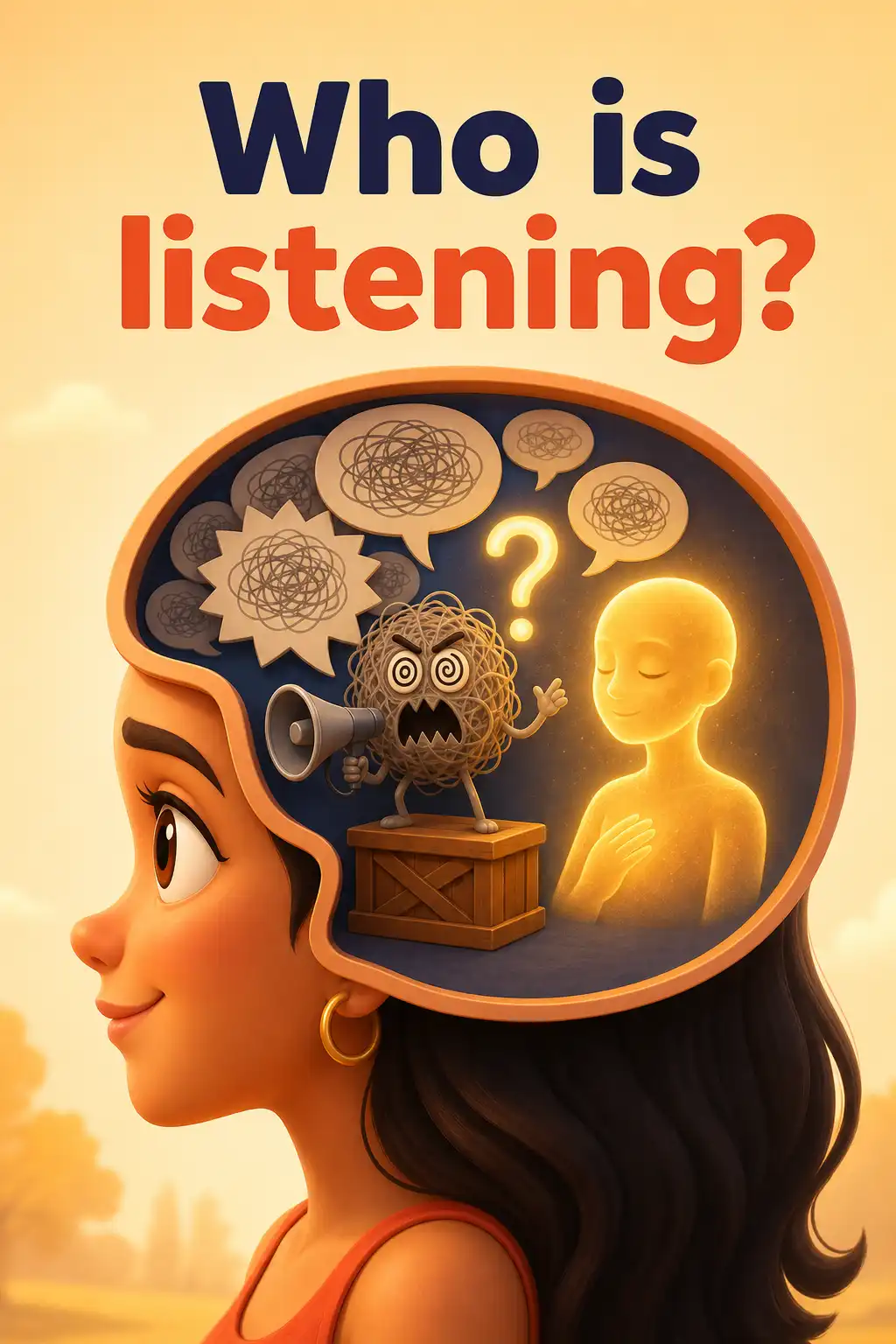
You know that voice in your head that never, ever shuts up? Here's a weird question. If you can hear it talking, then who exactly is doing the listening?
1. Which self are you supposed to be true to?
Shakespeare famously wrote, to thine own self be true. Sounds great. But honestly, which self? The one raging in traffic, or the calm one that shows up on vacation?
Even psychology kind of punts on this. Freud split the mind into id, ego, and superego, which really just means three forces fighting inside you with no referee. Still no clear answer about who's actually you.
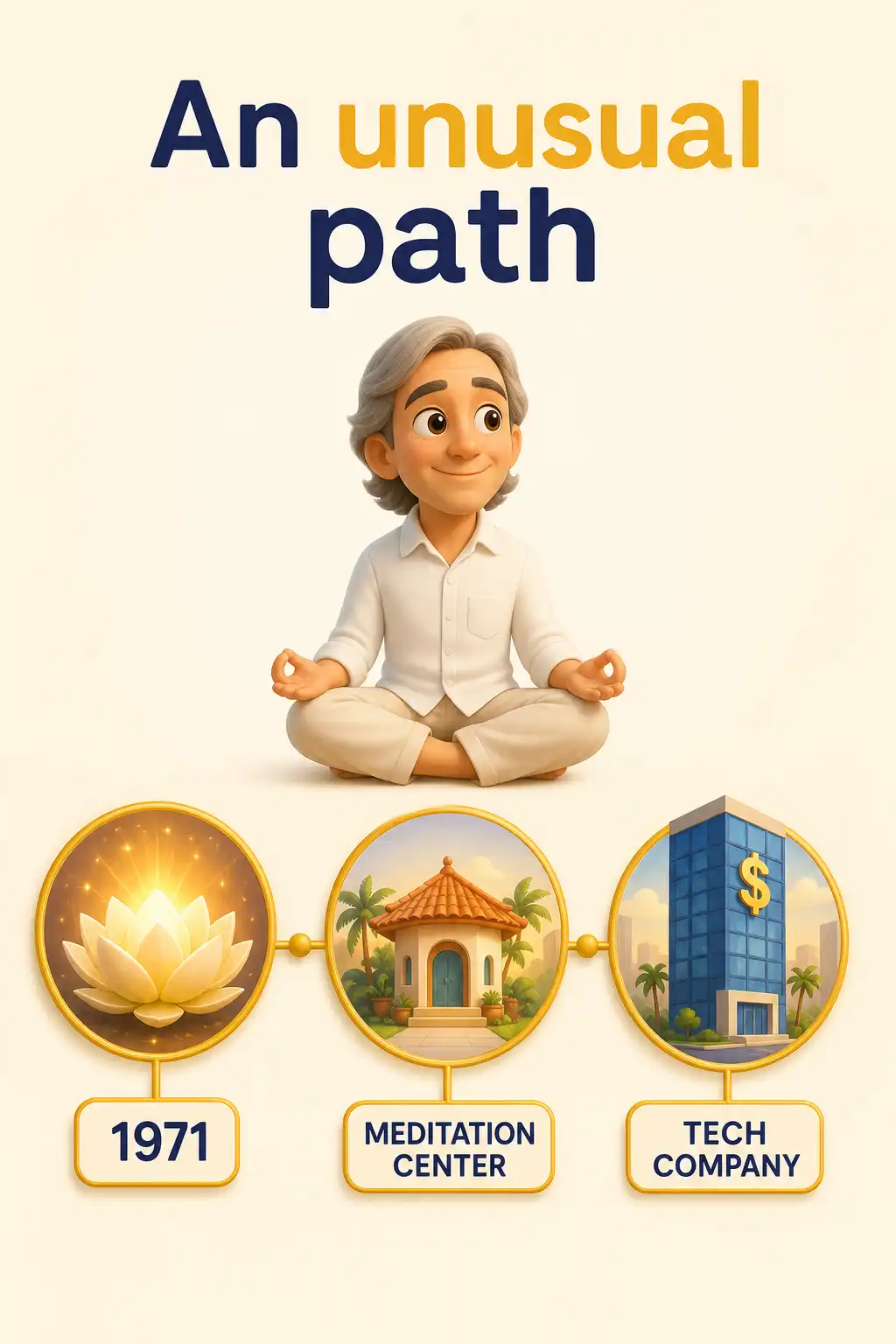
Michael Singer took an unusual route to answering this. He had a profound awakening in 1971 during his economics doctorate, founded a meditation center, and then somehow also went on to build a billion-dollar tech company.
His method isn't about quoting gurus at you. He says look at your own direct experience, from the inside. Each chapter of the book is a mirror, showing you a different angle of yourself.
And his promise is genuinely comforting. You haven't lost yourself. You've just gotten distracted. Pay attention properly, and you can not only find yourself, you can actually free yourself.
Meet Nicole. She's a high school teacher in Miami. It's midnight, and she's replaying one awkward comment from a parent meeting for the fortieth time, wide awake and miserable.
Watch it come to life
Watch The Untethered Soul instead
Explore this summary and the Braintoon library.
2. The voice in your head is not you
There's a narrator running in your skull nonstop. It argues both sides of every decision, spirals at bedtime, and comments on strangers' outfits at the grocery store. It literally never clocks out.
Here's Singer's core insight, and it's huge. You are not that voice. There's the voice, and there's the one who hears the voice. Those are two completely different things.
So why does it even talk so much? Partly to release built-up emotional pressure, like a valve letting off steam. And partly to narrate the world so that reality feels labeled, organized, and safe.
The catch is, you end up living inside a mental model of life instead of actual life. The voice started out as your protector, and now it just never stops guarding.
Singer says step back and notice the quiet awareness underneath all the chatter. That silent watcher, he claims, is the actual doorway to waking up.
Nicole tries this while grading essays one night. Her voice starts predicting she'll get a bad review this year, and then, weirdly, she notices herself noticing the prediction.
3. Meet your terrible inner roommate
Here's a fun exercise from Singer. Imagine your inner voice as an actual person sitting next to you all day, jumping topics, starting arguments with itself, panicking over nothing.
You would never take life advice from that person. And yet, you follow your inner roommate's guidance constantly, even after it's been spectacularly and repeatedly wrong.
So Singer flips the usual question on its head. Instead of asking what to do about a problem, ask which part of you is actually the one being disturbed by it.
He calls the observing presence the Witness. If you can watch your own anxiety or jealousy, then by definition you aren't those feelings. You're the one noticing them.
That's why rearranging the outside world never brings permanent peace. The roommate will always find fresh material to complain about. The fix is inside, not out there.
Nicole spends one full day just observing hers. It complains about the weather, a coworker's tone, her hair, and a text nobody answered fast enough.
4. Who am I, really?
The Indian sage Ramana Maharshi thought one question mattered more than any spiritual practice ever invented. Just this. Who am I? Singer takes it seriously.
Your name is just a label someone gave you. Your life story is stuff that happened to you. Even your body has completely changed over time. None of that is the fixed you.
So what has actually stayed constant? The awareness. The same inner witness that looked in the mirror when you were a kid is watching this video right now. Thoughts and feelings pass through. The experiencer stays.
But we lose sight of it constantly. Singer compares it to a great TV show. You get so absorbed you forget you're sitting on a couch. Life absorbs you in the exact same way.
The move, he says, is turning awareness back on itself. Don't just be aware of your thoughts. Be aware that you're aware. That, he says, is real meditation.
Nicole catches herself mid-spiral about an upcoming classroom observation, fully sucked into the mental movie. Then she remembers. She's the one watching the screen, not the character stuck in the drama.
5. Your heart is a valve, keep it open
Singer paints a scene. Someone is destroyed by a breakup, buried in pizza boxes, can barely stand up. Then the ex calls, and suddenly they're cleaning the apartment at 2 a.m., bursting with energy.
Where did that energy come from? Singer says there's a vast inner energy, called Chi, Shakti, or Spirit across different traditions, that flows when your heart opens and stops when it closes.
And here's the hopeful part. Closing off is just a habit. So is staying open. Notice the urge to shut down, and simply choose not to follow it.
What blocks the flow? Stuck impressions the yogis call Samskaras. Singer's example. You spot what looks like your girlfriend's car with two people hugging inside. That image gets lodged, unprocessed.
Years later, something similar floods you with the original emotions all over again. The fix isn't fighting it. When old energy surfaces, you relax and let it pass all the way through.
Nicole gets criticized in a staff meeting and her chest clamps shut. She recognizes the sting. It's old, from a job she got pushed out of years ago.
6. Remove the thorn, don't protect it
Imagine a thorn stuck in your arm, pressing right on a nerve. Anything touching it is agony. Singer says you have two options. Protect it forever, or just pull it out.
Protecting it sounds reasonable at first, until you notice you've redesigned your whole house, your routines, and your relationships around one point of pain. The thorn is now running your entire life.
We all do this with inner thorns like loneliness or fear of rejection. We pick partners who numb the pain, and we avoid situations that might brush against it.
Removal works like this. Remember you're not the pain, you're the one noticing it, and let go the moment something hits the block. Singer calls this a law, because waiting only makes it harder.
He says start hilariously small. Someone steals your pencil, someone honks at you in traffic. Release the reaction right there, and you build the muscle for the big stuff.
Nicole practices on traffic and a snarky parent email. Notice the tightening, don't feed it, let it pass. Small reps, every single day.
7. Decide, unconditionally, to be happy
Singer says that beneath all your complicated choices sits exactly one decision. Do you want to be happy or not? Most people answer yes, but, and it's that but that ruins everything.
His analogy. A starving person doesn't list food preferences. They just say yes to food. Choosing happiness means yes without conditions, no matter what life happens to serve up.
Here's why we struggle so much with this. We've given the mind an impossible job. Make everyone like me, let nothing go wrong. That assignment breaks the mind, and it's what produces all that anxious chatter.
Singer compares fixing this to quitting smoking. Just stop giving your mind that job. Use ordinary moments, like opening a door or starting the car, as little checkpoints to release the noise.
Yes, there's a price. Underneath everything sits a layer of old pain, and freedom means feeling it instead of dodging it. But on the other side, Singer promises, is real joy and peace.
Nicole makes the call. Her observation review comes back rougher than she hoped, and she feels the shutdown starting. She chooses to keep her heart open anyway.
8. Step out of the house you built
Singer's best allegory. A person builds a house in a gorgeous sunlit field, then slowly seals every shutter until they're living in darkness, burning candles, never once thinking to step outside.
That house is your psyche, with walls made of old thoughts, beliefs, and opinions. Your comfort zone is a cage, and like a dog with an electric collar, you retreat whenever discomfort zaps you.
Spirituality, Singer says, is deciding to keep pushing through those edges, relaxing into discomfort instead of resisting it. Because stress doesn't come from events. It comes from your resistance to them.
He even recruits death as a teacher. If you had one week left, what would change? If the answer is everything, then you're wasting something precious right now.
A year later, Nicole has the same job, the same traffic, the same occasionally snarky emails. But Sunday nights aren't dread anymore. Same life, completely different experience of it.
She still hears the inner roommate, by the way. It never fully retired. She just stopped handing it the keys, and that turned out to be everything.
Watch it come to life
Watch the animated summary
Explore this summary and the Braintoon library.